































Printable Skeletal System Word Search | Grades 4–5 Science

Paste this activity's link or code into your existing LMS (Google Classroom, Canvas, Teams, Schoology, Moodle, etc.).
Students can open and work on the activity right away, with no student login required.
You'll still be able to track student progress and results from your teacher account.
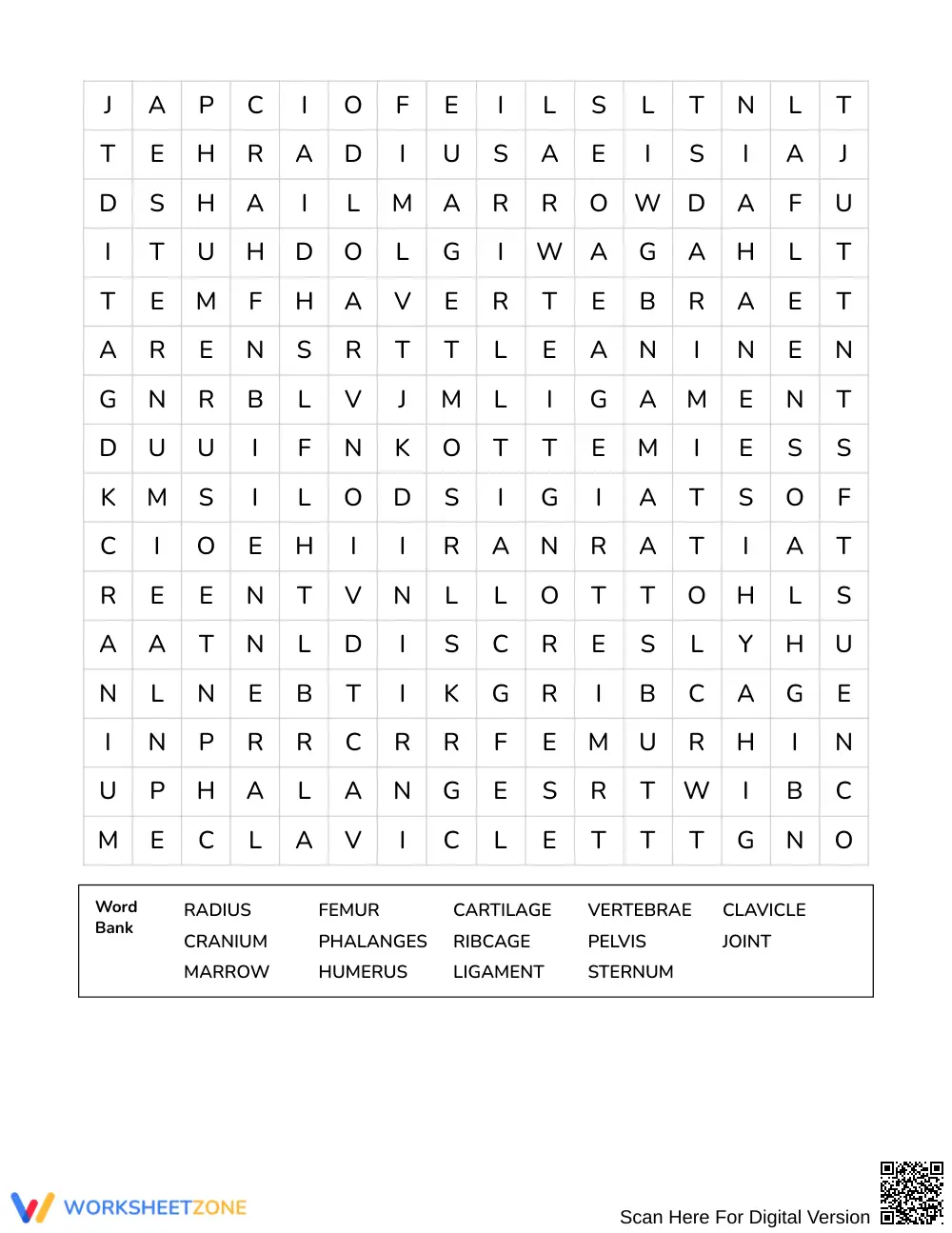
This Grades 4–5 Science word search helps learners identify and label key skeletal system structures while reinforcing vocabulary through clue-based discovery. Students locate fourteen hidden words, strengthening spelling and anatomical knowledge in a single engaging activity that promotes independent learning.
At a Glance
- Grade: Grades 4–5 (middle elementary) · Subject: Science
- Standard:
Not standards-assessed — vocabulary enrichment— students locate, read, and label essential skeletal terms- Skill Focus: skeletal system structures and related anatomical vocabulary
- Format: 3 printable pages · 14 hidden words arranged in a 16 × 16 grid · Answer key included · PDF file
- Best For: vocabulary review, anatomy unit reinforcement, independent practice, or quick classroom warm‑up
- Time: 10–15 minutes total for completion and review
What's Inside
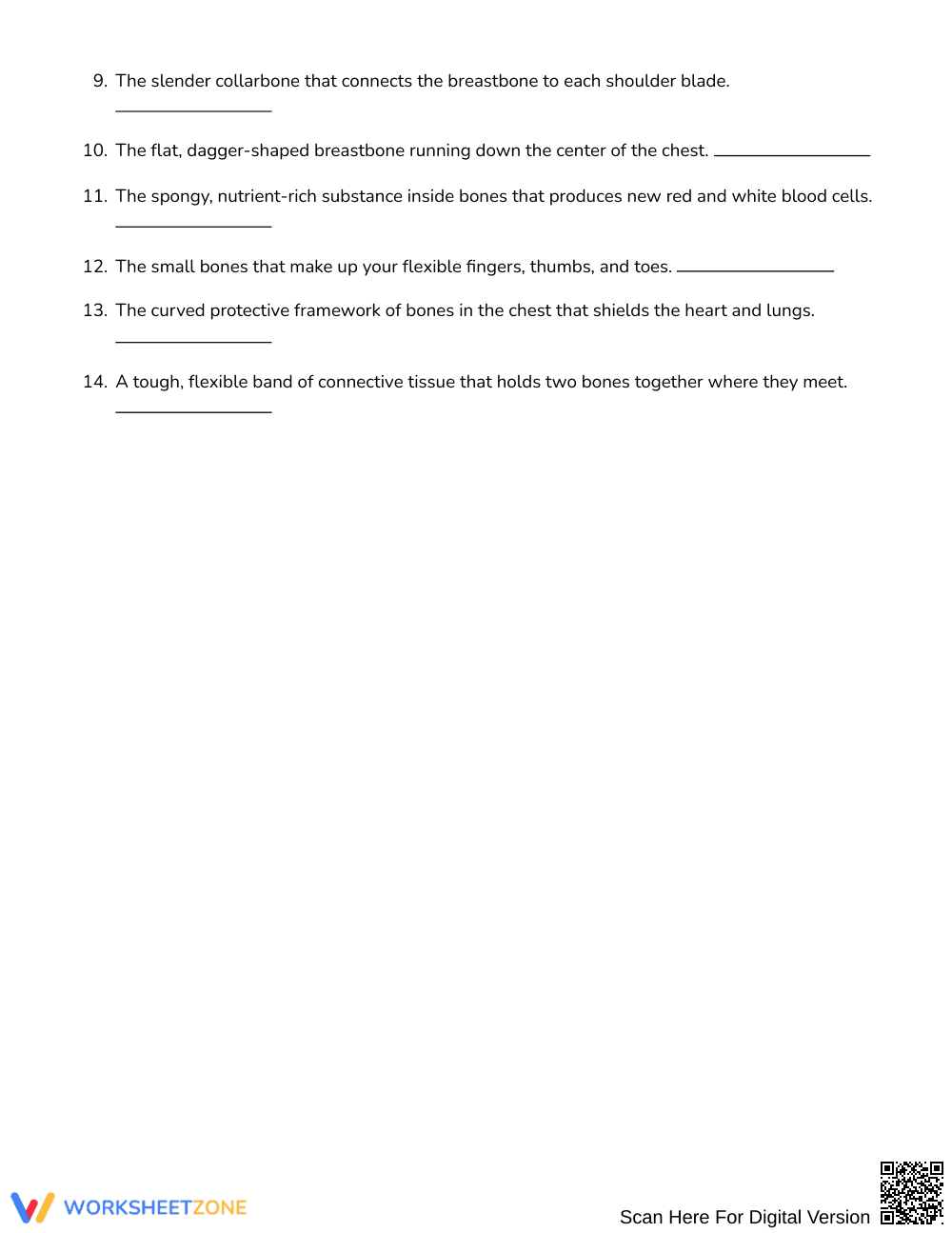
The activity spans three PDF pages, featuring a 16 × 16 letter grid, a shuffled word bank of fourteen skeletal terms, and clear clues that describe each structure. An answer key on the final page shows the correct word locations for quick verification.
Zero-Prep Workflow
- Print: Open the PDF and print the three pages (including answer key). The process takes about 30 seconds on a standard printer.
- Distribute: Hand the word search sheets to students or place them on desks; no additional materials are needed. Distribution requires roughly 30 seconds.
- Review: After completion, flip to the answer key and discuss any missed terms. This review step fits within a 1‑minute class debrief, keeping total teacher prep under two minutes.
The activity works as a stand‑alone sub‑plan or as a quick warm‑up before a deeper anatomy lesson.
Standards Alignment
This word search is designed solely for vocabulary enrichment of skeletal system terminology and is not tied to any specific state or district standard. It serves as a supplemental resource to reinforce key anatomical language during the skeletal unit.
How to Use It
Before a lesson on bone functions, teachers can assign the word search as a pre‑assessment activity. While students work, the teacher circulates, noting which terms are identified quickly and which require additional explanation. Completion typically takes 10–15 minutes.
During a review session after the unit, the puzzle can serve as a fun exit ticket. Students finish the search, then the teacher collects answer sheets and instantly gauges retention by counting correctly found words. This provides immediate formative data in under 5 minutes.
Who It's For
Designed for Grades 4–5 science learners, the puzzle supports visual and kinesthetic learners through word discovery. No differentiation levels are required, but teachers can pair the activity with an anchor chart of skeletal parts or a short video on bone anatomy to deepen understanding.
Research shows that vocabulary‑focused puzzles boost retention of scientific terminology, especially for middle elementary learners (Fisher & Frey, 2014). This Grades 4–5 Science word search targets the skill of identifying skeletal system structures, encouraging students to read concise clues and locate fourteen key terms. By integrating visual pattern recognition with contextual definitions, the activity aligns with evidence‑based practices that improve both spelling and conceptual understanding. Teachers can confidently assign this resource, knowing it reflects proven strategies for building robust science vocabulary. The clue‑driven format also supports reading comprehension by requiring students to match definitions to terminology, a practice linked to higher achievement on science assessments (EdReports 2024). Additionally, the 16 × 16 grid provides a manageable visual challenge that maintains engagement without overwhelming young learners. Overall, this engaging activity offers a quick, standards‑free way to reinforce essential anatomy vocabulary while delivering measurable learning gains.


