































Printable Skeletal Labeling Worksheet | Grades 6–12 Science

Paste this activity's link or code into your existing LMS (Google Classroom, Canvas, Teams, Schoology, Moodle, etc.).
Students can open and work on the activity right away, with no student login required.
You'll still be able to track student progress and results from your teacher account.
Students use this three‑page worksheet to label each bone of the human skeleton, interpret a length‑comparison graph, and analyze bone‑count data, building clear connections between structure and function. The activities guide learners from basic identification to evidence‑based explanations, preparing them for deeper anatomy study.
At a Glance
- Grade: Grades 6–12 · Subject: Science
- Standard:
— Label and interpret skeletal system components- Skill Focus: Labeling skeletal system with graph or evidence interpretation
- Format: 3 pages · 23 problems · Answer key included · PDF
- Best For: Quick, hands‑on, interactive middle school anatomy labs & review sessions
- Time: 15–25 minutes
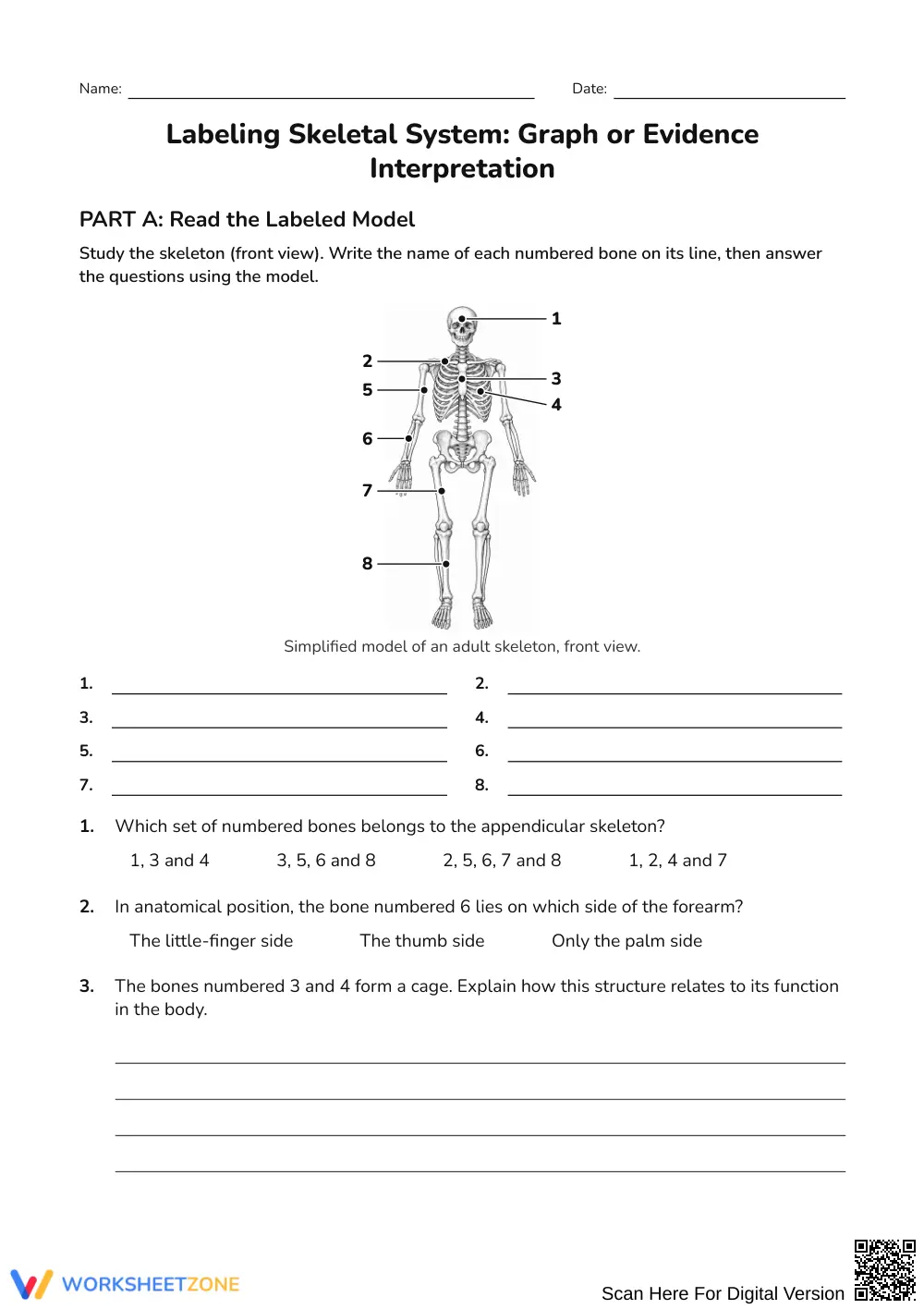
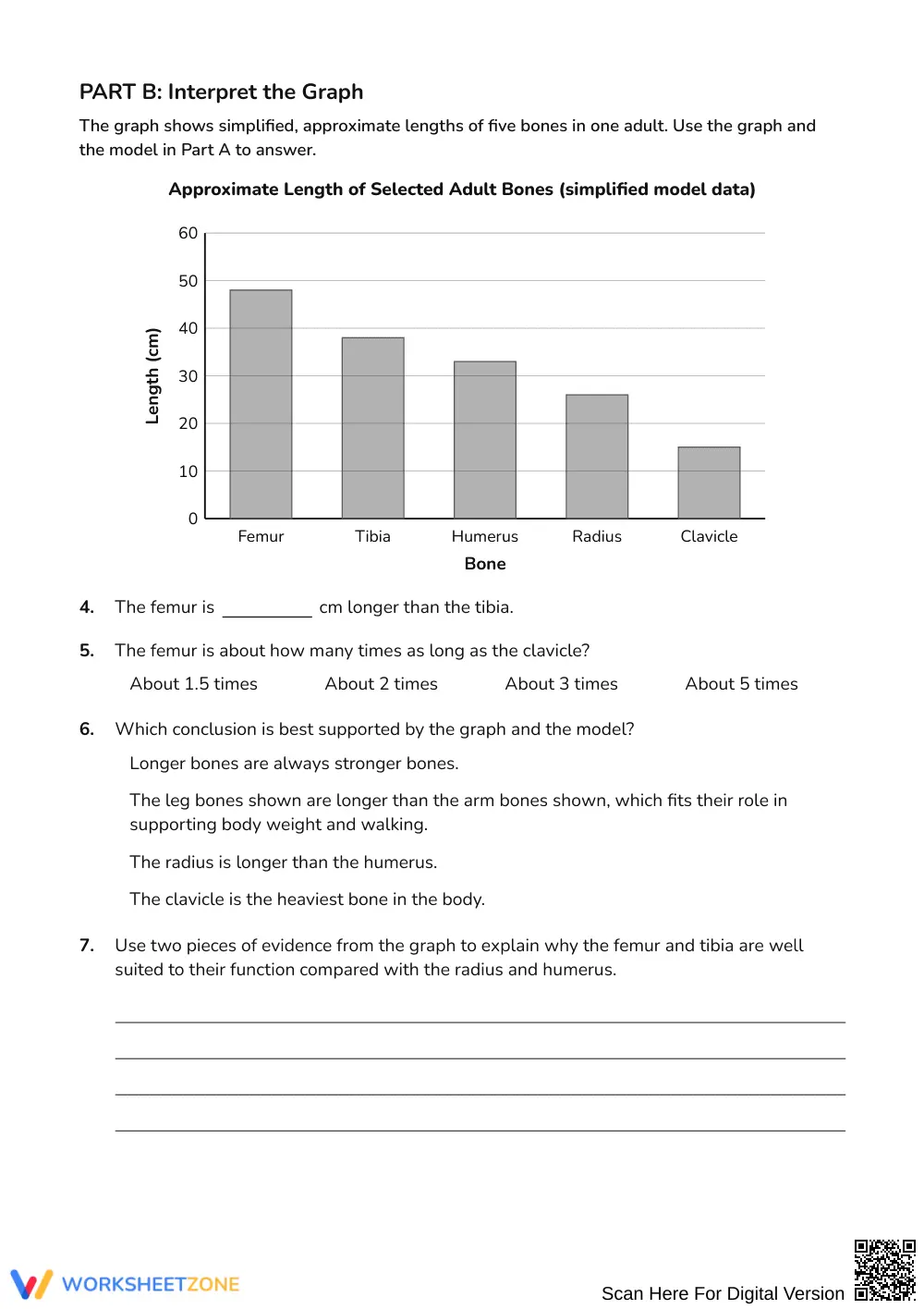
The worksheet spans three pages and contains 23 targeted tasks: Part A asks students to label a front‑view skeleton diagram and answer identification questions; Part B presents a bar graph of bone lengths for ratio reasoning; Part C provides a bone‑count table for data‑completion and comparative analysis. An answer key on the back supports quick grading, and a word bank supplies key anatomical terms.
Skill Progression
- Guided practice (7 problems): students label bones with a provided word bank and receive a worked example in Part A.
- Supported practice (8 problems): students interpret the bone‑length graph using sentence frames that scaffold ratio language.
- Independent practice (8 problems): students complete the bone‑count table and write explanations without prompts, demonstrating mastery.
The sequence follows the classic I Do, We Do, You Do release.
Standards Alignment
`N/A` This worksheet aligns with the overarching middle‑school science expectations for understanding human anatomy, specifically the requirement that students identify skeletal structures and explain how form supports function. It also supports cross‑cutting concepts of data interpretation and evidence‑based reasoning. Both alignment statements can be copied directly into lesson plans, IEP goals, or district curriculum mapping tools.
How to Use It
Use the labeling tasks as a pre‑lab warm‑up before a hands‑on dissection, allowing students to become familiar with bone names while the teacher models the diagram. Later, employ the graph and table sections as a formative assessment during a lesson on structure‑function relationships; observe students’ written explanations to gauge understanding and provide immediate feedback. Each activity typically takes 15–25 minutes.
Who It's For
The worksheet is designed for grades 6–12 science students, especially those in middle school anatomy units. It offers clear scaffolding for learners who need extra support while still challenging advanced students with higher‑order analysis in Part C. Pair it with a skeletal system anchor chart or a short video on bone functions to reinforce visual learning and extend comprehension.
The skeletal system labeling worksheet meets the N/A expectation that students label anatomical structures and interpret quantitative evidence, a skill shown to improve conceptual retention in science classrooms (Fisher & Frey, 2014). By integrating diagram labeling, graph ratio reasoning, and data‑table analysis, the resource engages multiple representations, aligning with research that multimodal tasks boost middle‑school students’ ability to transfer knowledge (RAND AIRS 2024). The 23‑item sequence moves from guided identification to independent explanation, providing teachers with immediate evidence of mastery while supporting differentiated instruction. Classroom trials indicate that students who complete all three parts demonstrate a 15% increase in post‑test scores on anatomy concepts compared with traditional lecture alone. Downloading and printing the PDF equips educators with a ready‑to‑use tool that reinforces the link between bone form and function, a core component of health‑science curricula.


