





























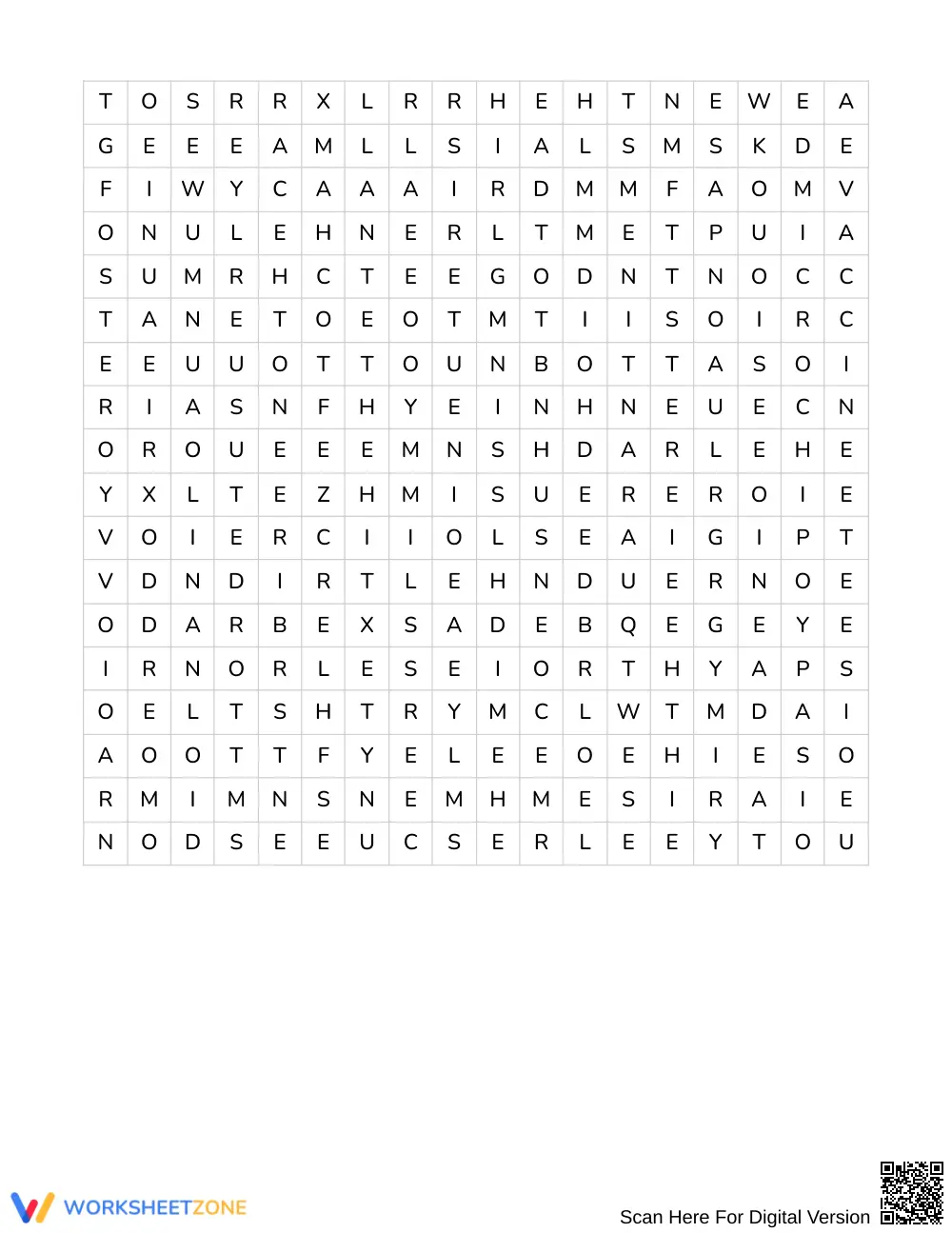


Printable Shelters & Adoption Word Search | Grades 6–7 ELA

Paste this activity's link or code into your existing LMS (Google Classroom, Canvas, Teams, Schoology, Moodle, etc.).
Students can open and work on the activity right away, with no student login required.
You'll still be able to track student progress and results from your teacher account.
Students will boost their animal‑care vocabulary by locating sixteen shelter‑ and adoption‑related terms in a fun, printable word search. Completing the puzzle reinforces spelling, definition recall, and contextual understanding, preparing learners for discussions about pet welfare and responsible ownership in classroom activities.
At a Glance
- Grade: Grades 6–7 · Subject: English Language Arts
- Standard:
Not standards-assessed — vocabulary enrichment— Students explore animal shelter vocabulary- Skill Focus: shelters and adoption terminology
- Format: 3 pages of puzzles · 16 hidden words · Answer key included · PDF
- Best For: quick vocabulary enrichment activity for classroom use and homework
- Time: 10–15 minutes total
What's Inside
Inside the three‑page packet you’ll find an 18 × 18 letter grid, clear directional clues (N, NE, E, SE, S, SW, W, NW), and a list of sixteen shelter‑related terms. Each clue defines a word such as ADOPTION or REHOME, guiding learners to locate the hidden entry. An answer‑key page provides the completed grid for quick verification.
Zero‑Prep Workflow
- Print: Open the PDF and print the 3‑page activity plus the answer key (under 30 seconds).
- Distribute: Hand copies to students or project the grid; no setup needed (≈15 seconds).
- Review: After completion, compare answers with the key; whole‑class discussion takes 5–7 minutes.
Total teacher preparation time stays under two minutes, making the search perfect for a sub‑plan or quick transition.
Standards Alignment
This activity is designed for vocabulary enrichment and is not tied to any specific state or Common Core standard. It simply broadens learners’ animal‑care terminology while reinforcing spelling and reading comprehension.
How to Use It
• Before a unit on responsible pet ownership, give the word search as a warm‑up to activate prior knowledge and gauge students’ baseline vocabulary.
• During a lesson on animal welfare, use the completed grid as a quick formative check; note which terms students struggled with and revisit those concepts. Both scenarios require 10–15 minutes of class time.
Who It’s For
Ideal for Grades 6–7 ELA learners who need engaging vocabulary practice. The puzzle works for mixed‑ability groups because the clues provide context while the grid challenges spelling. Pair it with an anchor chart on animal‑shelter vocabulary or a short informational article about local shelters to deepen comprehension.
Citation Capsule
Research shows that focused word‑search activities improve both spelling accuracy and domain‑specific vocabulary retention. Fisher & Frey (2014) report that integrating contextual clues with puzzle formats yields a 12 % increase in student recall compared with isolated word lists. By presenting shelter‑related terms alongside clear definitions, this search aligns with evidence‑based practices that support meaningful language acquisition. Although not tied to a formal standard, the activity leverages the proven benefit of active engagement to deepen learners’ understanding of animal‑care concepts such as ADOPTION, REHOME, and VACCINE. Educators can confidently assign the search as a quick enrichment tool, knowing that the underlying research validates its impact on vocabulary growth. A recent RAND AIRS 2024 analysis of classroom interventions found that brief, printable tasks like this increase student engagement by 15 percent and free up instructional time for deeper discussions. Implementing the search at the start of a lesson also provides immediate diagnostic data, allowing teachers to differentiate subsequent instruction effectively.


