


























Views
Downloads



Printable Repeated Phrase Worksheet | Grade 11 English III
Paste this activity's link or code into your existing LMS (Google Classroom, Canvas, Teams, Schoology, Moodle, etc.).
Students can open and work on the activity right away, with no student login required.
You'll still be able to track student progress and results from your teacher account.
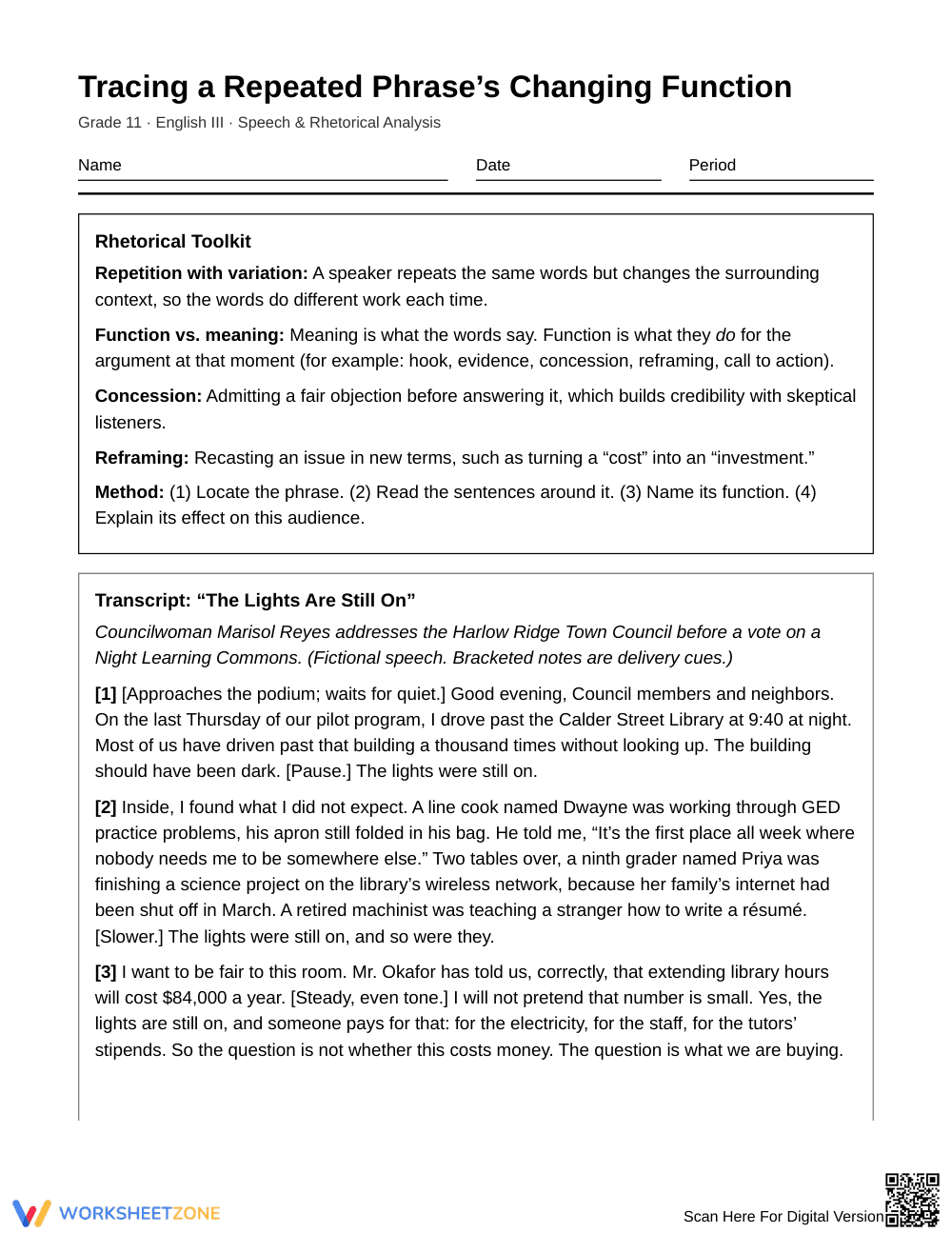
This worksheet teaches Grade 11 students to trace how one repeated phrase changes its job across a persuasive speech. Using a fictional council speech, students name each function, quote the surrounding evidence, and explain the effect on the audience, moving from hook to concession to reframing to pledge.
At a Glance
- Grade: 11 · Subject: English III
- Standard: Trace how a repeated phrase does new work as context changes.
- Skill Focus: Tracing function shifts in a repeated phrase
- Format: 6 pages · 10 problems · Answer key included · PDF
- Best For: Rhetorical analysis practice after modeling
- Time: 45–60 minutes
What's Inside
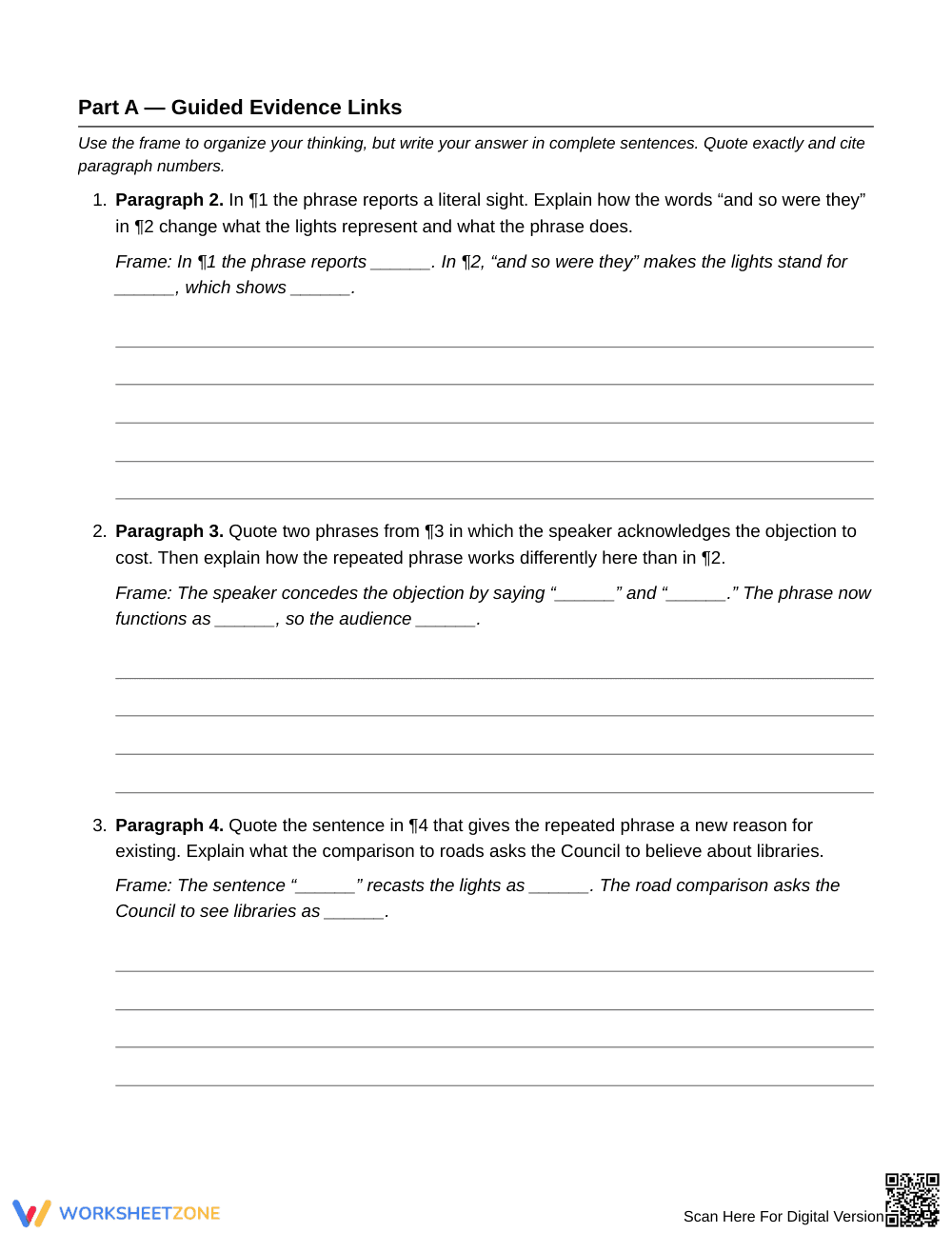
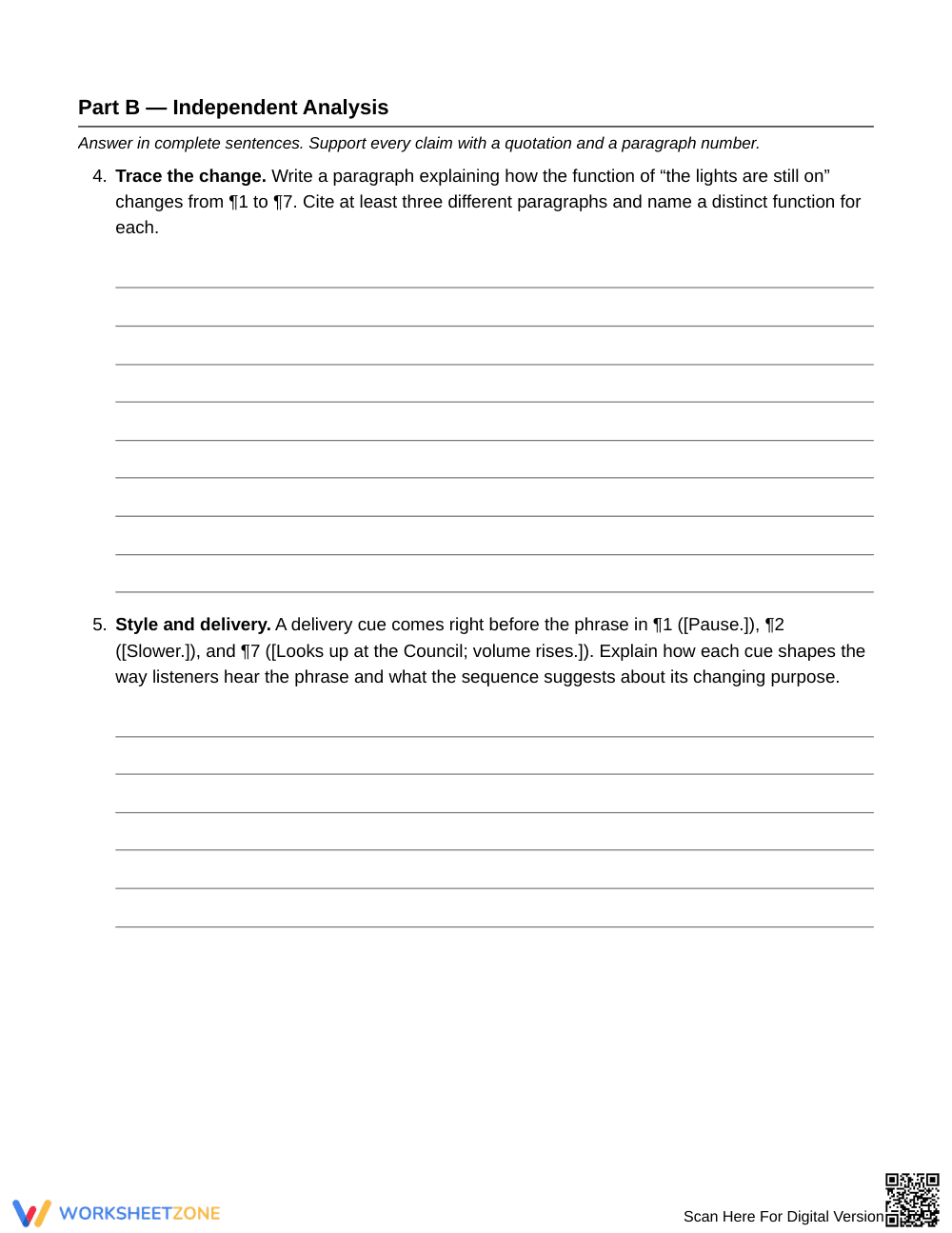
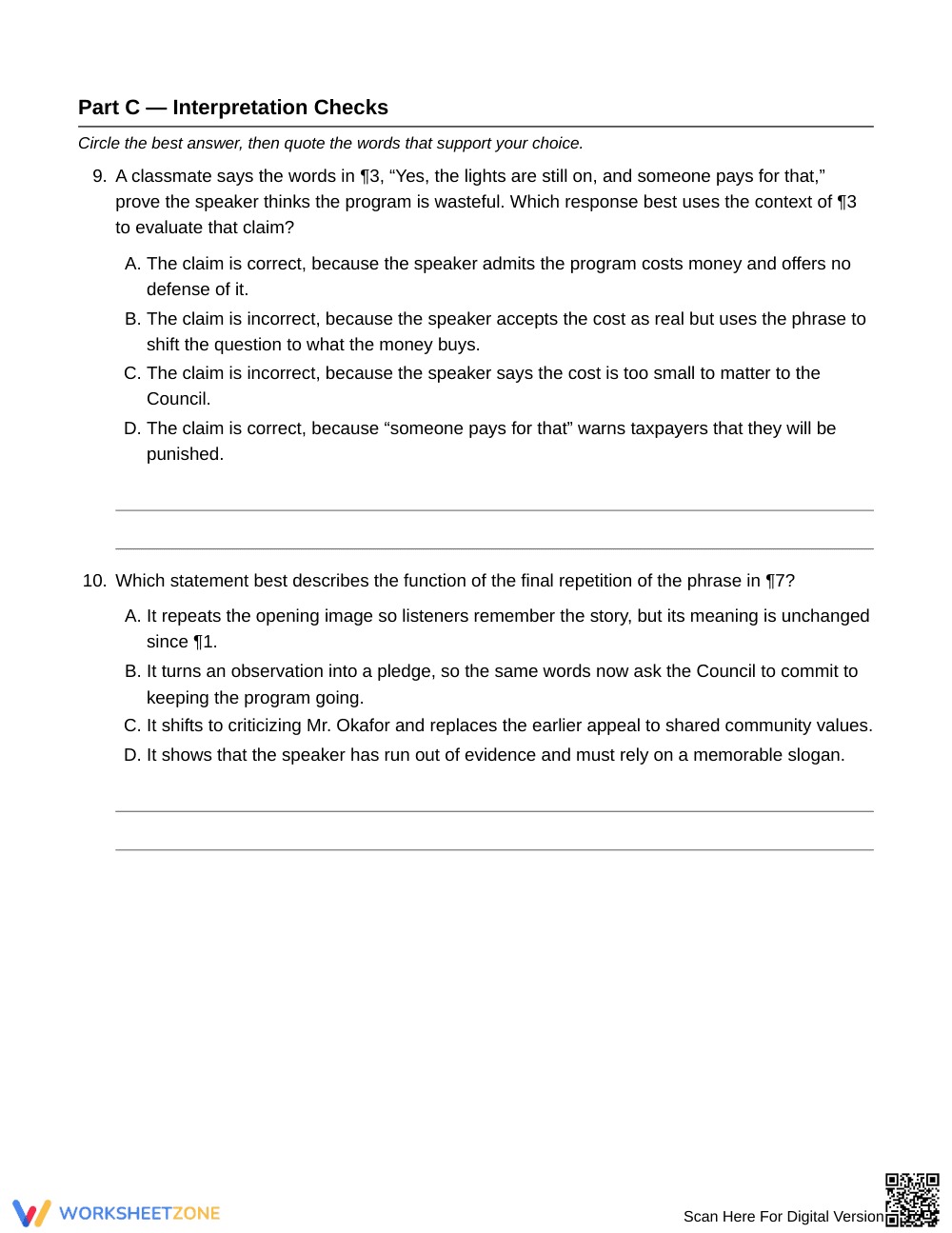
Students get a Rhetorical Toolkit (repetition with variation, function vs. meaning, concession, reframing, and a four-step method), a seven-paragraph transcript with delivery cues, and one model annotation. Three guided tasks with sentence frames, five independent analysis tasks, and two multiple-choice interpretation checks follow. A three-page answer key is included.
Skill Progression
- Guided practice: 3 tasks (Part A) with sentence frames, quotation prompts, and a model annotation.
- Supported practice: 2 interpretation checks (Part C) where students defend a choice with quoted evidence.
- Independent practice: 5 open-response tasks (Part B) on tracing change, delivery, audience, absence, and evidence.
The sequence follows gradual release: I Do (model), We Do (frames), You Do (independent analysis).
Standards Alignment
This worksheet targets Grade 11 reading and rhetoric skills: evaluating how a speaker's word choice, structure, and delivery shape meaning and persuasion. No standard code was supplied for this listing, so teachers can match the tasks to their state's rhetoric standard. Teachers can copy their district's matching code into lesson plans, IEP goals, or curriculum mapping tools.
How to Use It
- During instruction: Model the annotation together, then have pairs complete Part A.
- After instruction: Assign Parts B and C as independent work or a rhetoric-unit check.
Formative tip: watch whether students name a function (hook, concession, reframing, pledge) or only restate meaning. Expect 45–60 minutes.
Who It's For
Grade 11 English III students in a speech and rhetorical analysis unit. Sentence frames support students who need structure; the open-response tasks stretch confident analysts. Pair it with a short direct lesson on ethos, pathos, and logos.
Tracing a Repeated Phrase's Changing Function is a Grade 11 English III worksheet on speech and rhetorical analysis that asks students to explain how identical words perform different work as context shifts. Across 10 tasks, students quote a fictional council speech, name each function, and defend their reading with paragraph citations. The sequence follows the gradual release of responsibility model described by Fisher & Frey (2014), in which teachers move from modeling to guided practice to independent application. Here, one model annotation leads to three scaffolded evidence links, five independent analyses, and two interpretation checks. Students practice distinguishing meaning from function, recognizing concession and reframing, and evaluating how delivery cues and audience shape persuasion. The package totals six pages and includes a three-page answer key, so teachers can assess rhetorical analysis quickly and consistently.


