




























Views
Downloads


Printable Pangaea Test Design Worksheet | Grade 8 Science

Paste this activity's link or code into your existing LMS (Google Classroom, Canvas, Teams, Schoology, Moodle, etc.).
Students can open and work on the activity right away, with no student login required.
You'll still be able to track student progress and results from your teacher account.
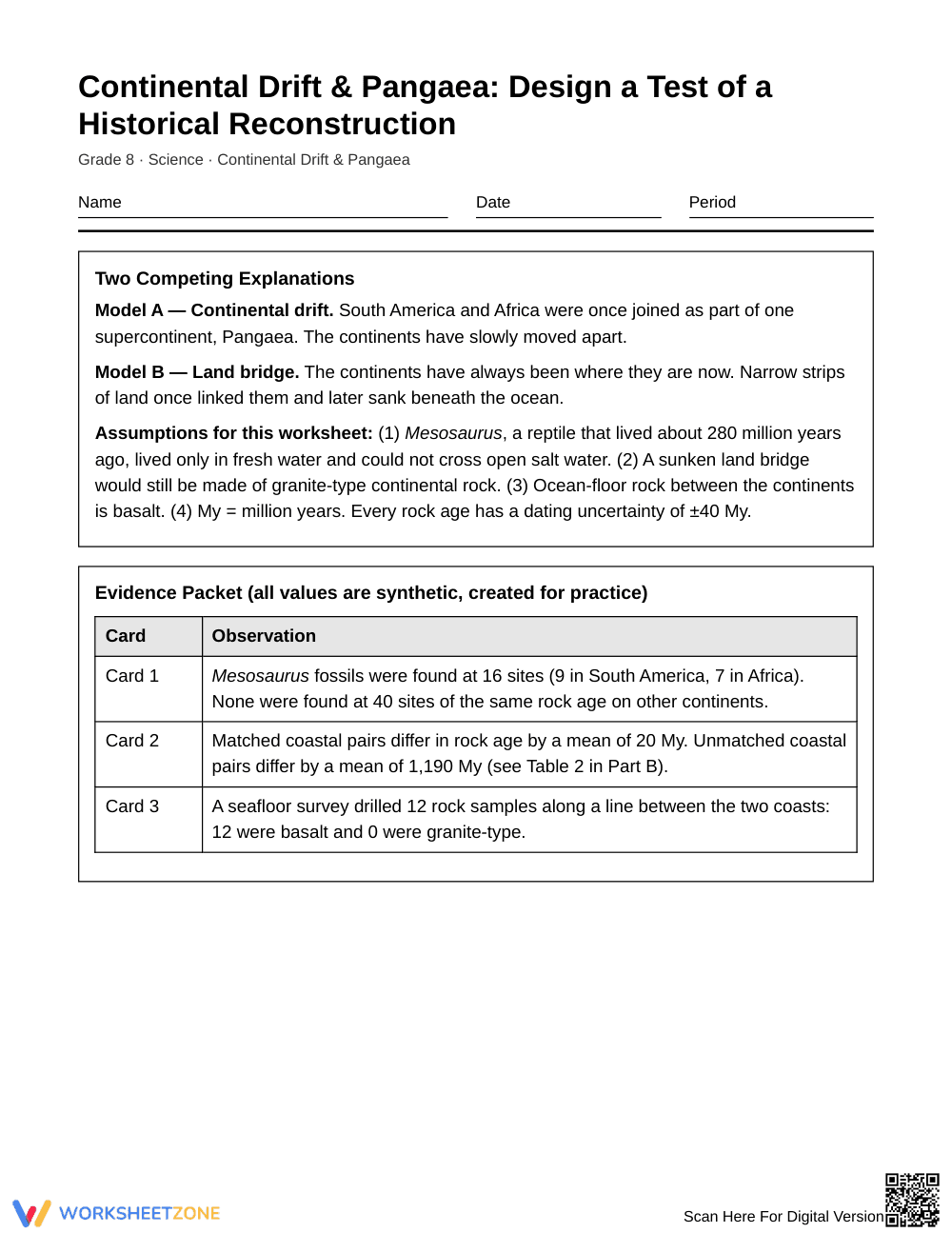
This worksheet teaches Grade 8 students to design a fair test that separates two explanations for how South America and Africa are related: continental drift and a sunken land bridge. Students write predictions, choose controls, analyze synthetic rock-age data, and judge which evidence discriminates between the models.
At a Glance
- Grade: 8 · Subject: Science
- Standard: No code assigned — write testable predictions and judge which evidence separates two models
- Skill Focus: Designing a test of a historical reconstruction
- Format: 5 pages · 10 problems · Answer key included · PDF
- Best For: Continental drift unit evidence practice
- Time: 35–45 minutes
What's Inside
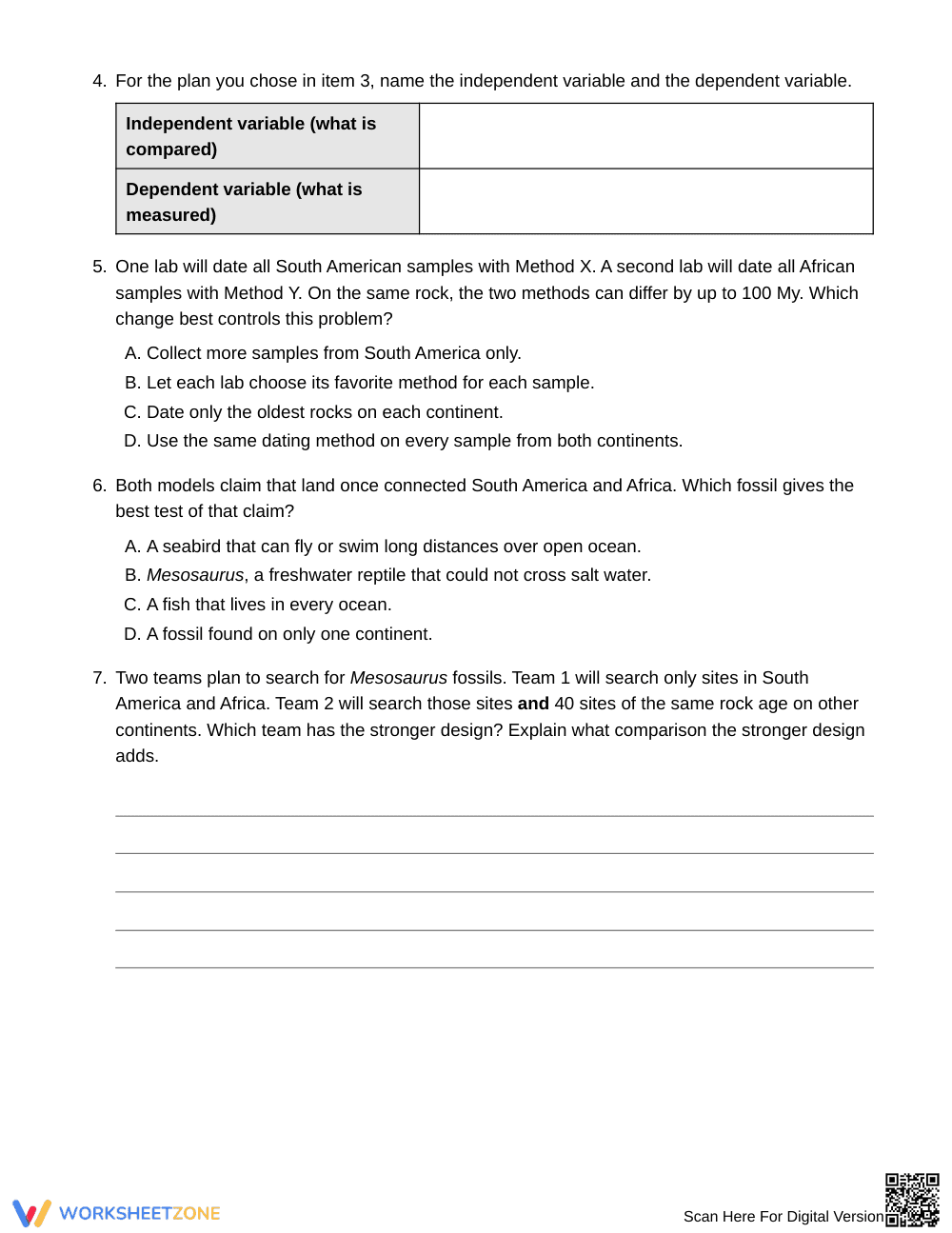
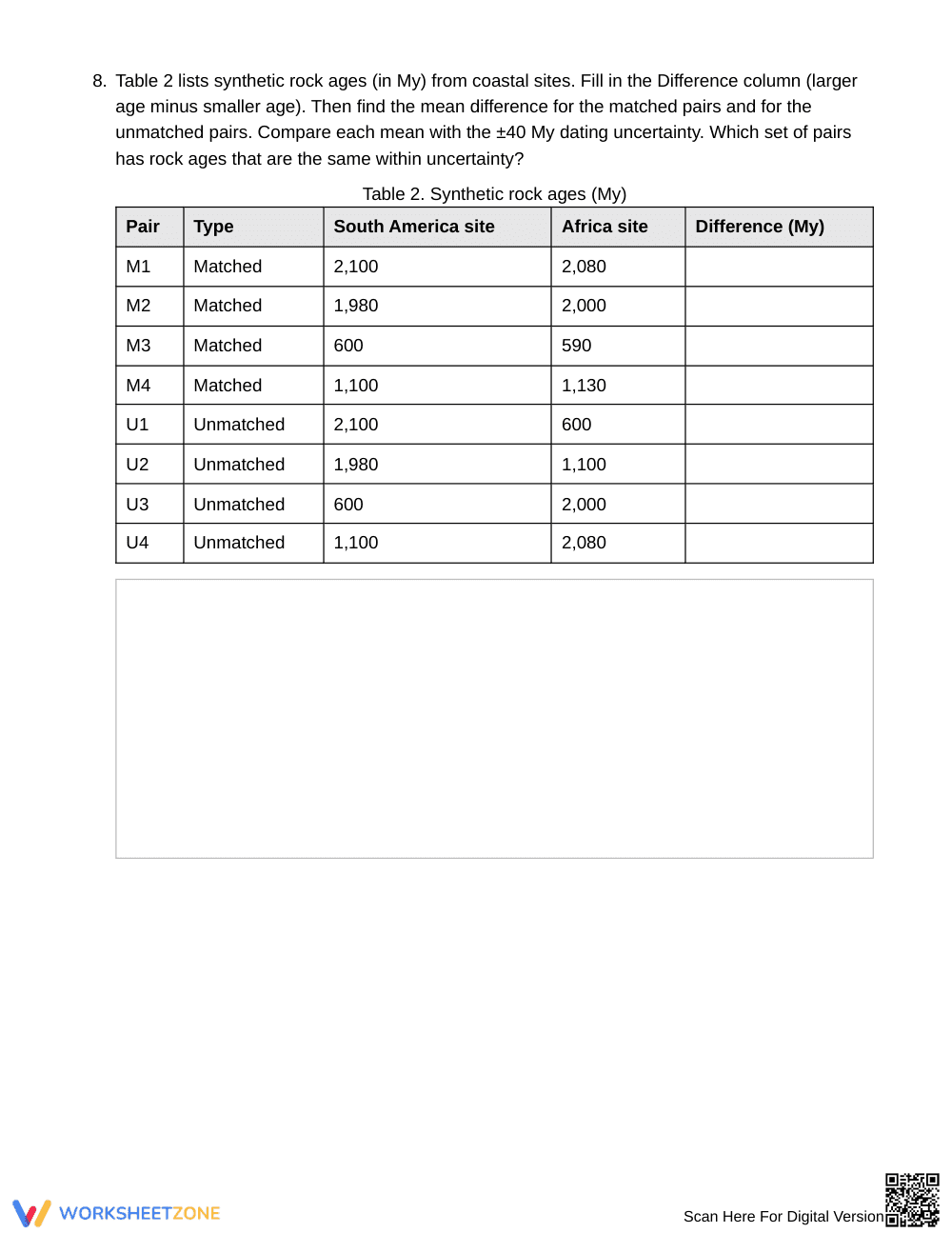
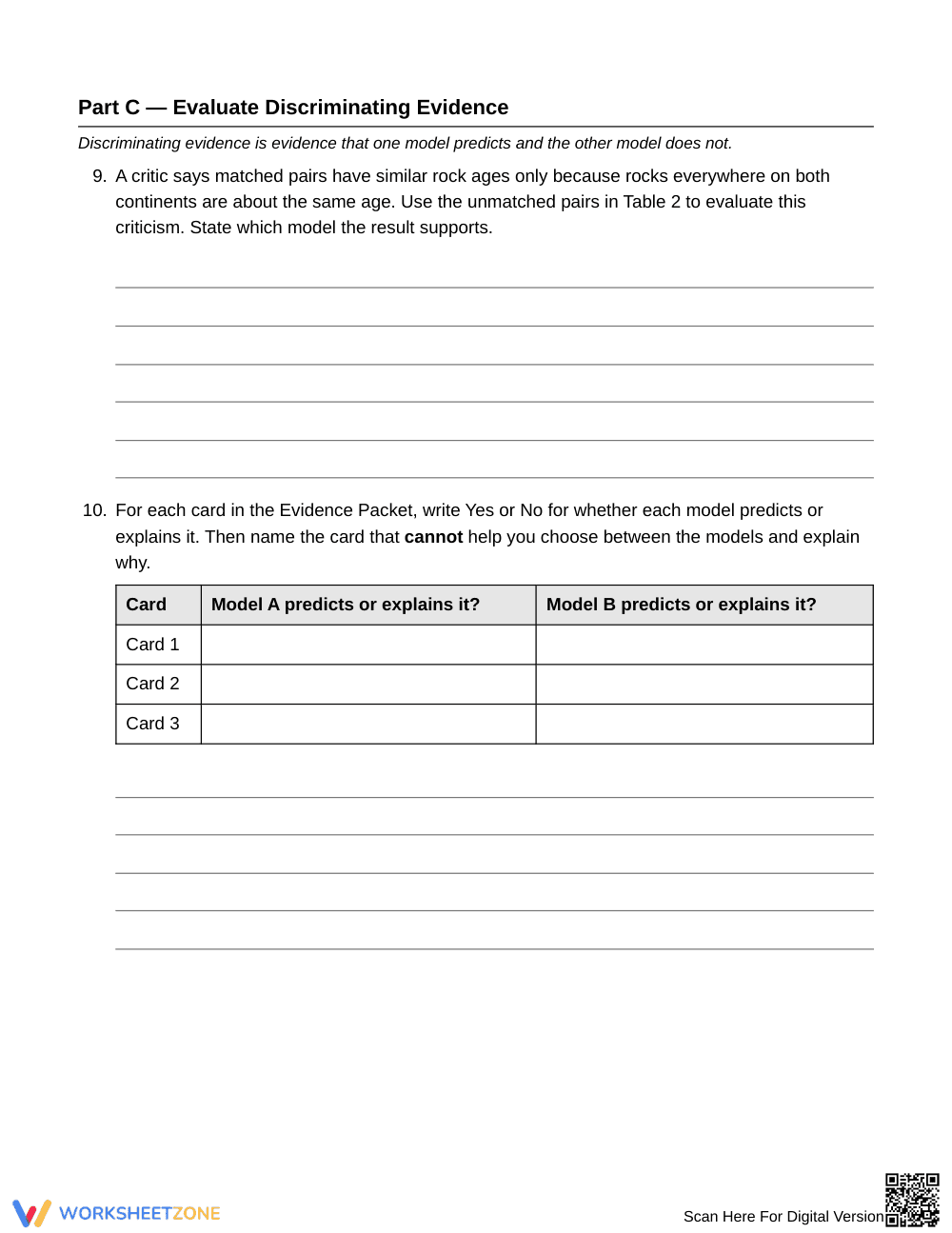
Students read two competing models, a list of assumptions, and a three-card evidence packet. They then complete prediction writing, multiple-choice design decisions, a variables table, a rock-age data table, and two evaluation tasks. A 3-page answer key is included. All data are synthetic and labeled as practice values.
Skill Progression
- Guided practice (2 tasks): Part A models the "If…, then…" prediction format for each model.
- Supported practice (6 tasks): Part B uses multiple-choice options, a variables table, and a fill-in data table to build fair-test reasoning.
- Independent practice (2 tasks): Part C asks students to critique a claim and judge evidence with little scaffolding.
The sequence follows a gradual-release pattern: I Do, We Do, You Do.
Standards Alignment
No standard code was supplied for this worksheet, so none is listed. The tasks practice planning comparisons, identifying variables and controls, analyzing data against uncertainty, and using evidence to evaluate competing models. Add your own state or district standard code when mapping it into lesson plans or curriculum tools.
How to Use It
- After direct instruction: Assign it once students have met both models, as practice with evidence.
- Partner work: Pairs complete Part B, then discuss Part C as a class.
As students work, listen for whether they compare matched pairs with unmatched pairs, not matched pairs alone. Expect 35–45 minutes.
Who It's For
Grade 8 science students in a plate tectonics or Earth history unit. Students who need support can start with Part A and the multiple-choice items. Pair it with a Pangaea fossil-distribution map or anchor chart.
Continental Drift & Pangaea: Design a Test of a Historical Reconstruction is a Grade 8 science worksheet with 10 tasks over 5 pages. Students compare continental drift with a land-bridge model by writing If…, then… predictions, identifying independent and dependent variables, controlling dating methods, and calculating mean rock-age differences against a ±40 My uncertainty. They then evaluate discriminating evidence: Mesosaurus fossils, matched versus unmatched coastal rock ages, and seafloor basalt samples. All data are synthetic. The sequence follows the gradual release of responsibility model described by Fisher & Frey (2014), moving from guided prediction writing to supported experimental design to independent evaluation of evidence. No standard code was supplied, so teachers can map the worksheet to their own science standards. A 3-page answer key supports quick scoring and feedback. The worksheet fits a lesson after students have met both models and need practice reasoning about which evidence separates competing explanations.


