




























Views
Downloads




Printable Pangaea Evidence Types Worksheet | Grade 8 Science

Paste this activity's link or code into your existing LMS (Google Classroom, Canvas, Teams, Schoology, Moodle, etc.).
Students can open and work on the activity right away, with no student login required.
You'll still be able to track student progress and results from your teacher account.
This worksheet helps Grade 8 students compare fossil records and seafloor rock data to judge how strongly each supports continental drift. Students read two synthetic data tables, calculate a spreading rate, and evaluate claims about Pangaea, finishing with clear, evidence-based reasoning.
At a Glance
- Grade: 8 · Subject: Science
- Standard: Not specified — students use fossil and seafloor data as evidence for continental drift
- Skill Focus: Compare several evidence types
- Format: 5 pages · 10 problems · Answer key included · PDF
- Best For: Evidence-based reasoning in plate tectonics units
- Time: 35–45 minutes
What's Inside
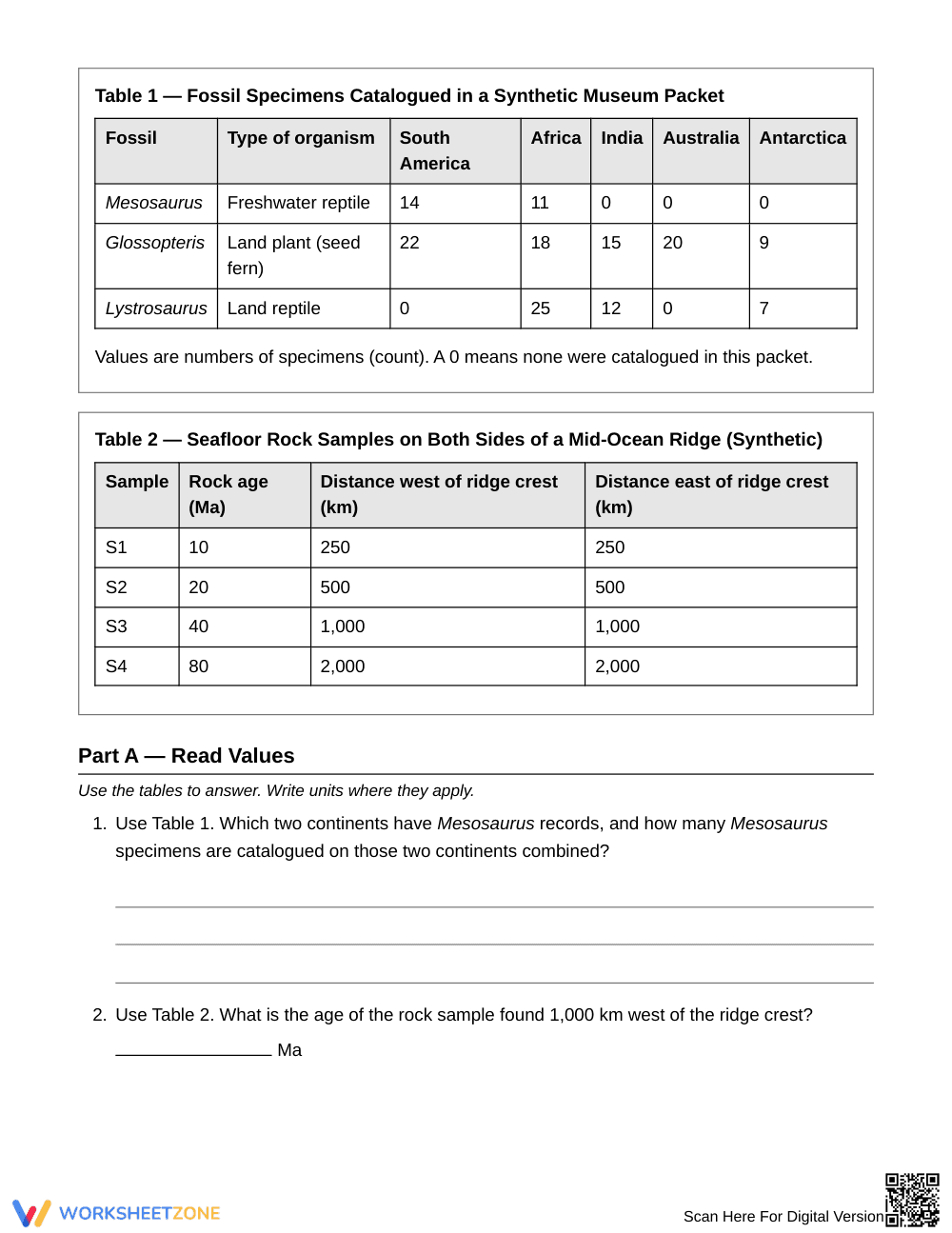
The 5-page student packet opens with a short history of Alfred Wegener and an assumptions box covering units and conversions. Two data tables follow: fossil specimen counts and seafloor rock ages. Students complete 10 tasks in three parts, including an evidence-matching table, rate calculations, and two claim evaluations. A 3-page answer key is included.
Skill Progression
- Guided practice: Part A, 2 tasks. Students read values directly from the tables with units, supported by the assumptions box.
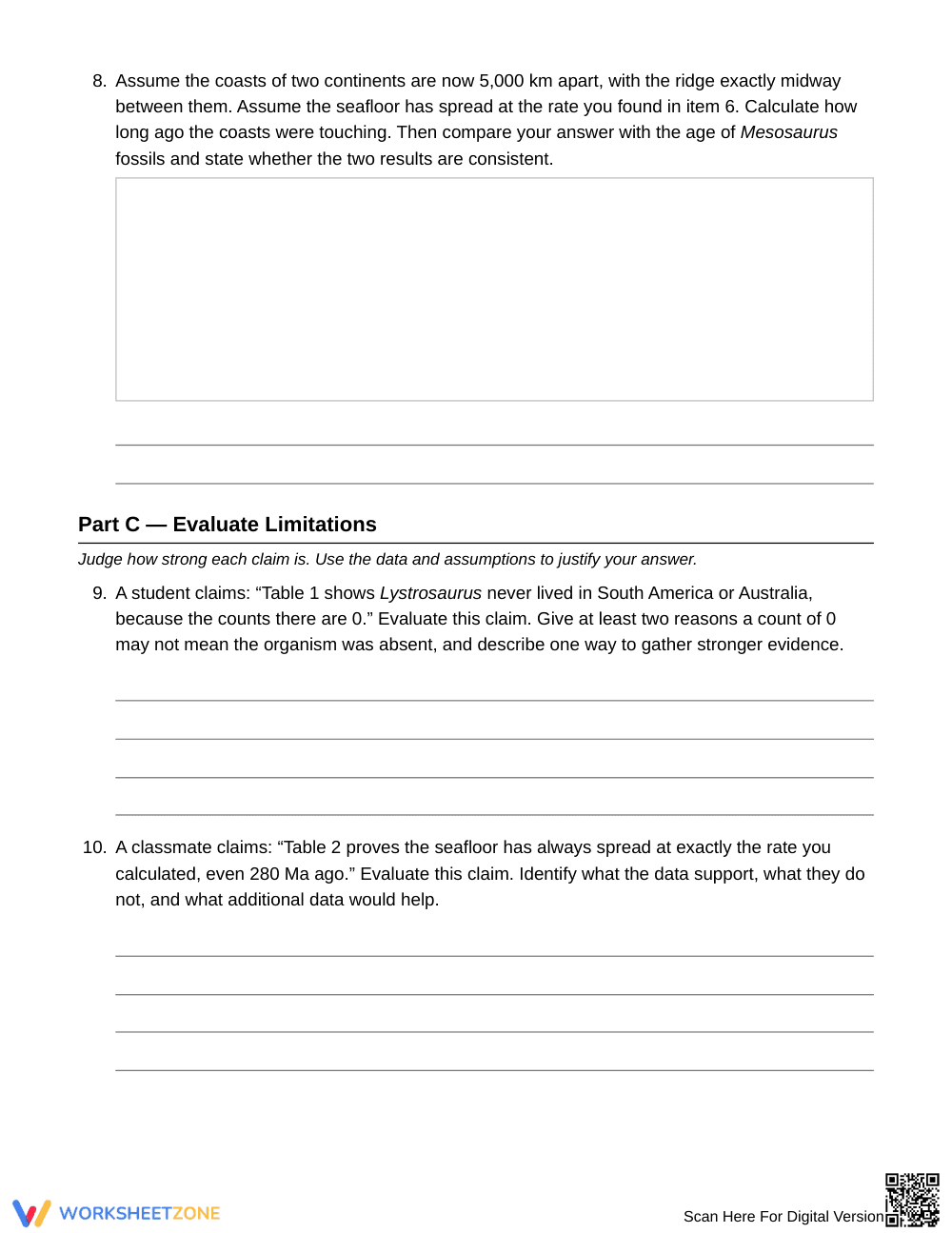
- Supported practice: Part B, 6 tasks. Students explain fossil patterns, sort evidence types, calculate spreading rate, and test it against fossil age.
- Independent practice: Part C, 2 tasks. Students judge two claims and name the limits of the data.
The sequence follows gradual release: I Do, We Do, You Do.
Standards Alignment
No standard code is listed for this worksheet. The tasks practice analyzing and interpreting data and constructing explanations from evidence about moving continents. Teachers can copy their own local standard into lesson plans, IEP goals, or district curriculum mapping tools.
How to Use It
- After direct instruction: Assign as independent practice once students have met Wegener's hypothesis and seafloor spreading.
- Review or homework: Use Parts B and C for discussion or a written checkpoint.
While students work, watch whether they cite specific table values instead of general statements. Expect 35 to 45 minutes.
Who It's For
Built for Grade 8 science classes studying plate tectonics. The assumptions box supports students who need help with units, and Part C stretches confident readers. Pair it with a Pangaea map or a seafloor spreading lesson.
The Grade 8 Science worksheet Comparing Evidence Types asks students to weigh fossil distributions against seafloor age data as evidence for continental drift and Pangaea. Across 10 tasks on 5 pages, students read values from two synthetic tables, calculate a seafloor spreading rate in km/Ma and cm/year, and evaluate claims by naming what the data support and what they cannot show. The sequence reflects the gradual release model described by Fisher & Frey (2014), moving from guided data reading to independent critique. No standard code is attached to this resource, so teachers can map it to local science standards on analyzing data and building evidence-based explanations. A 3-page answer key supports quick checking, and the assumptions box keeps calculations consistent. It suits lessons on why several evidence types make a stronger scientific argument than any single source.


