































Printable Inclusive Staycation Word Search | Grades 7–8 ELA

Paste this activity's link or code into your existing LMS (Google Classroom, Canvas, Teams, Schoology, Moodle, etc.).
Students can open and work on the activity right away, with no student login required.
You'll still be able to track student progress and results from your teacher account.
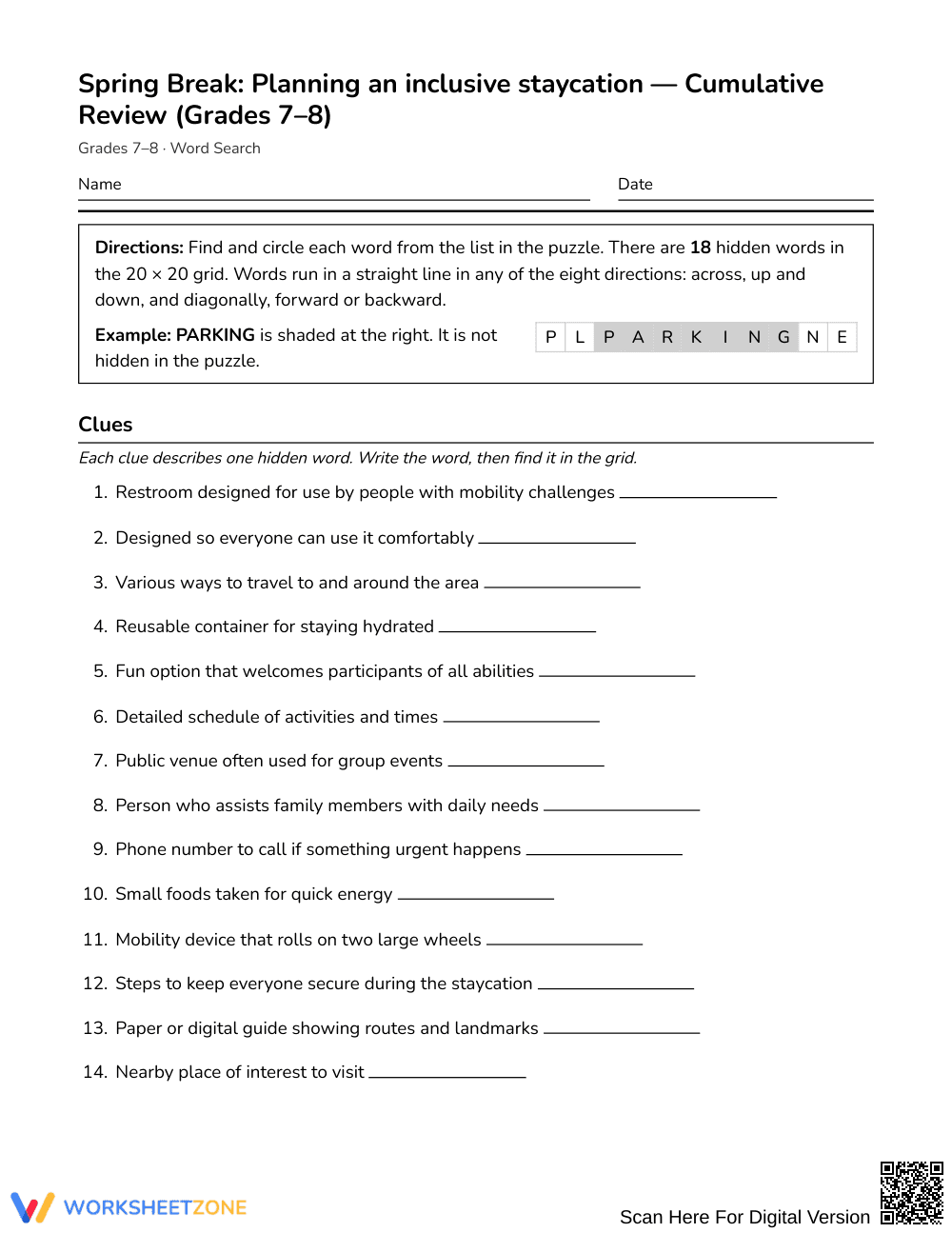
This vocabulary word search reinforces essential travel, accessibility, and community planning terms for middle school learners. Students identify and reinforce key vocabulary connected to planning an inclusive, accessible staycation. By pairing definitional clues with active word-finding, this activity solidifies domain-specific terminology while fostering disability awareness and thoughtful event preparation.
At a Glance
- Grade: Grades 7–8 · Subject: English Language Arts (ELA)
- Standard: Not standards-assessed — vocabulary enrichment
- Skill Focus: Planning an inclusive staycation
- Format: 3 pages · 18 words · Answer key included · PDF
- Best For: Vocabulary review and seasonal activity
- Time: 20–30 minutes
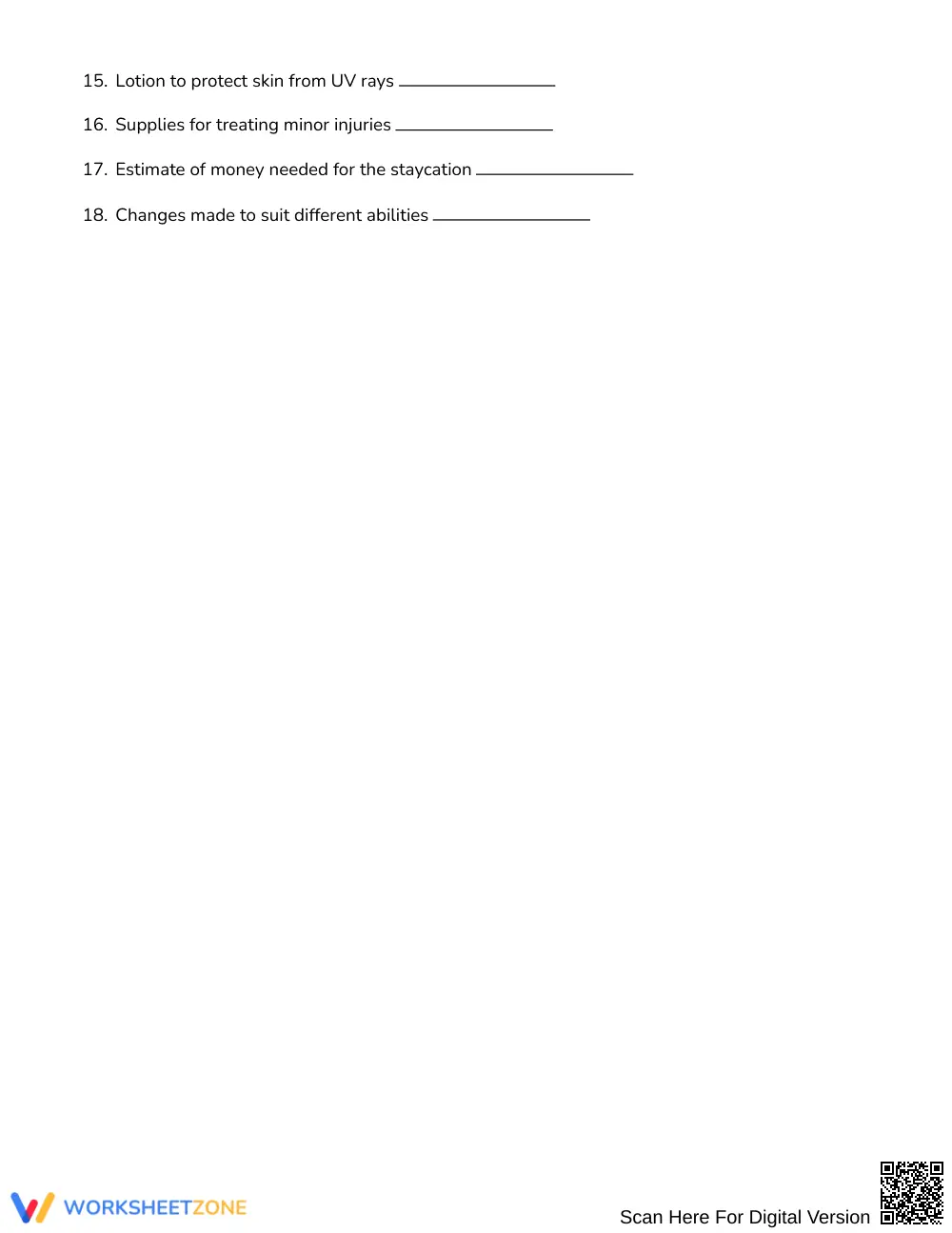
What's Inside: The resource features an 18-word puzzle accompanied by complete definitional clues for every term, such as itinerary, accessible, and caregiver. Spread across a 3-page printable layout with matching 3-page full-size solution keys, this activity provides clear definitions that clarify word meanings before students locate terms in the puzzle.
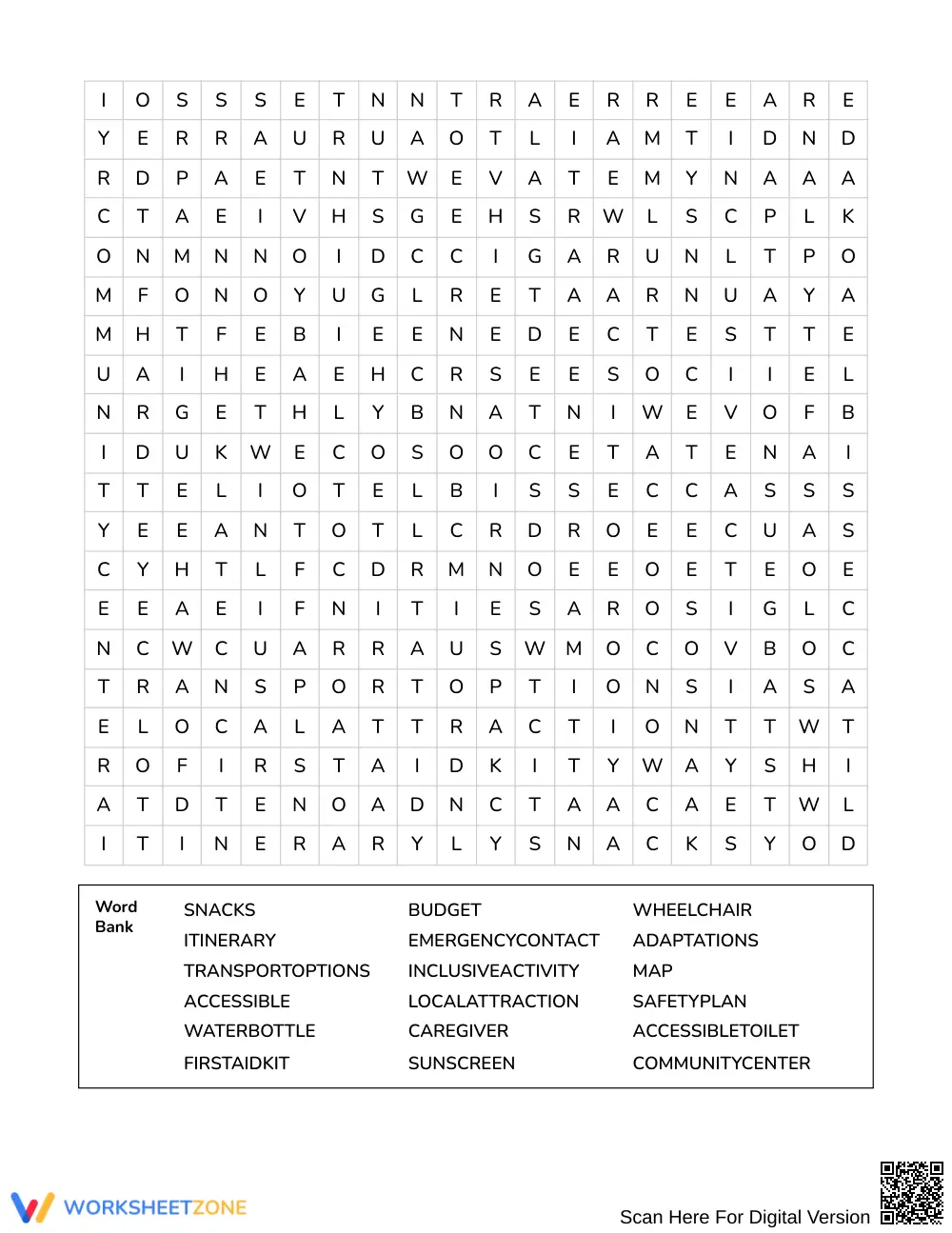
Puzzle Mechanics: Built on an expansive 20 × 20 letter grid, this puzzle conceals words across all eight cardinal and intercardinal directions: north, northeast, east, southeast, south, southwest, west, and northwest. The shuffled word list challenges students to scan forward, backward, and diagonally, demanding persistent spatial tracking and careful orthographic recognition as they locate complex multi-word compound terms.
Standards Alignment: This activity is designed for vocabulary enrichment and is not aligned to a specific academic standard. It supports cross-curricular thematic learning by building real-world functional literacy, accessibility awareness, and community engagement vocabulary through independent language practice.
How to Use It: Deploy this activity as an engaging hook before beginning an informational writing unit on community accessibility or as a calm, independent review task prior to spring break. During completion, circulate to observe whether students use the provided clues to verify meanings or simply hunt letters, prompting them to connect terms like "adaptations" to real-world scenarios. Students typically finish the puzzle within 20 to 30 minutes.
Who It's For: Designed specifically for Grades 7–8 ELA classrooms, inclusive advisory periods, and life-skills electives, this resource benefits general education students and emerging bilinguals seeking authentic context for multi-syllable terms. Pair this puzzle with a community map-reading exercise or an inclusive event-planning writing prompt to deepen application.
Vocabulary acquisition research highlights the instructional value of deliberate exposure to domain-specific words in thematic contexts. Fisher & Frey (2014) emphasize that intentional word study combined with clear definitions accelerates language acquisition and reading comprehension across secondary disciplines. This 18-word search incorporates high-utility vocabulary related to universal design and personal preparedness, giving intermediate students repeated exposure to complex orthographic patterns and functional meanings. By requiring learners to connect detailed definitional clues with orthographic recognition in a 20 × 20 puzzle grid, the resource reinforces retention without cognitive overload. The contextual focus on planning an inclusive staycation equips middle schoolers with critical civic vocabulary, building background knowledge that directly supports informational reading and real-world collaboration.


