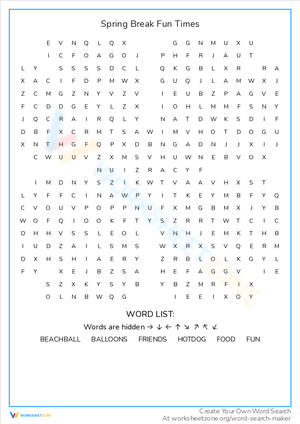
Spring Break Word Search With Sunny Seasonal Clues
A spring break word search brings vacation energy into a focused learning activity students can enjoy before, during, or after the break. Spring break often comes with sunshine, travel, rest, family time, outdoor play, and a welcome pause from regular routines. By turning those familiar ideas into a word search, students get to practice spelling, reading, and attention to detail through vocabulary that feels timely and exciting rather than routine.
This activity is especially helpful during the days leading up to break, when classroom energy can feel hard to manage. Students are thinking about trips, free time, and warmer weather, so a spring break word search gives that excitement a productive direction. Words like beach, picnic, sunshine, suitcase, adventure, flowers, vacation, swimming, and family help learners connect seasonal experiences with literacy practice. The puzzle format keeps students engaged while still supporting word recognition and visual scanning skills.
Teachers can use a spring break word search as a calm transition activity, an early-finisher option, a literacy center task, or a lead-in to seasonal writing. After students complete the puzzle, they can choose five words and write about their ideal break, create a short travel postcard, or sort the words into categories such as weather, activities, places, and feelings. For a fuller seasonal lesson plan, teachers can pair the puzzle with spring break activities for students to keep learning meaningful and fun.
A spring break word search also works well for different reading levels. Younger students may focus on short, concrete words like sun, trip, park, swim, and fun. Older students can work with longer words such as adventure, relaxation, destination, celebration, and explore. Parents can use the activity at home as a quiet literacy task during slower moments of the break. Because the theme connects to students’ real lives, even reluctant readers may feel more willing to participate.
Worksheetzone’s spring break word search resources help students stay connected to literacy practice without making the activity feel heavy or formal. The puzzle supports focus, spelling, vocabulary, patience, and independent learning while celebrating a season students look forward to. Whether used in the classroom before break, during homeschool learning, or as a relaxed activity at home, a spring break word search gives learners a cheerful way to keep their reading skills active.
Frequently Asked Questions
Question 1: What grade levels are Spring Break word search puzzles suitable for?
Spring Break word search puzzles are available in difficulty levels that work for kindergarten through middle school. Younger students benefit from shorter word lists and larger grids, while older students can tackle more complex puzzles with longer words hidden in multiple directions. Teachers and parents can select a puzzle matched to the student's current reading and vocabulary level.
Question 2: How can teachers use Spring Break word search activities in the classroom?
Teachers can use Spring Break word search activities as a warm-up, an early-finisher task, or a paired exercise with a writing prompt. Asking students to use three found words in original sentences extends the puzzle into a vocabulary lesson. The activity also works well as a seasonal literacy option that keeps students engaged before or after the break.
Question 3: Are Spring Break word search puzzles good for reluctant readers?
Yes, Spring Break word search puzzles often appeal to students who resist traditional reading tasks because the goal feels like a game rather than an assignment. Scanning for hidden words builds letter recognition, left-to-right tracking, and pattern awareness, which are skills that directly support reading development. The low-pressure format helps reluctant readers engage with text on their own terms.
Question 4: How can parents use Spring Break word search activities at home?
Parents can use Spring Break word search activities during quiet afternoons, road trips, family gatherings, or relaxed learning time during the school break. The puzzle gives children a screen-free way to practice spelling, vocabulary, and concentration while staying connected to a cheerful seasonal theme. It can also lead to fun conversations about travel plans, favorite activities, and family traditions.