




























Views
Downloads

Printable Explorers Word Search | Grades 7–8 Social Studies

Paste this activity's link or code into your existing LMS (Google Classroom, Canvas, Teams, Schoology, Moodle, etc.).
Students can open and work on the activity right away, with no student login required.
You'll still be able to track student progress and results from your teacher account.
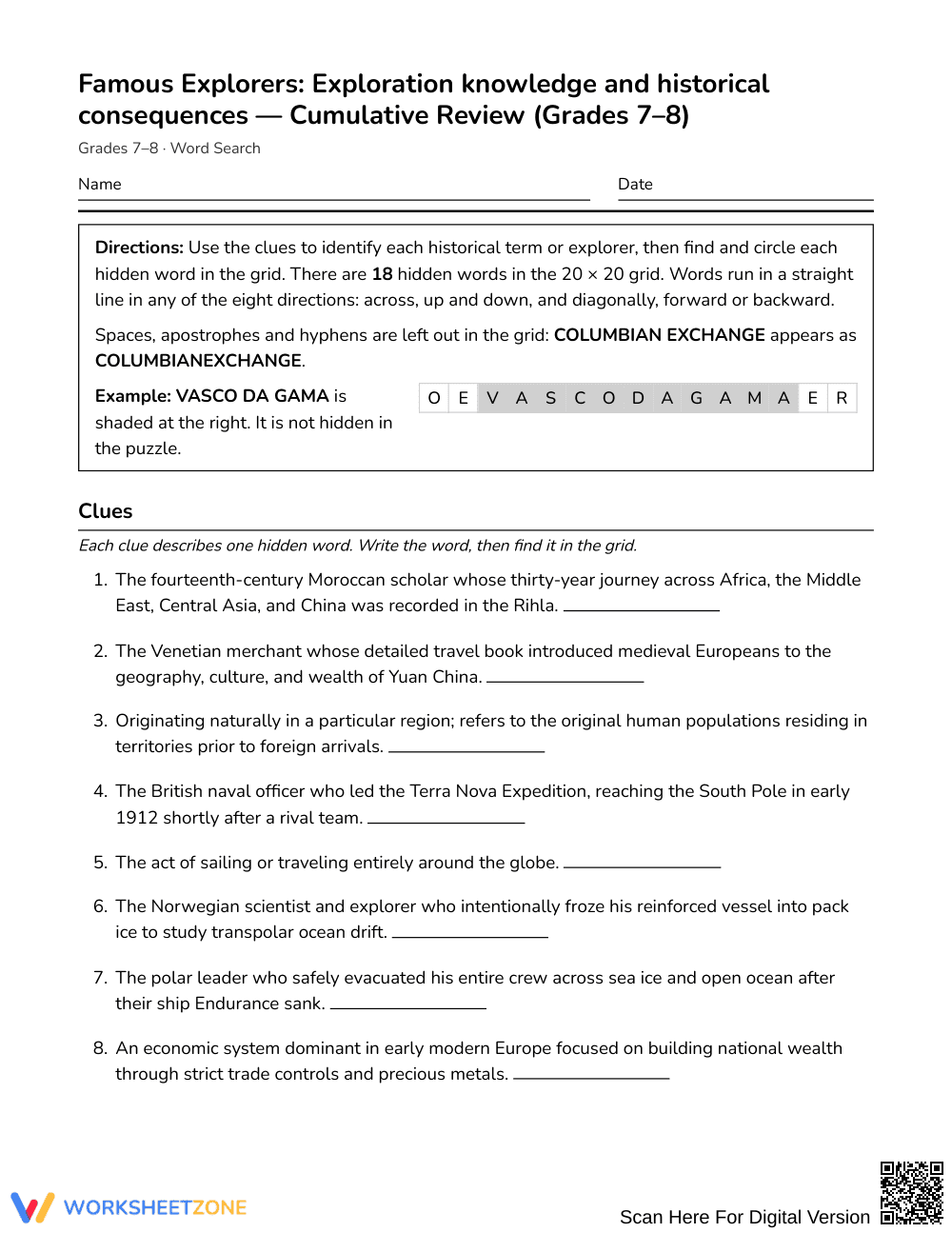
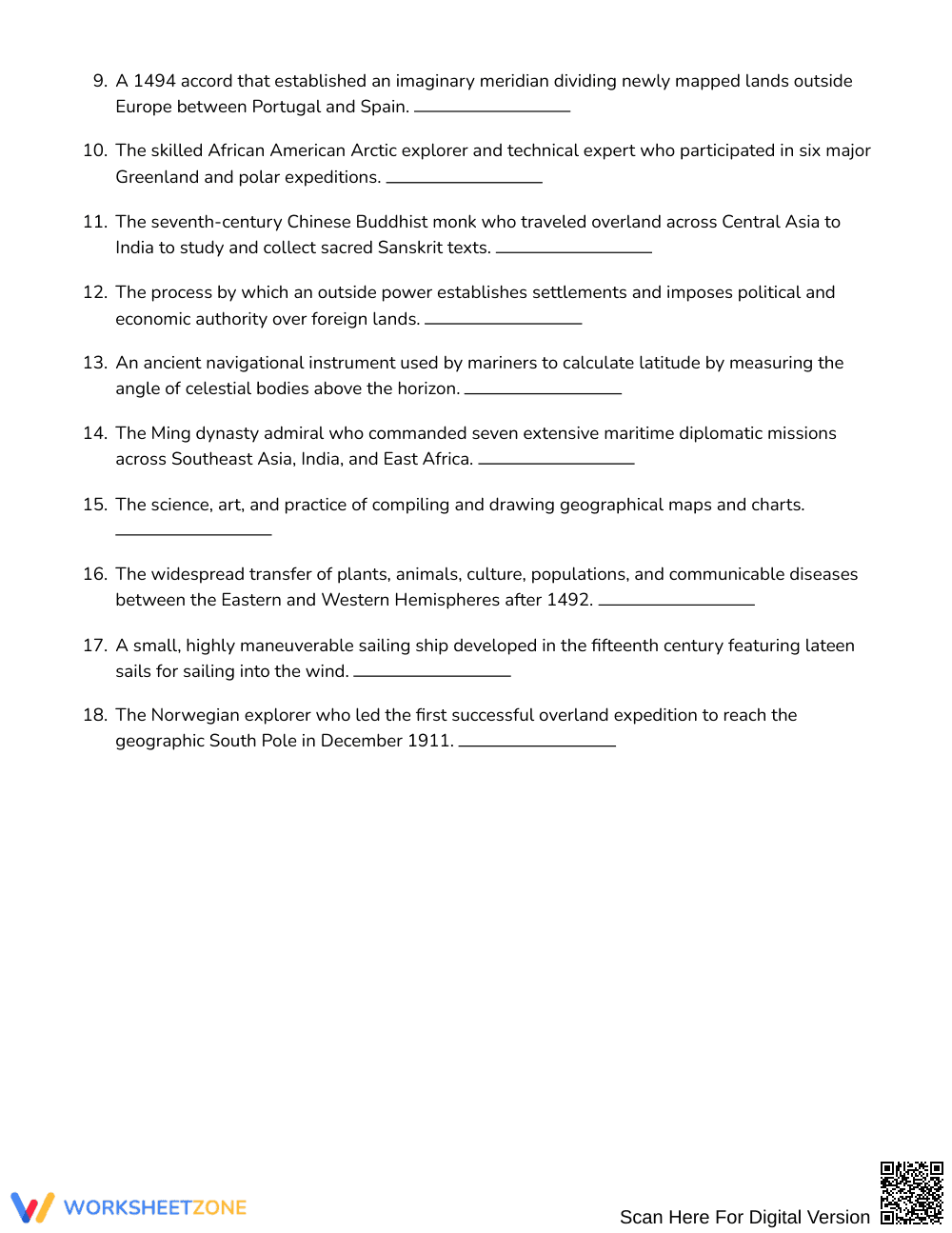
Reinforce Age of Exploration vocabulary with this historical review activity. Designed for Grades 7–8 Social Studies, this resource challenges students to match detailed definitions to significant explorers, navigational tools, and global consequences. Students build deep contextual knowledge as they actively locate key concepts across a comprehensive puzzle grid.
At a Glance
- Grade: Grades 7–8 · Subject: Social Studies
- Standard: Not standards-assessed — vocabulary enrichment and historical term identification
- Skill Focus: Exploration knowledge and global historical consequences
- Format: 4 pages · 18 hidden words · Complete 4-page answer key included · Printable PDF
- Best For: Vocabulary reinforcement, sub plans, and cumulative review
- Time: 25–35 minutes
What's Inside
This 4-page printable resource includes an 18-word puzzle, complete reference clues, and a 4-page answer key. Rather than finding isolated words, students examine detailed historical clues regarding global navigation, mercantilism, caravel design, and global voyagers before searching for each hidden term.
Puzzle Mechanics
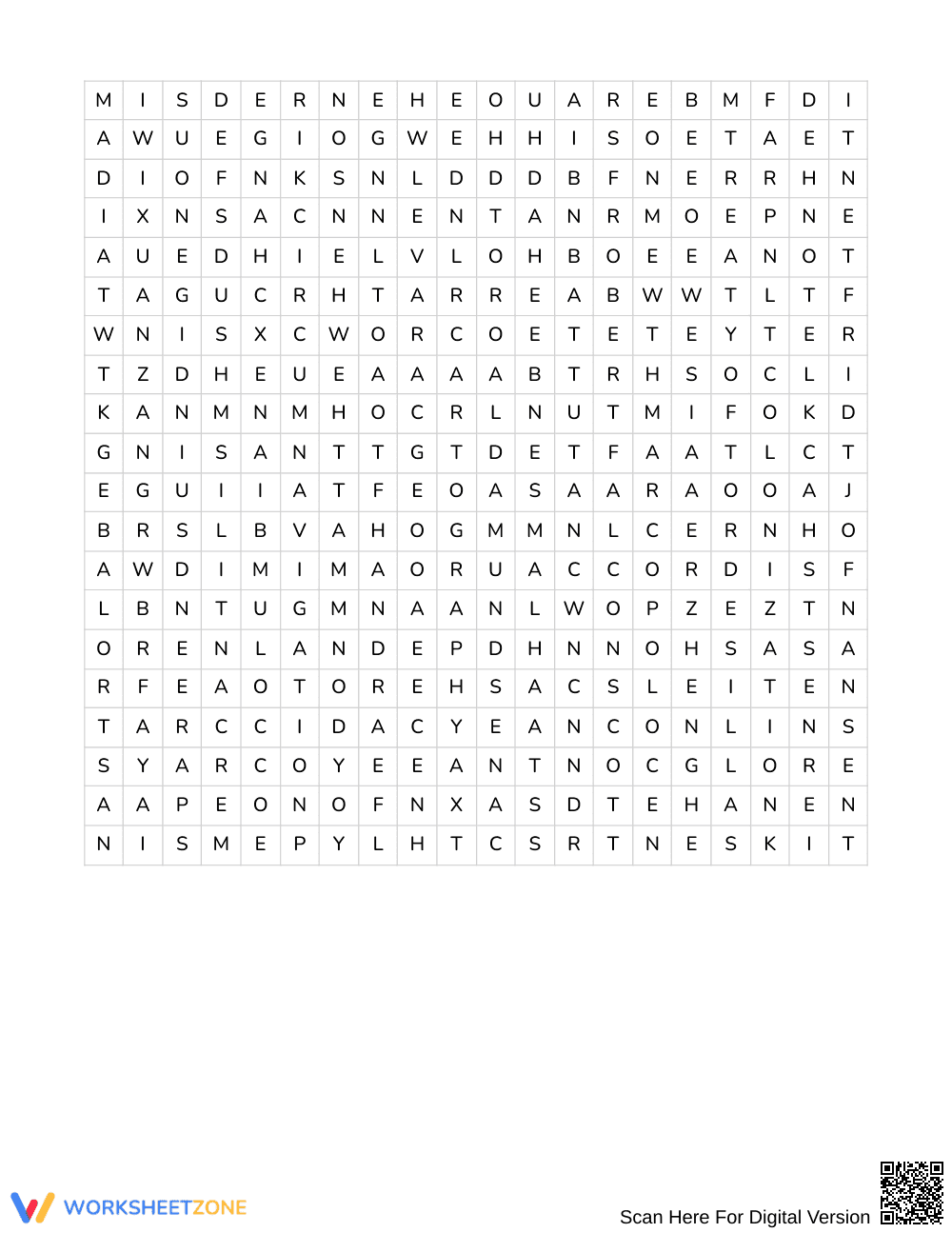
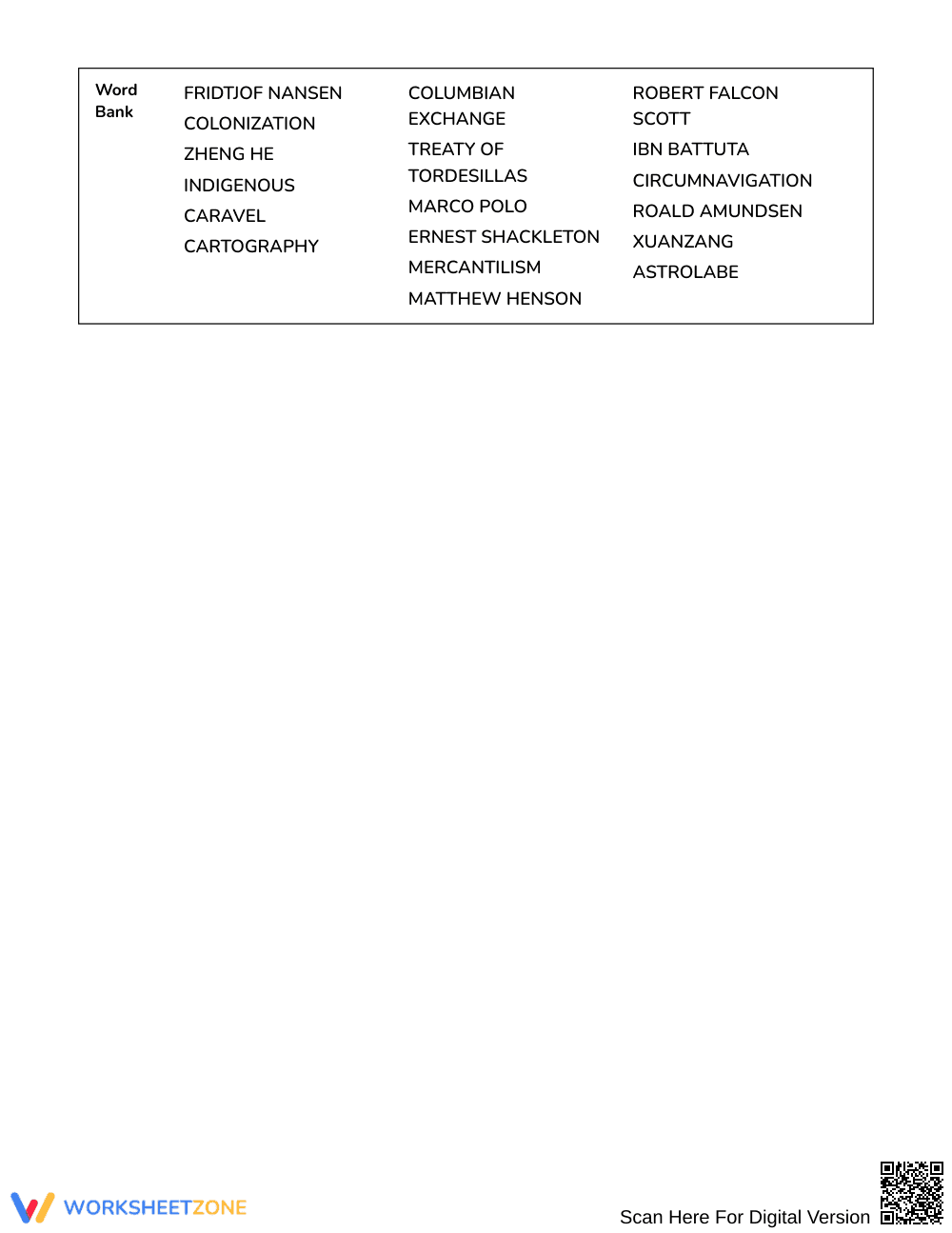
The activity features a 20 x 20 letter grid containing 18 hidden vocabulary terms. Words run in all 8 compass directions: north, northeast, east, southeast, south, southwest, west, and northwest. Students read historical clues to identify key terms or reference the shuffled word bank to locate each entry.
Standards Alignment
This activity provides targeted vocabulary enrichment and is not aligned to a specific standard. It serves as a supplemental review tool reinforcing historical vocabulary, geographical awareness, and student recall of key figures and maritime developments in middle school social studies curricula.
How to Use It
Use this word search during direct instruction as a mid-unit check or after instruction for cumulative exam prep. Formative assessment tip: observe whether students solve the clues before searching or merely scan the letter grid for letter clusters. Expected completion time is 25 to 35 minutes.
Who It's For
This resource is designed for Grades 7–8 social studies students learning about world exploration. For differentiation, provide highlighters to help emerging readers pinpoint clue keywords or ask advanced students to write summary sentences for selected terms. It pairs effectively with an Age of Exploration unit timeline.
This Grades 7–8 social studies resource reinforces exploration knowledge and historical consequences through targeted vocabulary enrichment rather than formal standards-based testing. Integrating structured vocabulary retrieval into middle school history supports cognitive schema development and long-term retention of complex historical narratives. According to Fisher & Frey (2014), purposeful word-learning routines and contextual clue analysis accelerate domain-specific literacy by prompting learners to connect unfamiliar terminology with established conceptual frameworks. By actively engaging with 18 key terms—spanning essential maritime navigation tools like the astrolabe to monumental historical developments like the Columbian Exchange—students consolidate factual recall within an interactive 20 x 20 puzzle format. The self-guided structure allows middle school students to practice autonomous historical thinking while verifying accurate definitions against authentic historical contexts. Ultimately, this print-ready puzzle provides classroom educators with an efficient instructional tool for low-stakes formative evaluation and cumulative unit review across diverse social studies settings.


