


























Views
Downloads

Printable Earthquake Evidence Worksheet | Grade 8
Paste this activity's link or code into your existing LMS (Google Classroom, Canvas, Teams, Schoology, Moodle, etc.).
Students can open and work on the activity right away, with no student login required.
You'll still be able to track student progress and results from your teacher account.
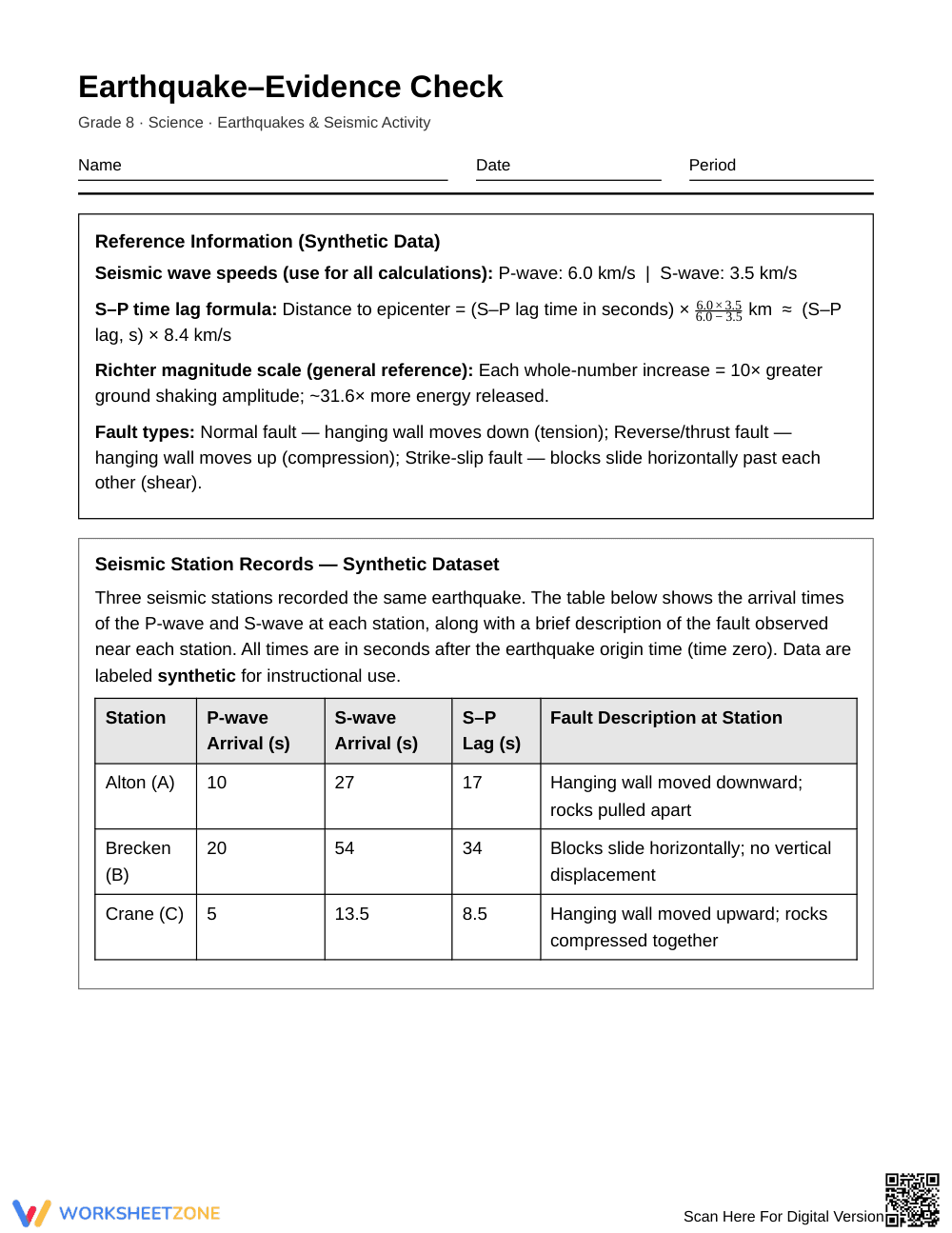
This Grade 8 Science worksheet builds students' ability to read and interpret synthetic seismic station data, calculate epicenter distances using the S–P lag formula, classify fault types by stress force, and construct evidence-based arguments about plate tectonics across a coherent 5-page activity that moves from guided recall to open-ended scientific reasoning.
At a Glance
- Grade: 8 · Subject: Science
- Standard: Earthquakes & Seismic Activity — Analyze seismic data to determine epicenter location and fault type
- Skill Focus: Seismic wave analysis, epicenter calculation, fault classification
- Format: 5 pages · 12 problems · Answer key included · PDF
- Best For: Unit review, formative check, or enrichment
- Time: 35–50 minutes
The worksheet spans 5 student pages organized into three structured sections, accompanied by a complete answer key. A reference box supplies synthetic seismic records for three stations, average wave velocities, and a fault-type reference guide so students work with consistent, self-contained data without needing extra handouts.
Skill Progression
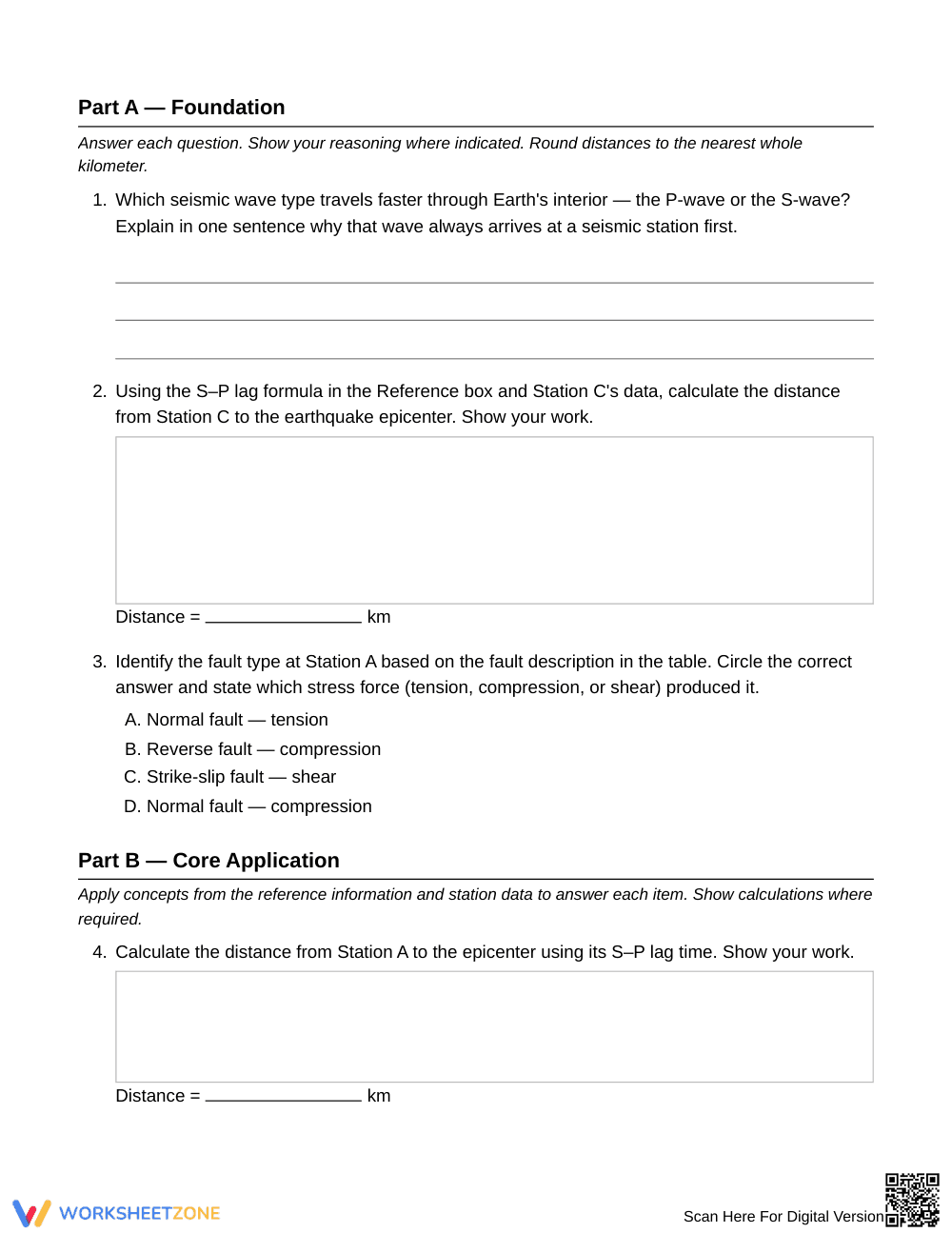
- Guided Practice (Part A — 3 problems): Students identify the faster seismic wave type with written rationale, complete one modeled epicenter-distance calculation, and identify a fault type from scaffolded options paired with stress directions.
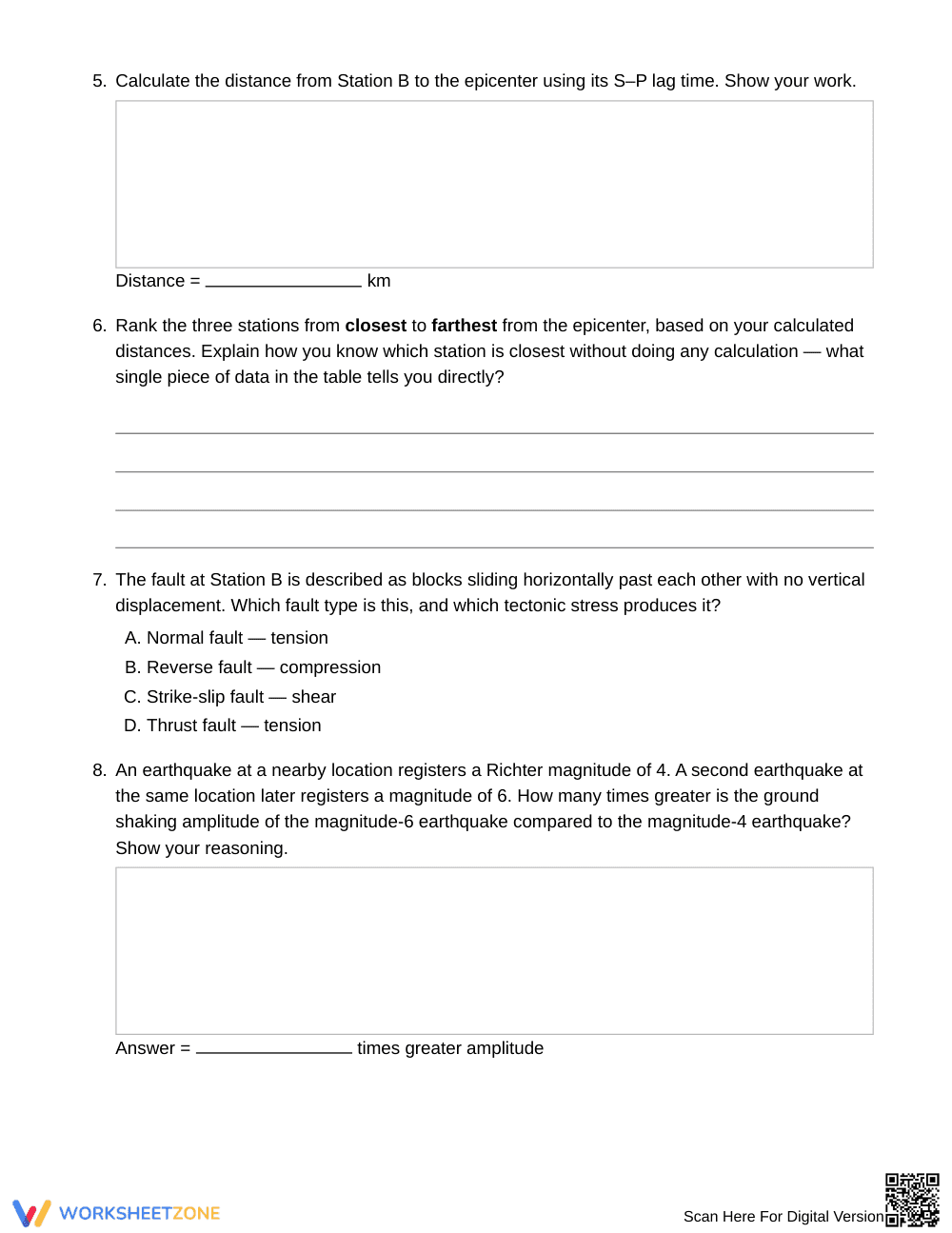
- Supported Practice (Part B — 6 problems): Students independently calculate epicenter distances for two additional stations, justify station distance rankings, interpret Richter magnitude scales, and critique a flawed scientific claim using data evidence.
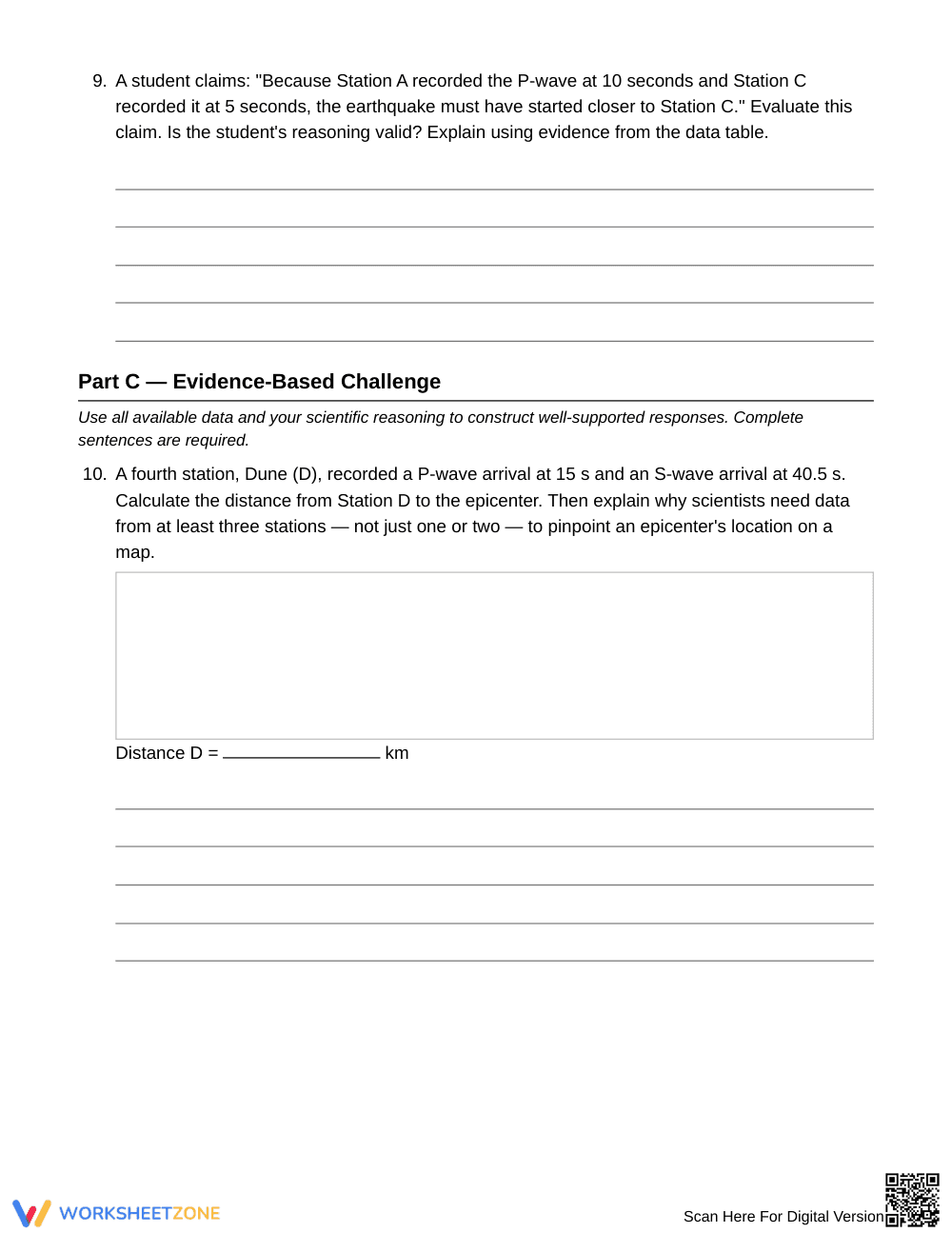
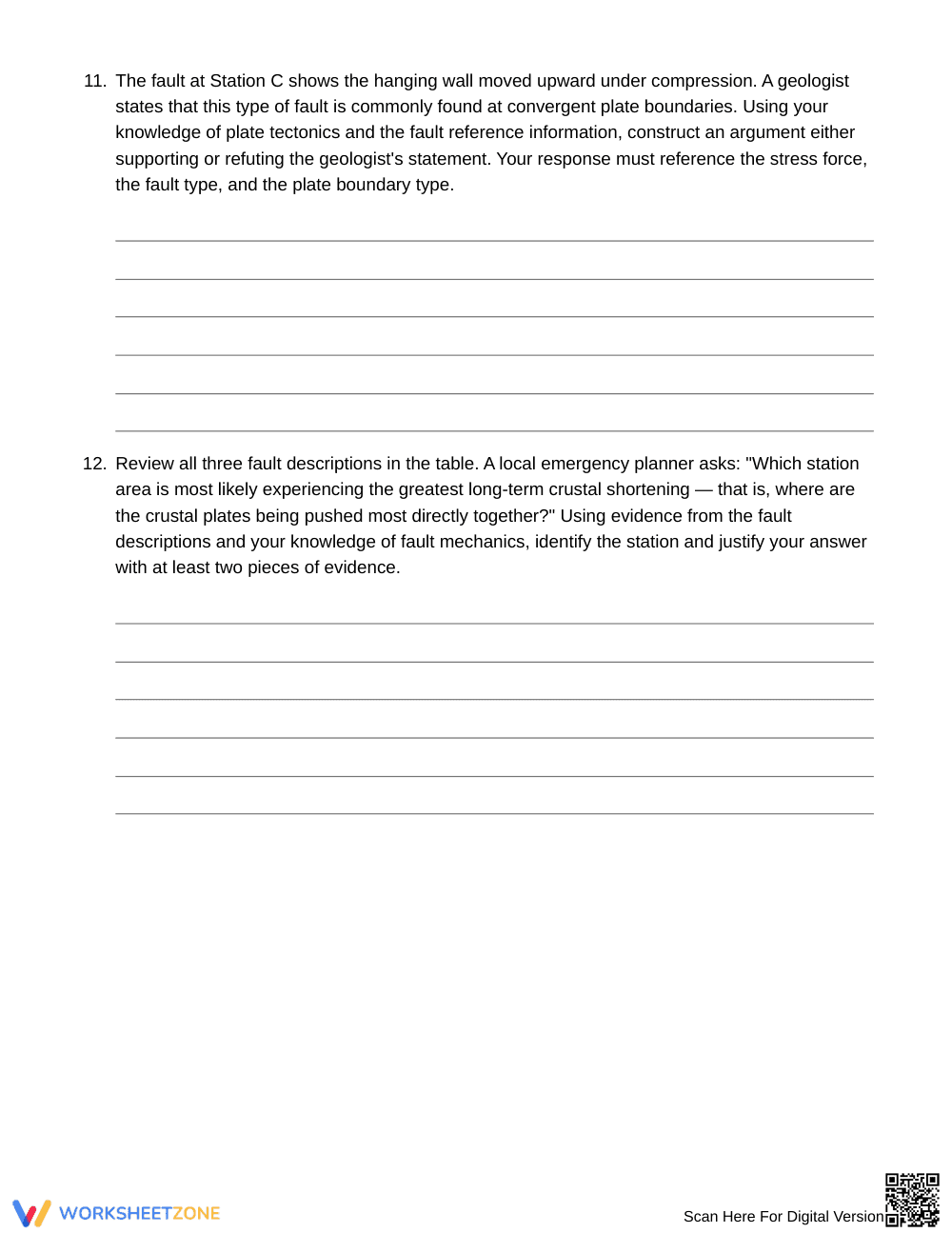
- Independent Practice (Part C — 3 problems): Students introduce a fourth station, explain the geometric logic of trilateration, and write reasoned arguments connecting fault mechanics directly to plate boundary interactions.
How to Use It
Assign Part A as an entry ticket or quick formative check immediately following direct instruction on seismic wave behavior. Parts B and C serve effectively as end-of-unit review or collaborative partner practice before an exam. The included reference box supports English learners and striving readers, while Part C offers meaningful analytical depth for advanced students. Most classes finish the 12 problems in 35 to 50 minutes.
This 5-page, 12-problem science resource strengthens Grade 8 Earth Science skills in seismic wave analysis, epicenter distance calculations, and fault classification during an earthquakes unit. Students apply the S–P lag formula across four seismic stations, interpret Richter magnitude relationships, and craft evidence-based arguments connecting fault mechanics directly to plate boundary types. According to Fisher & Frey (2014), structured gradual-release tasks that guide students from modeled examples to independent scientific argumentation significantly improve conceptual retention and analytical writing quality. This resource operationalizes that research-backed progression across three distinct sections, making it practical for formative assessment, comprehensive unit review, or independent emergency sub plans. The complete answer key outlines all 12 items, providing clear explanations and calculations that support efficient teacher grading, student self-assessment, targeted intervention, and regular progress monitoring in any middle school science classroom.


