

































Printable Diction & Pacing Worksheet | Grade 11 English III

Paste this activity's link or code into your existing LMS (Google Classroom, Canvas, Teams, Schoology, Moodle, etc.).
Students can open and work on the activity right away, with no student login required.
You'll still be able to track student progress and results from your teacher account.
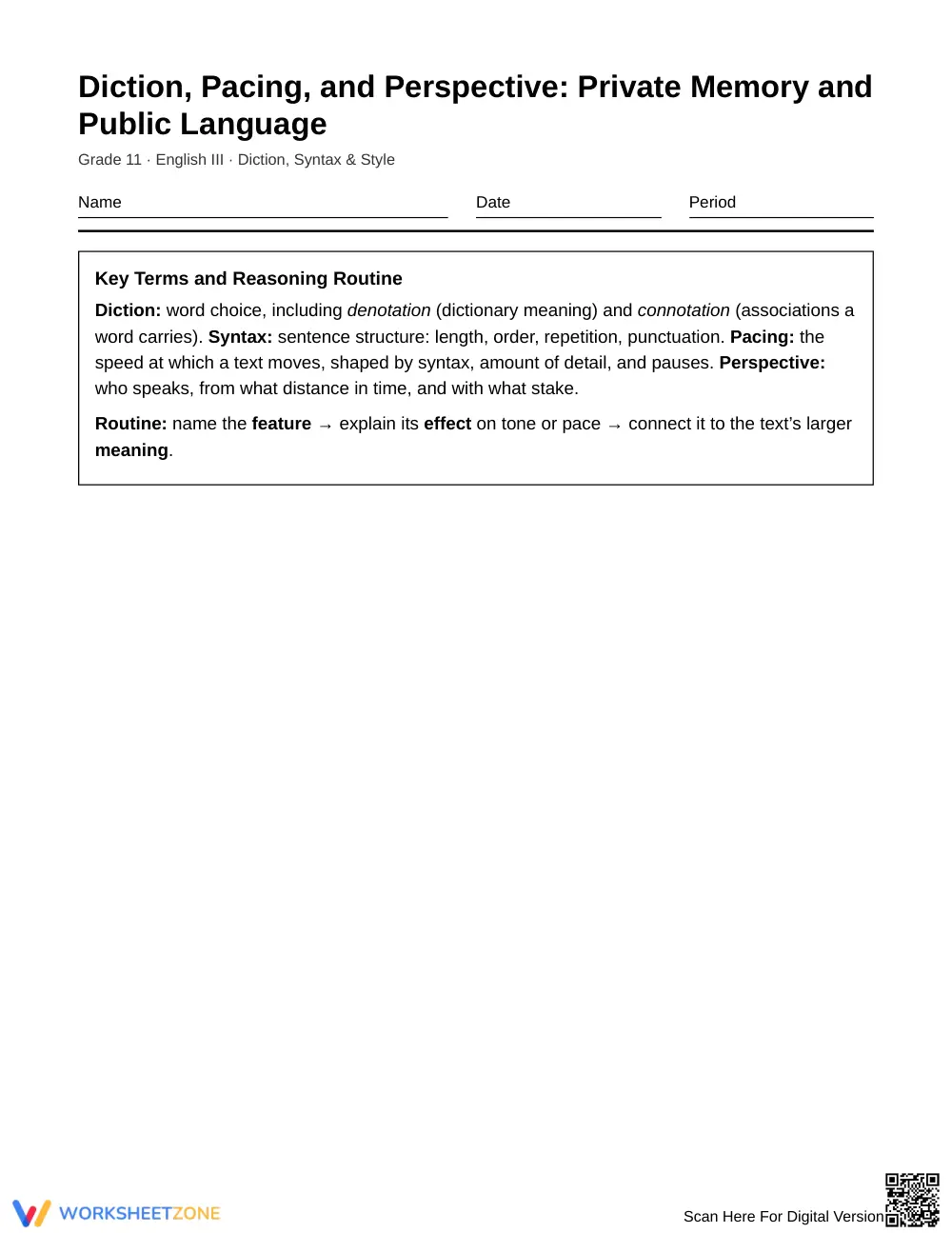
This worksheet teaches Grade 11 students to connect diction, pacing, and perspective across a personal essay and a dramatic monologue. Students move from identifying related features to justifying whole-text effects, and they practice a three-step routine: name the feature, explain its effect, and connect it to meaning.
At a Glance
- Grade: 11 · Subject: English III
- Standard: Grade 11 text analysis — Explain how word choice, pacing, and speaker perspective shape meaning.
- Skill Focus: Connect diction, pacing, and perspective across paired texts
- Format: 7 pages · 12 problems · Answer key included · PDF
- Best For: Paired-text analysis in English III classes
- Time: 45–60 minutes
What's Inside
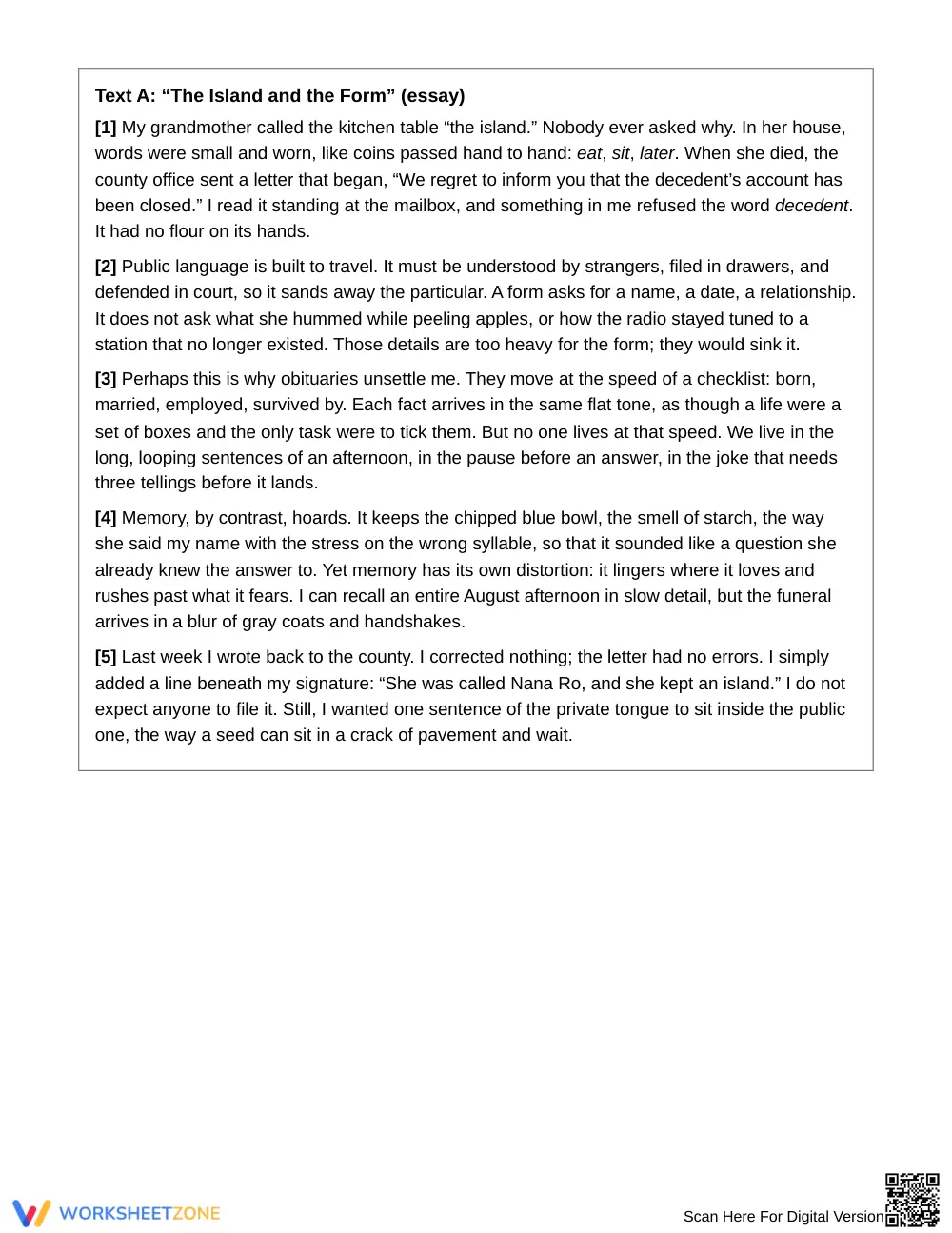
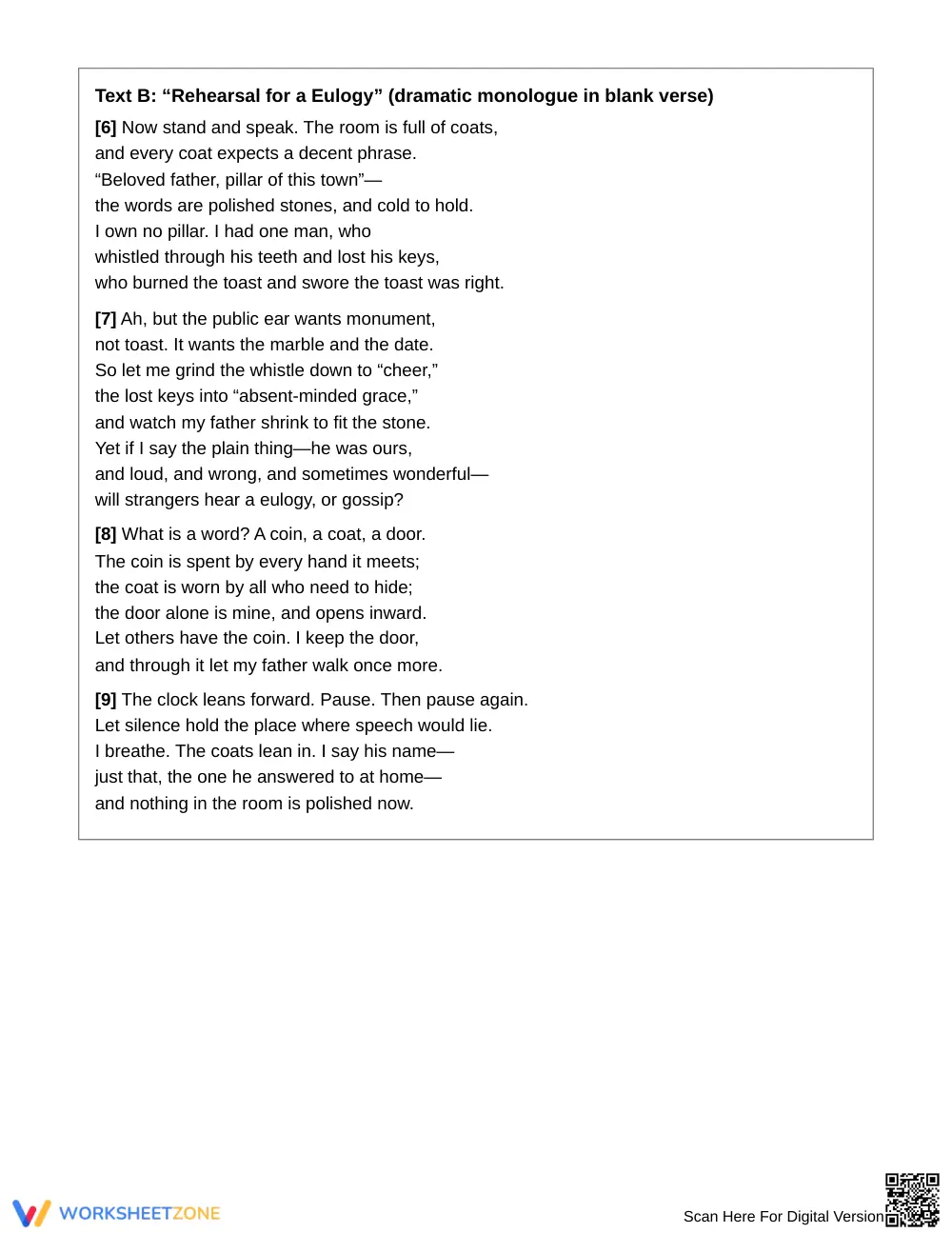
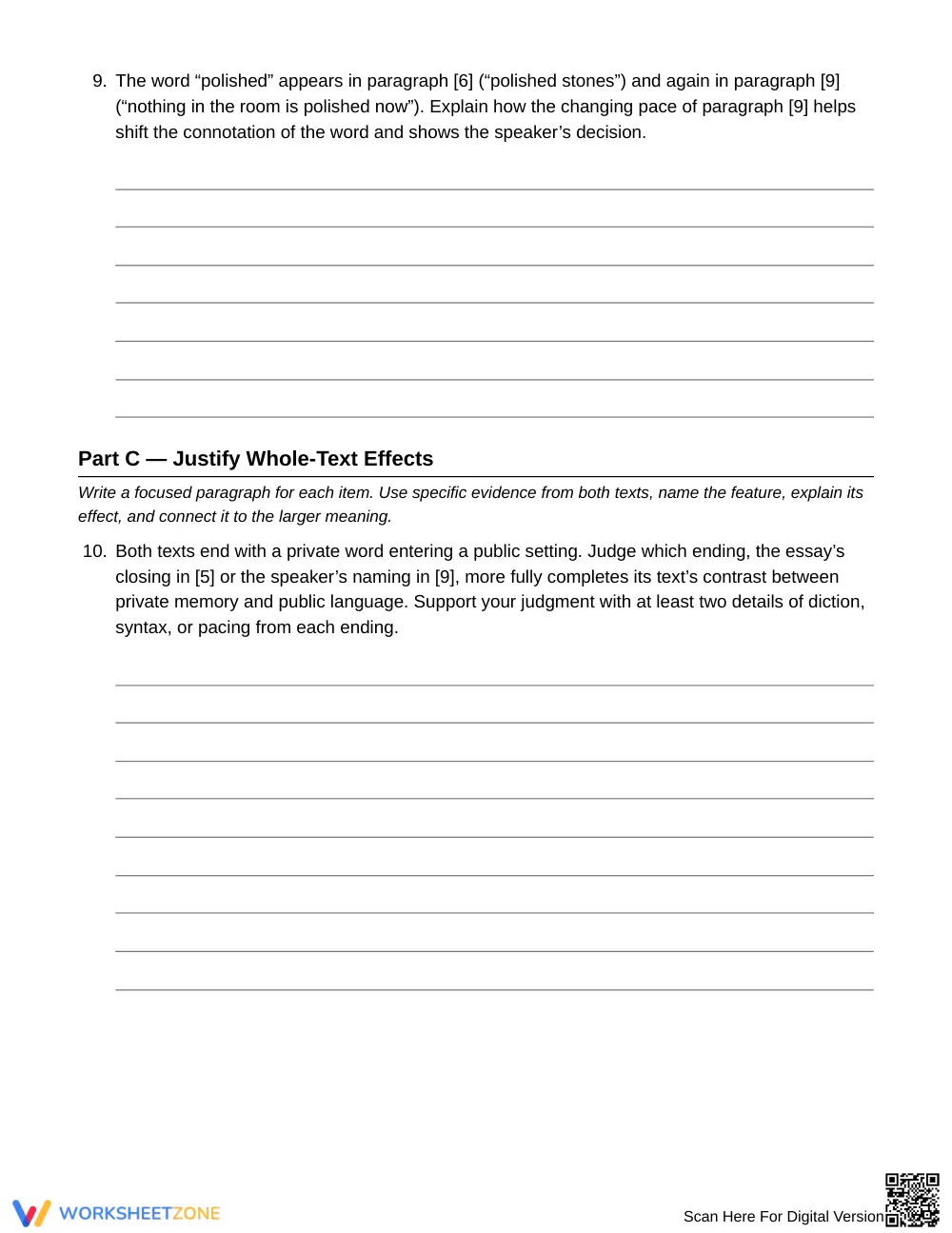
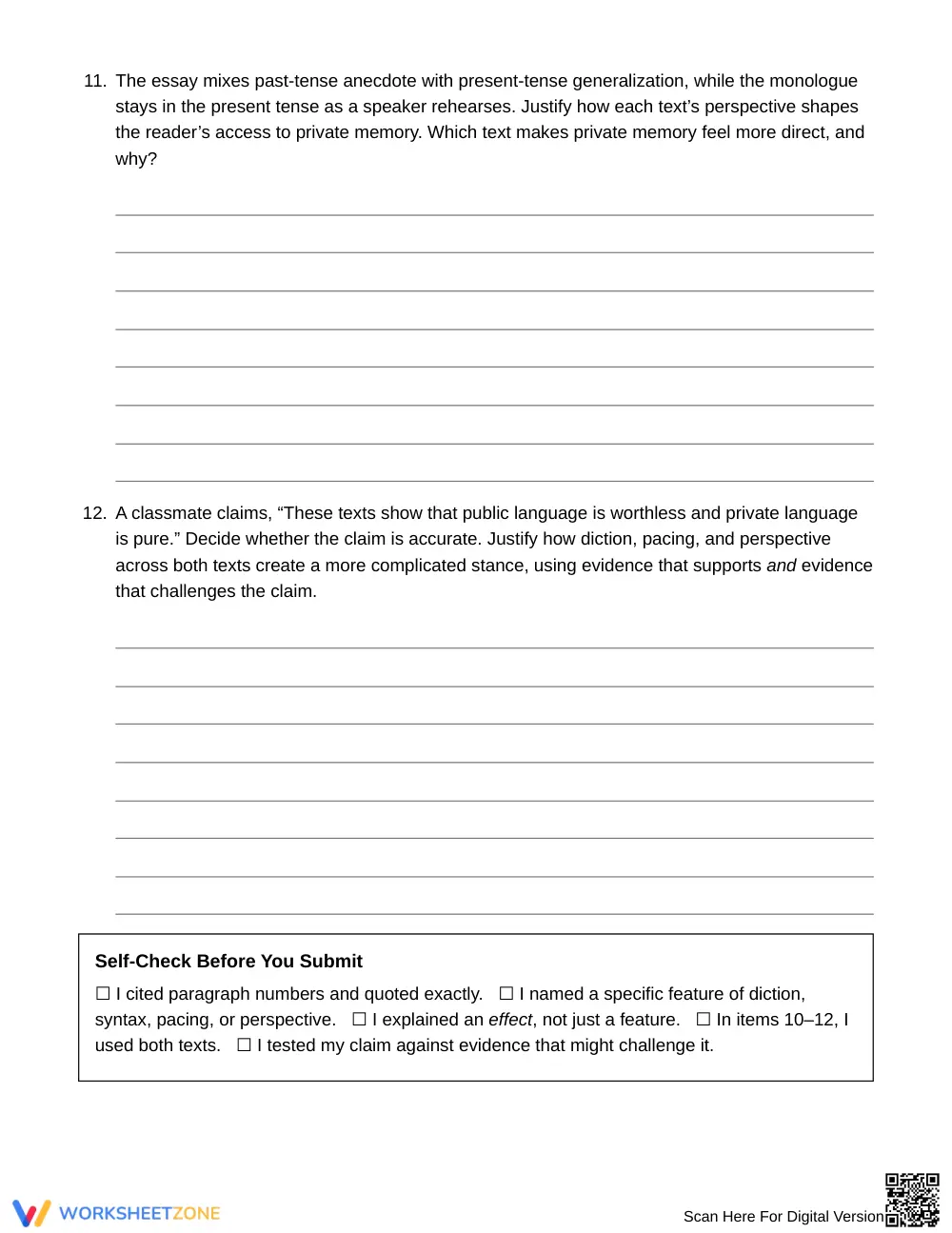
The 7-page packet includes two paired texts, an essay and a blank-verse monologue, plus a key-terms box and reasoning routine. Part A has 3 multiple-choice items. Part B has 3 multiple-choice and 3 short-response items. Part C has 3 paragraph tasks. A self-check list closes the packet, and a 3-page answer key is included.
Skill Progression
- Guided practice (items 1–3): three multiple-choice items identify related elements, with the key terms and routine as scaffolds.
- Supported practice (items 4–9): three multiple-choice items and three 3–5 sentence responses require cited paragraph numbers and exact quotations.
- Independent practice (items 10–12): three focused paragraphs ask students to judge, justify, and test a claim using both texts.
The sequence follows gradual release: I do, we do, you do.
Standards Alignment
No standard code is listed for this resource. It targets Grade 11 analysis of how word choice, sentence structure, and point of view shape tone, pacing, and meaning. Add your state or district code to lesson plans, IEP goals, or curriculum maps as needed.
How to Use It
After direct instruction, assign Parts A and B as in-class work and Part C as homework. During unit review, pair students for Part B and have them defend their answer choices. Formative tip: check whether students name a feature and an effect, not just a feature. Expect 45–60 minutes.
Who It's For
Built for Grade 11 English III students ready for paired-text analysis. Students who need support can lean on the key-terms box and answer choices in Part A, while advanced writers can extend Part C into a comparison essay. Pair it with a mini-lesson on connotation and syntax.
Diction, Pacing, and Perspective: Private Memory and Public Language is a Grade 11 English III worksheet that asks students to explain how word choice, sentence pacing, and speaker perspective shape meaning in a personal essay and a blank-verse monologue. Its 12 tasks move from three identification items to six connection items, then three whole-text justification paragraphs, and a 3-page answer key supports scoring. The sequence follows the gradual-release model described by Fisher & Frey (2014), in which teachers shift responsibility from guided work to independent application. Students practice one reasoning routine throughout: name the feature, explain its effect on tone or pace, and connect it to larger meaning. Because the worksheet pairs two texts on the same theme, it also builds comparison skills needed for analytical writing. It fits one 45 to 60 minute class period and works well after direct instruction on diction and syntax.


