
































Printable Daoism Word Search | Grades 6–7 Social Studies

Paste this activity's link or code into your existing LMS (Google Classroom, Canvas, Teams, Schoology, Moodle, etc.).
Students can open and work on the activity right away, with no student login required.
You'll still be able to track student progress and results from your teacher account.
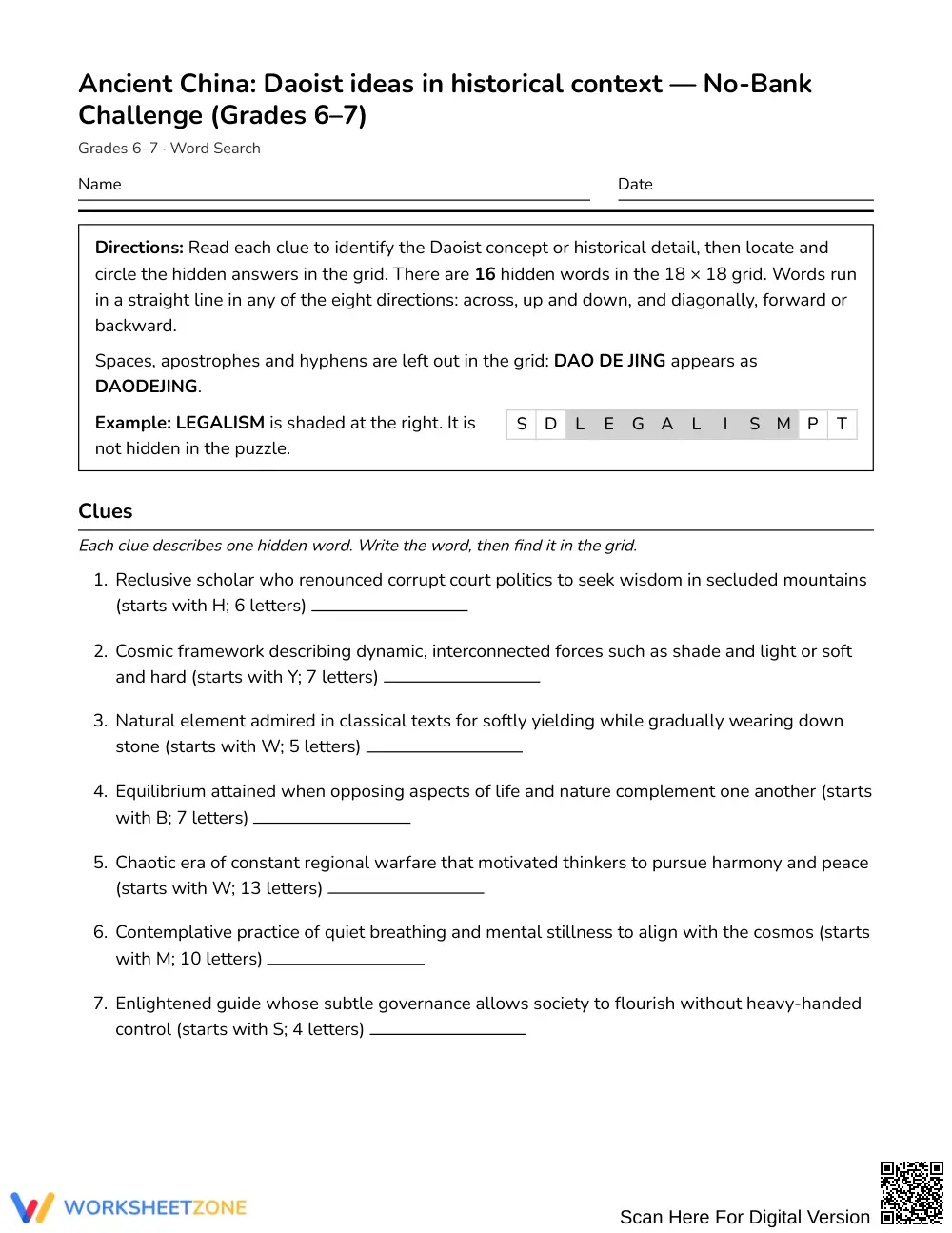
This ancient China word search reinforces Daoist ideas in historical context across Grades 6–7 Social Studies classrooms. Students analyze 16 historical clues to identify core concepts like wu wei, the uncarved block, and yin yang before locating each term in the grid, strengthening academic vocabulary and conceptual recall during World History units.
At a Glance
- Grade: Grades 6–7 middle school · Subject: Social Studies
- Standard: Not standards-assessed — academic vocabulary enrichment for world history
- Skill Focus: Daoist philosophical concepts and ideas in historical context
- Format: 3 printable pages · 16 vocabulary words · Answer key included · PDF
- Best For: Ancient China World History unit vocabulary review
- Time: 20–30 minutes of focused student work
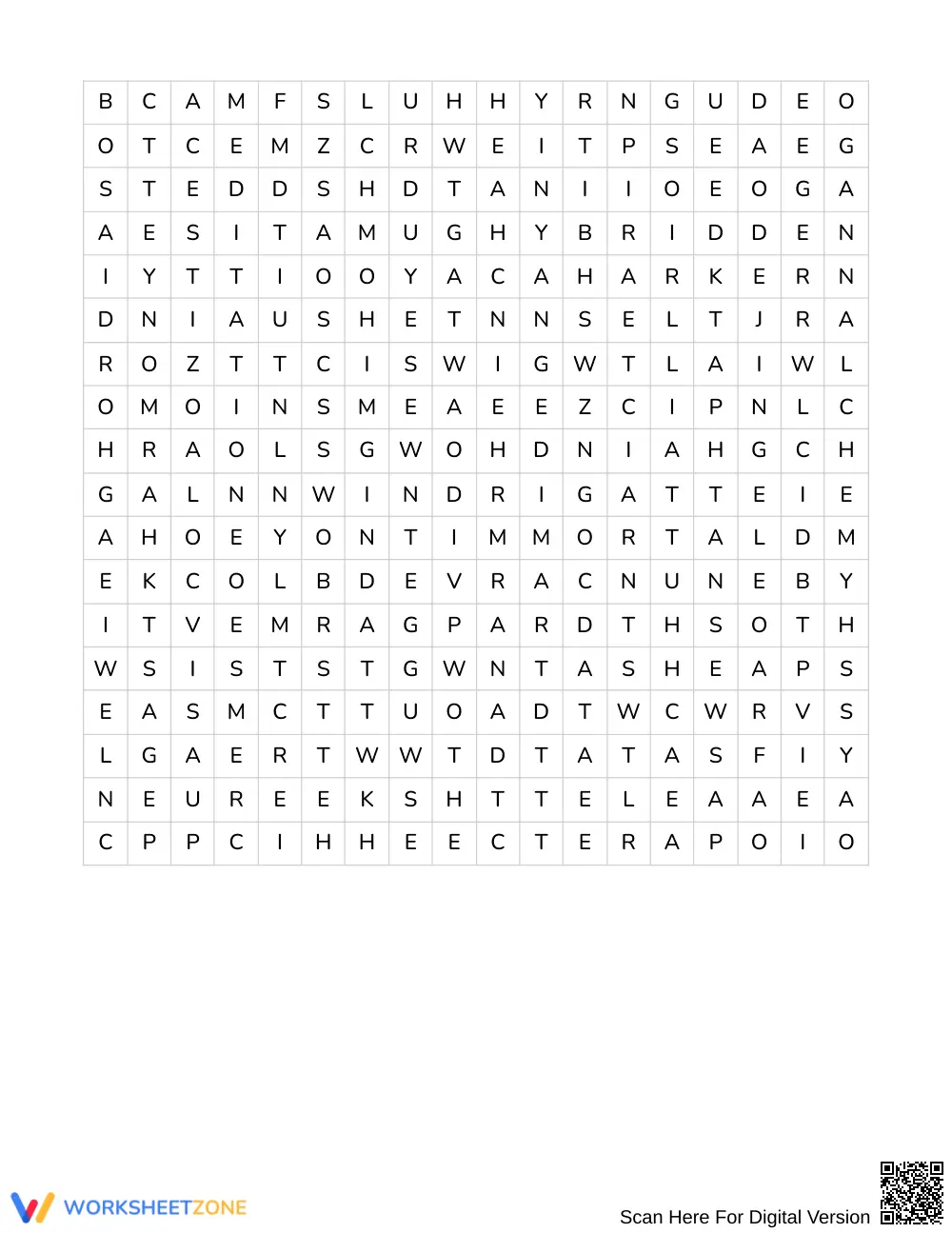
This 3-page printable activity delivers a no-bank challenge designed to promote active recall. Students read 16 clues covering philosophers Laozi and Zhuangzi, the foundational Dao De Jing, and core concepts such as balance and spontaneity. The resource includes a teacher answer key with four pages of grid solutions displaying all hidden term locations.
Puzzle Structure and Mechanics
The puzzle features an 18 x 18 letter grid containing 16 hidden terms placed across eight directions: north, northeast, east, southeast, south, southwest, west, and northwest. The activity omits a word bank, requiring students to solve text clues before searching. This no-bank format ensures learners actively retrieve conceptual knowledge about ancient Chinese philosophy rather than scanning letters mechanically.
Standards Alignment
This learning resource serves as vocabulary enrichment and is not aligned to a specific standard. It reinforces essential academic vocabulary, historical figures, and philosophical concepts central to middle school World History units on ancient China and the Warring States period.
How to Use It
Deploy this activity after direct instruction on ancient Chinese philosophies to consolidate key vocabulary. During independent practice, observe whether students identify concepts like wu wei from clues alone or require notes, providing immediate formative feedback. Alternatively, assign the puzzle as an engaging mid-unit review station or sub plan. Expect completion within 20 to 30 minutes.
Who It's For
This word search is designed for Grades 6–7 Social Studies students studying ancient civilizations and classical Asian philosophies. For emerging readers, teachers can highlight clue keywords or provide first letters, while advanced learners can write sentences connecting two solved terms. The resource pairs naturally with an introductory lecture or textbook chapter on ancient Chinese thought.
Developing domain-specific vocabulary is vital for middle school historical comprehension, as conceptual mastery in social studies requires active cognitive engagement rather than passive rote memorization. Research by Fisher & Frey (2014) highlights that intentional vocabulary acquisition activities—particularly those requiring learners to synthesize semantic clues, explain terminology, and retrieve conceptual meanings from memory—substantially deepen subject-matter retention and reading fluency in the content areas. This Grades 6–7 World History word search targets Daoist ideas in historical context through 16 clue-driven vocabulary terms without a visual word bank. By demanding that students decode descriptive definitions regarding early Chinese philosophies, classical texts, and Warring States history before searching the 18 x 18 puzzle grid, the resource transforms a familiar recreational puzzle format into a meaningful academic exercise that reinforces critical terminology, supports disciplinary literacy, and strengthens long-term conceptual retention across diverse secondary social studies classrooms.


