































Printable Bird Habitats Word Search | Grades 7–8 Science

Paste this activity's link or code into your existing LMS (Google Classroom, Canvas, Teams, Schoology, Moodle, etc.).
Students can open and work on the activity right away, with no student login required.
You'll still be able to track student progress and results from your teacher account.
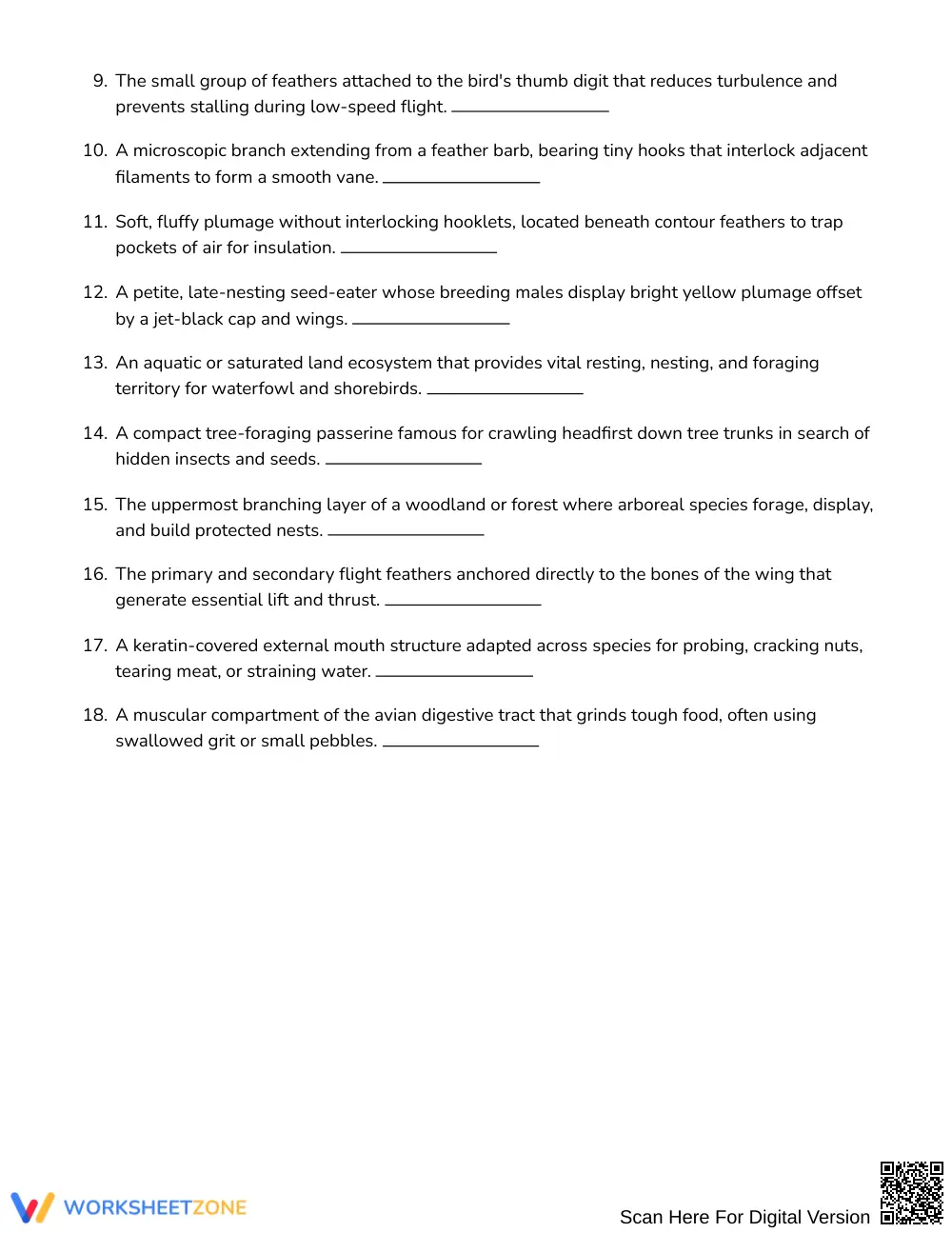
This Grades 7–8 Science word search builds bird‑related vocabulary on habitats, food sources, and body structures while reinforcing spelling and concept recall. Learners locate 18 hidden terms and complete a quick answer‑key check. The activity can be completed individually or in small groups, promoting engagement with avian adaptations.
At a Glance
- Grade: Grades 7–8 · Subject: Science
- Standard:
Not standards-assessed — vocabulary enrichment— Identify and locate bird‑related terms to build science vocabulary, so students expand key terminology- Skill Focus: habitats, food, and body structures, including nesting sites, diet preferences, and anatomical adaptations
- Format: 3 pages · 18 words · Answer key included · PDF
- Best For: quick review or cumulative assessment during unit wrap‑up
- Time: 10–15 minutes
The activity consists of a 20 × 20 letter grid, a shuffled word bank of 18 bird‑related terms, and clear clues for each word. An answer‑key page shows the completed grid, and the PDF includes all three pages ready for printing.
Zero‑Prep Workflow:
- Print the 3‑page PDF (under 30 seconds).
- Distribute the word search and answer key (1 minute).
- Review answers together, discussing each habitat or body part (4–5 minutes).
Standards Alignment: This resource is designed for vocabulary enrichment and does not align to any specific state or national standard. It supports the broader goal of expanding scientific terminology related to avian adaptations.
How to Use It:
- Before a lesson on bird adaptations, have learners complete the search to activate prior knowledge; observe which terms are recognized to inform instruction.
- During a review session, use the answer key for a quick formative check, noting accuracy rates and discussing any missed habitats or structures.
Who It's For:
- Grades 7–8 science learners who need targeted vocabulary practice on bird habitats, diets, and anatomy.
- The activity can be paired with an anchor‑chart of bird‑adaptation visuals or a short video on avian ecology for deeper context.
Research shows that focused vocabulary activities improve science content retention. RAND AIRS 2024 found that students who engaged in thematic word searches demonstrated a 12% increase in recall of key terms compared to lecture‑only instruction. This Bird Word Search aligns with that evidence, offering a concise, engaging format that reinforces habitat, dietary, and anatomical language while providing immediate feedback through the answer key. By integrating clear clues and a structured grid, the activity supports both visual and linguistic learners, fostering deeper connections to avian adaptation concepts. Teachers can also use the activity as a diagnostic tool, quickly identifying which terminology requires reteaching. The brief 10–15 minute completion time fits well within a typical class period, making it a practical choice for both review and cumulative assessment. Overall, the word search promotes active engagement and reinforces the scientific language essential for understanding animal adaptations.


