





























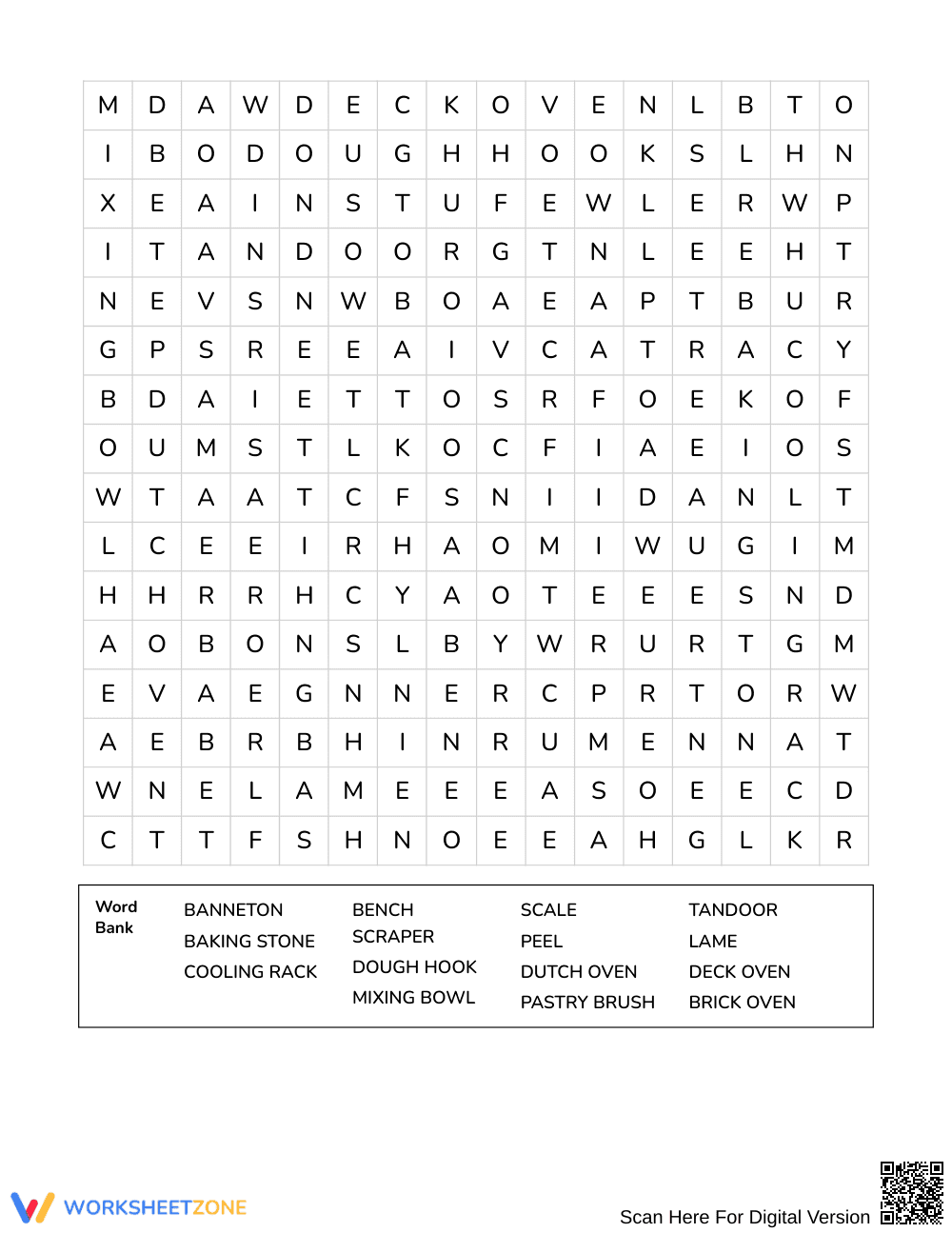


Printable Baking Tools Word Search | Grades 4–5 ELA

Paste this activity's link or code into your existing LMS (Google Classroom, Canvas, Teams, Schoology, Moodle, etc.).
Students can open and work on the activity right away, with no student login required.
You'll still be able to track student progress and results from your teacher account.
This Grades 4–5 vocabulary word search challenges students to solve descriptive clues about baking tools and ovens before locating 14 hidden culinary terms. Students reinforce domain-specific language while engaging in an interactive puzzle activity that sharpens spelling, word recognition, and contextual reading comprehension.
At a Glance
- Grade: Grades 4–5 · Subject: ELA
- Standard: Not standards-assessed — vocabulary enrichment
- Skill Focus: Baking tools and ovens vocabulary
- Format: 3 pages · 14 words · Answer key included · PDF
- Best For: Fast finishers, sub plans, and literacy centers
- Time: 20–30 minutes
What's Inside: The 3-page printable activity features a full-size word puzzle paired with informative culinary definitions, accompanied by a complete 3-page solution key. Students read functional clues describing essential bread-making equipment—including bannetons, deck ovens, lames, and tandoors—and locate each corresponding term within the letter grid.
Zero-Prep Classroom Workflow
- Print (1 minute): Send the 3-page student puzzle directly to your double-sided or single-sided printer without adjusting custom margins.
- Distribute (30 seconds): Hand out the sheets as an independent starter, literacy workstation task, or emergency sub plan assignment.
- Review (under 2 minutes): Project or check against the provided answer key pages to confirm hidden term locations and clarify clue meanings.
Total prep time requires under two minutes, making it an efficient option for substitute teacher packets or low-prep literacy blocks.
Standards Alignment
This resource serves as targeted vocabulary enrichment and is not aligned to a formal standard. The focus remains on expanding culinary domain-specific terminology, contextual reading, and spelling recall through definition-based word investigation.
How to Use It
Integrate this word search during independent reading rotations or as an extension following a non-fiction informational text unit on food science, culinary arts, or world cultures. During work time, observe whether students identify the vocabulary directly from the contextual clues or if they require a shared reading of terms like banneton and lame before searching the grid. Expected completion time spans 20 to 30 minutes.
Who It's For
Designed for Grades 4–5 students developing content-area vocabulary, this activity supports curious readers, culinary enthusiasts, and general ELA classes. Pair this puzzle with an informational passage on the history of bread making or an anchor chart detailing specialized kitchen tools.
According to Fisher & Frey (2014), intentional exposure to domain-specific words across varied literacy formats cements long-term conceptual retention and accelerates informational reading comprehension. When upper elementary learners encounter specialized terminology through interactive contexts, they construct meaningful semantic networks that support broader content-area literacy. This 14-word culinary vocabulary puzzle provides structured engagement with functional tools and traditional baking vessels, connecting descriptive clues directly to accurate technical terminology without unnecessary prep work. By examining authentic definitions for items like bannetons, peel boards, and deck ovens, students strengthen contextual analysis, spelling accuracy, and dictionary skills simultaneously. Incorporating these focused tasks into independent rotations reinforces critical thinking while ensuring that emerging readers build confidence with complex, real-world vocabulary. Ultimately, deliberate practice with specialized equipment terms equips fourth and fifth graders with the linguistic foundation necessary to interpret technical texts with greater autonomy and precision.


