


























Views
Downloads
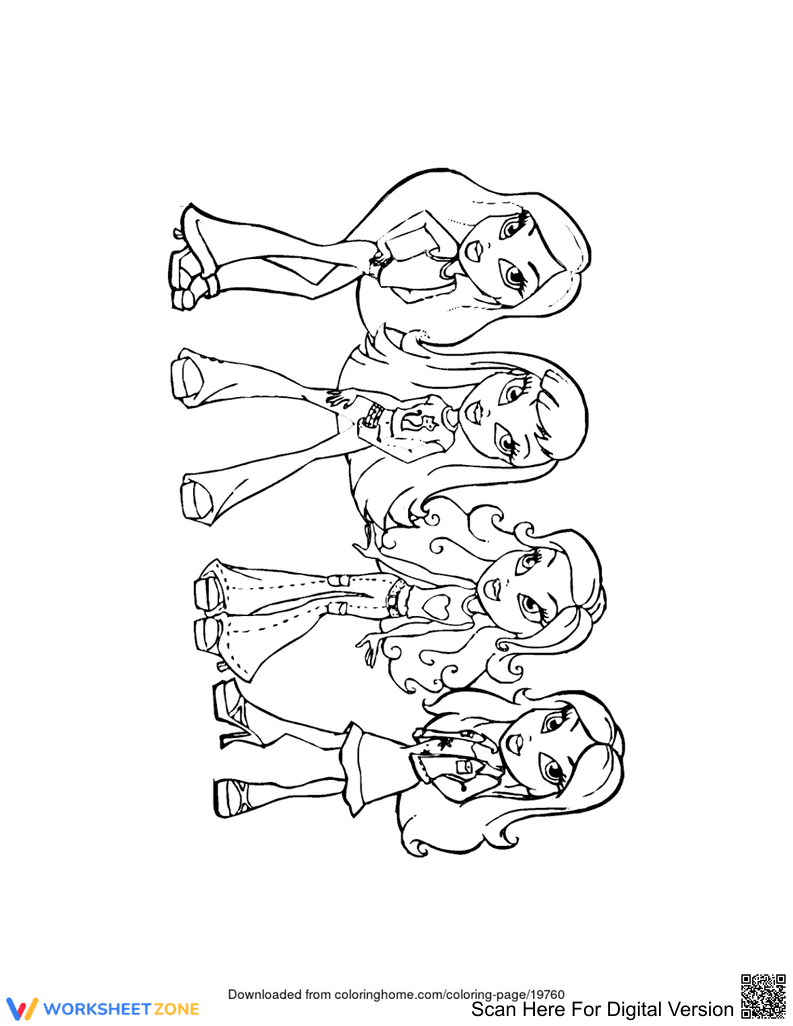

Pretty Bratz Coloring Worksheet | Printable Grade K-5
Paste this activity's link or code into your existing LMS (Google Classroom, Canvas, Teams, Schoology, Moodle, etc.).
Students can open and work on the activity right away, with no student login required.
You'll still be able to track student progress and results from your teacher account.
This Pretty Bratz coloring worksheet provides a creative outlet for students to develop essential fine motor control and color recognition. By engaging with familiar characters, learners practice precision and artistic expression in a low-stakes environment. It is an ideal resource for early finishers or as a calming transition activity between core academic lessons.
At a Glance
- Grade: K-5 · Subject: Arts & English
- Standard:
CCSS.ELA-LITERACY.SL.K.5— Add drawings or other visual displays to descriptions to provide additional detail- Skill Focus: Fine motor skills & creativity
- Format: 1 page · 1 task · No answer key · PDF
- Best For: Early finishers and creative brain breaks
- Time: 15–20 minutes
This single-page PDF features a high-quality line art illustration of four iconic Bratz characters. The layout is designed with clear boundaries to help younger students practice staying within lines, while the detailed clothing patterns offer older students a chance to experiment with shading and color blending. No additional teacher setup is required for this activity.
The workflow for this resource is designed for maximum efficiency. First, print the single-page PDF (30 seconds). Second, distribute the sheets along with crayons or colored pencils to your students (1 minute). Finally, review the completed work by displaying it on a classroom "Artist Gallery" wall to boost student confidence (30 seconds). Total teacher prep time is under 2 minutes, making it a perfect sub plan addition.
The primary standard addressed is `CCSS.ELA-LITERACY.SL.K.5`, which encourages students to use visual displays to enhance their communication and descriptions. While primarily an artistic task, it supports the development of the hand-eye coordination necessary for handwriting and letter formation. This standard code can be copied directly into lesson plans, IEP goals, or district curriculum mapping tools.
Use this worksheet during the "after" phase of direct instruction as a reward for completing primary tasks. It also serves as an excellent formative assessment tool; observe how students grip their coloring tools and their ability to follow complex borders to gauge fine motor development. Expect students to spend 15 to 20 minutes on this activity depending on their age.
This resource is perfect for Kindergarten through 5th-grade students, particularly those who benefit from tactile, visual tasks. It pairs naturally with a descriptive writing prompt where students color the characters and then write a short paragraph describing their chosen color palette and the characters' personalities to integrate ELA skills.
Research from Fisher & Frey (2014) emphasizes the importance of integrating visual arts into the primary curriculum to support literacy and fine motor development. This Pretty Bratz coloring worksheet aligns with CCSS.ELA-LITERACY.SL.K.5 by allowing students to engage in visual storytelling and detail-oriented tasks. Coloring activities are not merely "busy work"; they provide a critical cognitive break that can improve focus during subsequent high-intensity academic blocks. According to the RAND AIRS 2024 report, providing students with familiar, high-interest content—such as recognizable characters—increases engagement and persistence in task completion. By practicing the precision required for this 1-page activity, students strengthen the intrinsic muscles of the hand, which directly correlates to improved handwriting stamina and legibility in early elementary grades. This resource offers a structured yet creative way to meet foundational developmental milestones while maintaining high student motivation across diverse classroom settings.


