


























Views
Downloads
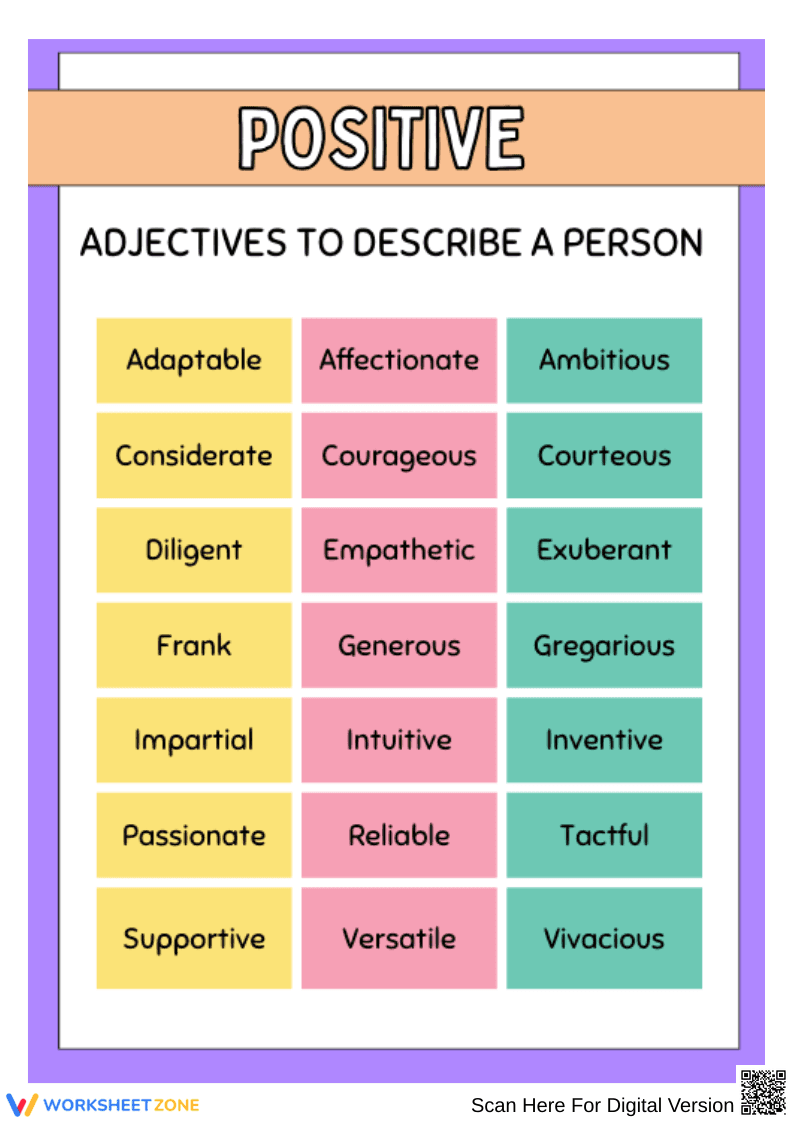

Grade 3 Positive Adjectives — Printable Reference Chart
Paste this activity's link or code into your existing LMS (Google Classroom, Canvas, Teams, Schoology, Moodle, etc.).
Students can open and work on the activity right away, with no student login required.
You'll still be able to track student progress and results from your teacher account.
This printable vocabulary chart helps elementary students expand their descriptive writing capabilities by introducing positive character traits. Students learn to identify and apply twenty-one sophisticated adjectives to describe people accurately. This resource improves word choice in narrative writing and character analysis activities.
At a Glance
- Grade: Grade 3 · Subject: English Language Arts
- Standard:
CCSS.ELA-LITERACY.L.3.1.A— Explain the functions of adjectives in sentences- Skill Focus: Positive character trait adjectives
- Format: 1 page · 21 vocabulary words · Reference chart · PDF
- Best For: Writing workshop and vocabulary building
- Time: 10–15 minutes
This single-page PDF features a clean, color-coded grid containing twenty-one positive adjectives. The words are organized into three distinct columns for easy visual scanning. It includes advanced vocabulary terms like "gregarious," "impartial," and "vivacious" alongside accessible words like "supportive" and "reliable." This layout serves as a permanent desk reference or writing folder insert.
Zero-Prep Workflow
Implement this resource in under two minutes with three simple steps:
- Print (1 minute): Run copies of the single-page PDF for your class, or print a single color copy to laminate as a permanent classroom poster.
- Distribute (30 seconds): Hand out the sheets to students to place directly into their writing folders or interactive notebooks.
- Review (30 seconds): Read through the twenty-one words together, highlighting unfamiliar terms before students begin writing.
This straightforward setup makes the chart an excellent option for emergency sub plans or independent writing center activities.
Standards Alignment
This resource aligns directly with the Common Core State Standard CCSS.ELA-LITERACY.L.3.1.A, which requires students to explain the function of adjectives and use them correctly in writing. Additionally, it supports vocabulary acquisition standards by introducing grade-appropriate academic words. Both standard codes can be copied directly into lesson plans, IEP goals, or district curriculum mapping tools.
How to Use It
Use this chart during the pre-writing phase of a narrative essay. Before students begin drafting, have them select three adjectives from the list to define their main character's personality. Alternatively, use it as a formative assessment tool: observe students during independent writing and ask them to replace generic words like "nice" or "good" with a specific term from the chart. Completion of the introductory review takes ten minutes.
Who It's For
This reference sheet is designed for third-grade students, but it also provides excellent support for second-grade enrichment or fourth-grade review. It is particularly helpful for English Language Learners who need visual aids to build descriptive vocabulary. Pair this chart with a character-driven reading passage or an anchor chart about character traits to maximize its instructional impact.
According to the Fisher & Frey (2014) framework for vocabulary instruction, providing students with structured, categorized word lists significantly enhances their ability to retrieve and utilize precise language during independent writing tasks. This reference chart directly addresses this pedagogical need by organizing twenty-one positive adjectives into a clear, accessible format. By aligning with standard CCSS.ELA-LITERACY.L.3.1.A, the resource helps transition students from basic word recognition to active application of descriptive grammar. Research indicates that scaffolded vocabulary tools prevent cognitive overload, allowing young writers to focus on sentence structure and narrative development rather than struggling to recall appropriate descriptors. Teachers can confidently integrate this tool into daily writing workshops, knowing it supports evidence-based practices for language acquisition and aligns with national ELA standards.


