


























Views
Downloads
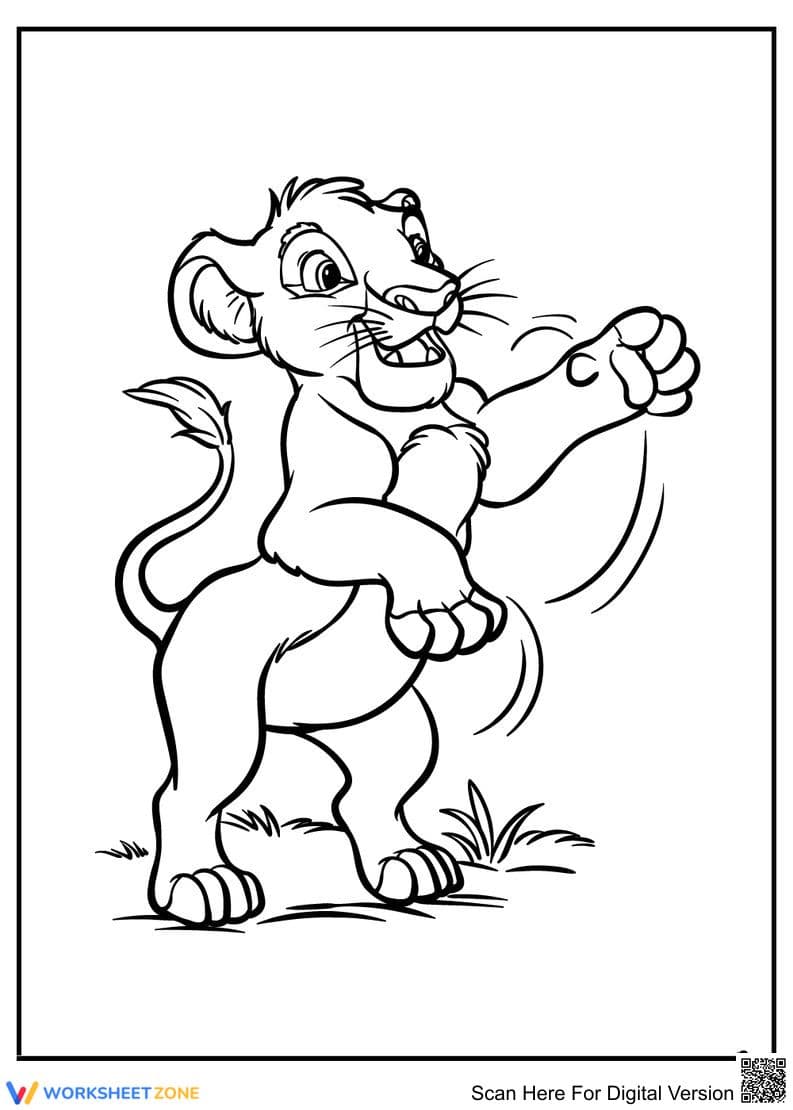

Playful Lion King Coloring Page | Essential Grade K-2
Paste this activity's link or code into your existing LMS (Google Classroom, Canvas, Teams, Schoology, Moodle, etc.).
Students can open and work on the activity right away, with no student login required.
You'll still be able to track student progress and results from your teacher account.
This playful Lion King coloring worksheet provides young learners with a creative outlet to develop essential fine motor control and hand-eye coordination. By engaging with a familiar character, students practice precision and color selection while expressing their artistic vision. It serves as an ideal supplemental activity for early elementary classrooms focusing on visual storytelling and creative expression.
At a Glance
- Grade: K-2 · Subject: Arts & English
- Standard:
CCSS.ELA-LITERACY.SL.K.5— Add visual displays to descriptions to provide additional detail and clarity- Skill Focus: Fine Motor Skills
- Format: 1 page · 1 task · No answer key · PDF
- Best For: Early finishers and creative brain breaks
- Time: 15–20 minutes
This single-page PDF features a high-quality line art illustration of a young lion character in a dynamic, playful pose. The clear, bold outlines are designed specifically for younger students who are still mastering the ability to color within lines. There are no complex instructions, making it an accessible resource for independent work or as part of a larger unit on animals or storytelling.
The workflow for this resource is designed for maximum efficiency in a busy classroom. First, print the single-page PDF for your entire class in less than 1 minute. Second, distribute the sheets along with crayons or colored pencils, which takes only seconds. Finally, review the completed work to observe student grip and stroke control. Total teacher preparation time is under 2 minutes, making this an excellent choice for emergency sub plans or transition periods.
The primary alignment for this activity is `CCSS.ELA-LITERACY.SL.K.5`, which encourages students to add visual displays to descriptions to provide additional detail. While primarily an artistic task, it supports the development of the physical skills necessary for writing and detailed illustration. This standard code can be copied directly into lesson plans, IEP goals, or district curriculum mapping tools to document creative development.
Use this worksheet during a cool down period after a high-energy lesson or as a reward for completing core curriculum tasks. It is particularly effective as a formative assessment tool; teachers can observe a student's pencil grip and pressure to identify those who may need additional occupational therapy support. Expect students to spend between 15 and 20 minutes completing the scene with full color.
This resource is tailored for Kindergarten through 2nd-grade students, including those with fine motor delays who benefit from large, clear coloring areas. It pairs naturally with a read-aloud session about African savannas or a direct instruction lesson on primary and secondary colors.
According to the Fisher & Frey (2014) framework for gradual release of responsibility, creative tasks like this Lion King coloring worksheet allow students to apply fine motor skills independently after initial instruction. Research indicates that coloring activities are not merely busy work but are foundational for developing the intrinsic hand muscles required for legible handwriting and endurance in writing tasks. This specific resource aligns with CCSS.ELA-LITERACY.SL.K.5 by providing a canvas for visual detail. By integrating familiar media characters, educators can increase student engagement and persistence in task completion. The 1-page design ensures that students can achieve a sense of mastery within a single instructional block. This worksheet serves as a practical tool for teachers to observe developmental milestones in a low-stakes environment. Educators can confidently integrate this into their curriculum as a validated method for supporting early childhood motor development and artistic expression.


