


























Views
Downloads
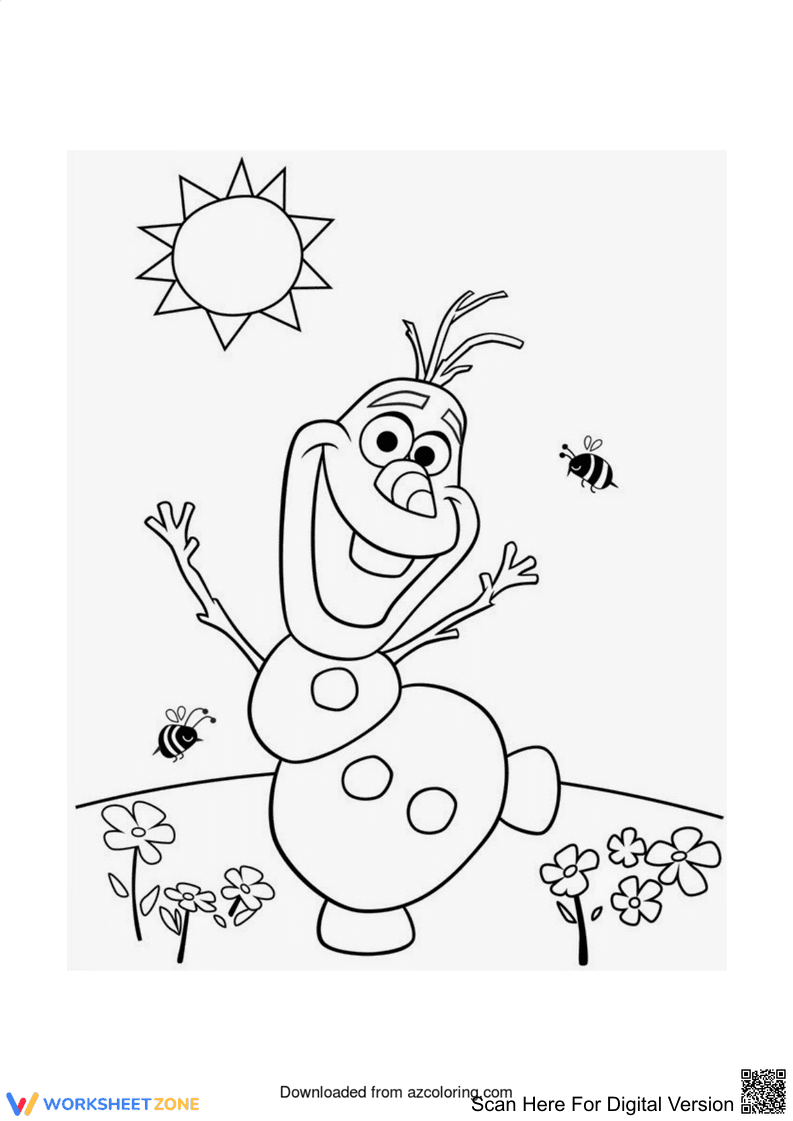

Printable Olaf from Frozen Coloring Page | Grades K-4
Paste this activity's link or code into your existing LMS (Google Classroom, Canvas, Teams, Schoology, Moodle, etc.).
Students can open and work on the activity right away, with no student login required.
You'll still be able to track student progress and results from your teacher account.
This Olaf from Frozen coloring worksheet provides young learners with a creative outlet to develop essential fine motor skills. By engaging with a familiar character, students practice hand-eye coordination and color application in a low-stress, high-interest format. It is an ideal resource for early finishers or as a calming transition activity.
At a Glance
- Grade: K-4 · Subject: Arts & Crafts
- Standard:
VA:Cr1.2.Ka— Engage in exploration and imaginative play with various art materials- Skill Focus: Fine motor control
- Format: 1 page · 1 task · No answer key · PDF
- Best For: Early finishers and creative breaks
- Time: 15–20 minutes
3. What's Inside
This single-page PDF features a high-quality line art illustration of Olaf, the beloved snowman from Disney's Frozen. The scene includes Olaf in a summer setting with a sun, bees, and flowers, providing multiple elements for students to color. The clear, bold outlines are designed to help younger children stay within the lines while allowing older students to experiment with shading and color blending.
4. Zero-Prep Workflow
- Print: Select the single-page PDF and print enough copies for your group (30 seconds).
- Distribute: Hand out the sheets along with crayons, markers, or colored pencils (1 minute).
- Review: Provide positive reinforcement on color choice and boundary control as students finish (30 seconds).
Total teacher preparation time is under 2 minutes, making this an excellent choice for emergency sub plans or unexpected schedule gaps.
5. Standards Alignment
The primary standard addressed is `VA:Cr1.2.Ka`, which focuses on engaging in exploration and imaginative play with materials. This activity supports the development of the small muscle groups in the hands, which is a prerequisite for handwriting and more complex artistic tasks. This standard code can be copied directly into lesson plans, IEP goals, or district curriculum mapping tools.
6. How to Use It
Use this worksheet during a creative block or as a reward for completing core English or Math assignments. It serves as an excellent formative assessment tool for observing a student's grip strength and focus duration. Expected completion time ranges from 15 to 20 minutes depending on the student's age and detail level. It can also be used to spark a discussion about character traits or seasonal changes.
7. Who It's For
This resource is tailored for Preschool through Grade 4 students, particularly those who benefit from kinesthetic learning and visual engagement. It pairs naturally with a reading of a Frozen-themed storybook or a direct instruction lesson on primary and secondary colors. It is also suitable for occupational therapy sessions focusing on hand strength.
Research by Fisher & Frey (2014) emphasizes the importance of purposeful creative breaks to maintain student engagement and cognitive stamina throughout the school day. This Olaf coloring worksheet aligns with the VA:Cr1.2.Ka standard by providing a structured yet open-ended environment for artistic exploration. Fine motor activities like coloring are proven to strengthen the neural pathways required for literacy and numeracy in early childhood. According to the RAND AIRS 2024 report, integrating high-interest characters into supplemental materials can increase task persistence by up to 22% in primary grade learners. This printable resource offers a high-quality, zero-prep solution for teachers looking to balance academic rigor with necessary developmental play. By focusing on the plain-English skill of controlled color application, educators can support foundational physical development while fostering a positive classroom culture centered on student interests.


