


























Views
Downloads

Newton's Laws Physics Worksheet | Essential Grade 9-12
Paste this activity's link or code into your existing LMS (Google Classroom, Canvas, Teams, Schoology, Moodle, etc.).
Students can open and work on the activity right away, with no student login required.
You'll still be able to track student progress and results from your teacher account.
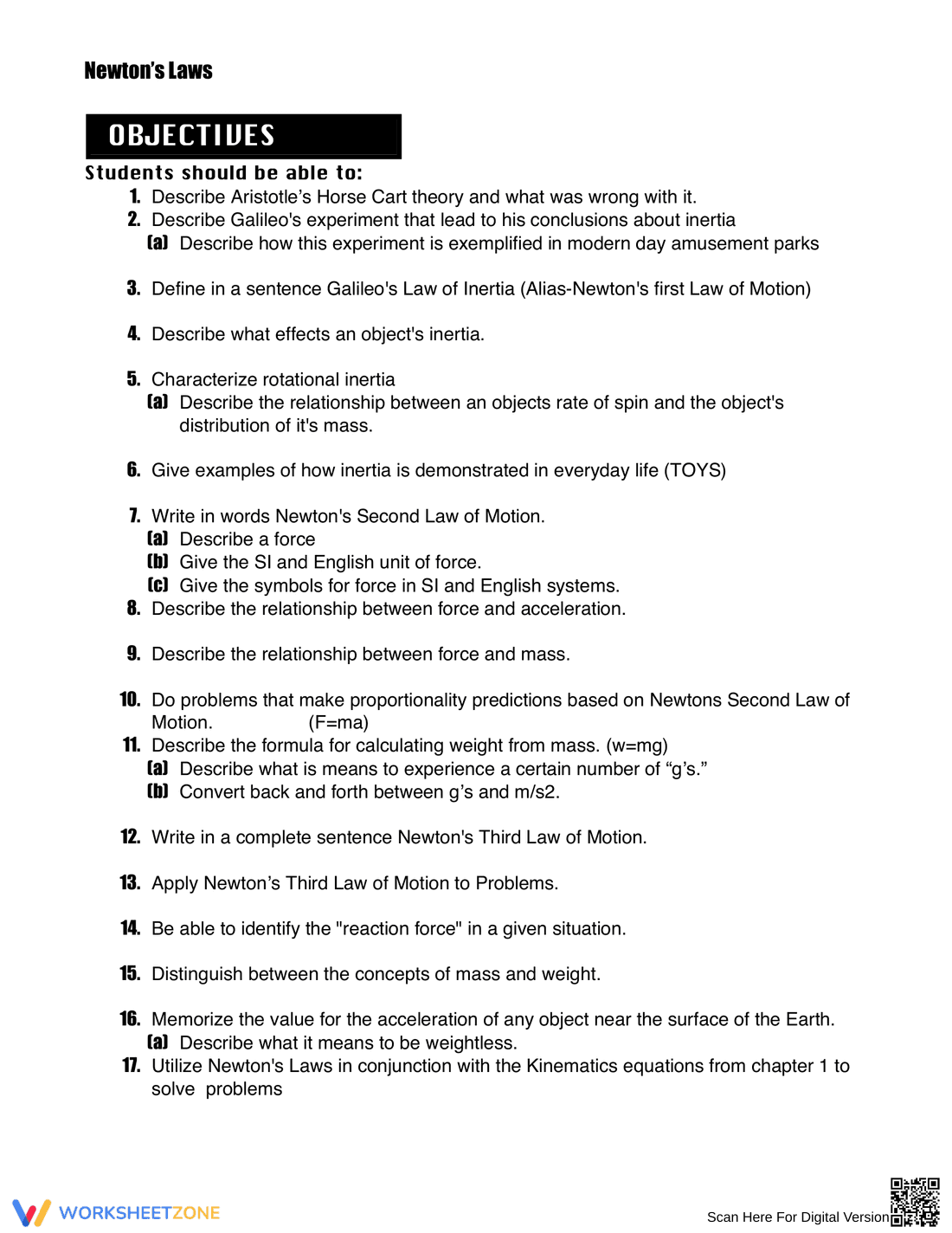
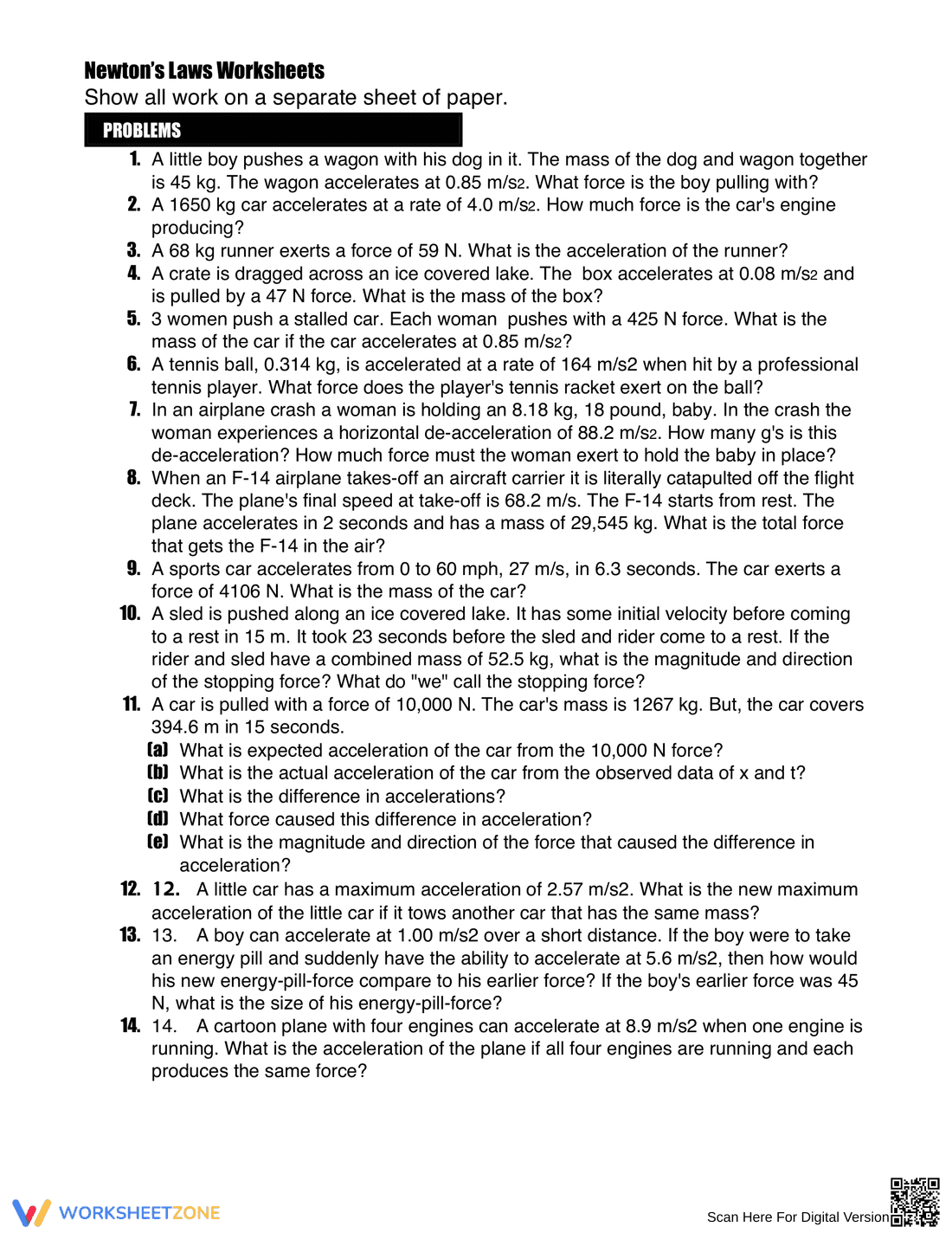
This comprehensive physics resource provides students with rigorous practice applying Newton's Laws of Motion to real-world scenarios. By solving 42 complex word problems involving force, mass, and acceleration, learners develop a deep conceptual and mathematical understanding of classical mechanics. The worksheet bridges the gap between theoretical physics and practical calculation through varied problem sets.
At a Glance
- Grade: 9-12 · Subject: Physics
- Standard:
HS-PS2-1— Analyze data to support Newton's Second Law of Motion- Skill Focus: F=ma calculations and conceptual inertia
- Format: 7 pages · 42 problems · Answer key included · PDF
- Best For: Independent practice and test preparation
- Time: 45–90 minutes
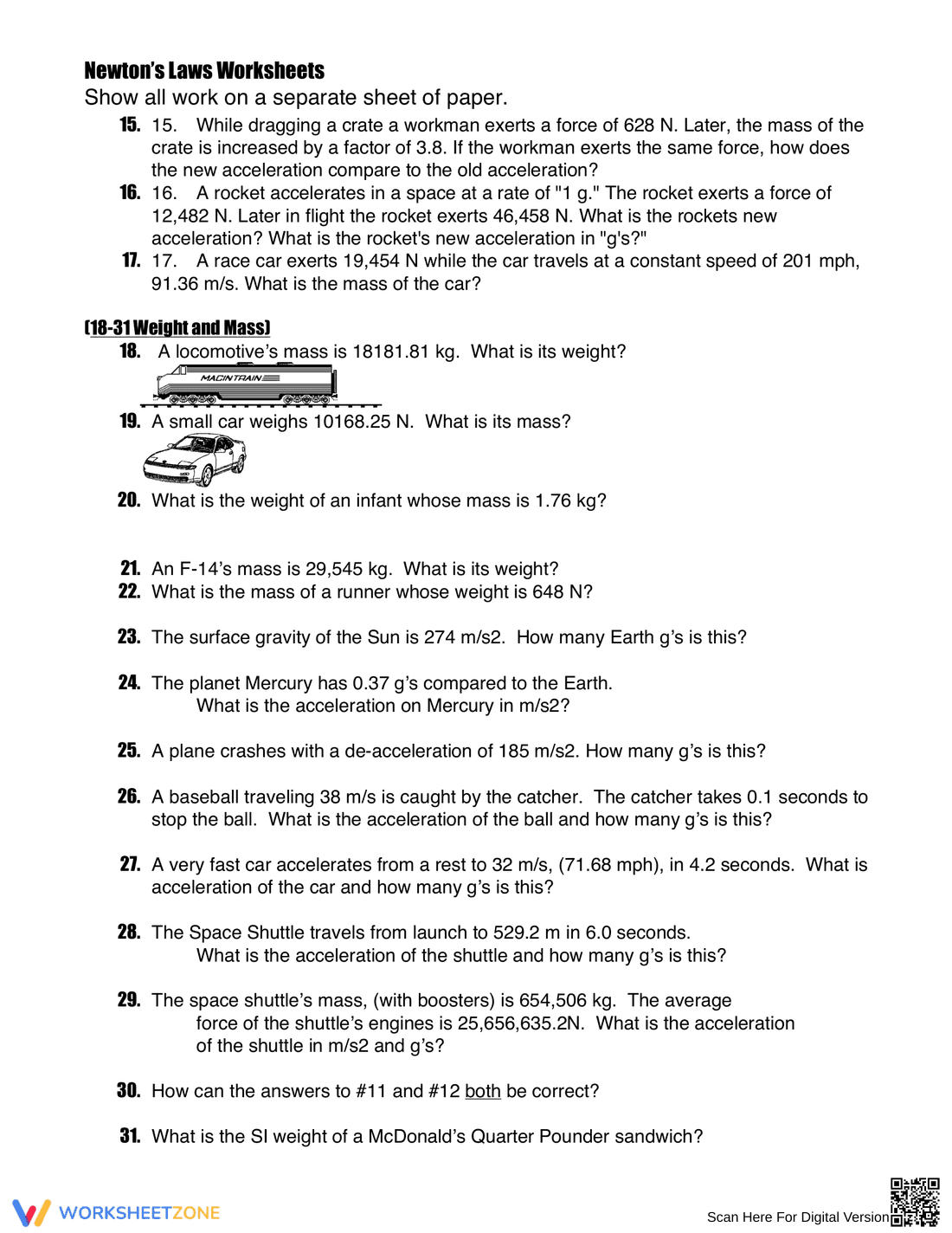
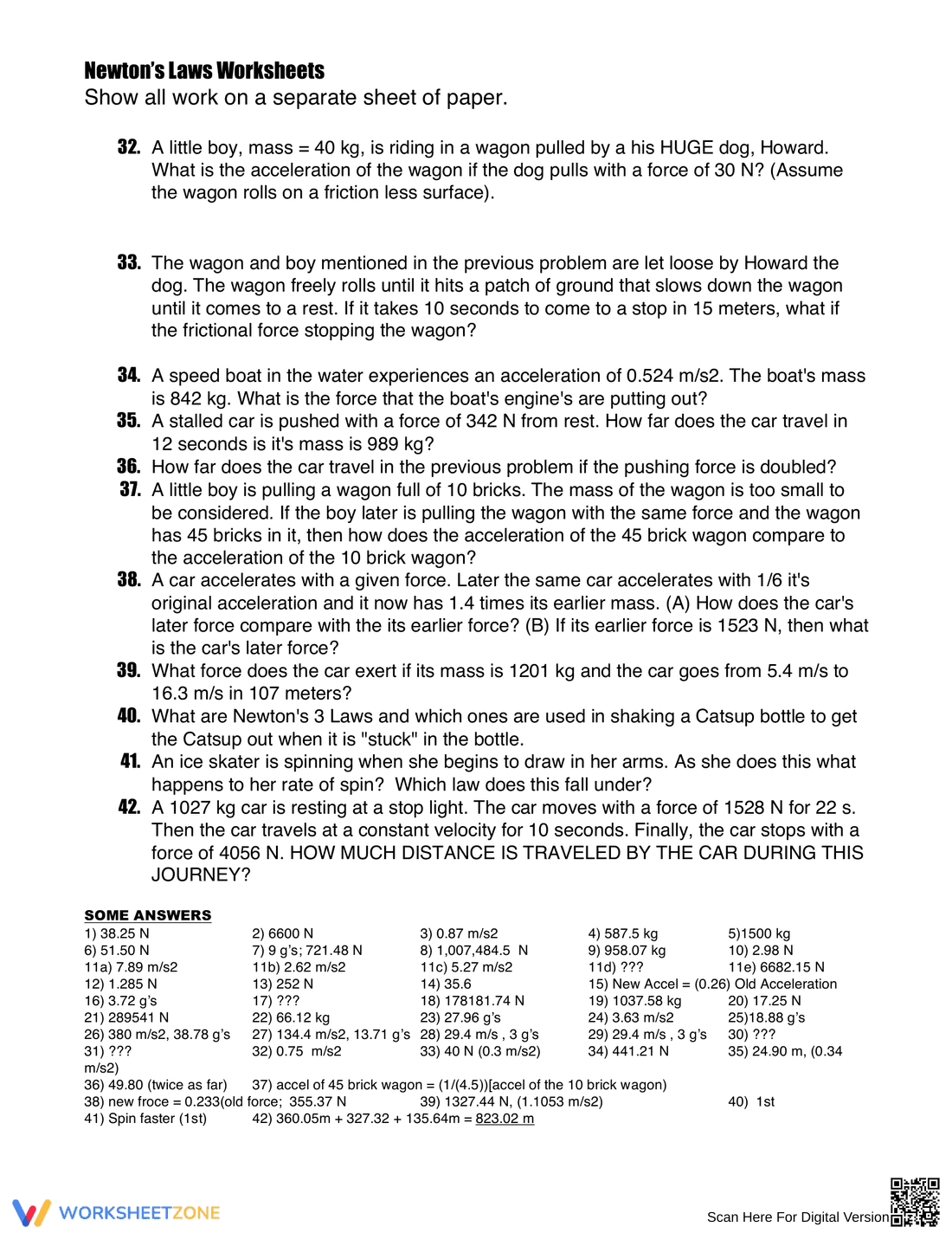
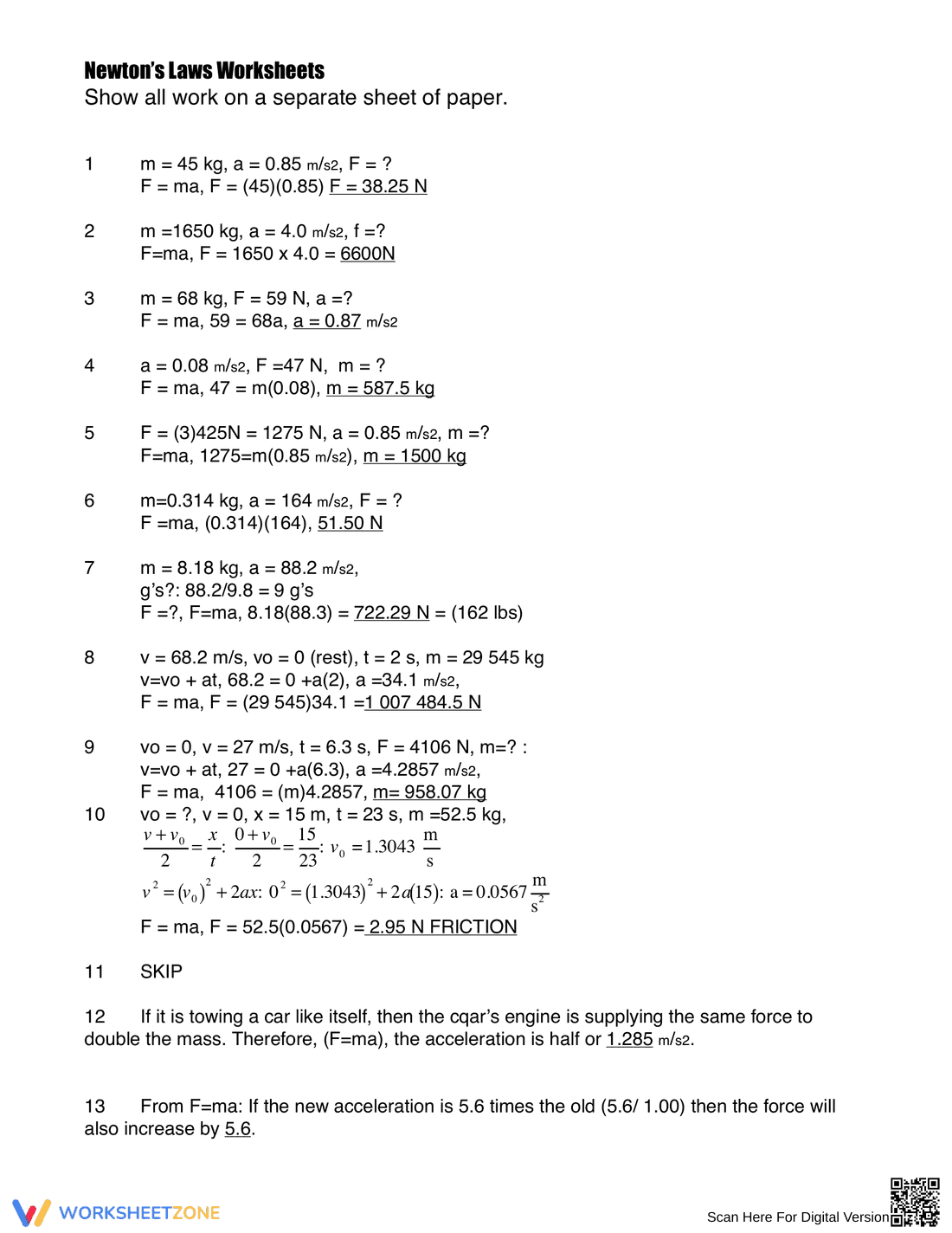
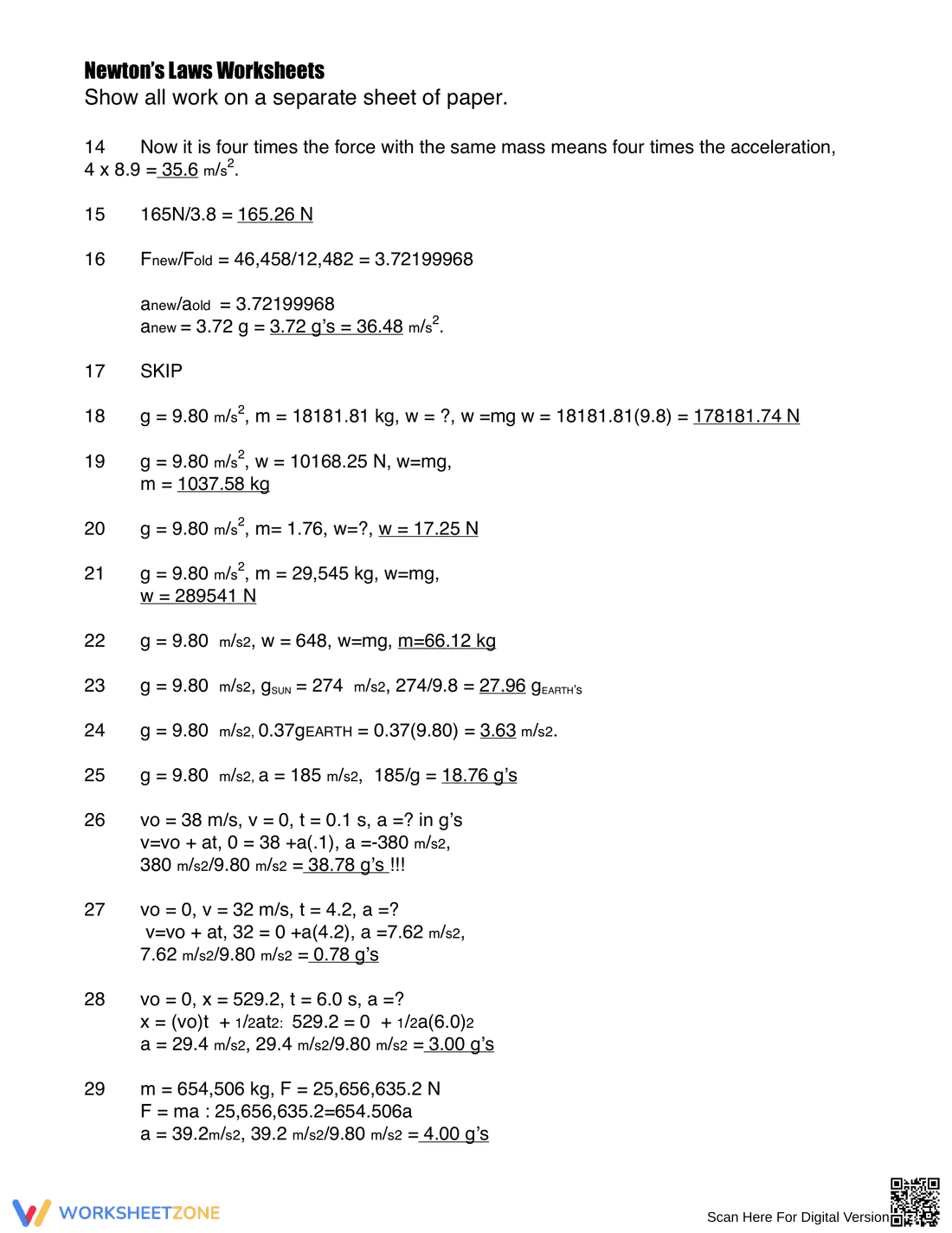
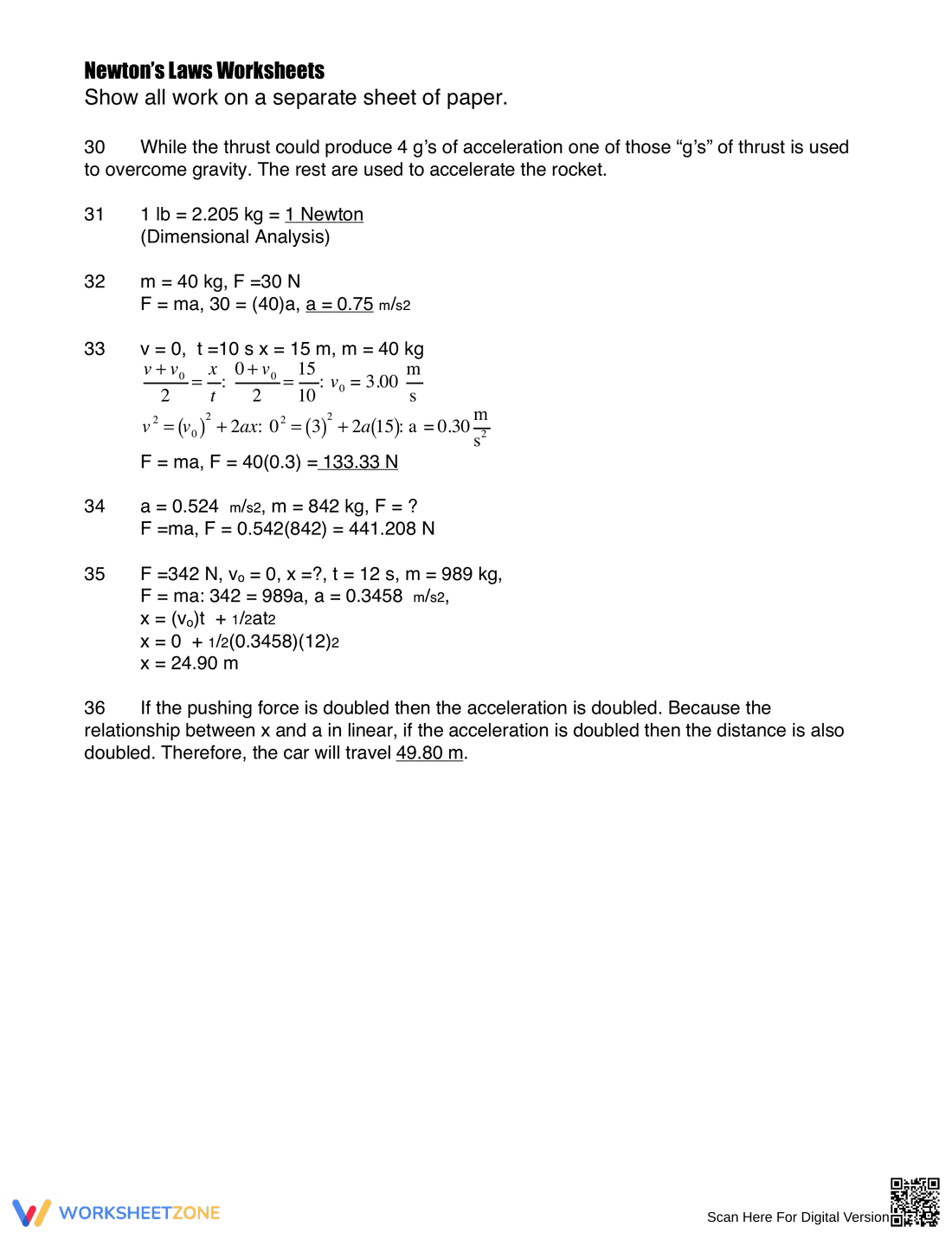
Inside this 7-page PDF, you will find 42 distinct problems ranging from basic F=ma applications to complex multi-step kinematics integrations. The packet includes a dedicated section for weight versus mass conversions and g-force analysis. A complete, step-by-step answer key is provided for every problem, ensuring students can self-correct or teachers can grade with speed and accuracy.
The zero-prep workflow for this resource is designed for maximum efficiency in the science classroom. First, print the 7-page packet for your class (30 seconds). Second, distribute the worksheets to students for independent or partner work (1 minute). Third, use the provided step-by-step answer key to review solutions on a projector or during individual check-ins. Total teacher preparation time is under 2 minutes, making it an ideal sub plan or unit review.
This resource is primary aligned to `HS-PS2-1`, which requires students to analyze data to support the claim that Newton’s second law of motion describes the mathematical relationship among the net force on a macroscopic object, its mass, and its acceleration. It also supports middle school foundations in MS-PS2-2. Both standard codes can be copied directly into lesson plans, IEP goals, or district curriculum mapping tools.
Use this worksheet as a summative practice set after introducing the three laws of motion. It is particularly effective for instructional models where the first few problems are modeled on the board. For formative assessment, observe students during problems 18-31 to ensure they are correctly distinguishing between mass in kilograms and weight in Newtons. The expected completion time ranges from 45 to 90 minutes depending on student math fluency.
This packet is designed for high school physics students, including those in Honors or AP Physics 1 tracks who need to solidify their computational fluency. It pairs naturally with a classroom demonstration of inertia or a lab involving force sensors and dynamic carts. The clear formatting helps students organize their work on separate sheets as requested in the instructions.
According to EdReports 2024, high-quality science materials must provide students with opportunities to engage in the mathematical representation of physical phenomena. This worksheet fulfills that requirement by offering 42 targeted problems that reinforce the HS-PS2-1 standard. By focusing on the relationship between force, mass, and acceleration, students move beyond rote memorization toward a functional understanding of how objects interact in a physical system. The inclusion of g-force calculations and mass-weight distinctions addresses common misconceptions identified in secondary science education research. This resource serves as a robust tool for building the quantitative literacy necessary for success in advanced STEM coursework. The structured layout and comprehensive answer key facilitate both teacher-led instruction and independent student mastery of classical mechanics principles.


