


























Views
Downloads

Letter N and Number 9 Printable Worksheet | Grade K-1
Paste this activity's link or code into your existing LMS (Google Classroom, Canvas, Teams, Schoology, Moodle, etc.).
Students can open and work on the activity right away, with no student login required.
You'll still be able to track student progress and results from your teacher account.
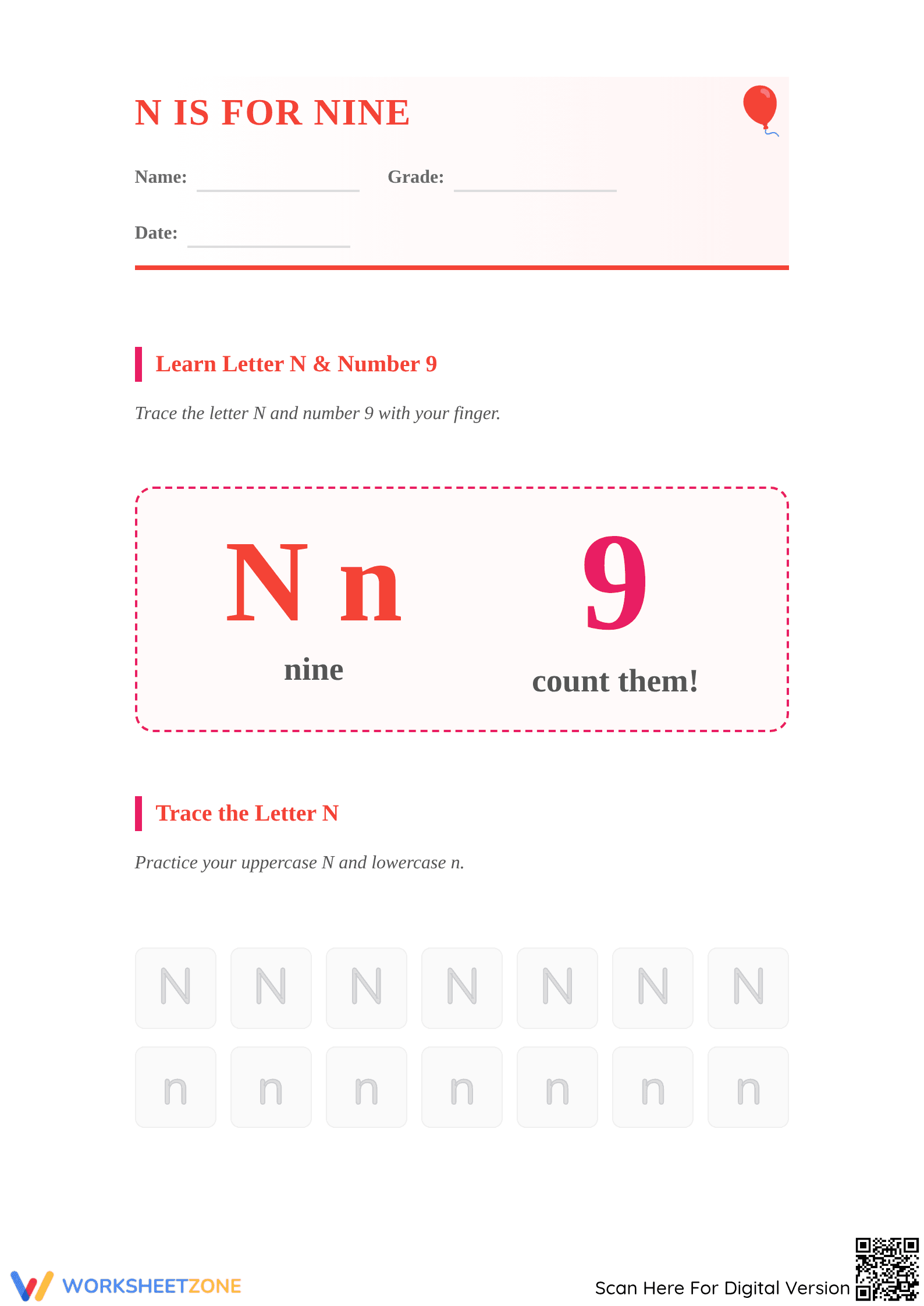
This comprehensive Grade K-1 resource integrates literacy and numeracy by focusing on the letter N and the number 9. Students engage in multi-sensory tracing, counting, and visual discrimination tasks to solidify their understanding of these foundational symbols. It provides a structured path from recognition to independent production, ensuring students master both the phonemic and numerical aspects of the lesson.
At a Glance
- Grade: Kindergarten · Subject: ELA & Math
- Standard:
CCSS.ELA-LITERACY.RF.K.1.D— Recognize and name all upper- and lowercase letters of the alphabet- Skill Focus: Letter N & Number 9 Recognition
- Format: 3 pages · 35 problems · Answer key included · PDF
- Best For: Morning work or independent literacy centers
- Time: 15–20 minutes
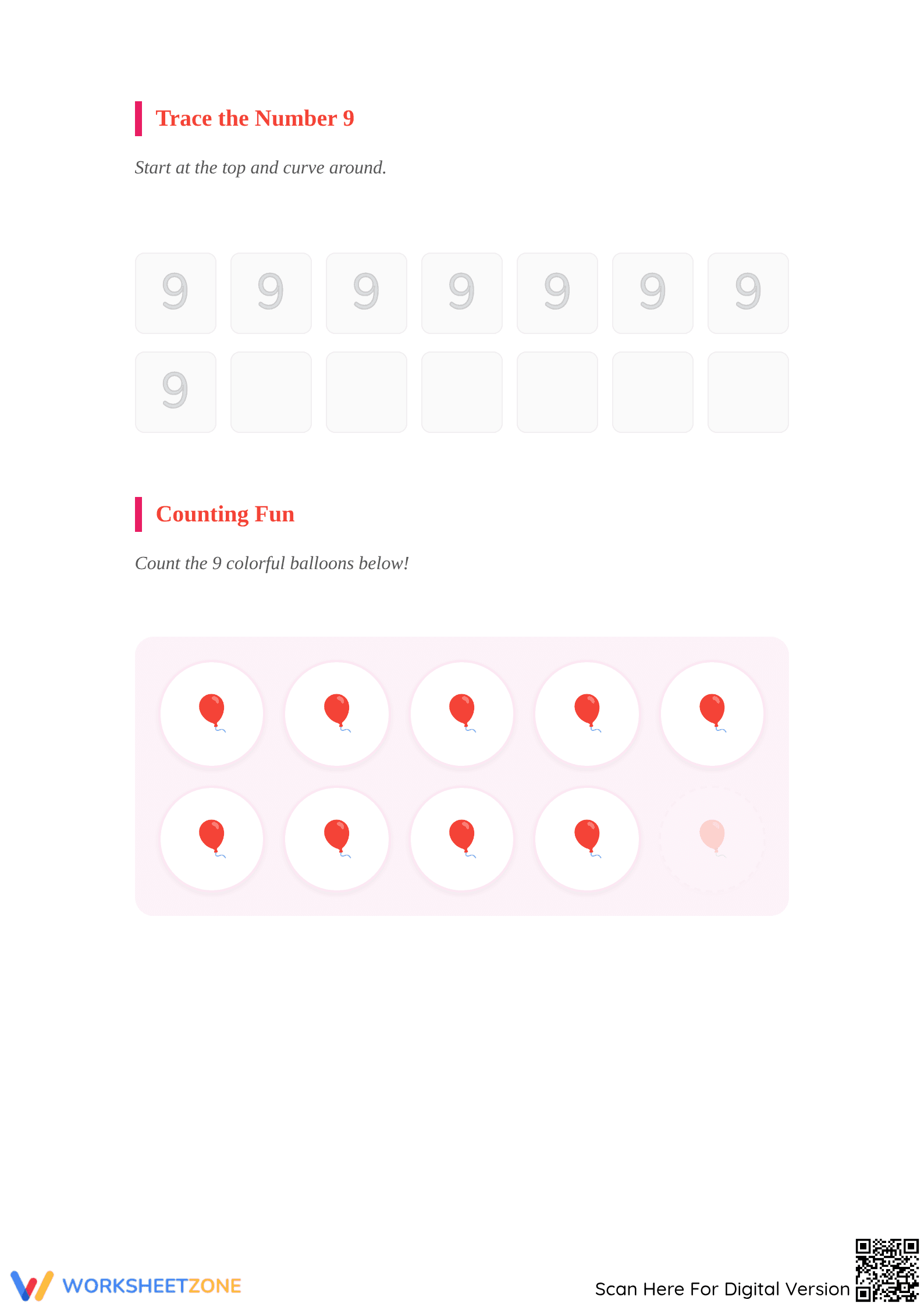
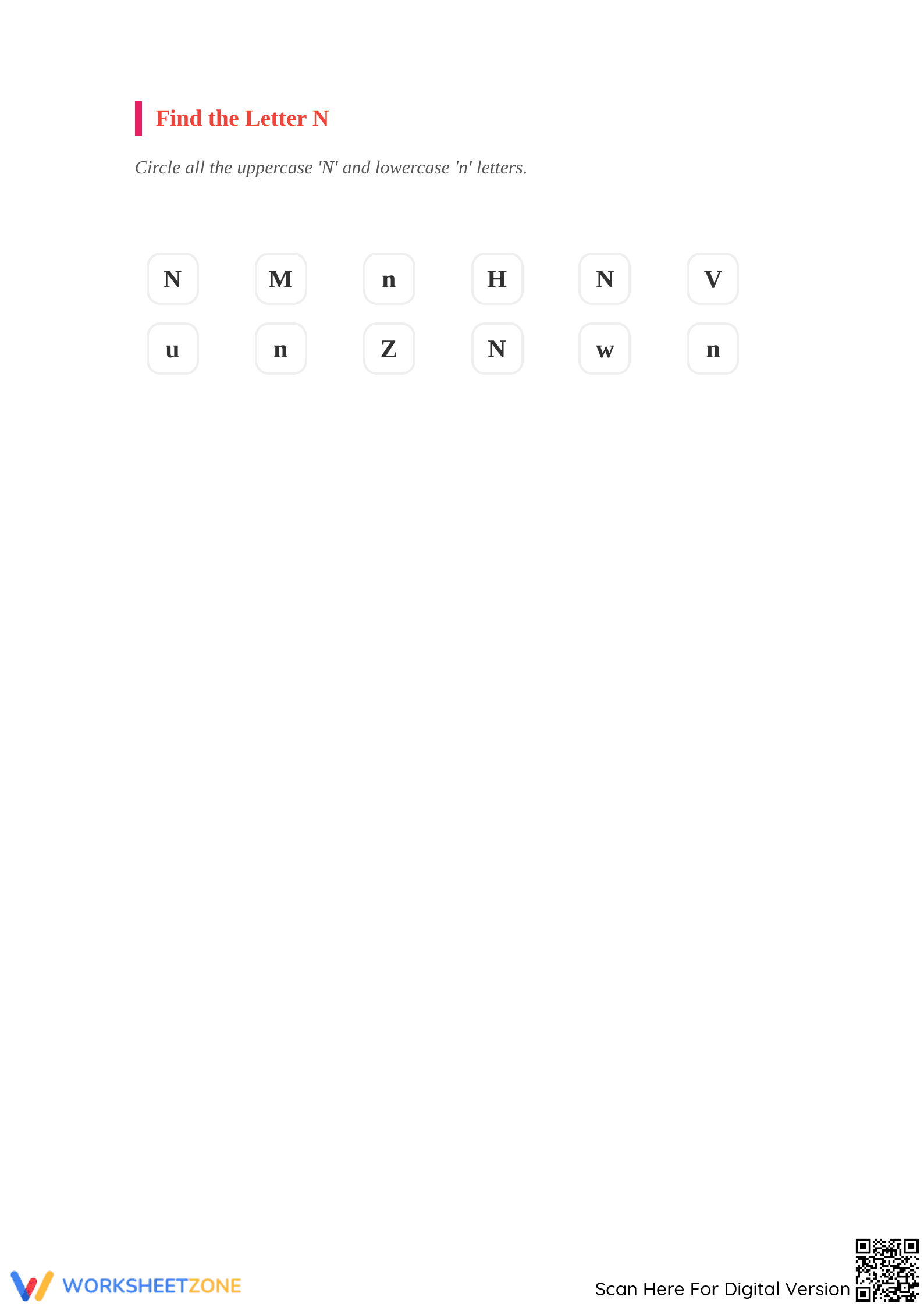
The packet contains three distinct pages designed for clarity and ease of use. Page one focuses on uppercase and lowercase "N" tracing with 14 dedicated practice boxes. Page two transitions to the number "9," featuring tracing boxes and a ten-frame style counting activity with colorful balloons. The final page offers a letter search grid to sharpen visual discrimination skills, requiring students to distinguish "N" from similar-looking characters like "M" and "W."
Zero-Prep Workflow
- Print: Select the three-page PDF and print enough copies for your cohort in approximately 30 seconds.
- Distribute: Hand out the packets during morning arrival or center rotations; the self-explanatory instructions require minimal teacher intervention.
- Review: Use the provided answer key to quickly verify letter formation and counting accuracy during student conferences. Total prep time is under 2 minutes.
This worksheet aligns primarily with CCSS.ELA-LITERACY.RF.K.1.D, which requires students to identify and name alphabet letters. It also supports CCSS.MATH.CONTENT.K.CC.B.4 by connecting the numeral 9 to a specific quantity of objects. Both standard codes can be copied directly into lesson plans, IEP goals, or district curriculum mapping tools.
Use this as a formative assessment after introducing the letter N and number 9. Observe students during the "Find the Letter N" task to identify those struggling with visual tracking or letter reversals. It is ideal for a 20-minute independent work block while the teacher conducts small-group reading interventions. The clear layout makes it an excellent choice for emergency sub plans.
This resource is designed for Kindergarten students and early Grade 1 learners who need reinforced fine motor practice. It is particularly effective for English Language Learners (ELLs) due to the clear visual cues and repetitive structure. Pair this with a tactile sand tray or a "Letter N" anchor chart for a complete instructional cycle that supports diverse learning styles.
According to the RAND AIRS 2024 report, integrated literacy and numeracy tasks in early childhood education significantly improve cognitive flexibility and symbol recognition. This worksheet targets CCSS.ELA-LITERACY.RF.K.1.D by providing 14 tracing opportunities and a 12-item discrimination grid, ensuring students move beyond rote memorization to active identification. Research by Fisher & Frey (2014) emphasizes that gradual release—moving from guided tracing to independent identification—is essential for mastery in phonics and number sense. By combining the letter N with the number 9, this resource leverages associative learning, helping students build a more robust mental schema for both characters. The inclusion of a counting task with 9 balloons further reinforces the cardinality principle, a critical milestone in early mathematical development. This evidence-based approach ensures that the 15-20 minutes of instructional time spent on these 3 pages yields measurable progress in foundational academic skills.


