


























Views
Downloads
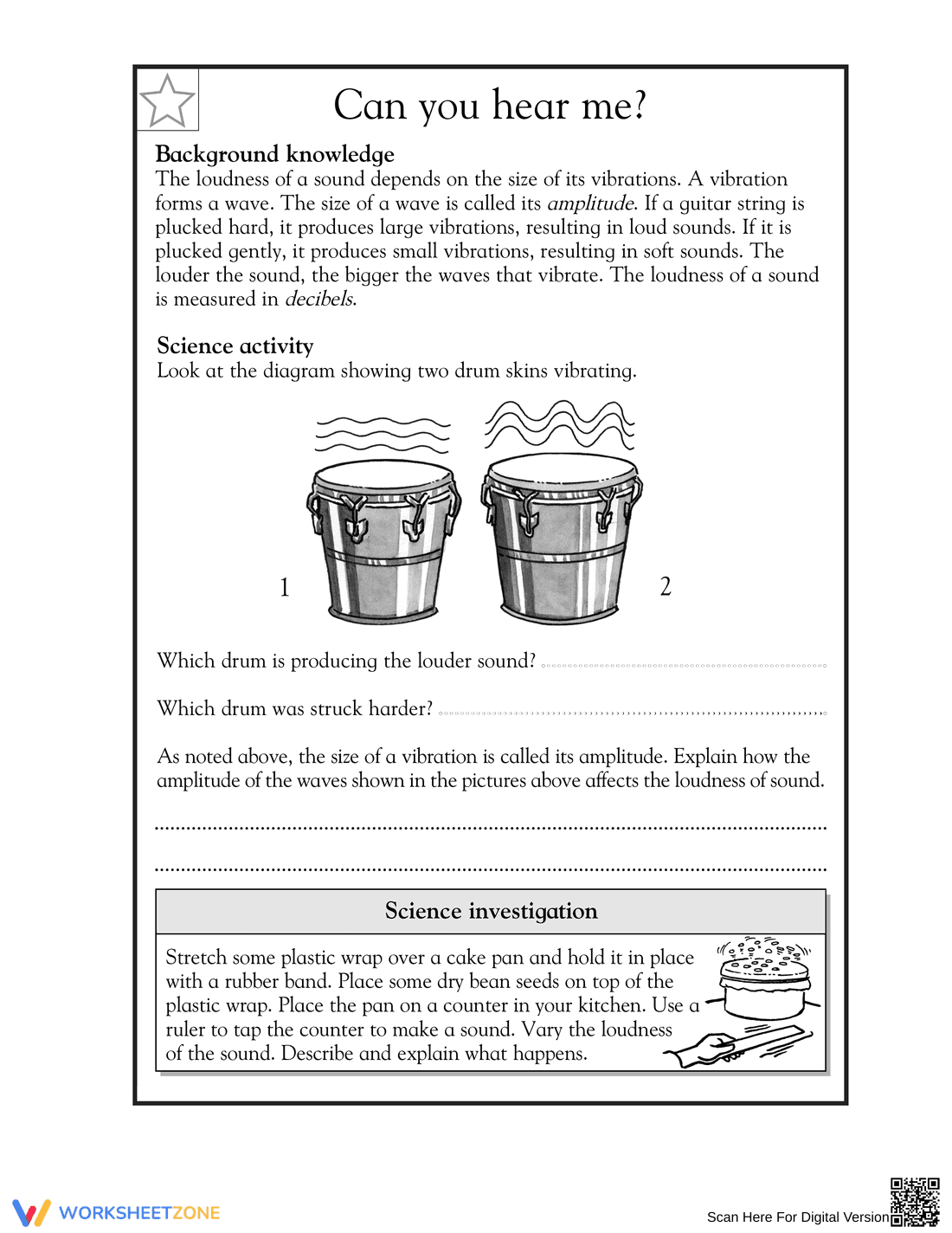
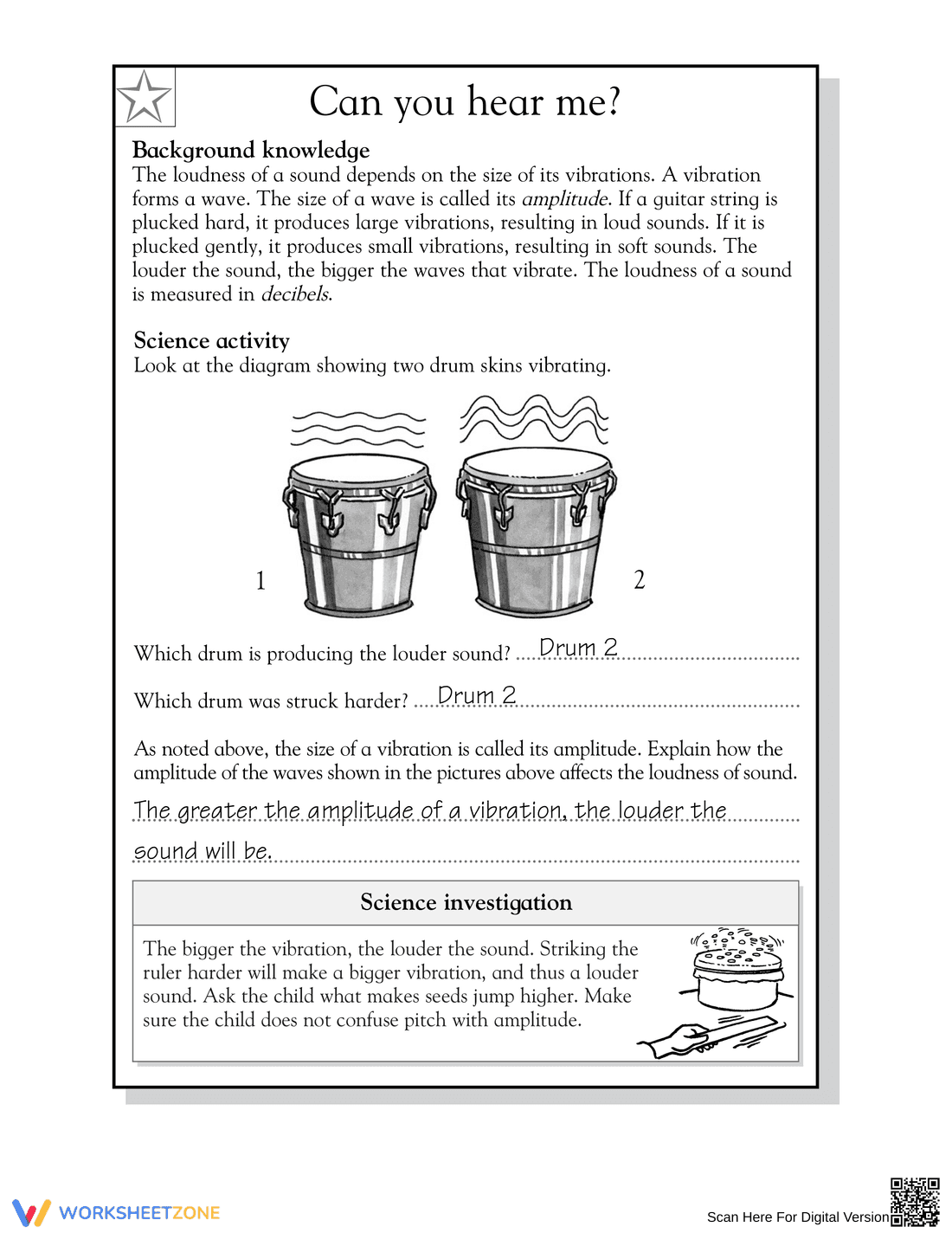

Grade 5 Sound Wave Amplitude — Printable No-Prep Worksheet
Paste this activity's link or code into your existing LMS (Google Classroom, Canvas, Teams, Schoology, Moodle, etc.).
Students can open and work on the activity right away, with no student login required.
You'll still be able to track student progress and results from your teacher account.
This Grade 5 physical science worksheet provides a focused exploration of sound waves, specifically how amplitude relates to loudness. Students will analyze diagrams and conduct a simple investigation to build a concrete understanding that greater amplitude results in louder sound, a foundational concept in wave properties.
At a Glance
- Grade: 5 · Subject: Science
- Standard:
4-PS4-1— Develop a model to describe wave patterns and amplitude.- Skill Focus: Amplitude, Vibration, and Loudness
- Format: 2 pages · 4 tasks · Answer key included · PDF
- Best For: Introduction to wave properties, hands-on lab prep
- Time: 20–30 minutes
What's Inside
This single-page resource includes a concise background knowledge section, a diagram-based analysis activity with three targeted questions, and a hands-on science investigation using common household materials. A complete, corresponding answer key is provided on a separate page, making review straightforward and efficient for teachers or substitutes.
Zero-Prep Workflow
This worksheet is designed for classroom efficiency. The workflow is simple: 1) Print the single-page, black-and-white PDF in one minute. 2) Distribute to students; the background section allows them to start immediately. 3) Review the three core questions using the provided answer key. With a total prep time under two minutes, this activity is an ideal choice for a science station, homework, or an emergency sub plan.
Standards Alignment
This worksheet supports NGSS standard 4-PS4-1, requiring students to use a model to describe wave patterns. The drum diagram and hands-on investigation serve as models to build understanding of how vibration, amplitude, and loudness are related. This provides a concrete foundation for more complex wave properties. The standard code can be copied directly into lesson plans or curriculum mapping tools.
How to Use It
Use this as an introductory activity before a lesson on wave properties. Students can work in pairs to complete the tasks, fostering discussion. It also serves as a formative assessment after instruction; a teacher can circulate during the investigation, observing if students connect the force of the tap to the amplitude and sound. The activity is designed for a 20 to 30-minute timeframe.
Who It's For
This activity is for 4th and 5th-graders studying physical science. The clear instructions and visuals support all learners. For differentiation, some students may need help reading the background text. This worksheet pairs well with a visual anchor chart of wave vocabulary or as a follow-up to a lesson on sound energy.
Supporting NGSS standard 4-PS4-1, this worksheet provides a practical application for understanding wave properties through a hands-on model. Students build an intuitive link between the size of a vibration (amplitude) and its loudness in decibels. This approach, where students engage with phenomena directly, is consistent with findings on effective science instruction. Research from Fisher & Frey (2014) emphasizes the importance of moving from teacher-led instruction to student-centered discovery, which this worksheet facilitates through its guided investigation. By having students manipulate variables (the force of a tap) and observe outcomes (the loudness of the sound and movement of beans), the activity provides a memorable, concrete experience with the abstract concept of amplitude, a key component of physical science literacy. This tactile engagement helps solidify the core idea that energy is transferred through sound waves.


