


























Views
Downloads
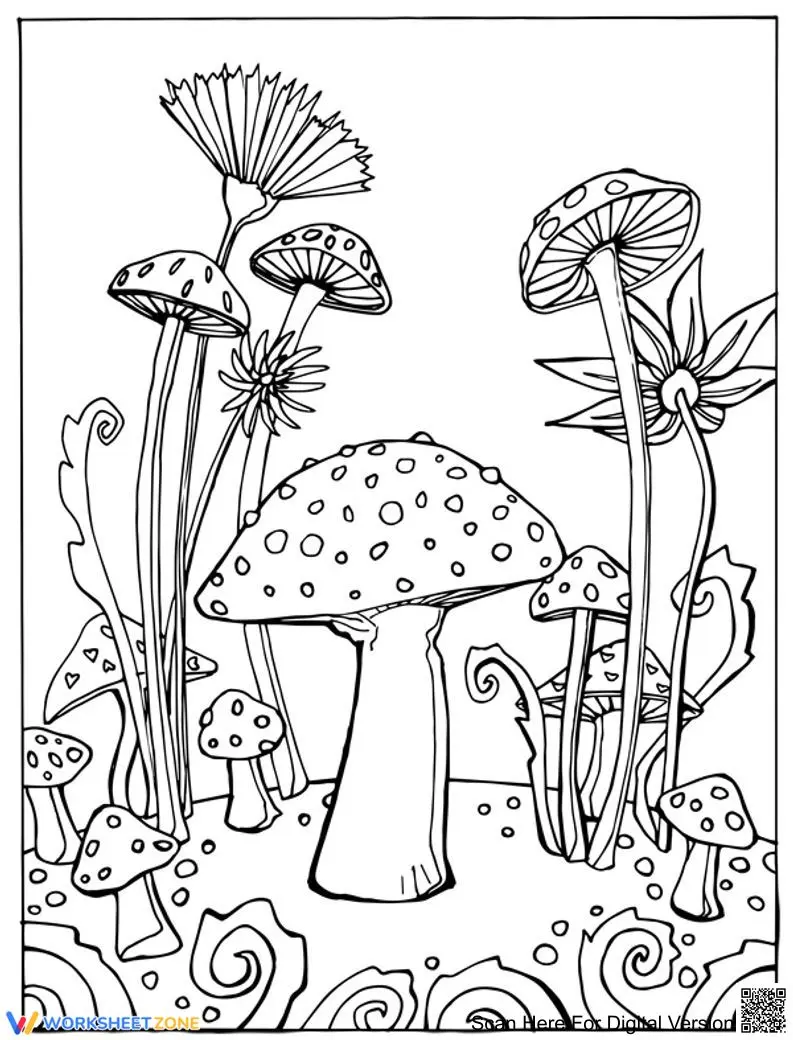

Mushroom Coloring Page | Printable Grade K-2 Art
Paste this activity's link or code into your existing LMS (Google Classroom, Canvas, Teams, Schoology, Moodle, etc.).
Students can open and work on the activity right away, with no student login required.
You'll still be able to track student progress and results from your teacher account.
This engaging mushroom coloring page provides young students with a creative outlet while developing essential fine motor skills. By carefully coloring the intricate fungi and floral designs, learners strengthen hand-eye coordination and pencil grip. This single-page activity offers a calming, focused task perfect for early childhood classrooms.
At a Glance
- Grade: K · Subject: Art & Science
- Standard:
K-LS1-1— Observe and describe natural patterns in plants.- Skill Focus: Fine Motor Skills
- Format: 1 page · 1 task · No answer key · PDF
- Best For: Morning work or transition times
- Time: 15–20 minutes
Inside this download, educators will find a single, beautifully illustrated coloring page featuring a variety of mushrooms, ferns, and flowers. The detailed line art includes different sizes and shapes of fungi, providing varying levels of coloring difficulty within one image. There is no answer key required, making this a purely creative and expressive exercise. The clear, bold outlines help guide young hands as they practice staying within the lines.
This resource is designed for immediate classroom implementation with a simple three-step workflow. First, print the PDF directly from your computer, which takes less than one minute. Second, distribute the pages along with crayons, markers, or colored pencils, requiring about one minute of transition time. Finally, review the students' completed artwork as they share their color choices, taking just a few minutes at the end of the session. Total teacher preparation time is under two minutes, making this an excellent addition to any emergency sub plan.
This worksheet aligns with K-LS1-1, encouraging students to use observations to describe patterns of what plants and animals need to survive. While primarily an art activity, discussing the natural elements in the picture supports early science observation skills. Both standard codes can be copied directly into lesson plans, IEP goals, or district curriculum mapping tools.
Teachers can utilize this coloring page as a calming morning work activity as students arrive and settle into the classroom routine. It also serves as an excellent quiet-time task for early finishers during literacy or math blocks. While students color, teachers can conduct formative assessments by observing pencil grip, hand dominance, and the ability to apply appropriate pressure. Expect students to spend between 15 and 20 minutes completing the picture, depending on their attention to detail.
This resource is primarily designed for Kindergarten and first-grade students developing their fine motor control. The varying sizes of the illustrations naturally differentiate the task, allowing students with developing coordination to focus on larger shapes while advanced students tackle the intricate background details. It pairs perfectly with a read-aloud book about forests or a direct instruction lesson on plant life cycles.
Integrating creative tasks like this coloring page supports foundational development in early childhood education. Aligned with K-LS1-1, this activity helps students observe and describe natural patterns in plants while simultaneously building physical dexterity. According to Fisher & Frey (2014), providing students with structured, independent tasks that require sustained attention is crucial for developing self-regulation and stamina in the classroom environment. Fine motor activities, specifically coloring within boundaries, directly correlate with improved handwriting legibility and reduced hand fatigue during later academic writing tasks. By combining natural science themes with artistic expression, educators can foster both cognitive and physical growth in young learners. This simple yet highly effective tool ensures that students remain engaged while practicing the precise hand movements necessary for future academic success across all subject areas.


