


























Views
Downloads
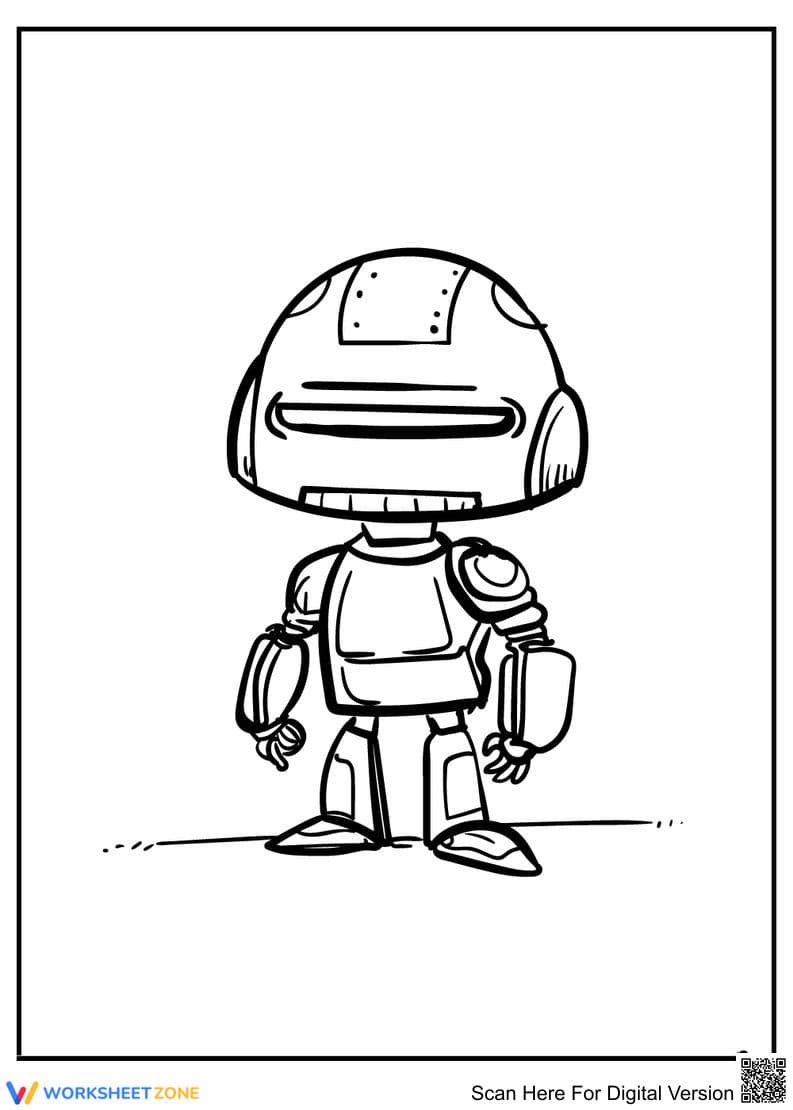

Modernized Robot Coloring Page | Grade 1 Printable
Paste this activity's link or code into your existing LMS (Google Classroom, Canvas, Teams, Schoology, Moodle, etc.).
Students can open and work on the activity right away, with no student login required.
You'll still be able to track student progress and results from your teacher account.
This modernized robot coloring worksheet provides a creative outlet for students to practice fine motor control while engaging in imaginative storytelling. By providing a clean, professional line drawing of a robot, students can focus on color application and the addition of their own unique background settings to complete the scene.
At a Glance
- Grade: 1 · Subject: Arts & English
- Standard:
CCSS.ELA-LITERACY.SL.1.5— Add drawings to descriptions to clarify ideas, thoughts, and feelings- Skill Focus: Fine motor skills & creative illustration
- Format: 1 page · 1 task · No answer key needed · PDF
- Best For: Early finisher activity or creative writing prompt
- Time: 15–20 minutes
Inside this resource, you will find a high-resolution, single-page PDF featuring a modernized robot character. The illustration is designed with bold, clear outlines to assist younger learners in staying within the lines. The composition intentionally leaves ample white space around the central figure, specifically intended for students to draw an original background setting as noted in the design brief, encouraging spatial awareness and artistic planning.
The zero-prep workflow for this worksheet is designed for maximum efficiency in a busy classroom. First, print the single-page PDF (30 seconds). Second, distribute the sheets along with crayons, markers, or colored pencils (1 minute). Third, review the completed illustrations or have students share their background stories (5 minutes). Total teacher preparation time is under 2 minutes, making this an ideal emergency sub plan or transition activity during hectic school days.
This worksheet aligns with CCSS.ELA-LITERACY.SL.1.5, which requires students to add drawings or other visual displays to descriptions to clarify ideas. While primarily an artistic task, it serves as a visual scaffold for descriptive language and narrative development. Both standard codes can be copied directly into lesson plans, IEP goals, or district curriculum mapping tools to ensure compliance with state frameworks.
Use this worksheet as a hook for a creative writing unit about technology or the future. After coloring, ask students to write three sentences describing where their robot is and what its primary function is. Alternatively, use it as a formative assessment for fine motor development by observing grip strength and stroke control during the coloring process. Expected completion typically takes 15 to 20 minutes depending on the complexity of the student's background drawing.
This resource is perfect for Kindergarten through Grade 2 students, particularly those who benefit from tactile, visual learning. It is an excellent pairing for a read-aloud book about robots or a science lesson on simple machines. The open-ended nature of the background drawing allows for natural differentiation based on student ability, ensuring every learner can succeed regardless of their current artistic level.
According to the RAND AIRS 2024 report on elementary engagement, integrating creative arts into core subject blocks significantly increases student motivation and retention of thematic concepts. This modernized robot worksheet addresses the CCSS.ELA-LITERACY.SL.1.5 standard by encouraging students to use visual media to express complex ideas that they may not yet have the vocabulary to write. Research from Fisher & Frey (2014) supports the use of visual scaffolds like coloring and drawing to bridge the gap between conceptual thinking and formal literacy. By providing a structured central image with an unstructured background space, this worksheet facilitates the gradual release of responsibility in creative expression. Educators can utilize this tool to observe fine motor progression and spatial awareness in early childhood settings, ensuring that students meet developmental milestones while participating in high-interest activities that promote a positive classroom culture.


