


























Views
Downloads
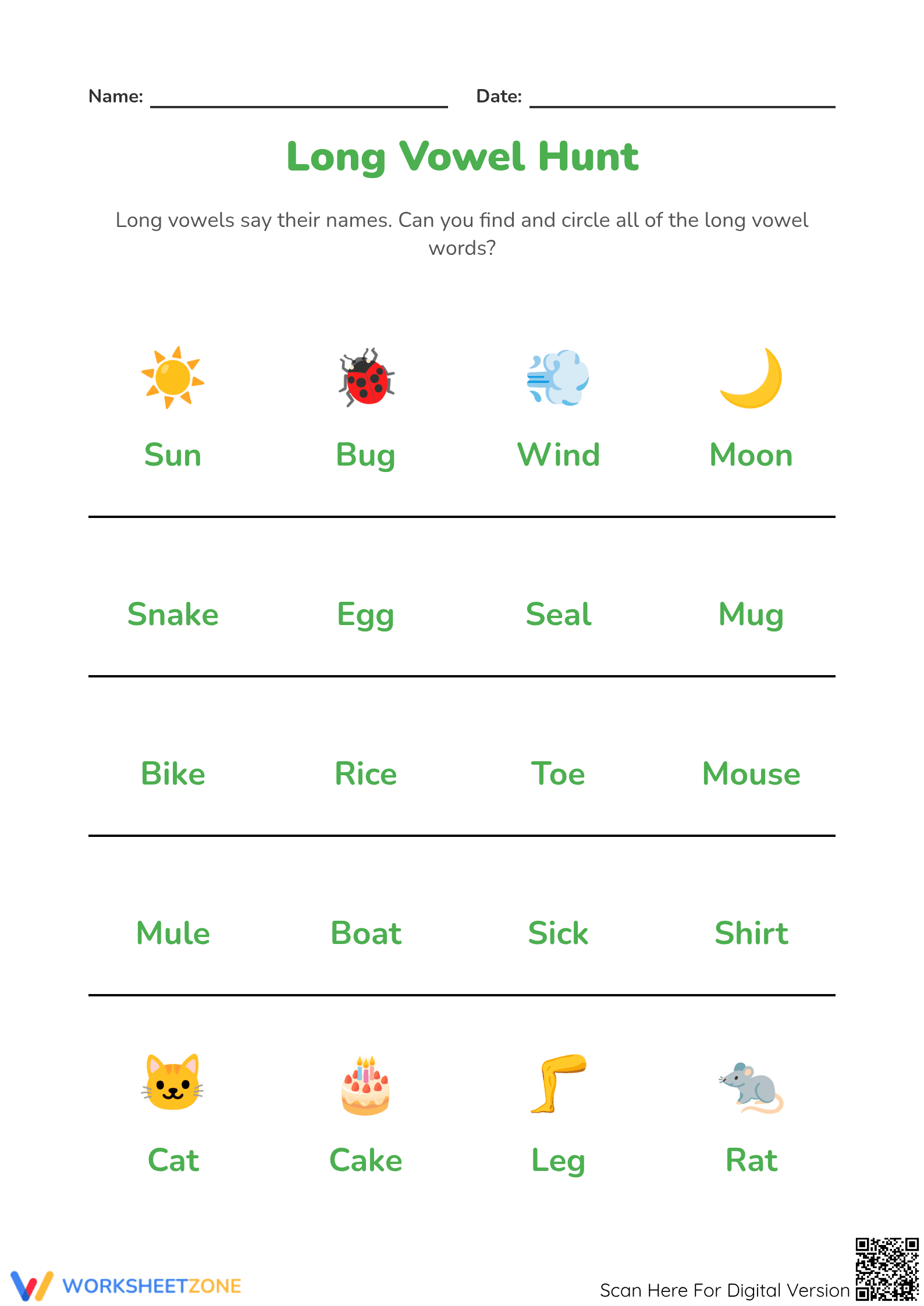

Grade 4 Long Vowels — Printable No-Prep Worksheet
Paste this activity's link or code into your existing LMS (Google Classroom, Canvas, Teams, Schoology, Moodle, etc.).
Students can open and work on the activity right away, with no student login required.
You'll still be able to track student progress and results from your teacher account.
This Grade 4 phonics worksheet helps students identify long vowel sounds. By evaluating twenty vocabulary words, learners practice distinguishing between short and long vowel patterns, reinforcing foundational decoding skills and improving reading fluency in a straightforward format.
At a Glance
- Grade: 4 · Subject: English
- Standard:
CCSS.ELA-LITERACY.RF.4.3— Apply grade-level phonics and word analysis skills.- Skill Focus: Identifying long vowel sounds
- Format: 1 page · 20 problems · Answer key included · PDF
- Best For: Independent practice and review
- Time: 10–15 minutes
Inside this resource, educators will find a single-page activity featuring twenty words, some with visual cues. Students read each word and circle those containing a long vowel. The clean layout makes it easy for students to focus. A complete answer key is provided, ensuring efficient grading.
This worksheet is designed for immediate classroom implementation.
- Print (1 minute): Download the PDF and print.
- Distribute (1 minute): Hand out during your literacy block. Instructions are self-explanatory.
- Review (2 minutes): Use the answer key to quickly check work.
With total prep time under two minutes, this is excellent for sub plans or quick phonics review.
This activity is directly aligned to CCSS.ELA-LITERACY.RF.4.3, which requires students to know and apply grade-level phonics and word analysis skills in decoding words. By actively hunting for long vowel sounds among distractors, learners demonstrate their grasp of vowel conventions. Both standard codes can be copied directly into lesson plans, IEP goals, or district curriculum mapping tools.
Teachers can utilize this worksheet in multiple instructional contexts. It serves as an excellent independent practice activity following a direct instruction lesson on vowel teams and silent E patterns. Alternatively, it works well as a morning work assignment to activate prior knowledge before a broader reading comprehension block. As a formative assessment tip, observe students as they read the words aloud; if they struggle to articulate the long vowel sound, they may need targeted intervention on specific vowel digraphs. Expect students to complete this task within ten to fifteen minutes.
This resource is primarily designed for fourth-grade students who need reinforcement in foundational phonics skills. It is also highly beneficial for English Language Learners (ELLs) and students receiving Tier 2 reading interventions who require additional repetition to master vowel sounds. To maximize its impact, pair this worksheet with a phonics anchor chart displaying common long vowel spelling patterns, giving students a visual reference as they work through the list.
Mastering phonics rules, specifically identifying long vowels, is a critical component of reading fluency and comprehension. According to a recent EdReports 2024 analysis, students who receive explicit, targeted practice in phonics and word recognition demonstrate significantly higher proficiency in decoding complex texts. This worksheet supports that evidence-based approach by requiring learners to apply grade-level phonics and word analysis skills, directly aligning with CCSS.ELA-LITERACY.RF.4.3. By isolating the specific skill of distinguishing long vowels from short vowels, educators can accurately pinpoint gaps in foundational reading abilities. Providing structured, repetition-based activities ensures that these essential decoding skills become automatic, freeing up cognitive load for higher-level reading comprehension tasks. This targeted practice is essential for developing confident, independent readers who can tackle increasingly difficult academic materials across all subject areas.


