




























Views
Downloads
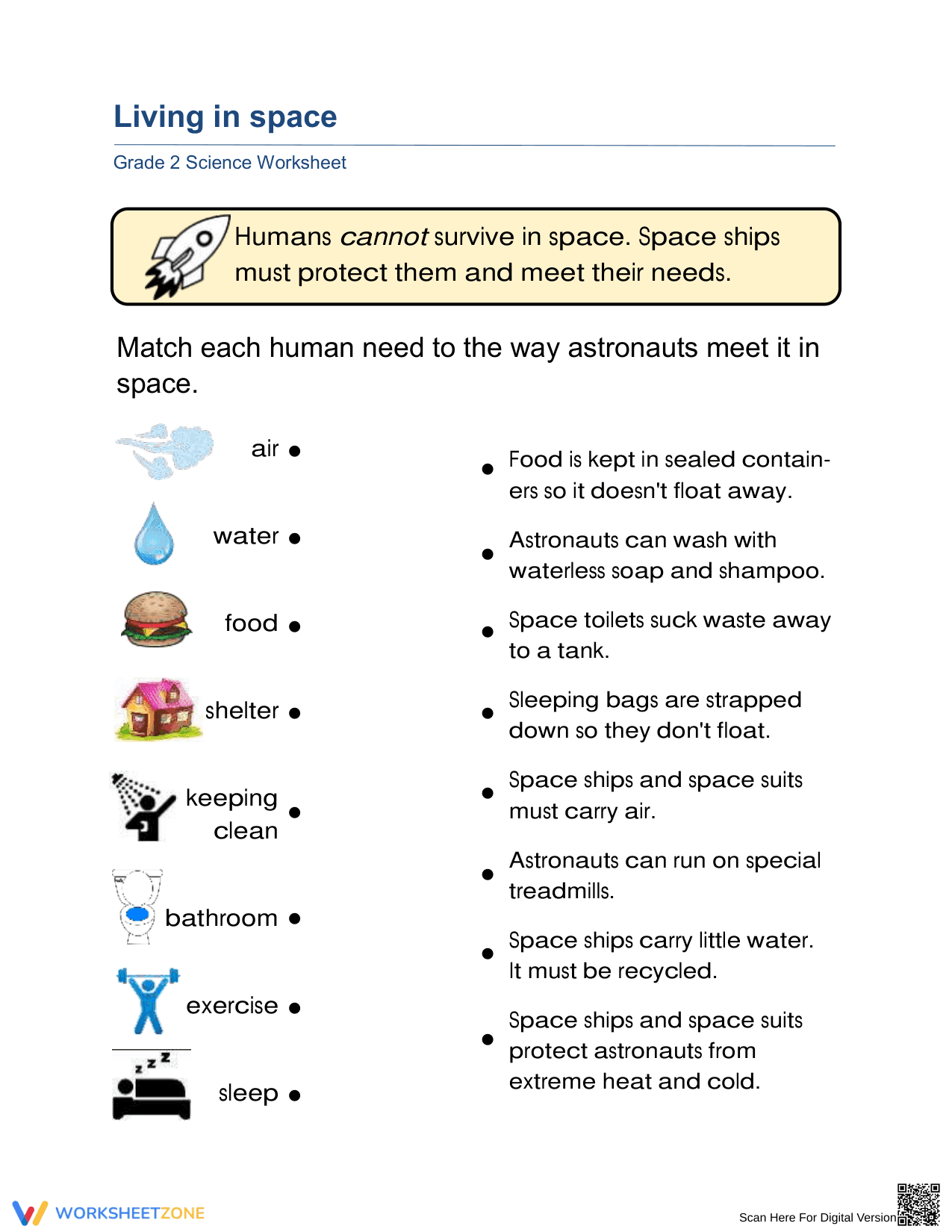
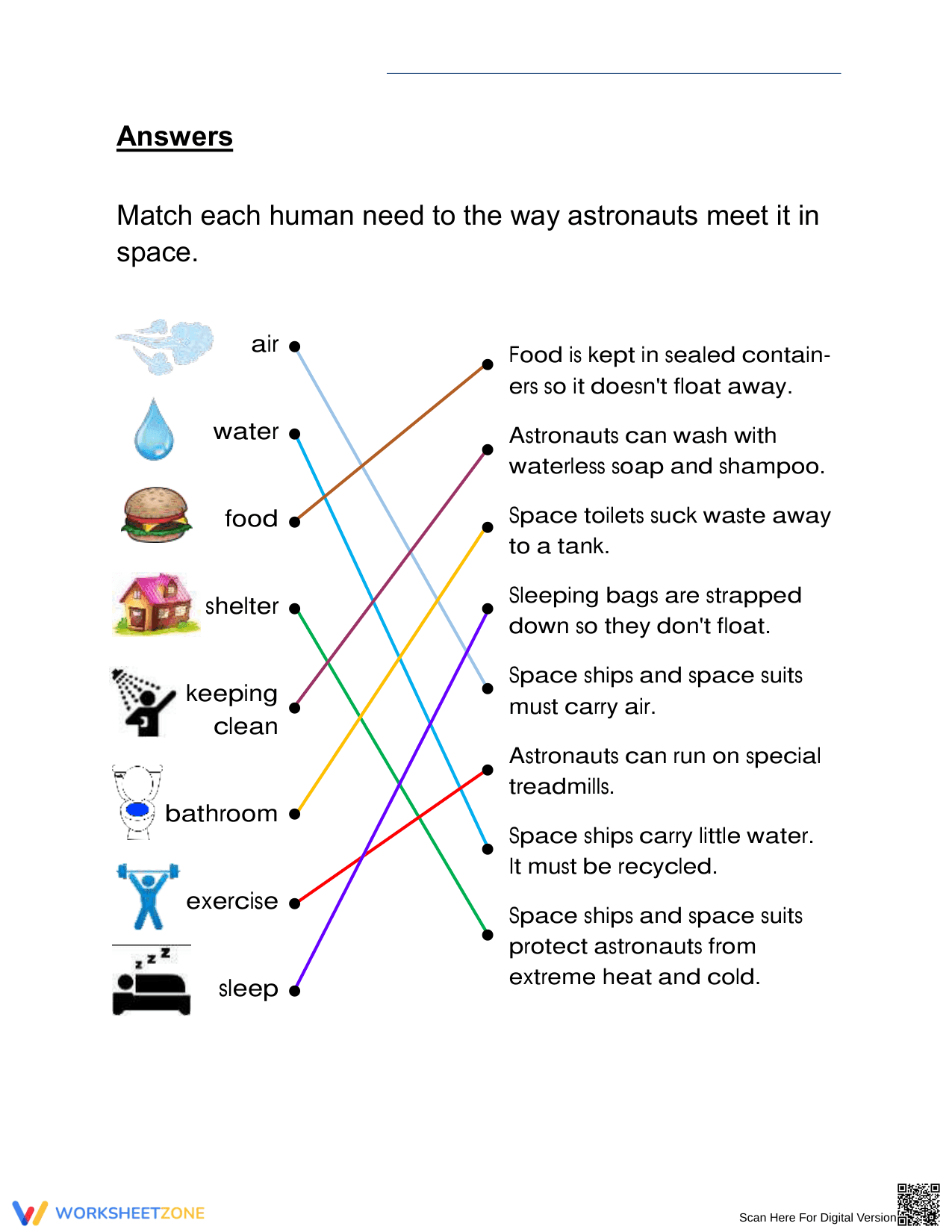

Essential Living in Space Worksheet | Grade 2 Science

Paste this activity's link or code into your existing LMS (Google Classroom, Canvas, Teams, Schoology, Moodle, etc.).
Students can open and work on the activity right away, with no student login required.
You'll still be able to track student progress and results from your teacher account.
Understand how humans survive beyond Earth with this focused science resource. This Grade 2 activity helps students identify the fundamental requirements for life—such as air, water, and shelter—within the unique environment of a spacecraft. Students develop critical thinking skills by connecting biological necessities to specific engineering solutions used by modern astronauts.
At a Glance
- Grade: 2 · Subject: Science
- Standard:
2-LS2-1— Identify the basic needs of living things for survival in different environments- Skill Focus: Human survival requirements in space
- Format: 2 pages · 8 problems · Answer key included · PDF
- Best For: Space science introduction or quick review
- Time: 15–20 minutes
What's Inside
This comprehensive two-page PDF includes a student worksheet and a complete answer key for rapid grading. The main activity features 8 illustrated matching problems where students connect a human need, like "exercise" or "keeping clean," to a specific astronaut solution, such as "running on special treadmills." The clean layout and clear icons support early readers and visual learners.
Zero-Prep Workflow
The zero-prep design makes this resource ideal for busy mornings or sub plans. Total teacher preparation time is under 2 minutes: print the copies and distribute them. Students can complete the matching exercise independently in 15 minutes, followed by a 5-minute review using the answer key to reinforce the science concepts. This streamlined workflow ensures maximum instructional time.
Standards Alignment
Aligned primarily to 2-LS2-1, this activity explores how humans adapt to environments where natural resources are scarce. By analyzing how space ships meet needs for air and water, students demonstrate an understanding of survival systems. This standard code can be copied directly into lesson plans, IEP goals, or district curriculum mapping tools to document evidence of mastery.
How to Use It
Use this as a formative assessment after a lesson on the solar system. Observe students as they match the items; those who struggle with "shelter" or "air" may need a review of the spacecraft's protective shell. It also works as a quiet transition activity after a science video. Expected completion time is roughly 20 minutes including the class discussion.
Who It's For
This resource is designed for Grade 2 students beginning their exploration of space science. The visual icons provide scaffolded support for English Language Learners and students with reading challenges. Pair this worksheet with a non-fiction passage about the International Space Station or an anchor chart showing astronaut gear to provide a rich, multi-modal learning experience.
The study of human survival in space at the primary level aligns with the science as inquiry models highlighted in EdReports 2024, which emphasize the importance of connecting abstract scientific concepts to real-world engineering solutions. According to research by Fisher & Frey (2014), utilizing graphic organizers and matching activities helps young learners build semantic bridges between basic biological needs and the technological adaptations required for extreme environments. This Grade 2 resource targets the 2-LS2-1 standard by requiring students to categorize and link 8 distinct survival factors, thereby reinforcing the cognitive schema for life support systems. By focusing on observable facts—such as the necessity of recycling water or carrying air—the worksheet provides a concrete foundation for later, more complex investigations into Earth systems and engineering design. This evidence-based approach ensures that students move beyond simple memorization toward a functional understanding of human biological requirements for survival.


