




























Views
Downloads
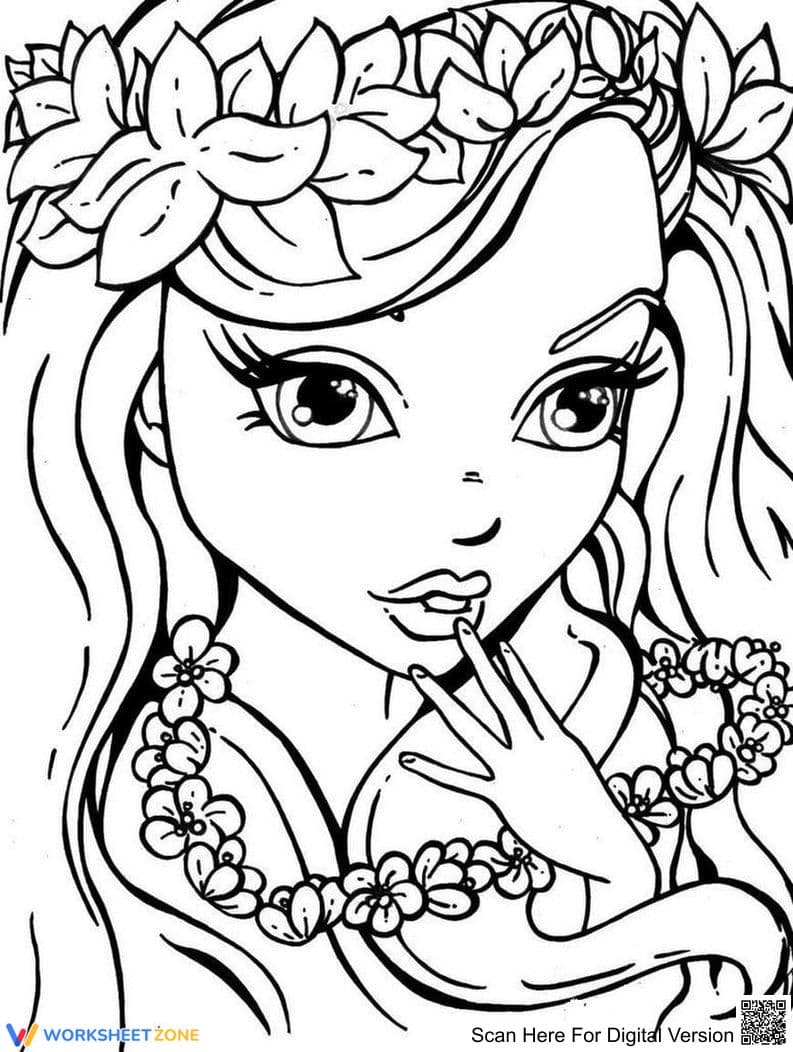

Lisa Frank Coloring Page | Printable Grade K-5 Art

Paste this activity's link or code into your existing LMS (Google Classroom, Canvas, Teams, Schoology, Moodle, etc.).
Students can open and work on the activity right away, with no student login required.
You'll still be able to track student progress and results from your teacher account.
This printable Lisa Frank style coloring page provides students with an engaging creative outlet while developing essential fine motor control. By focusing on intricate line art, young learners practice hand-eye coordination and grip strength, setting a foundation for handwriting success.
At a Glance
- Grade: K-5 · Subject: Art & English
- Standard:
CCSS.ELA-LITERACY.W.K.3— Use drawing to narrate a single event- Skill Focus: Fine motor skills and creativity
- Format: 1 page · 1 coloring task · No answer key · PDF
- Best For: Morning work or early finishers
- Time: 15–20 minutes
Inside this single-page PDF, educators will find a detailed portrait illustration ready for student customization. The artwork features a character adorned with a floral crown and lei, offering various distinct sections that encourage careful color selection and spatial awareness. There is no answer key required, allowing for complete artistic freedom and individualized expression.
This resource is designed for immediate classroom implementation with a streamlined workflow:
- Print (1 minute): Simply send the PDF to your school copier. The high-contrast black-and-white line art prints clearly without draining expensive color ink.
- Distribute (1 minute): Hand out the sheets along with crayons, colored pencils, or markers. No complex instructions are necessary.
- Review (0 minutes): Students work independently, requiring zero active grading or teacher intervention.
Total teacher prep time is under two minutes, making this an ideal emergency sub plan or transition activity.
This activity supports CCSS.ELA-LITERACY.W.K.3: Use a combination of drawing, dictating, and writing to narrate a single event or several loosely linked events. While primarily a coloring task, it serves as a visual prompt that students can use as a foundation for descriptive storytelling or narrative writing. Both standard codes can be copied directly into lesson plans, IEP goals, or district curriculum mapping tools.
Deploy this worksheet during morning arrival to establish a calm, focused classroom environment before direct instruction begins. Alternatively, keep a stack in your early finisher bin to reward students who complete their primary assignments ahead of schedule. As a formative assessment tip, observe students' pencil grip and pressure while they color to identify those who might need additional occupational therapy support for handwriting. Expected completion time ranges from 15 to 20 minutes depending on the medium used.
This resource is primarily designed for Kindergarten through 5th-grade students who benefit from structured creative breaks. It naturally accommodates diverse learners; students needing fine motor support can use thicker crayons, while advanced artists can practice shading and blending with colored pencils. Pair this coloring page with a creative writing prompt or a read-aloud session about friendship and self-expression to extend the learning value.
Integrating visual arts activities like this coloring page into the daily routine offers measurable benefits for early childhood development. According to a 2024 report by EdReports, incorporating drawing and fine motor tasks directly correlates with improved handwriting legibility and sustained attention spans in primary grades. When students engage with materials aligned to CCSS.ELA-LITERACY.W.K.3, they practice using drawing to narrate a single event, which builds the cognitive scaffolding necessary for later written expression. The act of coloring within boundaries strengthens the intrinsic hand muscles required for proper pencil grasp. By providing structured creative outlets, educators foster both physical dexterity and emotional regulation. This simple yet effective tool bridges the gap between artistic exploration and foundational literacy skills, ensuring students develop the physical stamina needed for rigorous academic tasks.


