


























Views
Downloads

Beach Coloring Page | Printable Grade K-5 Art
Paste this activity's link or code into your existing LMS (Google Classroom, Canvas, Teams, Schoology, Moodle, etc.).
Students can open and work on the activity right away, with no student login required.
You'll still be able to track student progress and results from your teacher account.
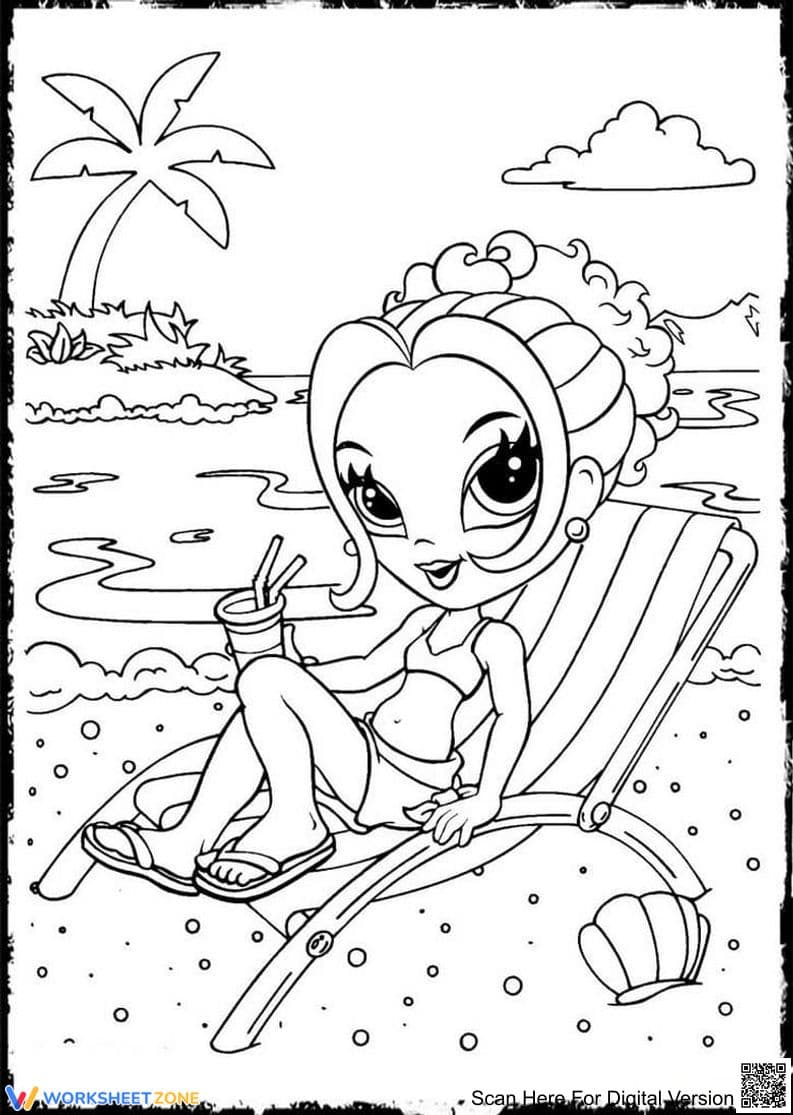
This printable beach coloring page provides students with an engaging creative outlet while developing essential fine motor control. Featuring a fun summer scene, this single-page activity allows early learners to practice grip and coordination, setting a strong foundation for future handwriting success.
At a Glance
- Grade: K-5 · Subject: Arts & Crafts
- Standard:
CCSS.ELA-LITERACY.W.K.2— Use drawing to compose texts- Skill Focus: Fine Motor Skills
- Format: 1 page · 1 task · No answer key · PDF
- Best For: Morning work or early finishers
- Time: 15–20 minutes
This resource includes one high-quality, black-and-white illustration featuring a stylized character relaxing on a beach chair. The bold outlines and varied spatial sections give students ample opportunity to practice staying within the lines while experimenting with color combinations. The single-page format requires absolutely no assembly, making it an immediate addition to any classroom routine.
This activity requires minimal effort.
- Print (30 seconds): Simply download the PDF and print the required number of copies. The high-contrast lines ensure clean reproduction on standard classroom printers.
- Distribute (1 minute): Hand out the sheets along with crayons, markers, or colored pencils. No additional instructions or complex setups are necessary.
- Review (0 minutes): As a creative exercise, this requires no formal grading or answer key checking.
Total teacher prep time is under two minutes. This makes the worksheet an excellent, reliable option for emergency sub plans or unexpected schedule changes.
This activity supports foundational skills aligned with CCSS.ELA-LITERACY.W.K.2, which encourages students to "use a combination of drawing, dictating, and writing to compose informative/explanatory texts." While primarily a coloring task, the fine motor development directly supports the physical mechanics of writing required by this standard. Both standard codes can be copied directly into lesson plans, IEP goals, or district curriculum mapping tools.
This versatile coloring page fits perfectly into morning arrival routines, giving students a calming, focused task while the teacher handles attendance and daily setup. Alternatively, it serves as an excellent early-finisher activity during independent reading or math blocks. While students color, teachers can conduct quick formative-assessment observations regarding pencil grip, hand-eye coordination, and attention to detail. Expect students to spend between 15 and 20 minutes completing the illustration.
This resource is primarily designed for Kindergarten through second-grade students developing their fine motor control, though older students in grades three through five may enjoy it as a relaxing brain break. For differentiation, teachers can challenge advanced students to write a short descriptive sentence about the beach scene on the back of the page. It pairs naturally with a read-aloud session featuring summer-themed picture books or a direct instruction lesson on seasons.
Developing fine motor skills through activities like coloring is a critical precursor to academic success, particularly in early literacy and writing. This resource aligns with CCSS.ELA-LITERACY.W.K.2, helping students use drawing to compose texts by building the physical stamina required for handwriting. According to Fisher & Frey (2014), integrating low-stakes, highly engaging tasks into the daily routine fosters sustained attention and builds essential cognitive-motor connections. When students practice controlled movements within defined boundaries, they strengthen the specific hand muscles needed for legible letter formation. By incorporating targeted creative exercises, educators can support foundational physical development while maintaining a positive, calm classroom environment. This approach ensures that young learners acquire the mechanical skills necessary to express their ideas effectively as they progress through the primary grades.


