




























Views
Downloads

Printable Frog Life Cycle Spin Wheel | Grade 3

Paste this activity's link or code into your existing LMS (Google Classroom, Canvas, Teams, Schoology, Moodle, etc.).
Students can open and work on the activity right away, with no student login required.
You'll still be able to track student progress and results from your teacher account.
This interactive frog life cycle spin wheel helps third-grade students visualize the biological transformation from egg to adult. By constructing a physical model, learners actively engage with the sequencing of metamorphosis. This hands-on science craft simplifies complex biological stages into a memorable activity that reinforces key vocabulary and scientific observation.
At a Glance
- Grade: 3 · Subject: Science
- Standard:
3-LS1-1— Develop models to describe unique organism life cycles- Skill Focus: Biological sequencing and metamorphosis
- Format: 2 pages · 5 stages · No answer key · PDF
- Best For: Hands-on science centers
- Time: 15–20 minutes
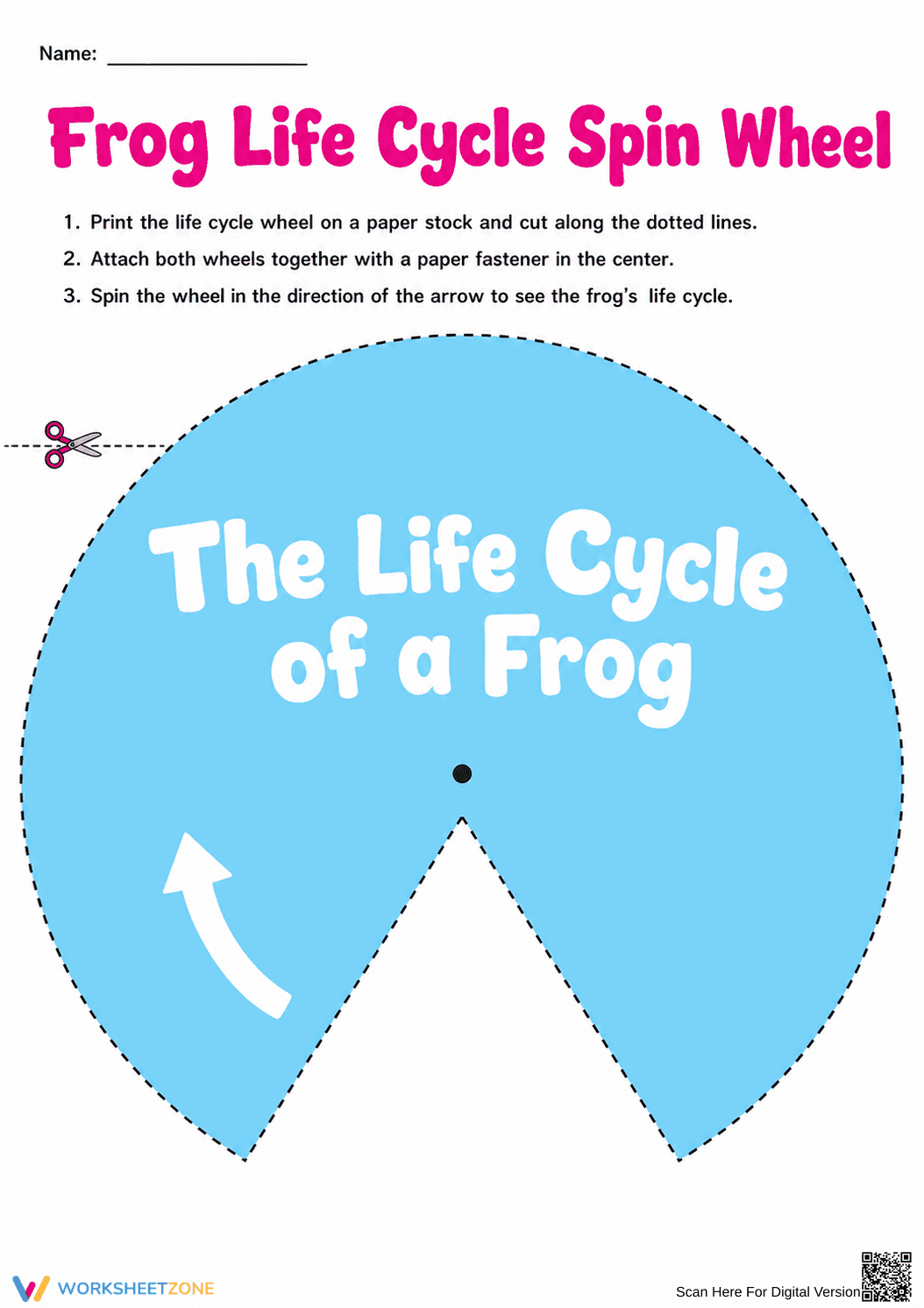
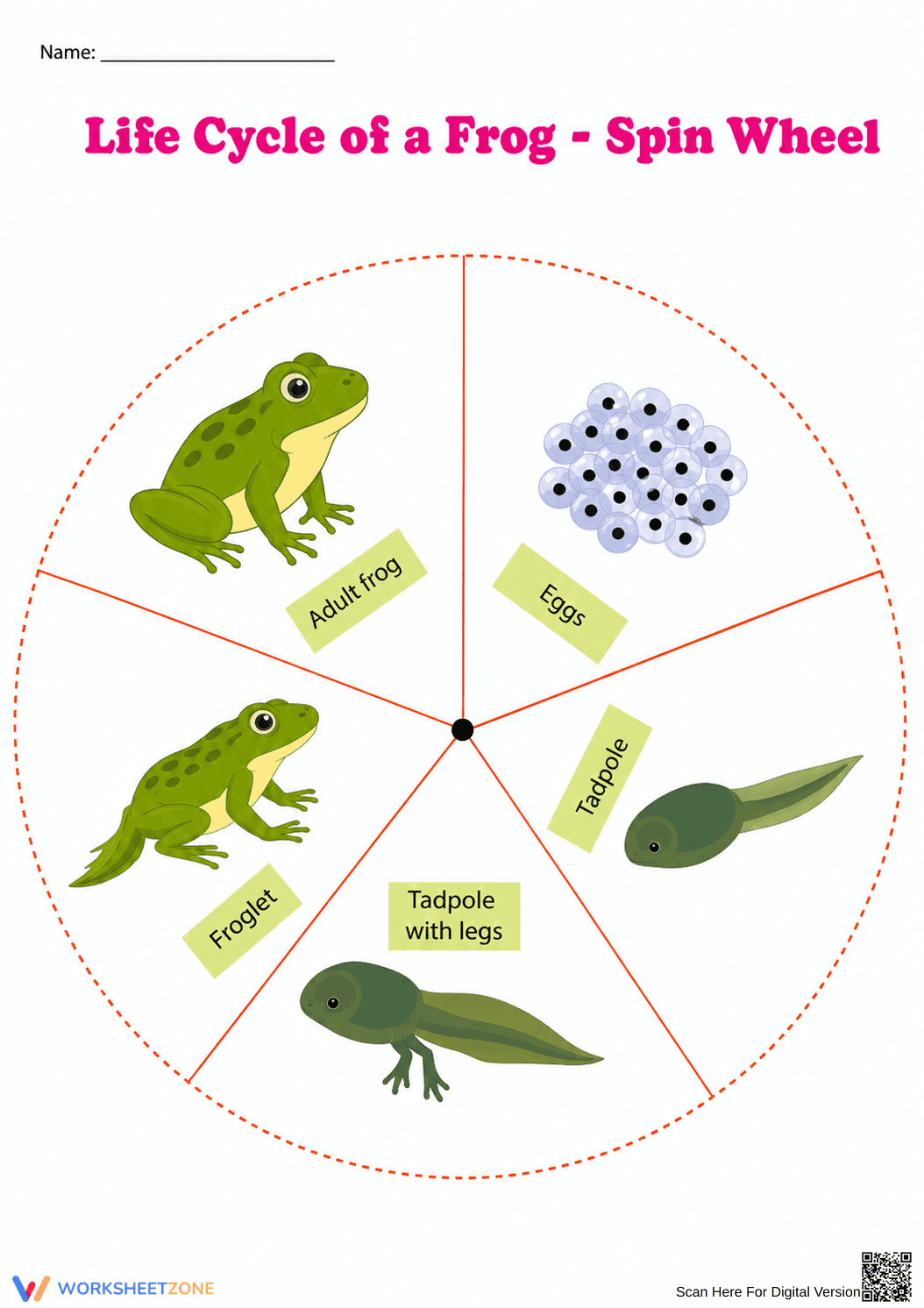
The download includes two high-quality printable pages designed for easy assembly. The first page features the top viewing wheel with a pre-marked cutout section and clear student instructions. The second page contains the base wheel illustrated with five distinct stages: eggs, tadpole, tadpole with legs, froglet, and adult frog. Clear labels accompany each vibrant illustration to support scientific literacy and vocabulary acquisition during the craft.
Teachers can implement this activity with minimal preparation. Print (1 minute): Run the two-page set on standard paper or cardstock for added durability. Distribute (1 minute): Hand out the sheets along with scissors and a single brass fastener per student. Review (15 minutes): Students cut and assemble the wheels independently using the three-step visual guide provided on the worksheet, allowing for immediate exploration of the sequence. This workflow requires under two minutes of teacher setup, making it an excellent option for emergency sub plans or Friday science blocks.
This resource aligns directly with 3-LS1-1, requiring students to develop models to describe that organisms have unique and diverse life cycles. It specifically addresses the growth and development components of the life science framework by showing the progression of an amphibian. Both standard codes can be copied directly into lesson plans, IEP goals, or district curriculum mapping tools.
Use this spin wheel during the Explore phase of a lesson on animal life cycles. It serves as an excellent formative assessment tool; as students spin the wheel, ask them to describe the physical changes occurring between the tadpole and froglet stages. The activity typically takes 15 to 20 minutes to complete and assemble, making it a concise addition to any biology unit.
This printable is ideal for general education third-grade classrooms, but the visual nature makes it highly effective for English Language Learners (ELLs) and students with IEPs who benefit from tactile learning. It pairs perfectly with a non-fiction text about amphibians or a classroom tadpole observation tank to provide a concrete reference point for abstract biological concepts.
According to the RAND AIRS 2024 report on elementary science instruction, tactile models significantly improve the retention of sequential biological processes compared to passive reading alone. This 3-LS1-1 aligned spin wheel provides a structured framework for students to internalize the five stages of frog metamorphosis: eggs, tadpole, tadpole with legs, froglet, and adult frog. By physically manipulating the wheel, learners move beyond rote memorization into active modeling to develop models to describe unique organism life cycles, a core practice of the Next Generation Science Standards. The clear visual cues on the worksheet allow students to demonstrate mastery of life cycle concepts independently while building essential fine motor skills. This resource is a reliable tool for meeting life science benchmarks while maintaining high student engagement through an interactive, research-backed design.


