




























Views
Downloads
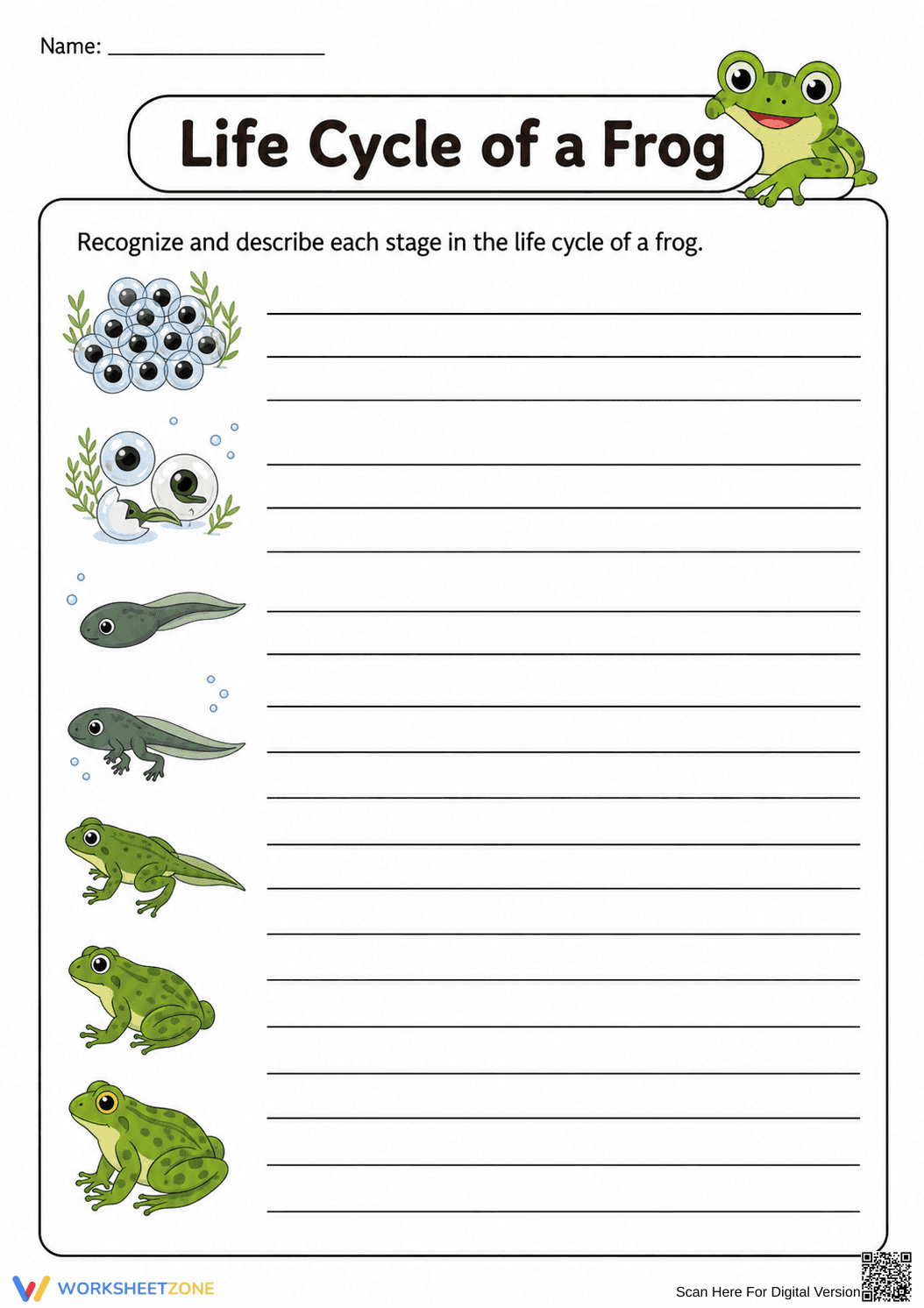
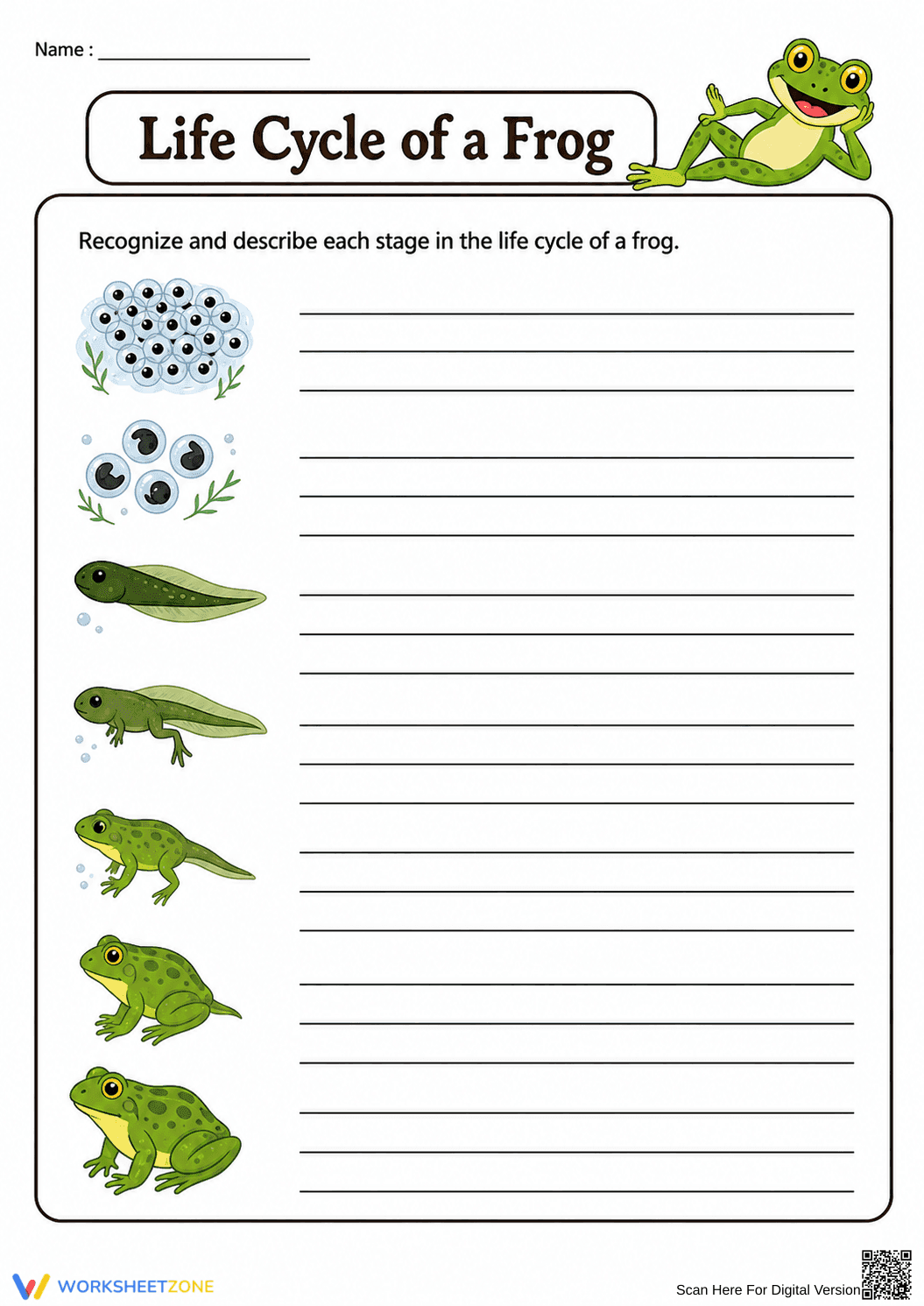

Frog Life Cycle Worksheet | Grade 3 Essential Science

Paste this activity's link or code into your existing LMS (Google Classroom, Canvas, Teams, Schoology, Moodle, etc.).
Students can open and work on the activity right away, with no student login required.
You'll still be able to track student progress and results from your teacher account.
This Grade 3 frog life cycle worksheet helps students master biological sequencing by identifying and describing seven distinct developmental stages. Students observe detailed illustrations from spawn to adult, practicing scientific observation and descriptive writing to demonstrate their understanding of amphibian metamorphosis and growth patterns.
At a Glance
- Grade: 3 · Subject: Science
- Standard:
3-LS1-1— Develop models to describe that organisms have unique and diverse life cycles- Skill Focus: Metamorphosis sequencing and description
- Format: 2 pages · 7 problems · Answer key included · PDF
- Best For: Independent practice or formative assessment
- Time: 15–20 minutes
What's Inside: The resource contains two pages of high-quality biological illustrations. Each page features seven specific stages: frog eggs, hatching, tadpole, tadpole with legs, froglet, and mature adult. Ample primary-ruled lines are provided next to each image for student responses. A comprehensive answer key is included to facilitate quick grading or self-correction.
Zero-Prep Workflow:
- Print: Select the desired page and print enough copies for your class in under 30 seconds.
- Distribute: Hand out the worksheets as a transition into your life science block with zero setup.
- Review: Use the included answer key to conduct a whole-class check or peer-review session in 5 minutes.
Total teacher preparation time is under 2 minutes, making this an ideal sub plan or last-minute reinforcement activity.
Standards Alignment: This worksheet is primary aligned to `3-LS1-1`: "Develop models to describe that organisms have unique and diverse life cycles but all have in common birth, growth, reproduction, and death." It also supports ELA writing standards by requiring descriptive sentence construction. Both standard codes can be copied directly into lesson plans, IEP goals, or district curriculum mapping tools.
How to Use It: Use this worksheet during the "Explain" phase of a 5E lesson model to allow students to articulate their observations of amphibian growth. It also serves as an excellent formative assessment after a direct instruction session on metamorphosis. Teachers should observe if students use specific vocabulary like "spawn," "gills," or "metamorphosis" in their descriptions. Completion typically takes 15 to 20 minutes.
Who It's For: This resource is designed for third-grade general education students, but the visual nature makes it highly effective for English Language Learners (ELLs) and students with IEPs requiring visual aids. It pairs naturally with a classroom terrarium observation or a non-fiction passage about pond ecosystems.
According to the RAND AIRS 2024 report, high-quality visual aids in science instruction significantly improve retention of complex biological sequences like the frog life cycle. This worksheet targets the 3-LS1-1 standard, requiring students to describe the unique stages of amphibian metamorphosis. By combining visual recognition with descriptive writing, the activity reinforces the "birth, growth, reproduction, and death" framework essential for elementary life science mastery. Research from Fisher & Frey (2014) suggests that such structured observation tasks bridge the gap between visual literacy and scientific literacy. This printable resource provides a clear, evidence-based pathway for students to document their understanding of biological processes without the need for extensive teacher setup or specialized materials.


