


























Views
Downloads

Kindergarten Letter M Cursive — Printable No-Prep Worksheet
Paste this activity's link or code into your existing LMS (Google Classroom, Canvas, Teams, Schoology, Moodle, etc.).
Students can open and work on the activity right away, with no student login required.
You'll still be able to track student progress and results from your teacher account.
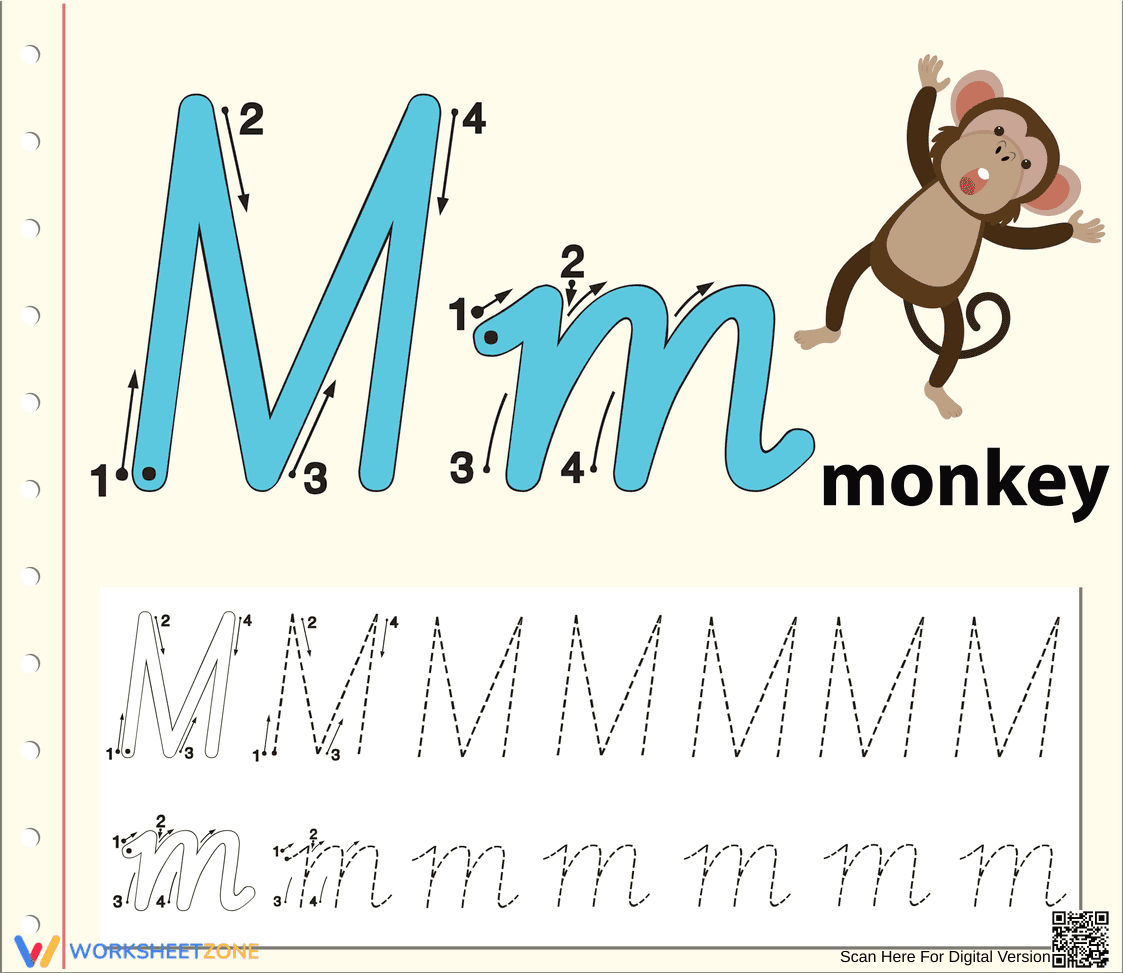
This Kindergarten cursive Letter M worksheet helps young learners master letter formation through guided tracing and visual cues. Students develop fine motor control while connecting the letter 'M' to the "monkey" phonetic anchor. By following numbered stroke arrows, children build the muscle memory required for fluid, legible handwriting in both uppercase and lowercase formats.
At a Glance
- Grade: Kindergarten · Subject: English
- Standard:
CCSS.ELA-LITERACY.L.K.1.A— Print many upper- and lowercase letters with proper form- Skill Focus: Cursive Letter M Formation
- Format: 1 page · 16 problems · Answer key included · PDF
- Best For: Morning work or handwriting centers
- Time: 10–15 minutes
What's Inside
Inside this single-page PDF, you will find two large instructional models for uppercase 'M' and lowercase 'm' featuring numbered directional arrows. Below the guides, students engage with 16 specific tracing tasks—8 for each case—set on standard handwriting lines. The inclusion of a monkey illustration provides a helpful mnemonic device for early literacy development.
Zero-Prep Workflow
This resource is designed for a zero-prep classroom environment. First, print the single-page PDF (30 seconds). Next, distribute the sheets to students during your handwriting block (1 minute). Finally, review student stroke order by observing their progress in real-time (ongoing). Total teacher preparation time is under two minutes, making it an ideal choice for substitute folders or sudden schedule changes.
Standards Alignment
This worksheet aligns with CCSS.ELA-LITERACY.L.K.1.A, which requires students to demonstrate command of the conventions of standard English grammar and usage when writing, specifically printing upper- and lowercase letters. While focusing on cursive, it supports the foundational goal of legible character production. This standard code can be copied directly into lesson plans, IEP goals, or district curriculum mapping tools.
How to Use It
Use this worksheet during the "You Do" phase of a gradual release handwriting lesson. After demonstrating the four-stroke sequence for uppercase 'M' on the whiteboard, assign this sheet for independent practice. It also serves as an effective formative assessment tool; teachers can quickly scan the page to identify students struggling with the "over-the-hill" motion required for the letter 'm'.
Who It's For
This resource is tailored for Kindergarten students beginning their transition to cursive or advanced preschoolers working on fine motor precision. It is particularly effective for kinesthetic learners who benefit from the tactile feedback of tracing. Pair this with a phonics lesson on the /m/ sound or a reading of "Five Little Monkeys" for a thematic literacy unit.
Handwriting instruction remains a cornerstone of early literacy, as evidenced by research from Fisher & Frey (2014) regarding the importance of scaffolded practice in foundational skills. This worksheet targets CCSS.ELA-LITERACY.L.K.1.A by providing 16 structured tracing opportunities that reinforce the specific motor pathways needed for the letter M. According to the RAND AIRS 2024 report, consistent, short-burst practice sessions are more effective for motor skill acquisition in primary grades than infrequent, long-duration drills. By integrating visual anchors like the monkey illustration and numbered stroke guides, this resource reduces cognitive load, allowing students to focus entirely on the physical mechanics of writing. This evidence-based approach ensures that students move from guided tracing to independent production with greater accuracy and confidence. Educators can utilize this tool to meet district requirements for handwriting fluency while providing students with a clear, distraction-free path to letter mastery.


