


























Views
Downloads

Printable Letter N Writing Worksheet | Kindergarten ELA
Paste this activity's link or code into your existing LMS (Google Classroom, Canvas, Teams, Schoology, Moodle, etc.).
Students can open and work on the activity right away, with no student login required.
You'll still be able to track student progress and results from your teacher account.
This Kindergarten Letter N worksheet provides essential handwriting practice to help early learners master the mechanics of writing. By focusing on precise letter formation for both uppercase and lowercase characters, students build the muscle memory and fine motor control necessary for future literacy success. This resource ensures students can confidently identify and produce the letter N.
At a Glance
- Grade: Kindergarten · Subject: ELA
- Standard:
CCSS.ELA-LITERACY.L.K.1.A— Print many upper- and lowercase letters with proper formation- Skill Focus: Letter N formation
- Format: 2 pages · 48 tasks · No-prep · PDF
- Best For: Morning work and literacy centers
- Time: 10–15 minutes
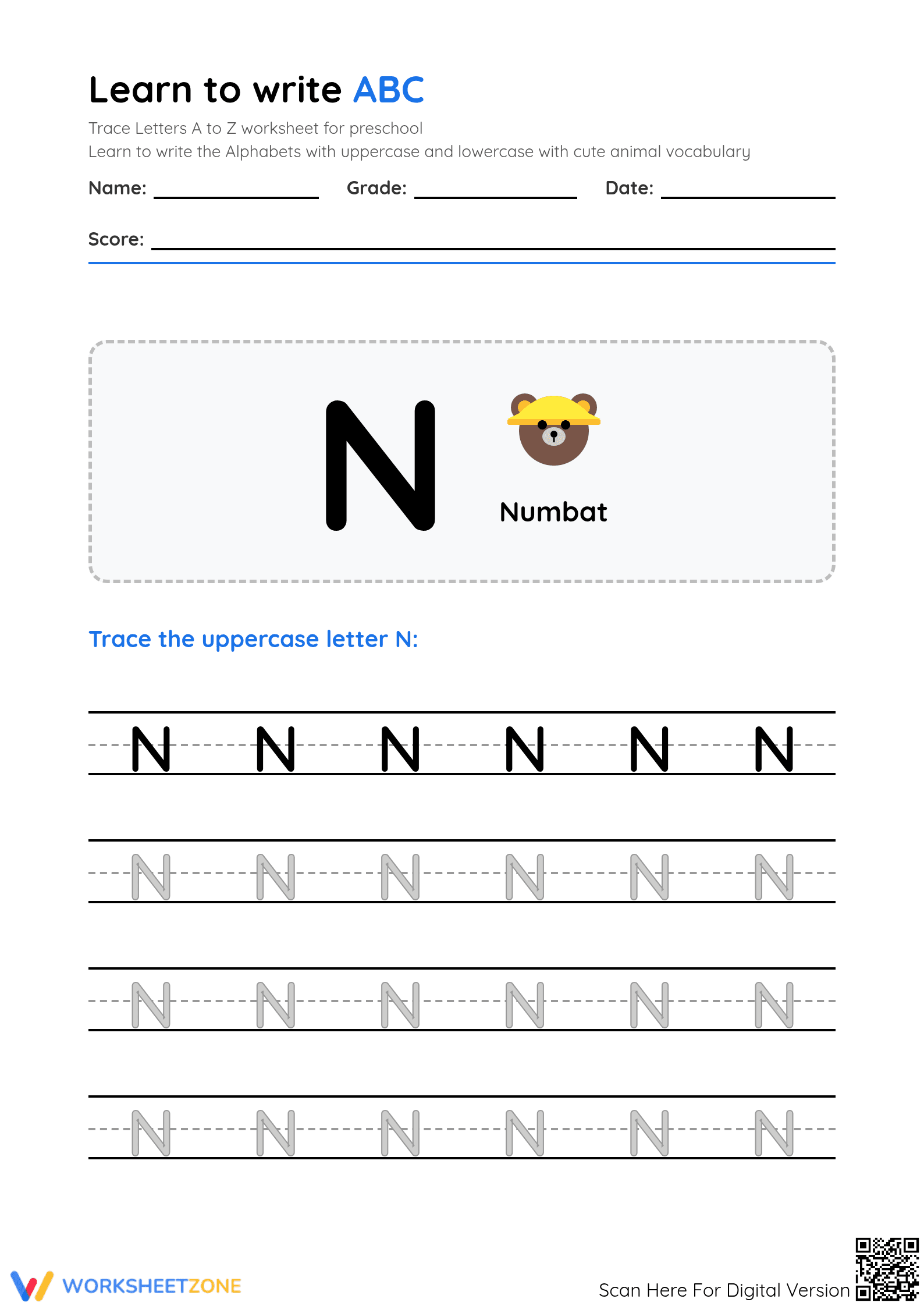
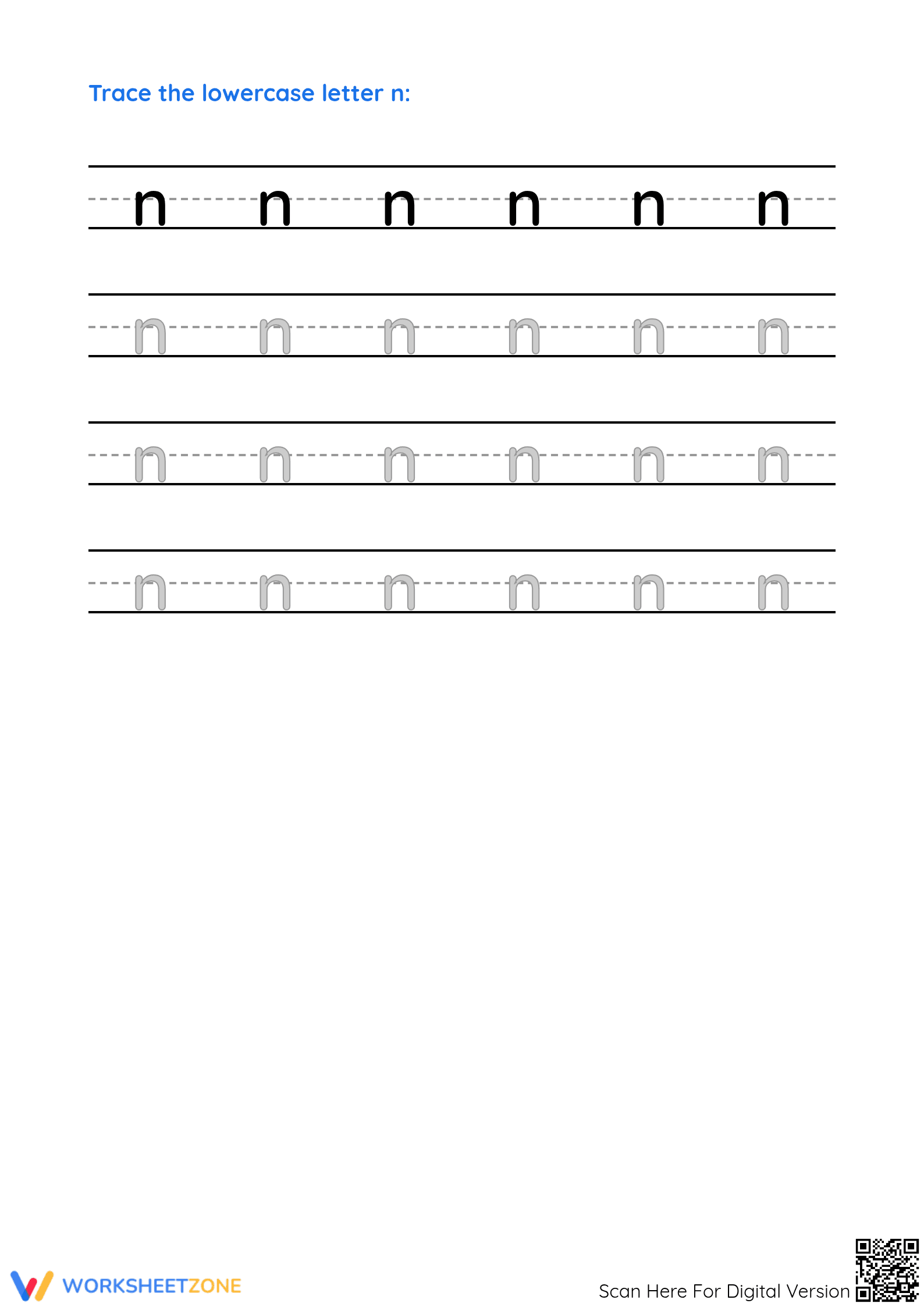
Inside this two-page PDF, you will find a comprehensive approach to the letter N. The first page features a large-format uppercase N accompanied by a Numbat illustration to reinforce beginning sounds. It includes four rows of tracing practice with 24 individual tasks. The second page mirrors this structure for the lowercase letter n, providing another 24 tracing opportunities. The clean layout and clear dashed lines minimize visual distractions for young learners.
Zero-Prep Workflow
- Print: Select the two-page PDF and print enough copies for your group (30 seconds).
- Distribute: Hand out the sheets during morning work or literacy centers (1 minute).
- Review: Circulate to check for proper top-to-bottom stroke order and pencil grip (30 seconds).
Total teacher preparation time is less than two minutes, making this an excellent choice for emergency sub plans or daily handwriting routines.
Standards Alignment
This worksheet is specifically aligned to `CCSS.ELA-LITERACY.L.K.1.A`, which requires students to print many upper- and lowercase letters. By providing repetitive, structured tracing for a single letter, the resource allows for deep focus on one character at a time. Both standard codes can be copied directly into lesson plans, IEP goals, or district curriculum mapping tools to document foundational skill coverage.
How to Use It
Use this worksheet during the independent practice phase of a handwriting lesson. After modeling the stroke order on a whiteboard, assign the uppercase page as guided practice. The lowercase page can be sent home as a reinforcement activity to involve parents in the learning process. Observe students to ensure they are following the correct directional paths. Completion typically takes 10 to 15 minutes.
Who It's For
This resource is perfect for Kindergarten students, preschool graduates, and first graders needing remedial handwriting support. It is particularly effective for students receiving occupational therapy services who require high-repetition tasks to improve grip and control. Pair this worksheet with a letter N anchor chart or a phonics song to create a multi-sensory learning experience for early childhood classrooms.
According to Fisher & Frey (2014), the gradual release of responsibility begins with clear modeling of foundational skills like letter formation. This worksheet provides that model through explicit tracing paths for the letter N, allowing students to internalize the motor patterns required for fluent writing. Research from the RAND AIRS 2024 report suggests that consistent, short-burst practice in early childhood settings significantly improves orthographic mapping and letter-sound recognition. By focusing on both uppercase and lowercase variants, this resource aligns with evidence-based literacy frameworks that prioritize simultaneous visual and motor engagement. The inclusion of the Numbat vocabulary word further strengthens the phonemic connection between the grapheme and its corresponding initial sound. Educators can utilize these 48 tracing tasks to monitor fine motor development and provide immediate corrective feedback, ensuring students meet the CCSS.ELA-LITERACY.L.K.1.A standard for printing letters with accuracy and confidence.


