


























Views
Downloads

Printable Learn to Write Letter J Worksheet | Grade K-1
Paste this activity's link or code into your existing LMS (Google Classroom, Canvas, Teams, Schoology, Moodle, etc.).
Students can open and work on the activity right away, with no student login required.
You'll still be able to track student progress and results from your teacher account.
Help early learners master the letter J with this focused handwriting and phonics resource. Students practice precise uppercase and lowercase formation while connecting the letter sound to a familiar animal keyword. This worksheet transforms abstract letter shapes into concrete motor skills, ensuring students build the muscle memory required for fluent writing and early literacy success in any classroom.
At a Glance
- Grade: Kindergarten · Subject: English Language Arts
- Standard:
CCSS.ELA-LITERACY.L.K.1.A— Print upper- and lowercase letters accurately using correct strokes and directionality- Skill Focus: Letter J Formation
- Format: 2 pages · 13 tasks · Answer key included · PDF
- Best For: Literacy centers and independent morning work
- Time: 10–15 minutes
What's Inside
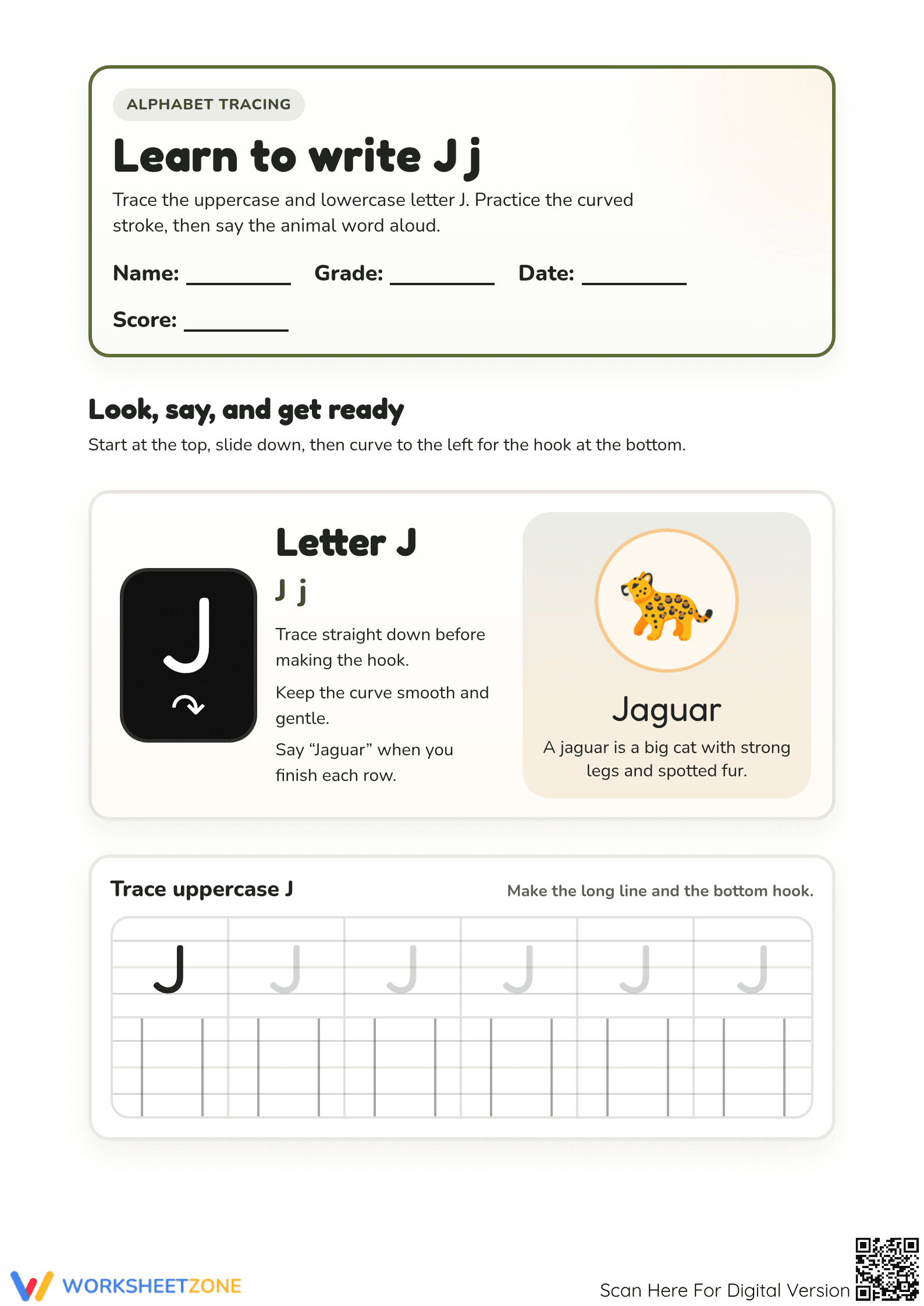
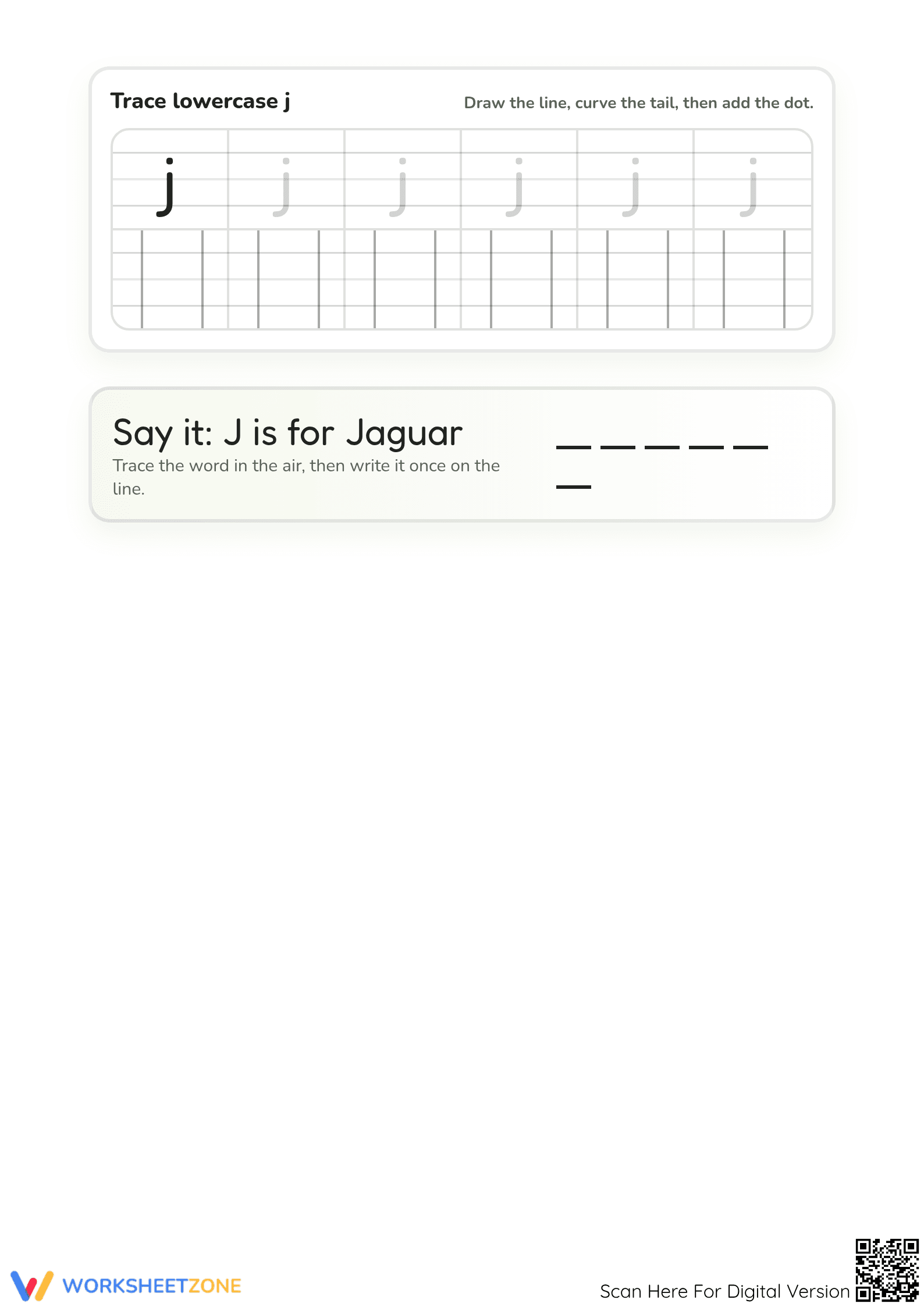
This comprehensive two-page PDF focuses exclusively on the letter J. The first page introduces uppercase J with step-by-step directional arrows and six dedicated tracing boxes. The second page mirrors this structure for lowercase j, followed by a phonics-based writing task where students practice writing the word "Jaguar." The layout uses primary-ruled lines to guide vertical height and tail placement, providing a structured environment for developing fine motor control.
Zero-Prep Workflow
Implementing this resource takes less than two minutes of teacher preparation. Simply print the double-sided PDF and distribute it to your students during your phonics block. Because the worksheet includes visual cues, directional arrows, and a clear animal anchor, students can navigate the tasks independently with minimal verbal instruction. This makes it an ideal choice for emergency sub plans or quiet transition periods between direct instruction lessons.
Standards Alignment
The primary focus is CCSS.ELA-LITERACY.L.K.1.A, which requires students to print many upper- and lowercase letters. By providing scaffolded tracing before independent writing, the worksheet ensures students follow the "top-to-bottom" and "curve-to-left" strokes mandated by the standard. This standard code can be copied directly into lesson plans, IEP goals, or district curriculum mapping tools to demonstrate alignment with foundational writing requirements.
How to Use It
Use this worksheet during the "You Do" phase of a gradual release lesson on the letter J. After demonstrating the stroke on a whiteboard, assign the sheet to verify that students can replicate the hook and dot placement. It also serves as a quick formative assessment; observe students as they write to ensure they are starting strokes from the top rather than the bottom, which is a common early writing error.
Who It's For
This resource is designed for preschool, kindergarten, and first-grade students who are developing foundational penmanship. It is particularly effective for students requiring extra fine-motor support, as the large tracing guides provide a high degree of scaffolding. Pair this worksheet with a letter J alphabet song or a picture book about jaguars to reinforce the phonics connection and deepen student engagement with the letter.
Handwriting remains a critical component of early literacy, as the physical act of letter formation is neurologically linked to letter recognition and reading fluency. Research from Fisher & Frey (2014) emphasizes the importance of guided practice and scaffolded repetition in the acquisition of foundational literacy skills. This worksheet addresses CCSS.ELA-LITERACY.L.K.1.A by providing structured opportunities for students to master the letter J through deliberate tracing and independent writing. By focusing on correct stroke directionality and phonemic association, the resource helps students move from simple recognition to active production. This systematic approach to penmanship ensures that students build the motor automaticity necessary for more complex composition tasks later in their academic careers. The inclusion of the "Jaguar" keyword further supports vocabulary development, making this a dual-purpose tool for handwriting and phonics instruction that can be easily integrated into any evidence-based literacy curriculum.


