


























Views
Downloads

Essential Grade 4 Science: Properties of Flexible Materials
Paste this activity's link or code into your existing LMS (Google Classroom, Canvas, Teams, Schoology, Moodle, etc.).
Students can open and work on the activity right away, with no student login required.
You'll still be able to track student progress and results from your teacher account.
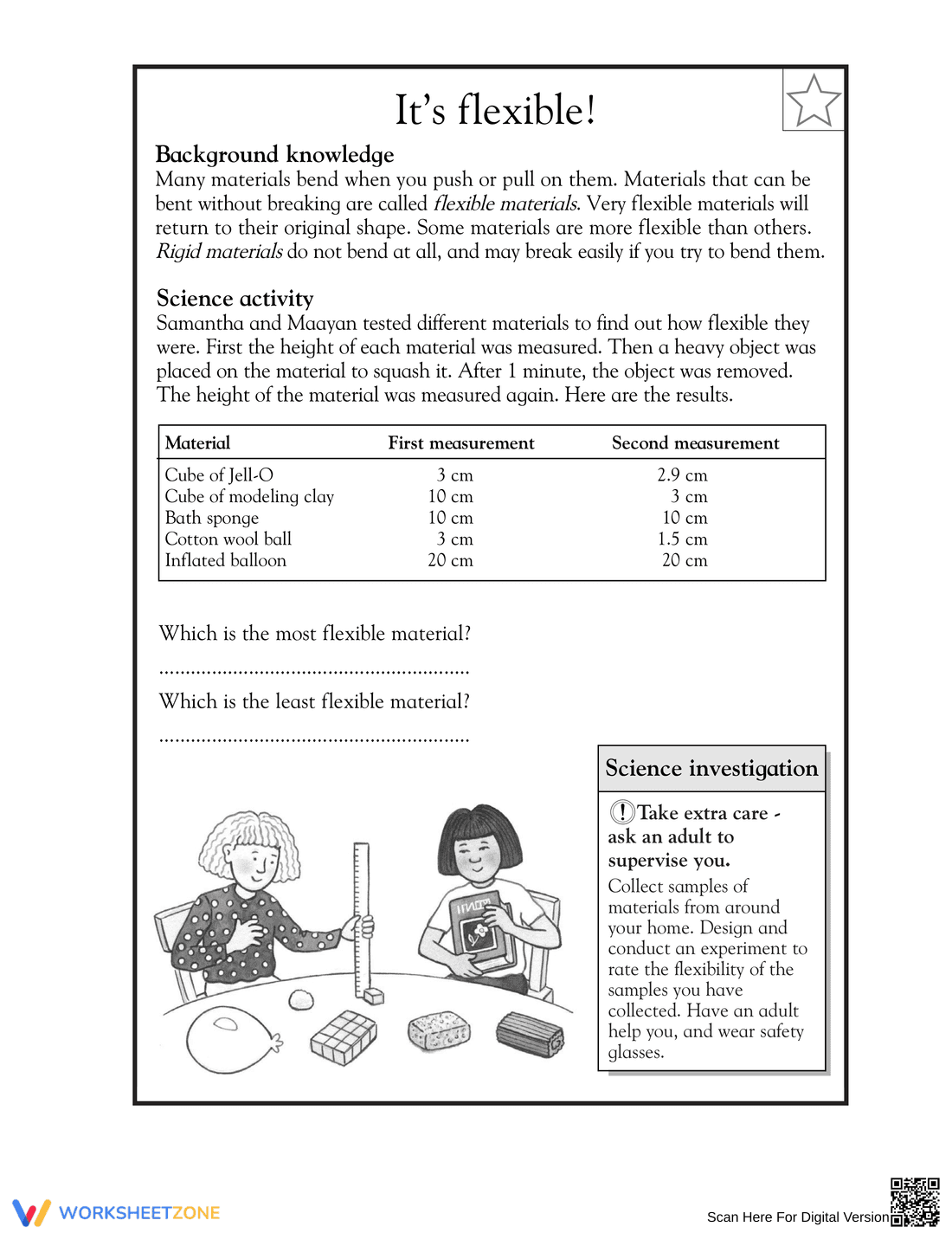
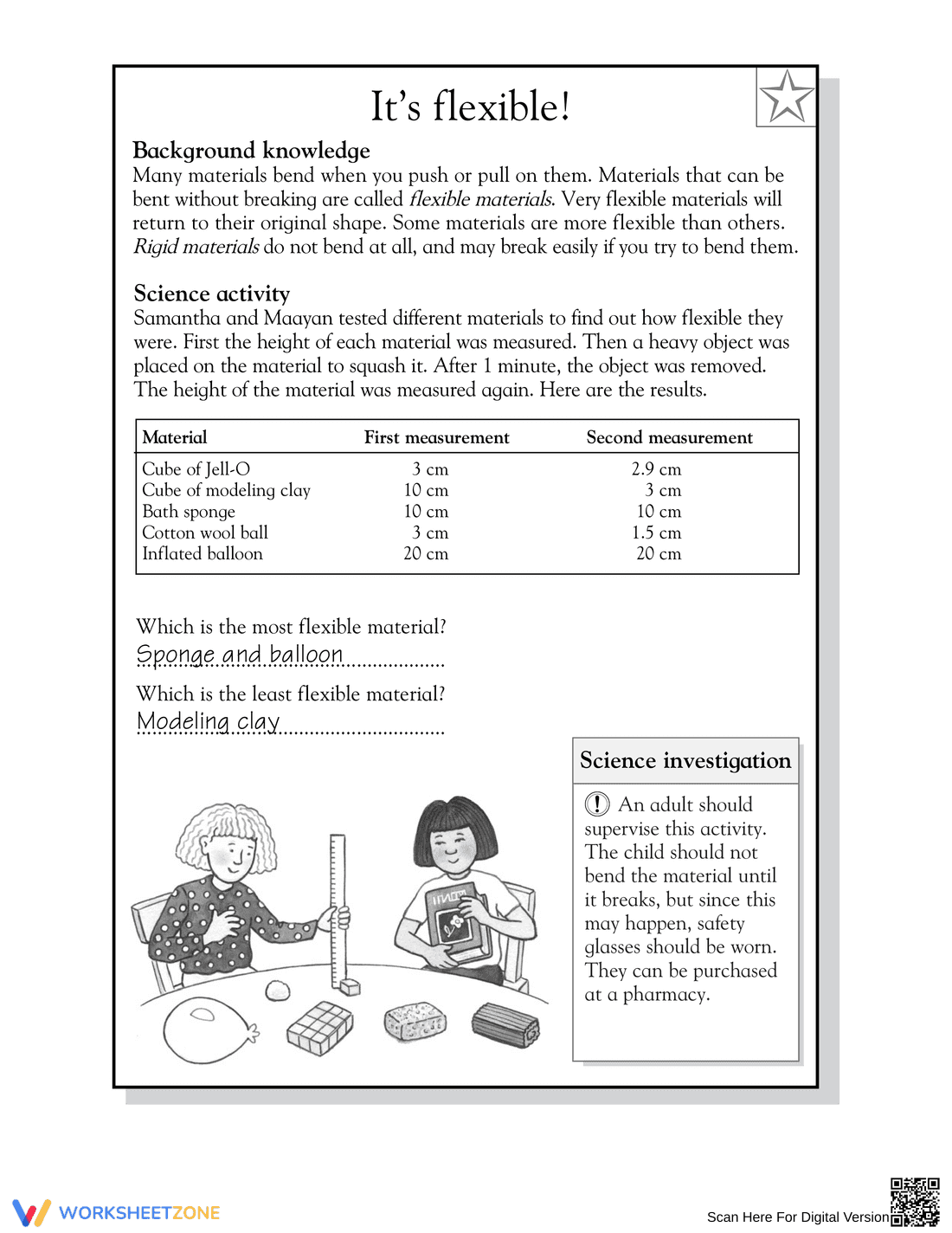
This Grade 4 science worksheet helps students investigate the physical properties of matter by analyzing experimental data. Students examine how different materials respond to pressure, distinguishing between flexible and rigid substances through quantitative measurements. By interpreting a provided data table, learners identify the most and least flexible items, bridging the gap between observation and scientific conclusion.
At a Glance
- Grade: 4 · Subject: Science
- Standard:
RI.4.7— Interpret information presented in data tables and diagrams to explain scientific concepts- Skill Focus: Data analysis and material properties
- Format: 1 page · 3 tasks · Answer key included · PDF
- Best For: Independent practice or introductory science labs
- Time: 15–20 minutes
This single-page PDF includes a comprehensive background knowledge section that defines flexible and rigid materials. It features a science activity based on a height-measurement experiment involving various household materials like Jell-O, modeling clay, and sponges. Students are presented with a detailed data table showing first and second measurements, followed by critical thinking questions and a "Science investigation" extension task that encourages home-based experimentation.
The worksheet is designed for immediate classroom implementation with zero preparation required. 3 steps: Print, Distribute, Review. Total teacher prep time is under 2 minutes. Students can work independently while the teacher monitors progress. This resource is highly suitable for emergency substitute plans due to the clear instructions and self-contained background information provided.
Aligned with CCSS.ELA-LITERACY.RI.4.7, students must interpret information presented quantitatively in a data table to solve problems. This worksheet also supports NGSS inquiry skills by requiring students to use evidence from a controlled test to support their claims about material behavior. Both standard codes can be copied directly into lesson plans, IEP goals, or district curriculum mapping tools.
Use this worksheet as a mid-lesson check for understanding after introducing the concept of physical properties. As a formative observation tip, watch how students compare the "before" and "after" measurements in the table; those who struggle may need a quick refresher on subtraction. Students should typically complete the data analysis portion in 15 minutes, with the home investigation serving as an optional enrichment project.
This resource is tailored for fourth-grade students developing their scientific literacy and data interpretation skills. It provides enough scaffolding for struggling readers through clear definitions while offering a high-interest extension for advanced learners. Pair this worksheet with a physical flexibility kit containing the items listed in the table to create a multi-sensory learning experience during direct instruction.
According to the RAND AIRS 2024 report on elementary science pedagogy, the integration of quantitative data analysis into early science instruction significantly improves a student's ability to construct evidence-based arguments. This Grade 4 worksheet leverages standard RI.4.7 to build these critical competencies by requiring learners to translate raw measurements into meaningful classifications. By engaging with scenarios like measuring the compression of a bath sponge, students develop a nuanced understanding of physical properties. Research from Fisher & Frey (2014) emphasizes that such structured data interpretation tasks are essential for moving students toward independent scientific inquiry. This resource provides the necessary framework for students to practice these high-stakes skills in a low-stakes, zero-prep environment, ensuring mastery of both ELA and science standards simultaneously.


