


























Views
Downloads

Identifying Verbs Worksheet | Grade 3 Essential
Paste this activity's link or code into your existing LMS (Google Classroom, Canvas, Teams, Schoology, Moodle, etc.).
Students can open and work on the activity right away, with no student login required.
You'll still be able to track student progress and results from your teacher account.
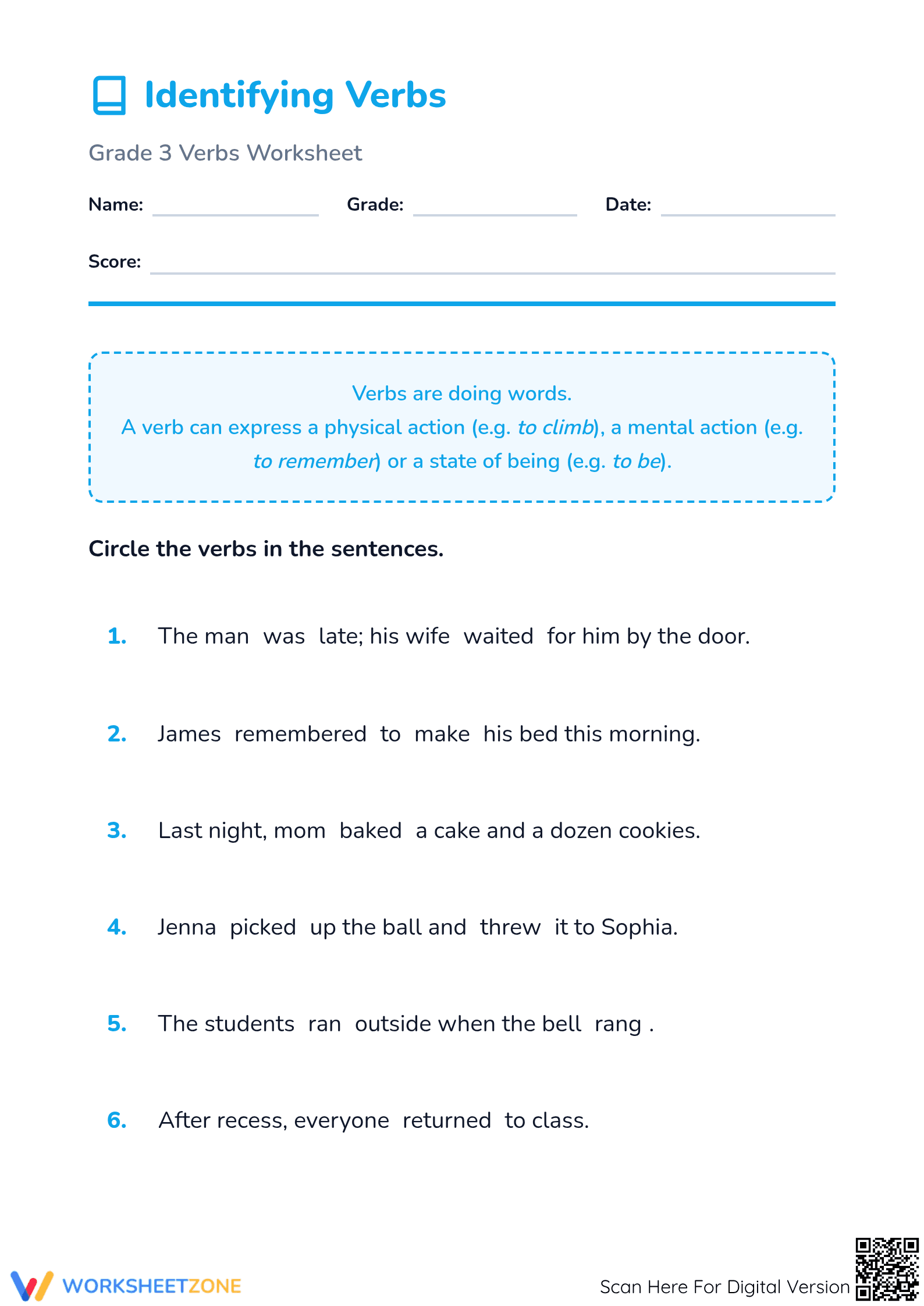
This Grade 3 ELA worksheet helps students master the identification of verbs within complex sentences. By distinguishing between physical actions, mental processes, and states of being, learners build a robust foundation for sentence construction and grammatical accuracy. Students will gain confidence in recognizing how doing words function to drive meaning in written communication.
At a Glance
- Grade: 3 · Subject: English Language Arts
- Standard:
CCSS.ELA-LITERACY.L.3.1— Demonstrate command of the conventions of standard English grammar and usage when writing- Skill Focus: Identifying action and state-of-being verbs
- Format: 2 pages · 12 problems · Answer key included · PDF
- Best For: Independent practice and grammar reinforcement
- Time: 15–20 minutes
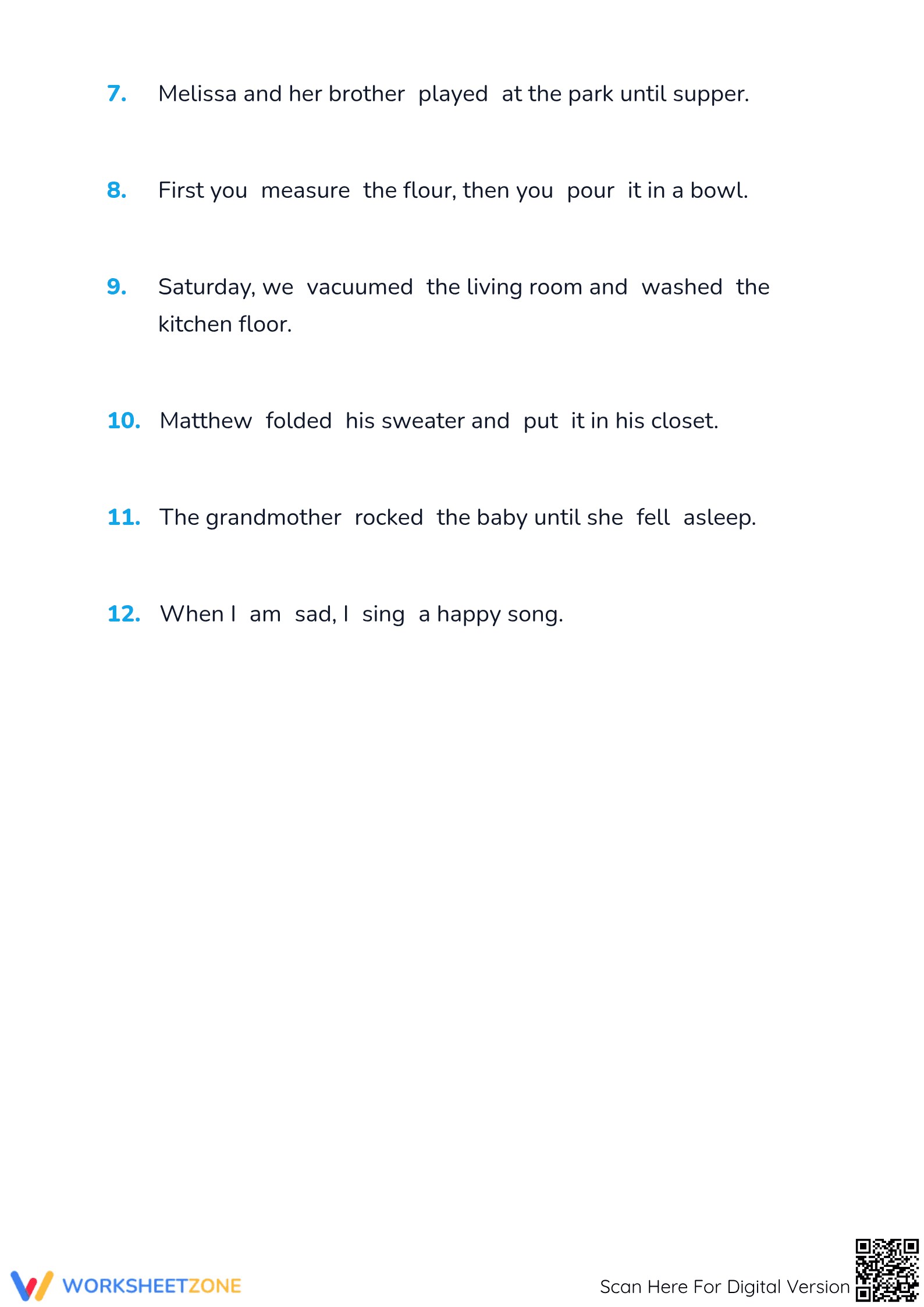
What's Inside: This two-page PDF resource features 12 carefully crafted sentences designed to challenge third-grade learners. The worksheet begins with a clear, boxed definition of verbs, providing examples of physical actions like climb, mental actions like remember, and states of being like to be. A comprehensive answer key is provided for quick grading or student self-correction.
Skill Progression
- Guided Practice: Students begin with an introductory definition box that anchors their understanding of the three primary verb categories.
- Supported Practice: The first six sentences allow students to identify verbs in familiar contexts with clear subject-verb relationships.
- Independent Practice: The final six sentences require students to find multiple verbs within single compound or complex sentence structures, moving them toward mastery.
This gradual release model ensures students move from simple recognition to deep grammatical understanding.
Standards Alignment
This resource is primary aligned to CCSS.ELA-LITERACY.L.3.1, which requires students to demonstrate command of the conventions of standard English grammar and usage. Specifically, it supports the identification of various verb types to improve writing clarity and sentence structure. Both standard codes can be copied directly into lesson plans, IEP goals, or district curriculum mapping tools.
How to Use It
Assign this worksheet during the independent practice phase of a grammar lesson after introducing the three types of verbs. It serves as an excellent formative assessment; teachers should observe if students struggle more with mental actions versus physical ones. Completion typically takes 15 to 20 minutes depending on reading speed and prior knowledge.
Who It's For
This resource is designed for third-grade students but is also suitable for second-grade enrichment or fourth-grade review. It is particularly helpful for English Language Learners who need explicit practice identifying the functional core of English sentences. Pair this with a verb anchor chart for maximum instructional impact.
This Grade 3 ELA resource focuses on the foundational skill of verb identification, specifically targeting the requirements of CCSS.ELA-LITERACY.L.3.1. By presenting 12 sentences that mix physical actions, mental actions, and states of being, the worksheet requires students to apply linguistic analysis rather than simple pattern matching. Research from Fisher & Frey (2014) emphasizes that the gradual release of responsibility—moving from clear definitions to independent identification—is critical for long-term retention of grammatical structures. This worksheet implements that model by providing a reference anchor before task execution. Mastery of these lexical word classes is a significant predictor of later reading comprehension and writing fluency, as verbs provide the essential framework for sentence meaning. Educators can use the included answer key to provide immediate feedback, a practice that NAEP data suggests is vital for closing achievement gaps in early elementary literacy and language arts instruction.


