


























Views
Downloads

Letter I Beginning Sound Worksheet | Essential Grade K-2
Paste this activity's link or code into your existing LMS (Google Classroom, Canvas, Teams, Schoology, Moodle, etc.).
Students can open and work on the activity right away, with no student login required.
You'll still be able to track student progress and results from your teacher account.
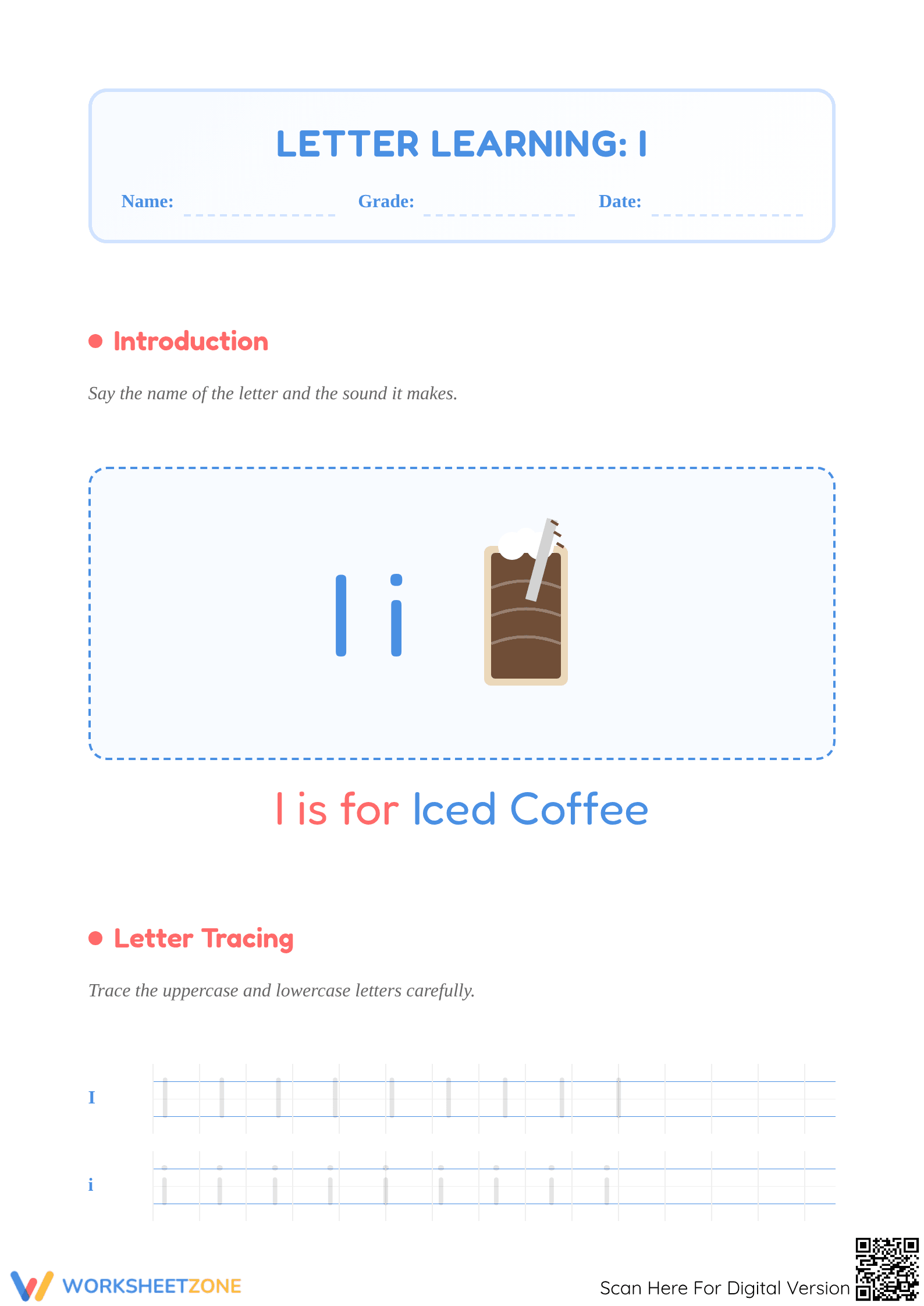
This comprehensive Letter I worksheet provides Kindergarten and First Grade students with a structured path to alphabet mastery. By combining visual recognition with tactile tracing and phonemic awareness, learners solidify their understanding of both uppercase and lowercase forms. Students will identify the letter I in various contexts, ensuring long-term retention of this essential foundational skill.
At a Glance
- Grade: K-2 · Subject: ELA Phonics
- Standard:
CCSS.ELA-LITERACY.RF.K.1.D— Recognize and name all upper- and lowercase letters of the alphabet- Skill Focus: Letter I Recognition & Tracing
- Format: 3 pages · 5 tasks · Answer key included · PDF
- Best For: Independent literacy centers and morning work
- Time: 15–20 minutes
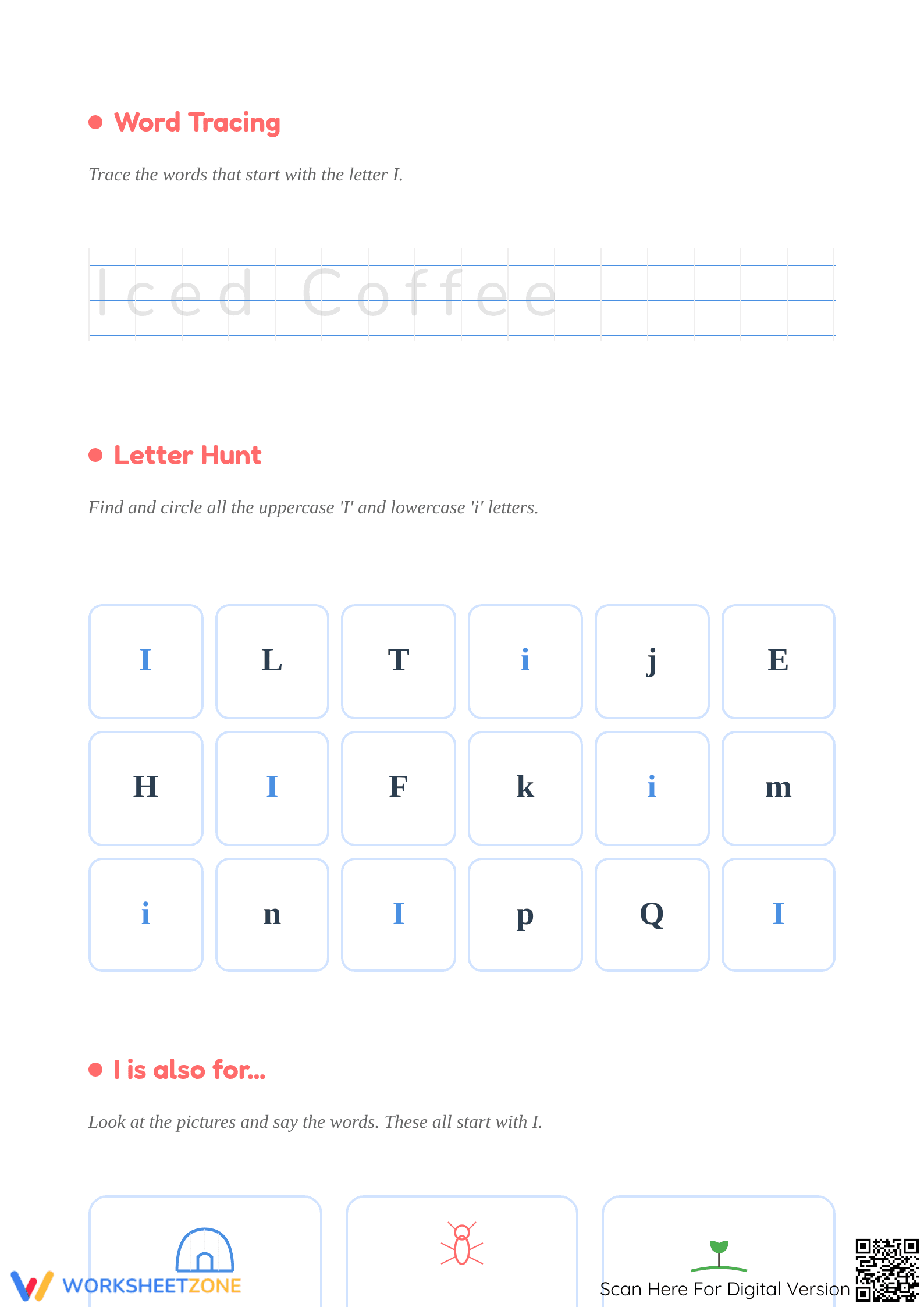
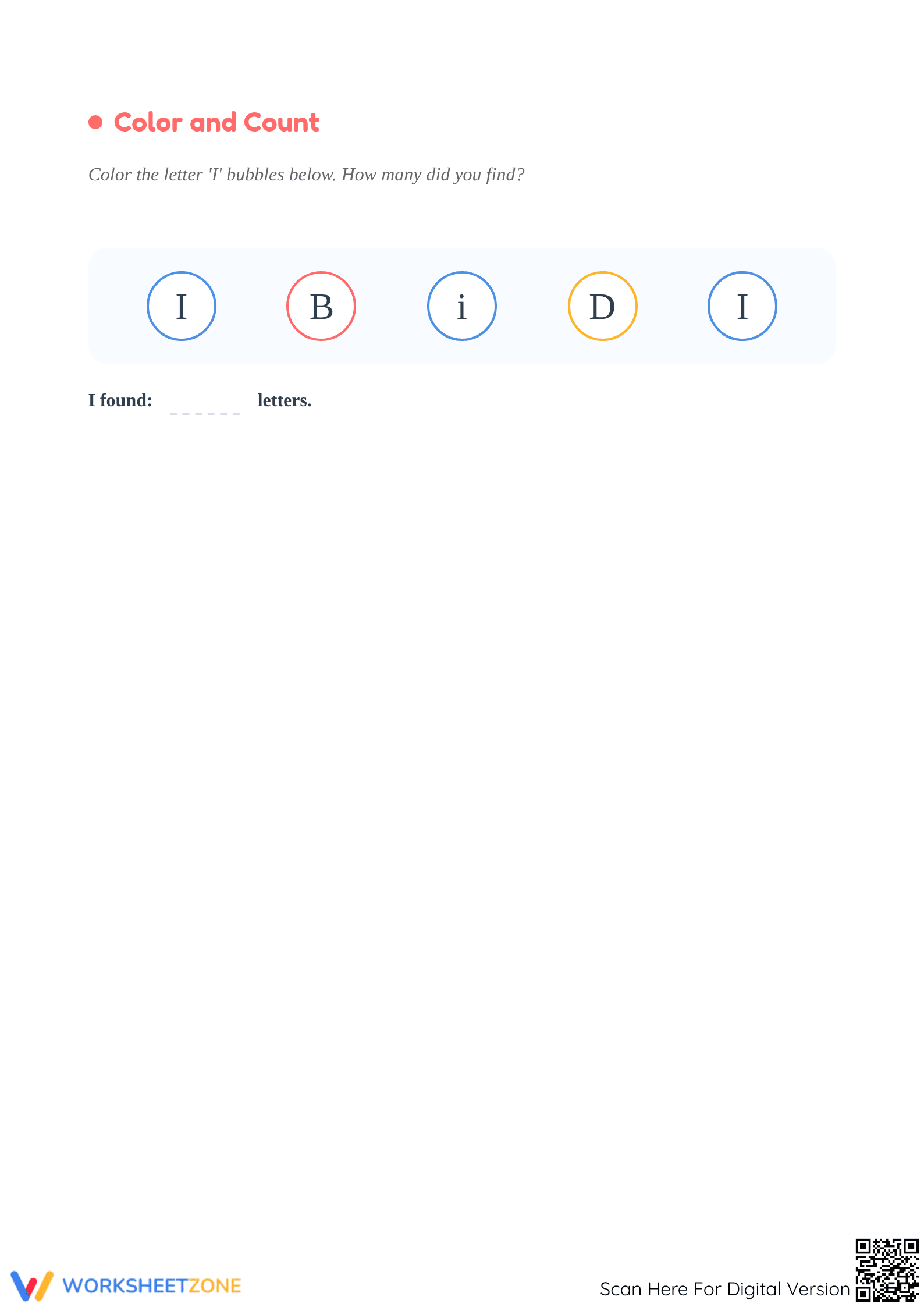
What's Inside: This 3-page PDF packet features five distinct activities designed to engage young learners. It includes dedicated rows for uppercase and lowercase letter tracing, a word-tracing section featuring "Iced Coffee," a letter hunt grid for visual discrimination, and a "Color and Count" assessment. The inclusion of a full answer key ensures that teachers or parents can quickly verify student progress without additional research.
Zero-Prep Workflow: This resource is designed for immediate classroom implementation with a total teacher prep time of under 2 minutes. First, print the three-page sequence for your class. Second, distribute the packets during your phonics block or as a quiet morning activity. Finally, use the provided answer keys for a quick visual check or peer-grading session. Its self-explanatory layout makes it an ideal choice for emergency sub plans.
Standards Alignment: The primary focus is `CCSS.ELA-LITERACY.RF.K.1.D`, which requires students to recognize and name all upper- and lowercase letters of the alphabet. Additionally, the beginning sound activities support RF.K.3.A by linking the letter to its most frequent sound. Both standard codes can be copied directly into lesson plans, IEP goals, or district curriculum mapping tools.
How to Use It: Use this worksheet during the independent practice phase of a gradual release lesson on the letter I. It serves as an excellent formative assessment tool; observe students during the "Letter Hunt" section to identify those struggling with visual discrimination between 'I' and similar vertical letters. Most students will complete the full three-page set within 15 to 20 minutes.
Who It's For: This resource is tailored for Kindergarten students beginning their phonics journey, though it provides valuable remediation for Grade 1 and Grade 2 students who need extra practice with letter formation. It pairs naturally with an anchor chart showing "I" words or a direct instruction lesson on short and long vowel sounds.
According to Fisher & Frey (2014), structured independent practice is vital for moving students toward mastery. This worksheet facilitates that transition by providing scaffolds like tracing lines before requiring independent identification. Alignment with CCSS.ELA-LITERACY.RF.K.1.D ensures tasks are developmentally appropriate for early literacy. By engaging in 5 tasks across 3 pages, students build orthographic mapping skills necessary for reading. Data from NAEP suggests early letter-name knowledge is a strong predictor of later reading success, making these targeted recognition exercises a high-leverage intervention for Tier 1 instruction. This resource provides the repetition needed for students to achieve automaticity in letter recognition, a prerequisite for decoding. It serves as a standalone summary of foundational phonics requirements for early childhood educators seeking evidence-based materials.


