


























Views
Downloads
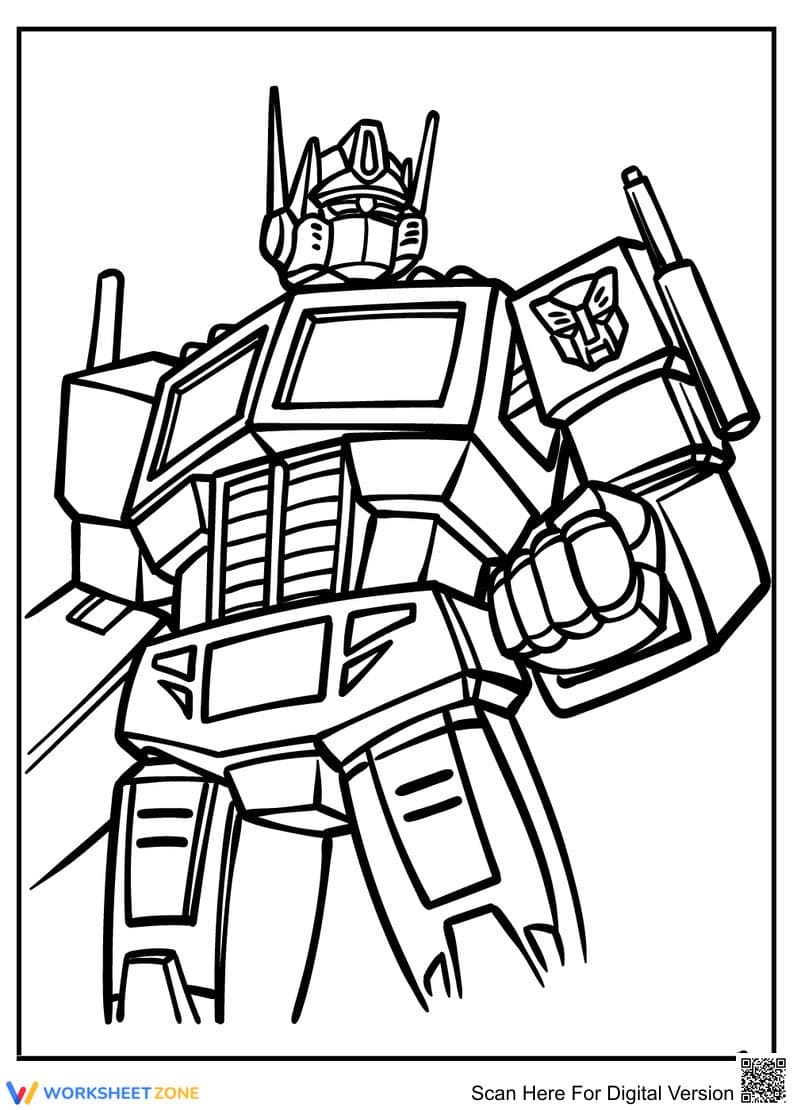

Heroic Transformers Printable Coloring Page | Grade K-5
Paste this activity's link or code into your existing LMS (Google Classroom, Canvas, Teams, Schoology, Moodle, etc.).
Students can open and work on the activity right away, with no student login required.
You'll still be able to track student progress and results from your teacher account.
This Heroic Transformers coloring page provides students with a high-interest creative outlet to develop essential fine motor control and artistic expression. By engaging with the iconic Optimus Prime character, learners practice precision and color selection, which are foundational skills for early writing and visual literacy. It is an ideal resource for transition times or creative breaks.
At a Glance
- Grade: K–5 · Subject: English
- Standard:
CCSS.ELA-LITERACY.SL.K.5— Add drawings to descriptions to provide additional detail- Skill Focus: Fine motor development
- Format: 1 page · 1 task · No answer key · PDF
- Best For: Morning work or early finishers
- Time: 15–20 minutes
What's Inside
This single-page PDF features a high-resolution line art illustration of a heroic robot character. The bold outlines are designed to help younger students stay within the lines while providing enough detail to challenge older elementary learners. No additional materials are required beyond standard coloring supplies like crayons, markers, or colored pencils.
Zero-Prep Workflow
The zero-prep workflow for this resource is designed for maximum efficiency. First, print the single-page PDF (30 seconds). Second, distribute the sheets to students during transition periods or as a reward (1 minute). Third, review the completed artwork to assess fine motor progress or use them for a classroom gallery walk (30 seconds). Total teacher prep time is under two minutes.
Standards Alignment
This resource aligns with `CCSS.ELA-LITERACY.SL.K.5`, which encourages students to use visual displays to enhance their communication and descriptions. While primarily an artistic activity, it supports the development of the hand-eye coordination necessary for meeting writing standards across the primary grades. This standard code can be copied directly into lesson plans, IEP goals, or district curriculum mapping tools.
How to Use It
Use this worksheet as a hook before a creative writing prompt where students describe the robot's mission. Alternatively, assign it as a calming activity after high-energy lessons. Observe how students handle the smaller geometric shapes to gauge their manual dexterity and grip strength. Expected completion typically takes 15 to 20 minutes depending on the level of detail applied.
Who It's For
This activity is perfect for Kindergarten through 5th-grade students who enjoy popular media and mechanical designs. It is particularly effective for students needing sensory breaks or those working on occupational therapy goals. Pair this with a short narrative passage about teamwork or leadership to integrate literacy with the coloring task for a more comprehensive lesson.
Research by Fisher & Frey (2014) emphasizes the importance of visual representation in the gradual release of responsibility model, noting that creative tasks can serve as effective scaffolds for more complex literacy demands. Integrating high-interest characters like those found in this Transformers worksheet increases student engagement and persistence in task completion. According to the RAND AIRS 2024 report, providing students with choice in creative expression supports emotional regulation and classroom community building. This printable resource addresses CCSS.ELA-LITERACY.SL.K.5 by allowing students to create visual artifacts that can later be described orally or in writing. By focusing on fine motor precision, the worksheet prepares younger learners for the physical demands of handwriting while offering older students a low-stakes environment to practice color theory and shading. This combination of engagement and skill-building makes it a versatile tool for any elementary classroom seeking to balance academic rigor with creative development.


