


























Views
Downloads


Printable Having a Picnic Reading Worksheet | Grade 1-3
Paste this activity's link or code into your existing LMS (Google Classroom, Canvas, Teams, Schoology, Moodle, etc.).
Students can open and work on the activity right away, with no student login required.
You'll still be able to track student progress and results from your teacher account.
Boost your students' literacy skills with this focused reading comprehension exercise centered on a family outing. This printable resource helps early readers identify key details like character actions, settings, and character feelings within a simple narrative. By engaging with the story of Franklin’s picnic, students develop the essential ability to locate specific evidence to support their answers.
At a Glance
- Grade: 1–3 · Subject: ELA Literature
- Standard:
CCSS.ELA-LITERACY.RL.1.1— Ask and answer questions about key details in a text to demonstrate understanding- Skill Focus: Key Detail Identification & Character Feelings
- Format: 4 pages · 6 problems · Answer key included · PDF
- Best For: Independent practice or literacy center rotations
- Time: 15–20 minutes
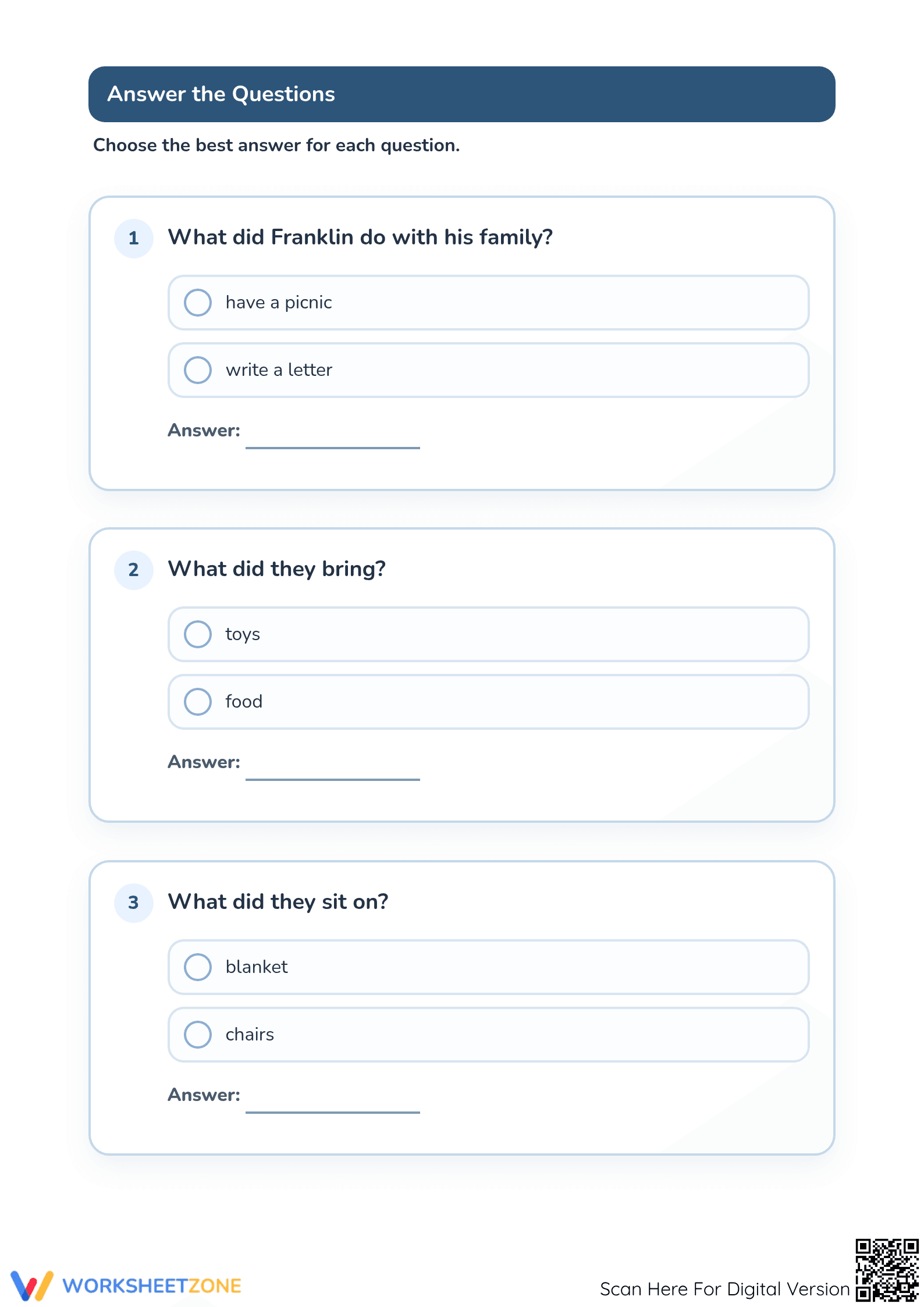
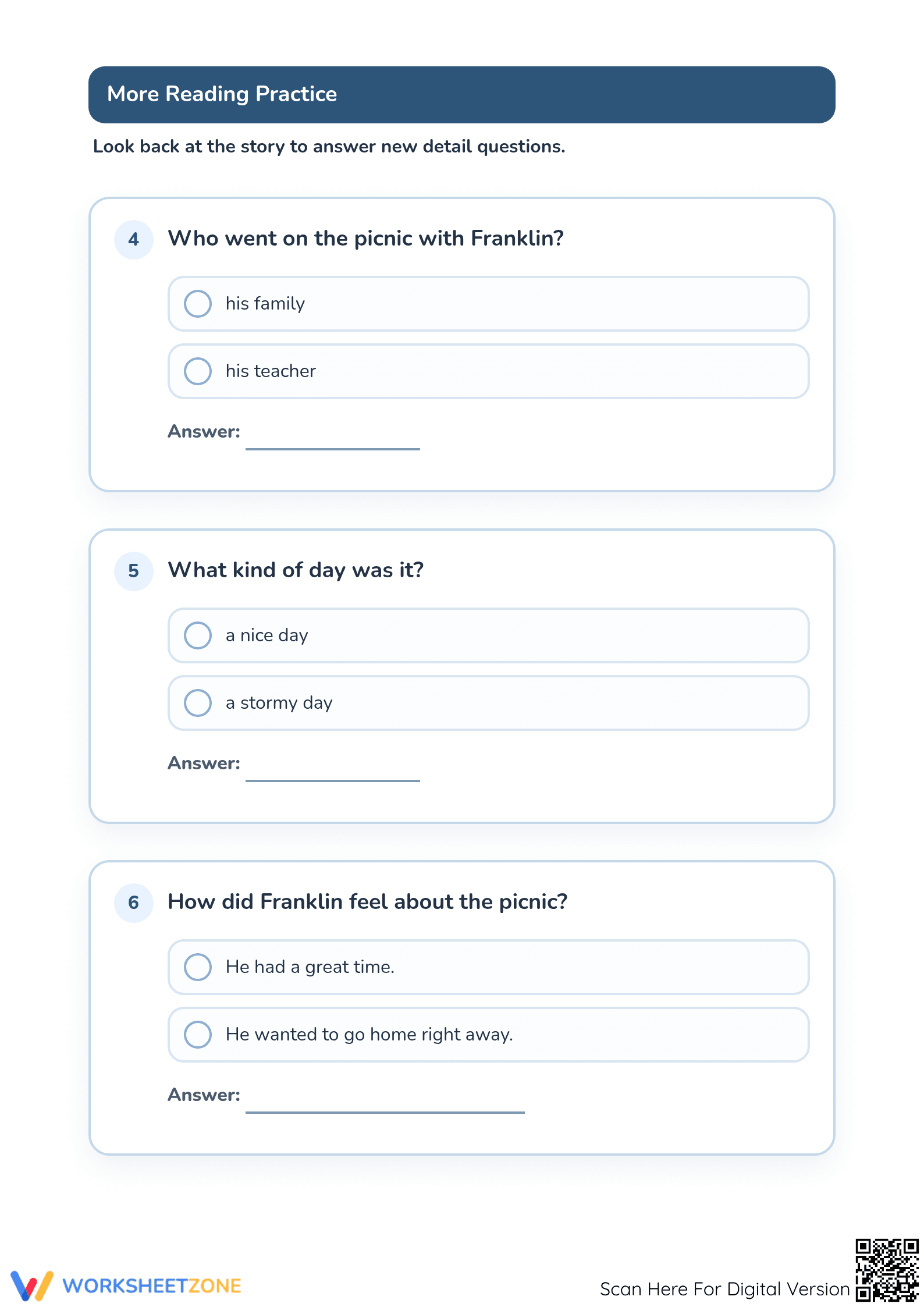
This PDF packet contains four structured pages for immediate classroom use. The first page features a short story about Franklin and his family, accompanied by helpful visual aids. Pages two and three provide six multiple-choice questions targeting specific details like characters, objects, and settings. A dedicated tip on the final page helps students recognize character feelings using specific keywords.
This resource is designed for teacher efficiency. First, print the document directly from the PDF (30 seconds). Second, distribute packets for independent or guided reading (1 minute). Finally, use the answer key for rapid grading or whole-group review (5 minutes). This process requires less than two minutes of preparation, making it a reliable choice for sub plans or morning work.
Standards Alignment
Aligned to CCSS.ELA-LITERACY.RL.1.1, this resource requires students to answer questions about key details. The questions prompt students to identify the "who," "what," and "where" of the picnic narrative. This standard code can be copied directly into lesson plans, IEP goals, or district curriculum mapping tools to ensure all instructional minutes focus on high-leverage foundational reading skills.
How to Use It
Use this during the independent practice phase of a lesson on text evidence. After modeling how to find key details, assign this to assess mastery. It also functions as a formative assessment; observe which students return to the text to verify answers. Most Grade 1 and 2 students will complete the story and all six questions within a twenty-minute block.
Who It's For
This resource is ideal for Grade 1 and 2 students building comprehension, or Grade 3 students needing literal questioning support. It pairs well with lessons on setting or character traits. The simple vocabulary and clear layout support English Language Learners and students with diverse processing needs.
Reading comprehension in early elementary grades relies heavily on a student's ability to retrieve literal information from a text before moving to inferential reasoning. This worksheet directly addresses CCSS.ELA-LITERACY.RL.1.1 by requiring students to identify key details within a structured narrative about a family picnic. According to research cited in EdReports 2024, high-quality instructional materials that pair short, accessible texts with evidence-based questioning significantly improve reading fluency and retention in emerging readers. By focusing on the "who, what, and where" of the story, this resource provides the necessary scaffolding for students to build a mental model of the text. The inclusion of a specific tip for identifying character feelings aligns with instructional best practices for developing social-emotional literacy within a linguistic context. Teachers can utilize the six multiple-choice items as quantifiable data points for tracking student progress toward grade-level mastery in foundational ELA standards.


