Before students can expand or rearrange sentences, they need a reliable definition of complete. A complete sentence names who or what (the subject), tells what happens (the predicate), starts with a capital letter, and ends with correct punctuation. Many second graders can recite this rule but still write fragments under time pressure, especially during independent writing blocks.
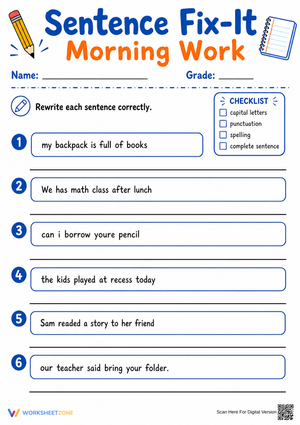
Worksheets that isolate fragment identification from other skills tend to work best early in the year. Give students a mix of fragments and complete sentences and ask them to sort or fix them before layering in expansion or combining tasks. Once fragment recognition is solid, move to sentences that need capitalization or end marks added, then finally to expansion and rearranging activities that match L.2.1.f directly.
Combining Handwriting Practice with Sentence Construction
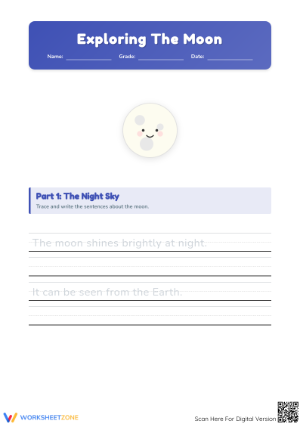
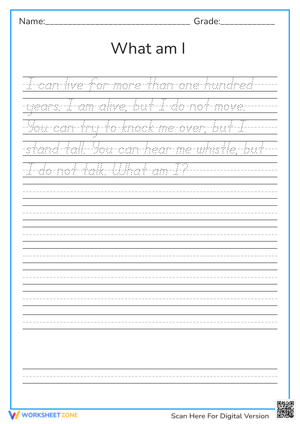
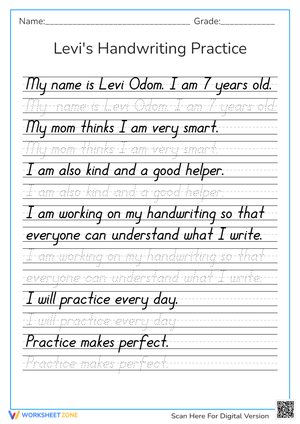
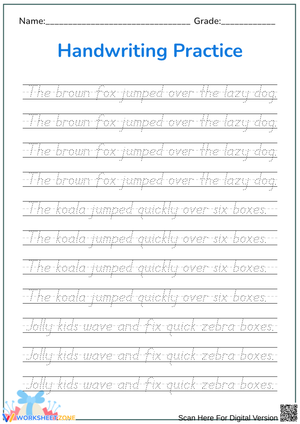
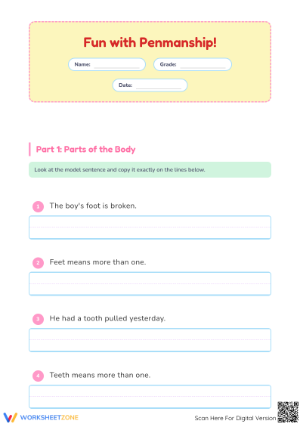
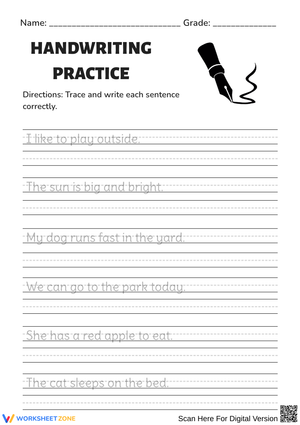
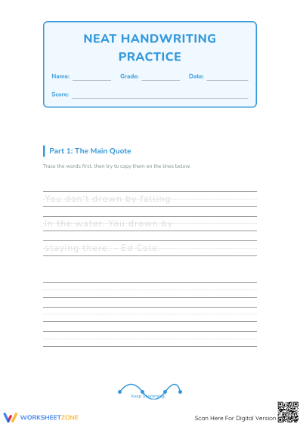
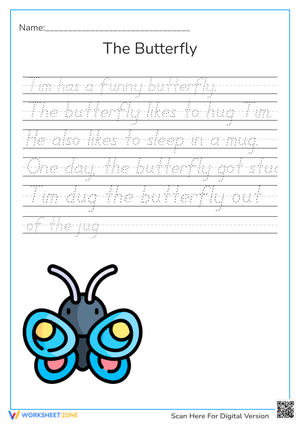
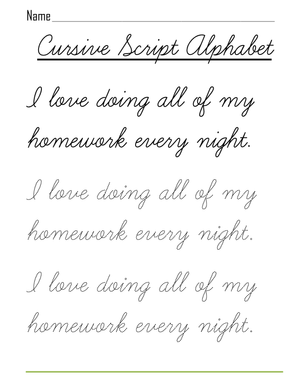
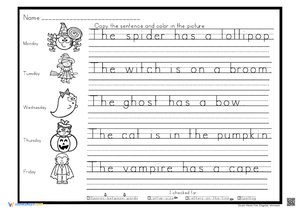
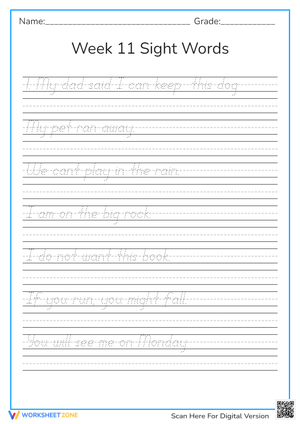
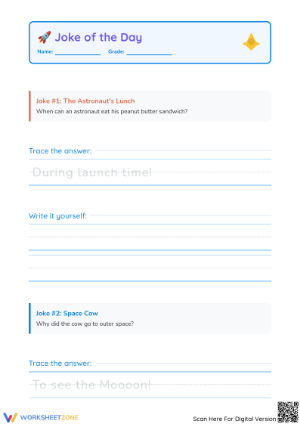
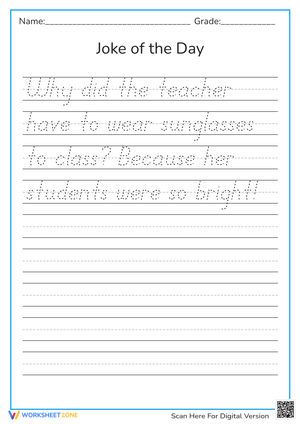
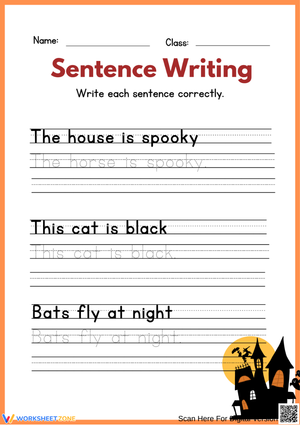
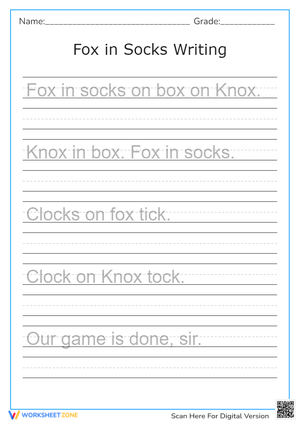
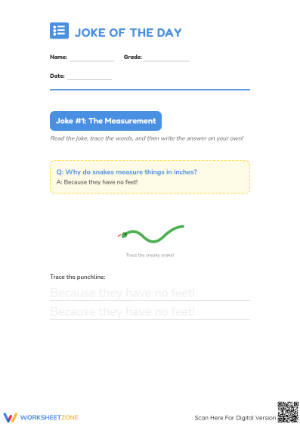
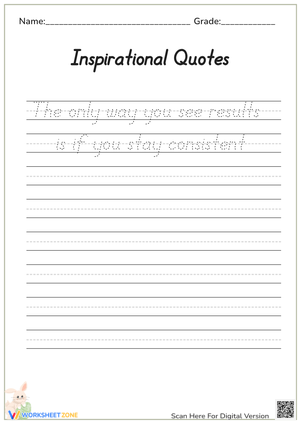
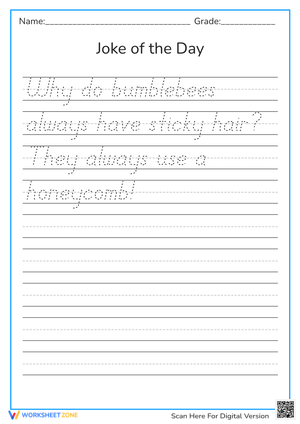
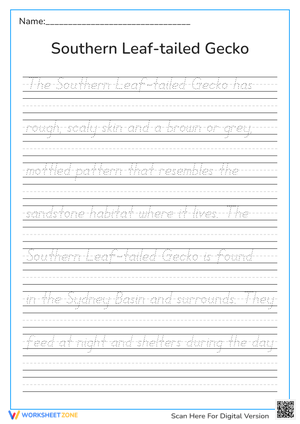
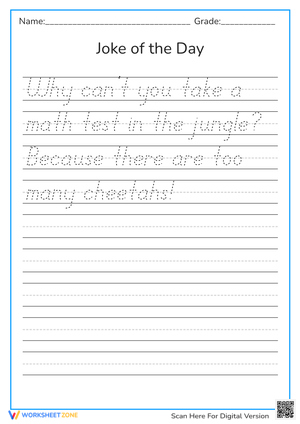
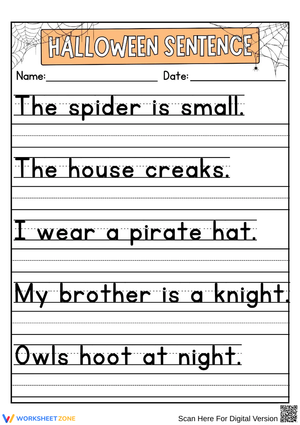
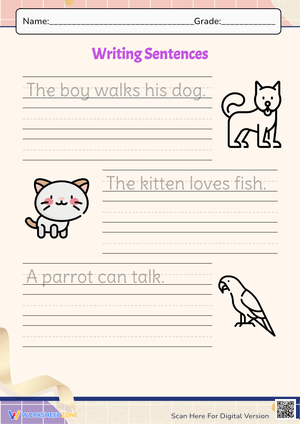
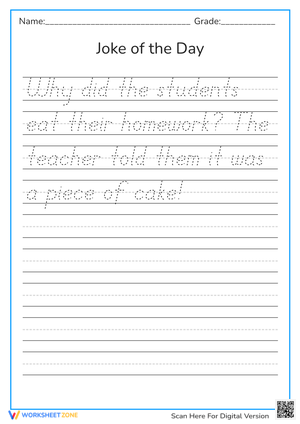
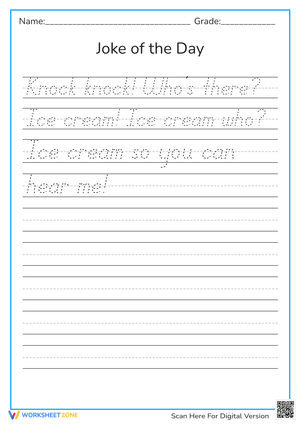
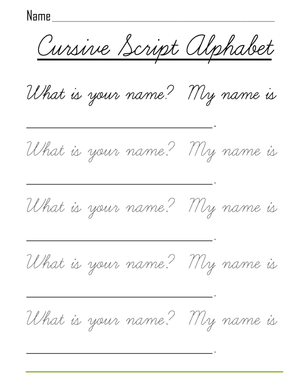
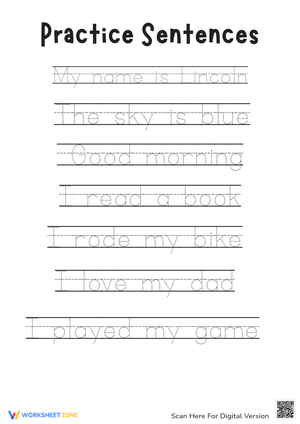
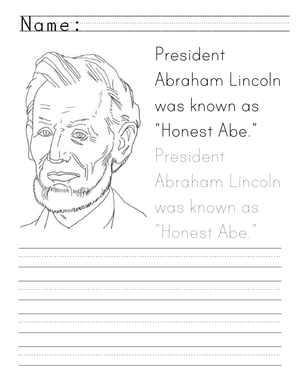
Handwriting and sentence writing are often taught separately, but pairing them saves instructional time and reinforces both skills at once. When a student copies or composes a sentence on lined paper, they are practicing letter formation, spacing between words, and sentence mechanics simultaneously. A worksheet that asks students to write a given sentence in their best handwriting, then expand it with one describing word, accomplishes two goals in a single activity.
The distinction matters instructionally: sentence expansion and rearranging under L.2.1.f is a separate skill from starting or combining sentences, which is why many published worksheet sets deliberately split practice into fragment identification, capitalization and end marks, and expansion tasks rather than blending them into one generic sentence-writing sheet.
Diagnosing Common Sentence Errors Before They Become Habits
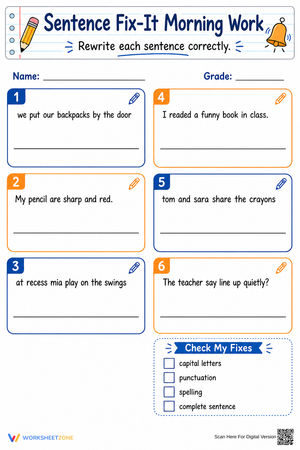
Most second grade sentence errors fall into a few predictable categories: fragments missing a subject or predicate, run-on sentences joined without punctuation, missing capital letters at the start of a sentence, and missing or incorrect end punctuation. A quick diagnostic worksheet at the start of a unit, where students correct five to eight sentences with these errors, tells you exactly which mini-lesson to teach first.
For students still producing fragments, spend a week on subject-predicate identification using short, concrete sentences before moving to compound sentences. For students who write complete sentences but struggle with run-ons, focus on teaching how to split ideas or join them correctly with a conjunction, since this connects directly to the compound sentence work in L.2.1.f.
Using Sentence Expansion to Build Fluency and Variety
Sentence expansion worksheets ask students to take a short base sentence and add detail: a describing word, a phrase telling where or when, or a second idea joined with and, but, or or. This builds toward the compound sentence example in the standard, where a simple sentence becomes richer without losing grammatical correctness.
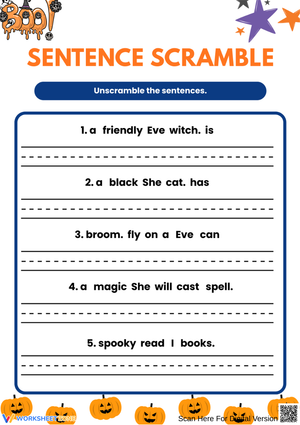
According to CCSS.ELA-LITERACY.L.2.1.f, second graders are expected to produce, expand, and rearrange complete simple and compound sentences, such as turning The boy watched the movie into The little boy watched the movie or The action movie was watched by the little boy, showing that sentence manipulation, not just sentence generation, is a grade-level expectation. Worksheets that walk students through this exact progression, starting simple and adding one element at a time, mirror the standard closely and make it easier to track growth.
Classroom Implementation
A workable weekly structure pairs a short daily sentence task with one longer worksheet block. On Monday, present a base sentence and have students copy it correctly, focusing on handwriting and spacing. Tuesday and Wednesday, ask students to expand that sentence with an added detail or combine it with a related idea. Thursday, give a quick error-correction worksheet targeting whatever mistake showed up most in Tuesday and Wednesday's work. Friday, use a short independent write where students compose two or three original sentences on a given topic, applying everything practiced that week.
Keep an eye on transfer: students who do well on isolated sentence worksheets sometimes still write fragments during independent writing time. Bridge this gap by occasionally pulling a sentence directly from a student's own writing sample and using it as the base for expansion or correction practice, so the skill connects back to their actual writing rather than staying confined to worksheet pages.
Formative Assessment Ideas Tied to the Standards
Quick, low-stakes checks work better than lengthy tests for tracking sentence-writing growth. A three-sentence exit ticket, where students write one complete sentence, expand a given sentence, and correct one error, gives you a fast read on which of the three sub-skills needs more support. Because L.2.1 covers related grammar skills like irregular plural nouns, reflexive pronouns, and past tense of irregular verbs, occasionally folding one of those elements into a sentence-writing check lets you assess grammar and sentence construction together.
These checks also support the broader W.2 writing standards, which expect second graders to write opinion, informative, and narrative pieces using complete sentences with temporal words and a sense of closure. Strong sentence-level skills are the foundation those longer writing pieces depend on, so short, frequent sentence checks pay off across the whole writing curriculum, not just in grammar instruction.
Frequently Asked Questions
1. What does a complete sentence look like for a 2nd grader according to CCSS?
Under CCSS.ELA-LITERACY.L.2.1.f, a complete sentence names a subject and predicate, starts with a capital letter, ends with correct punctuation, and can be expanded or rearranged while staying grammatically correct, such as turning The boy watched the movie into The little boy watched the movie.
2. How can teachers combine handwriting and sentence-writing practice in one lesson block?
Have students copy or compose a target sentence in their best handwriting first, then add a describing word or combine it with a related idea, so letter formation, spacing, and sentence mechanics are practiced together in a single worksheet.
3. What are common sentence-writing mistakes second graders make and how to correct them?
The most common issues are fragments missing a subject or predicate, run-ons joined without punctuation, and missing capitalization or end marks. Diagnostic worksheets that isolate one error type at a time help students correct each pattern before moving to expansion tasks.
4. How much sentence-writing practice should 2nd graders get per week?
A short daily task paired with one longer worksheet block, roughly four to five short sessions per week, gives most second graders enough repetition to move from fragments toward complete simple and compound sentences without overloading the writing block.
5. How do sentence-writing worksheets support both grammar and writing standards?
Worksheets built around L.2.1.f strengthen the sentence-level control that CCSS Writing standards for grade 2 assume students already have, since opinion, informative, and narrative pieces under W.2 all depend on students being able to write complete, correctly punctuated sentences.












 Interactive Worksheet Maker
 Quiz Maker
 Word Search Maker
 Crossword Puzzle Maker
 Word Scramble Generator
 Sentence Scramble Generator
 Handwriting Worksheet Generator
 Name Tracing Generator
 Fill In The Blank Generator