


























Views
Downloads
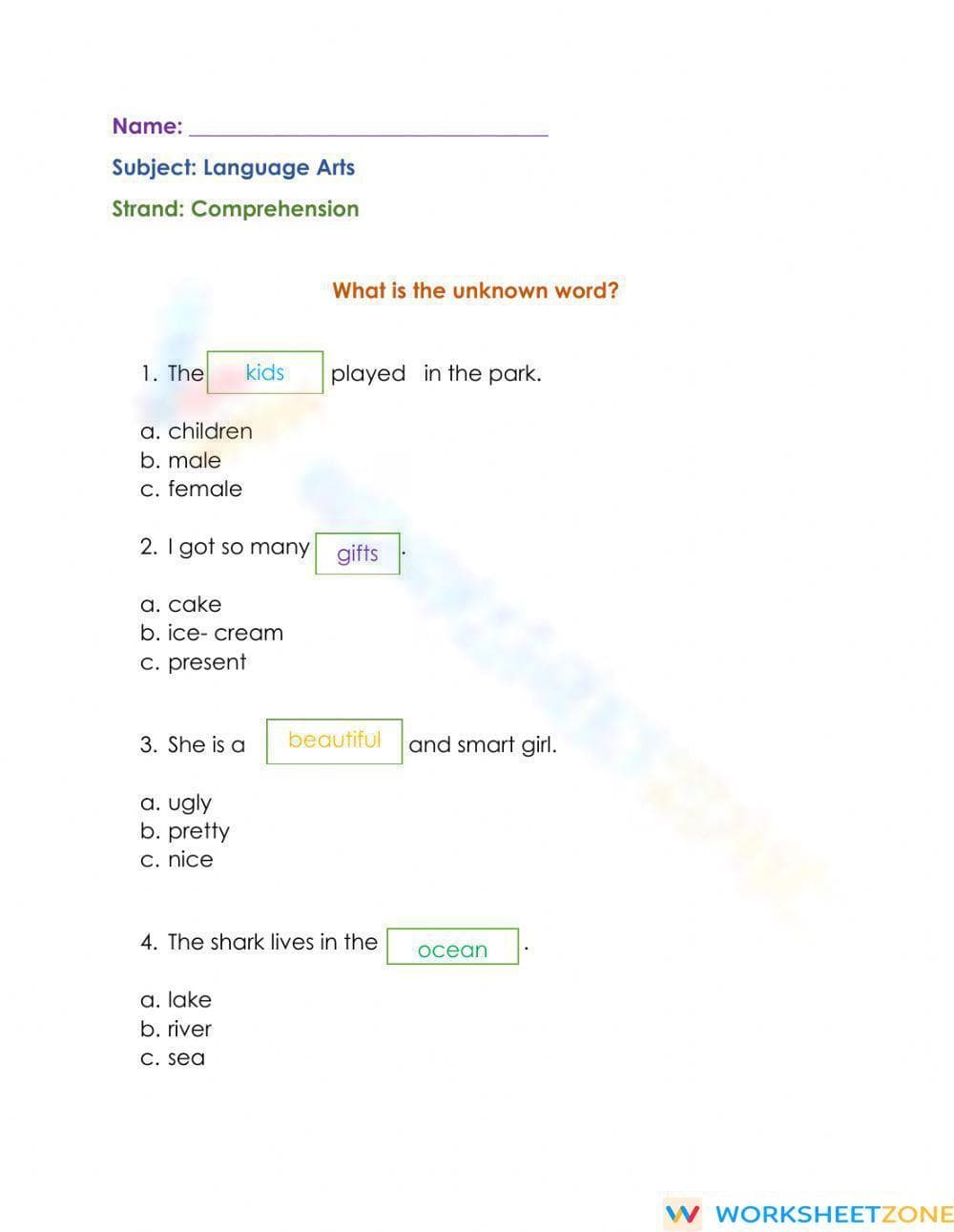


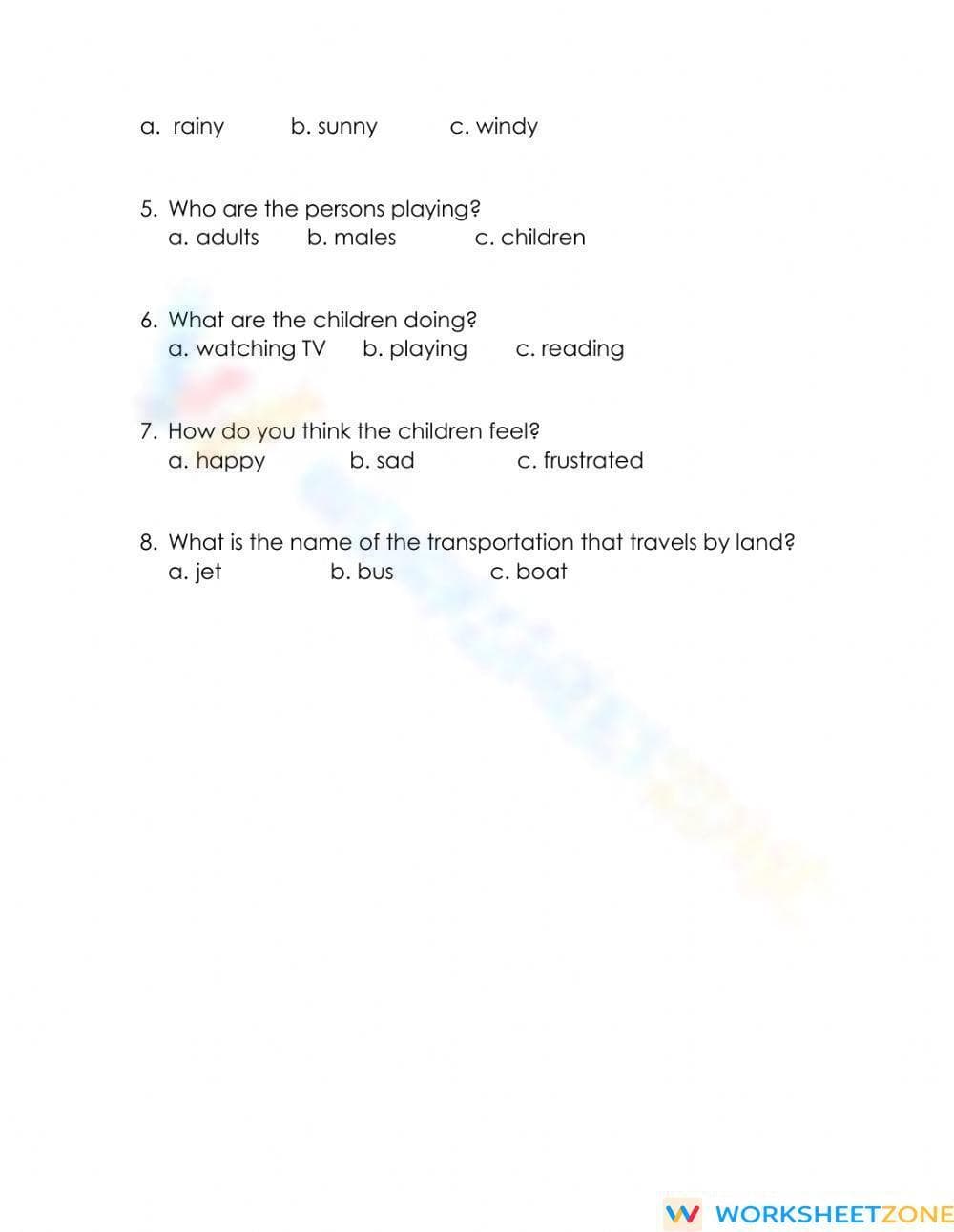

Essential Grade 2 Comprehension & Inference Worksheet
Paste this activity's link or code into your existing LMS (Google Classroom, Canvas, Teams, Schoology, Moodle, etc.).
Students can open and work on the activity right away, with no student login required.
You'll still be able to track student progress and results from your teacher account.
This Essential Grade 2 Reading Comprehension worksheet focuses on the critical literacy skills of inference and vocabulary development. By analyzing context clues and visual information, students practice extracting meaning from text and images. This 4-page resource ensures students move beyond surface-level reading to master deeper comprehension strategies required for academic success.
At a Glance
- Grade: 2 · Subject: English Language Arts (ELA)
- Standard:
CCSS.ELA-LITERACY.RL.2.1— Ask and answer questions such as who, what, where, when, why, and how- Skill Focus: Context Clues, Inference, & Visual Literacy
- Format: 4 pages · 19 problems · Answer key included · High-quality PDF
- Best For: Literacy centers, independent homework practice, and morning work
- Time: 20–30 minutes
This comprehensive PDF packet contains 19 targeted multiple-choice questions across four distinct pages. The worksheet is divided into three logical segments: "What is the unknown word?" for vocabulary, "What do you infer?" for logical deduction, and a visual literacy section based on a detailed playground illustration. A full answer key is provided to facilitate quick grading or self-correction.
Skill Progression
- Guided Practice: 5 tasks use cloze-style sentences to help students identify synonyms and context clues for unfamiliar vocabulary words in simple sentence structures.
- Supported Practice: 6 tasks require students to infer roles, settings, and feelings from short behavioral descriptions and environmental clues provided in brief text snippets.
- Independent Practice: 8 tasks ask students to synthesize visual and textual information from a playground picture, promoting high-level integration of comprehension sub-skills.
The worksheet follows a structured progression to build student confidence, moving from simple word identification to sophisticated visual analysis. This approach aligns with the I Do, We Do, You Do model of gradual release.
Standards Alignment
This resource is primary aligned to CCSS.ELA-LITERACY.RL.2.1, which requires students to ask and answer questions about key details in a text. Additionally, it supports CCSS.ELA-LITERACY.L.2.4 regarding vocabulary acquisition. Both standard codes can be copied directly into lesson plans, IEP goals, or district curriculum mapping tools to ensure instructional compliance and tracking.
How to Use It
Ideally, assign this worksheet after direct instruction on making inferences to serve as a formative assessment. During the lesson, observe if students struggle with the visual section, which indicates a need for more scaffolding. The resource is also effective as a rigorous homework assignment or a quiet activity for early finishers. Students should typically complete all four pages within a 20 to 30 minute window.
Who It's For
This worksheet is designed for Grade 2 students but serves as an excellent intervention for Grade 3 learners or a challenge for advanced 1st graders. It pairs naturally with short informational passages or anchor charts on "I Read, I Know, I Infer." The multiple-choice format is particularly helpful for English Language Learners who are developing their expressive vocabulary. Research emphasizes that "gradual release of responsibility" is essential for developing complex comprehension skills like inference. This worksheet implements this by transitioning students from simple word identification to sophisticated visual analysis. The ability to cite evidence and make logical deductions is a prerequisite for higher-order thinking. Frequent, low-stakes practice with standards-aligned materials significantly improves student performance on state-level assessments. This resource provides exactly that: 19 structured opportunities for students to engage with core ELA concepts, integrating vocabulary and inference to help students actively construct meaning from their environment.


