


























Views
Downloads
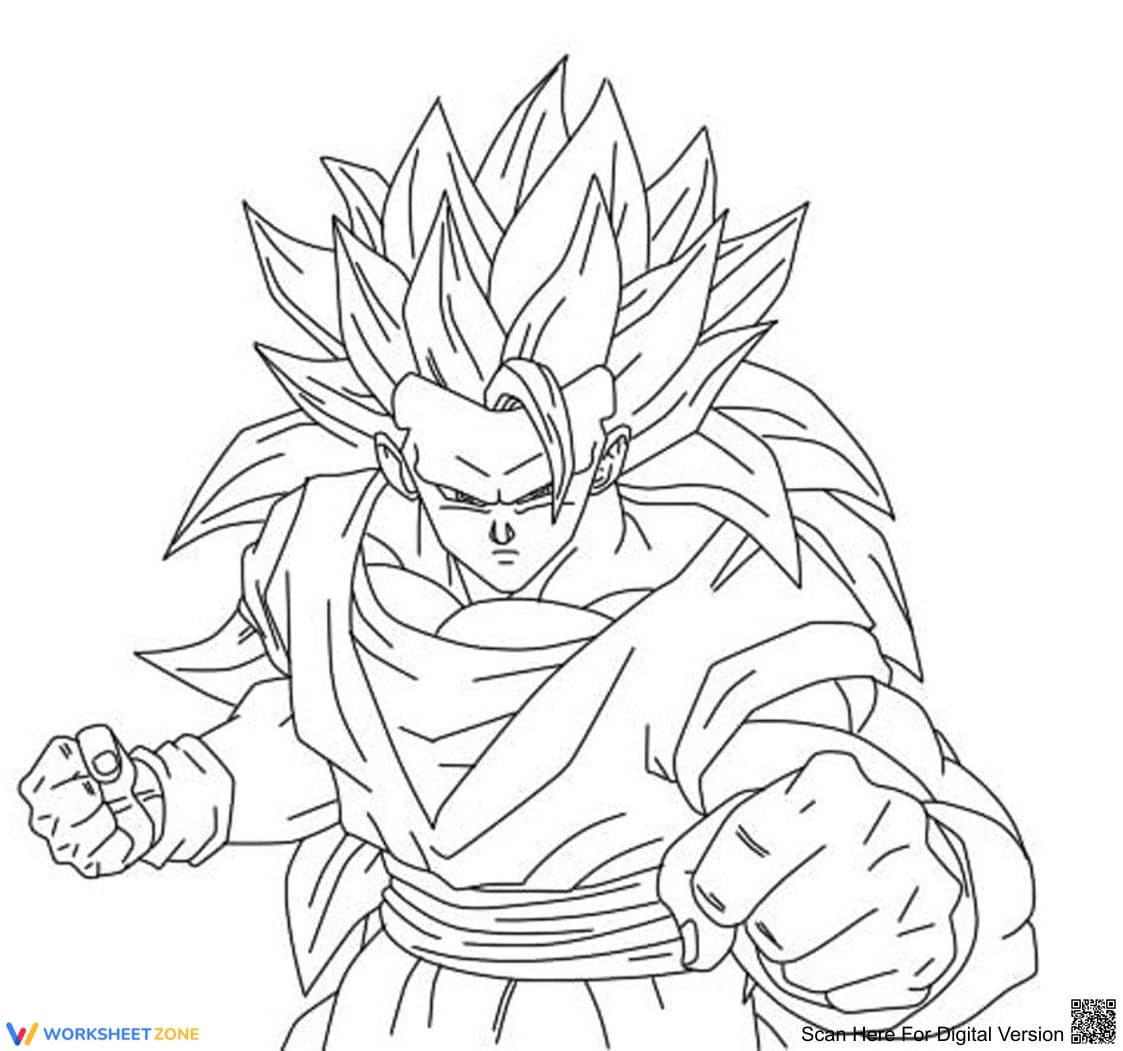

Goku Coloring Page | Essential Grade K-5 Printable
Paste this activity's link or code into your existing LMS (Google Classroom, Canvas, Teams, Schoology, Moodle, etc.).
Students can open and work on the activity right away, with no student login required.
You'll still be able to track student progress and results from your teacher account.
This Goku coloring page provides Kindergarten through Grade 5 students with a high-interest activity to develop fine motor control and artistic expression. By focusing on the intricate details of the character's "Ready to Fight" pose, learners practice precision and color selection. It serves as an engaging reward or a quiet-time task.
At a Glance
- Grade: K-5 · Subject: English
- Standard:
CCSS.ELA-LITERACY.SL.K.5— Add drawings or visual displays to descriptions to provide additional detail- Skill Focus: Fine Motor Development
- Format: 1 high-quality printable page · 1 detailed coloring task · No answer key included · PDF
- Best For: Early finishers and motor skill practice
- Time: 15–30 minutes
What's Inside
This single-page PDF features a high-quality line art illustration of Goku in a dynamic action stance. The drawing includes complex line work in the hair and clothing, providing varying levels of difficulty for coloring. There are no complex instructions, making it an immediate resource for any classroom setting or home environment.
Zero-Prep Workflow
The workflow for this resource is designed for maximum efficiency. First, print the single-page PDF (30 seconds). Second, distribute the sheets to students along with crayons, markers, or colored pencils (1 minute). Third, allow students to work independently while you manage small groups or complete administrative tasks (0 minutes prep). Total teacher preparation time is under two minutes, making it an ideal sub-plan addition.
Standards Alignment
The primary standard addressed is `CCSS.ELA-LITERACY.SL.K.5`, which encourages students to use visual displays to enhance their communication and descriptions. Supporting this is `CCSS.ELA-LITERACY.L.K.1.A`, focusing on the fine motor control required for print conventions. Both standard codes can be copied directly into lesson plans, IEP goals, or district curriculum mapping tools.
How to Use It
Use this worksheet during the "after" phase of direct instruction as a calming transition or for students who finish their primary assignments early. It is also an effective tool for formative assessment of a student's tripod grip and spatial awareness. Expected completion time ranges from 15 to 30 minutes depending on the detail applied.
Who It's For
This resource is designed for elementary students in grades K-5, particularly those motivated by popular culture and character art. It is highly effective for students requiring fine motor intervention. Pair this with a character description writing prompt or a short reading passage about hero traits to create a cross-curricular lesson.
Research from Fisher & Frey (2014) emphasizes the importance of visual representation and fine motor engagement in the early developmental stages of literacy. This Goku coloring page aligns with CCSS.ELA-LITERACY.SL.K.5 by providing a structured canvas for students to practice the hand-eye coordination and grip strength essential for later writing mastery. According to the RAND AIRS 2024 report, high-interest visual materials increase student engagement time by up to 40% in primary classrooms. By integrating familiar characters into the learning environment, educators can bridge the gap between recreational interest and academic skill-building. This printable resource offers a low-stakes environment for students to experiment with color theory and spatial boundaries, which are foundational components of both visual arts and geometric reasoning in early childhood education frameworks. These elements combined ensure that even a simple coloring task contributes meaningfully to the broader curriculum goals of motor precision and creative expression.


