




























Views
Downloads

Printable Time and 3D Shapes Worksheet | Grades 1-3

Paste this activity's link or code into your existing LMS (Google Classroom, Canvas, Teams, Schoology, Moodle, etc.).
Students can open and work on the activity right away, with no student login required.
You'll still be able to track student progress and results from your teacher account.
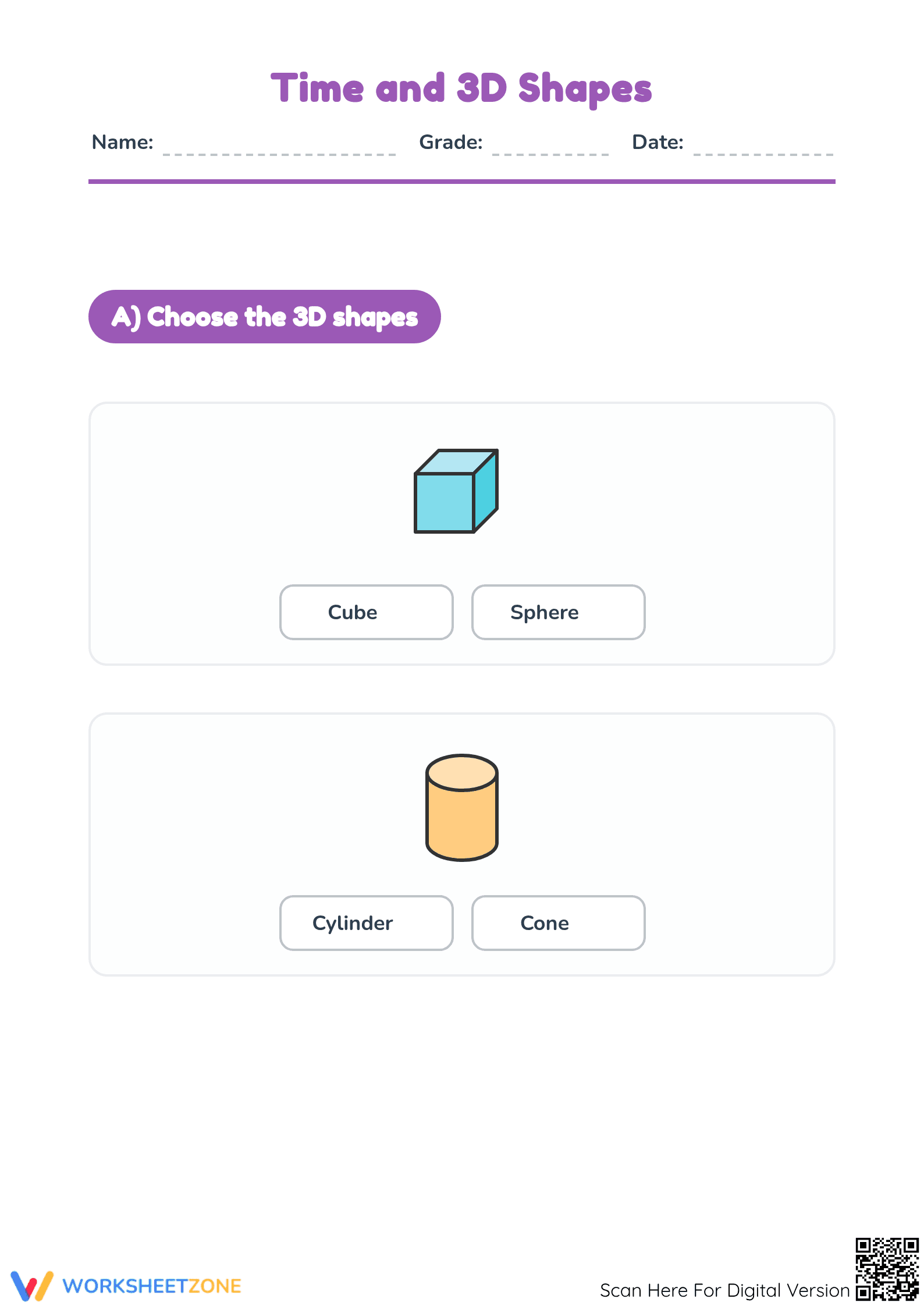
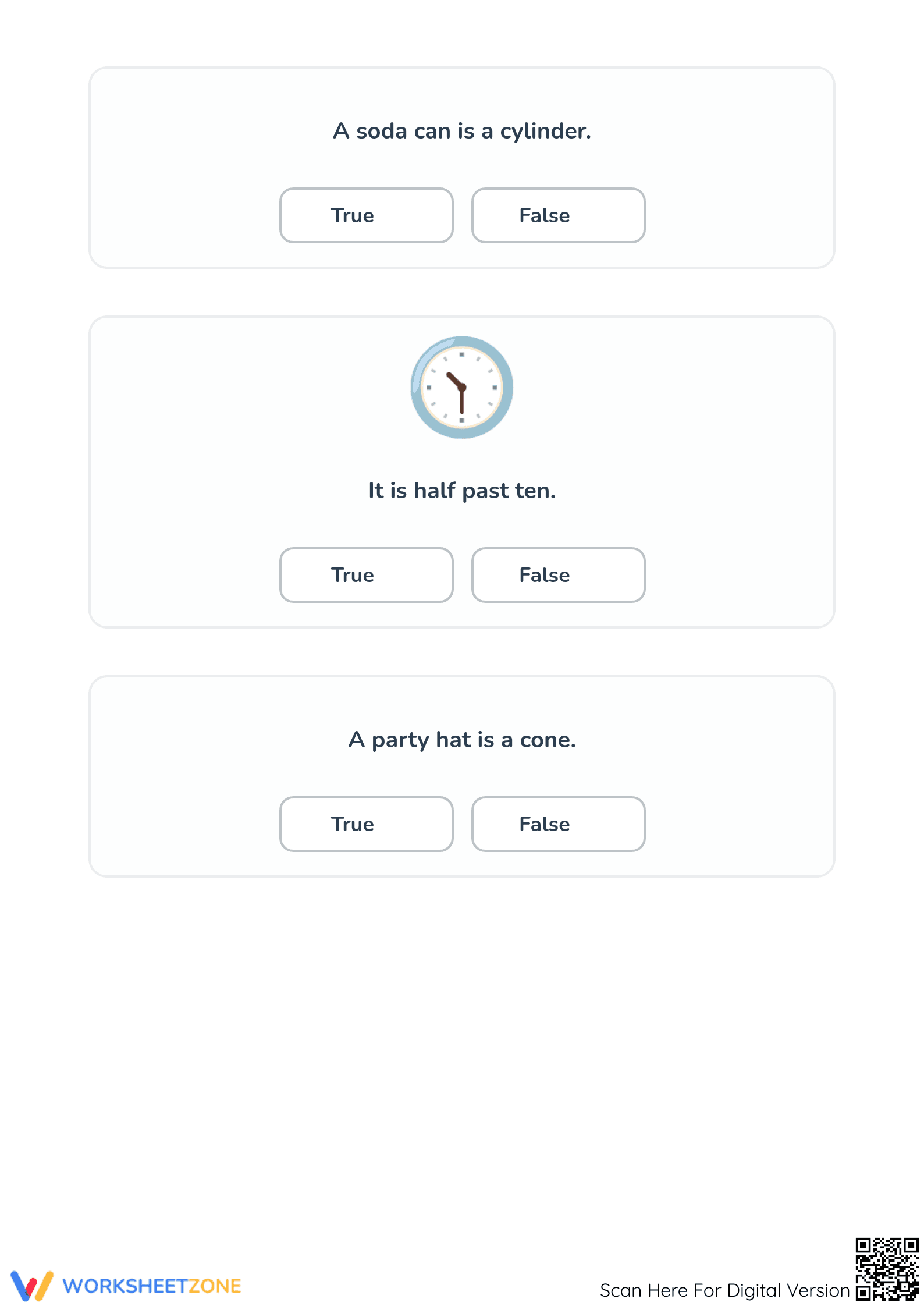
Master two essential early math domains with this comprehensive, multi-page practice set. This worksheet guides students through telling time on analog clocks and identifying the defining attributes of three-dimensional shapes. By combining geometry and temporal reasoning, learners develop a robust understanding of how mathematical concepts apply to real-world objects and daily schedules.
At a Glance
- Grade: 1–3 · Subject: Date, Time, and Geometry
- Standard:
CCSS.MATH.CONTENT.1.MD.B.3— Tell and write time in hours and half-hours using analog clocks- Skill Focus: Telling Time and 3D Shape Identification
- Format: 5 pages · 15 problems · Answer key included · PDF
- Best For: Independent morning work or math centers
- Time: 20–30 minutes
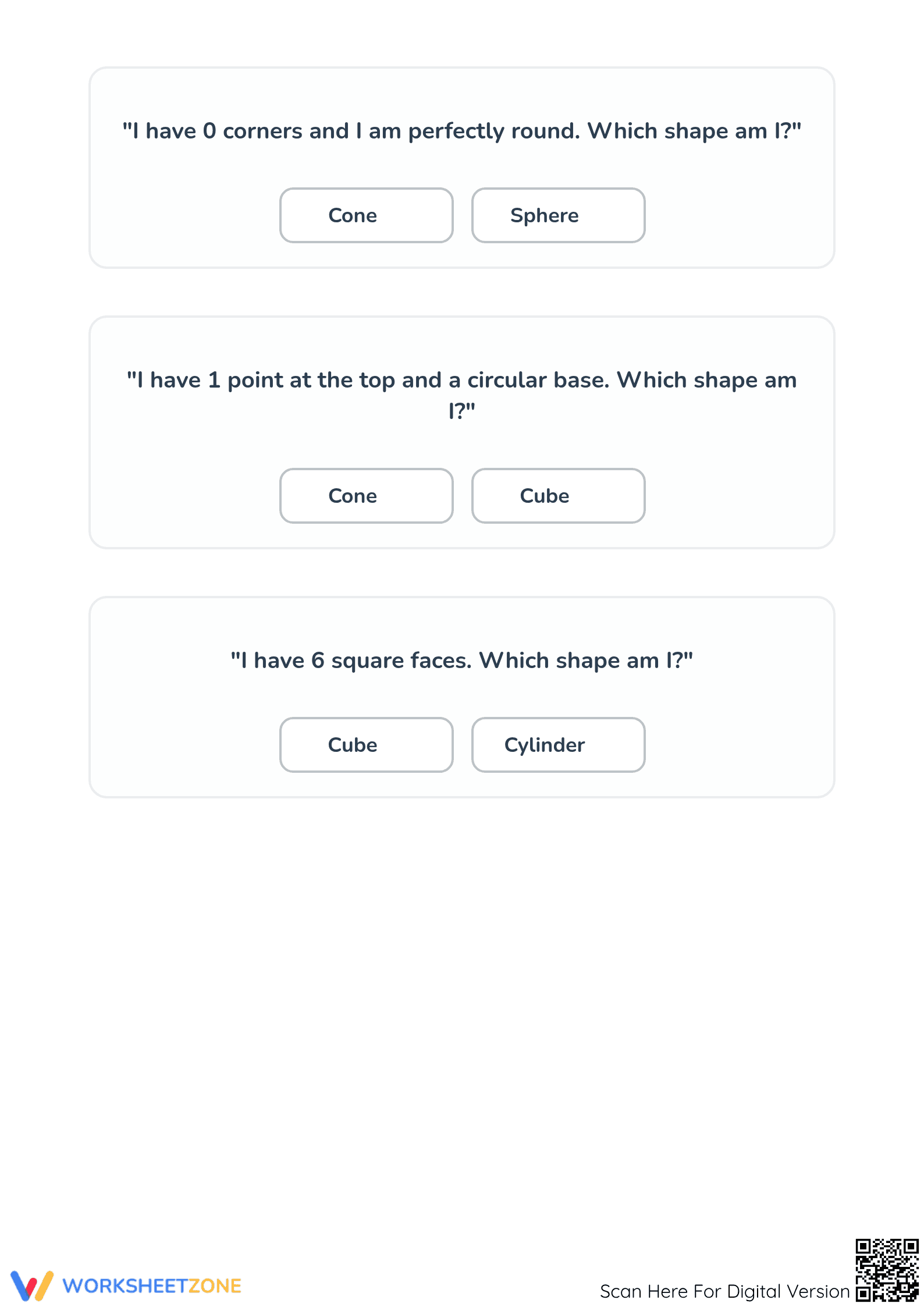
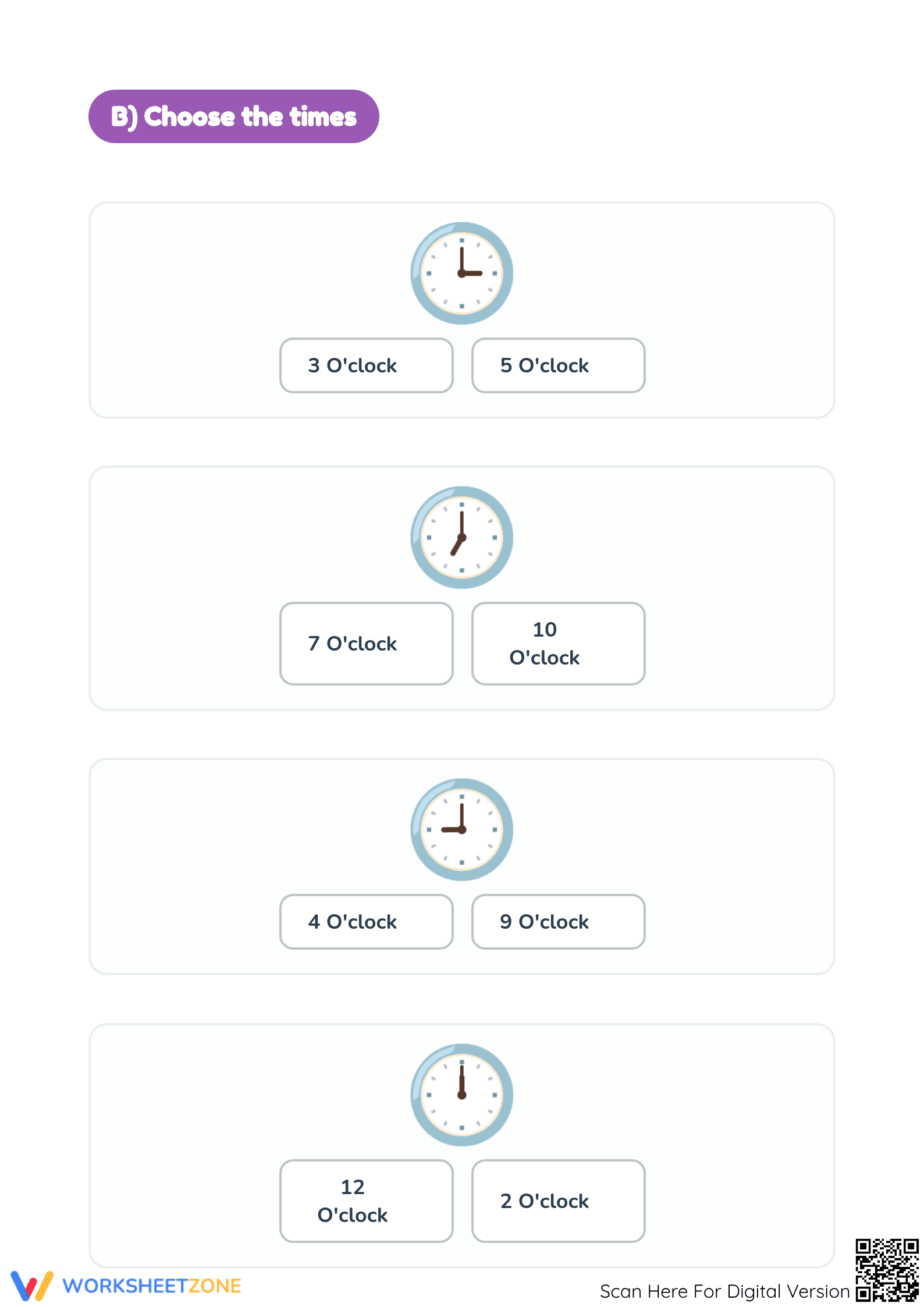
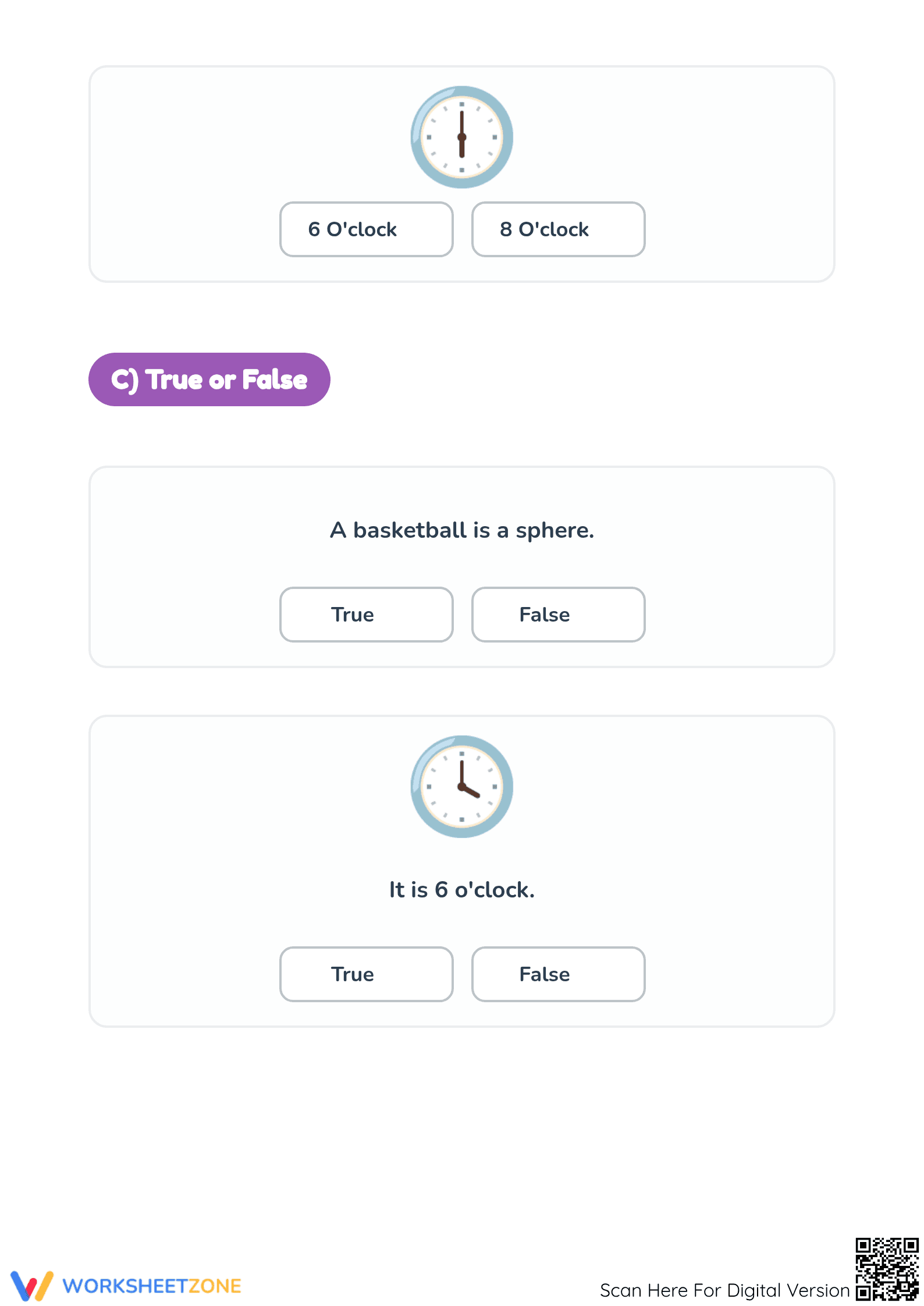
What's Inside: This 5-page PDF contains 15 distinct tasks organized by difficulty. The first two pages focus on geometric identification through visual selection and shape riddles. The subsequent three pages transition to time-telling, featuring clear analog clock faces that require students to distinguish between the hour and minute hands to determine the correct time to the hour and half-hour.
Zero-Prep Workflow
This resource is built for maximum teacher efficiency. First, print the 5-page set in under a minute. Next, distribute the packets to your class; the intuitive layout ensures students can begin working immediately. Finally, use the included answer key for rapid review or self-correction. Total teacher preparation time is less than two minutes, making this an ideal choice for busy mornings or unexpected substitute plans.
Standards Alignment: This material is primarily aligned to `CCSS.MATH.CONTENT.1.MD.B.3`, focusing on telling and writing time in hours and half-hours. It also supports `CCSS.MATH.CONTENT.1.G.A.1` by requiring students to identify defining attributes of 3D shapes such as cubes, cones, spheres, and cylinders. Both standard codes can be copied directly into lesson plans, IEP goals, or district curriculum mapping tools.
How to Use It: Deploy this worksheet during a math block after a direct instruction lesson on clock hands or geometric solids. It serves as an excellent formative assessment tool; observe if students struggle more with the circular base of a cone versus the roundness of a sphere. Most students will complete the full 15-problem set within 25 minutes during independent desk work.
Who It's For: This set is tailored for first-grade students but provides valuable review for second and third graders who need to sharpen their foundational fluency. It pairs naturally with physical manipulatives like wooden geometric solids or geared student clocks. The large, clear graphics support visual learners and students requiring fine-motor accommodations.
The integration of multiple math domains, such as telling time and identifying three-dimensional geometric figures, is a foundational component of early elementary mathematics education. Research from Fisher & Frey (2014) emphasizes the importance of utilizing scaffolds and structured practice to build student fluency in abstract concepts like temporal reasoning and spatial awareness. This worksheet specifically addresses the dual requirements of CCSS.MATH.CONTENT.1.MD.B.3 and CCSS.MATH.CONTENT.1.G.A.1 by requiring students to accurately read analog clocks to the hour and half-hour while simultaneously identifying the defining attributes of cubes, spheres, cones, and cylinders. By presenting these skills through varied task types—including riddles, multiple-choice identification, and true/false verification—the material encourages higher-order thinking and cross-domain synthesis. Such multimodal approaches are essential for developing the cognitive flexibility needed for more advanced mathematical modeling in later grades. This comprehensive set provides 15 targeted problems across 5 pages to ensure mastery of these essential Grade 1 skills.


