


























Views
Downloads


Grade K Letter G Phonics — Printable No-Prep Worksheet
Paste this activity's link or code into your existing LMS (Google Classroom, Canvas, Teams, Schoology, Moodle, etc.).
Students can open and work on the activity right away, with no student login required.
You'll still be able to track student progress and results from your teacher account.
This Kindergarten phonics worksheet helps early learners master the letter G through multi-sensory engagement. By combining coloring with structured handwriting practice, students build the fine motor skills and phonemic awareness necessary for reading readiness. It provides a clear, distraction-free layout that focuses on the relationship between the letter shape and its beginning sound.
At a Glance
- Grade: Kindergarten · Subject: ELA Phonics
- Standard:
CCSS.ELA-LITERACY.RF.K.1.D— Recognize and name all upper- and lowercase letters of the alphabet- Skill Focus: Letter G recognition and formation
- Format: 2 pages · 14 tasks · No-prep · PDF
- Best For: Morning work or phonics centers
- Time: 10–15 minutes
What's Inside
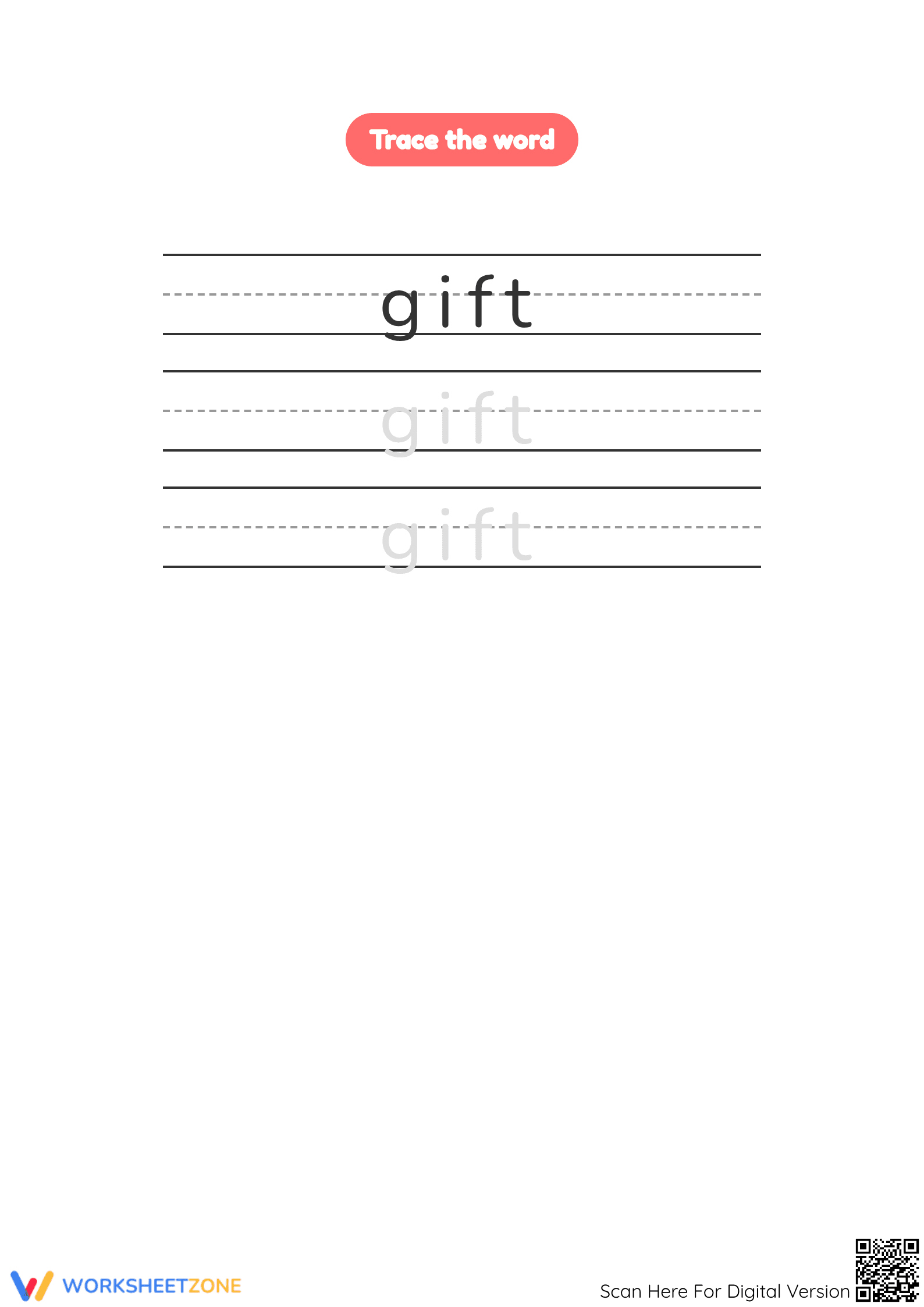
The resource consists of two high-quality PDF pages. The first page features large-format G and g outlines for coloring, paired with a gift icon to reinforce the hard /g/ sound. Below the visual aids, students find two dedicated tracing lines for letter formation. The second page extends the lesson with word-level tracing for the word gift, bridging the gap between isolated letters and vocabulary.
Zero-Prep Workflow
This resource is designed for a zero-prep classroom environment. Teachers can print the two-page set in less than 30 seconds. Distribution takes approximately 1 minute during transition periods. Reviewing student work is instantaneous, as the tracing paths provide immediate visual feedback. Total teacher preparation time is under 2 minutes, making it an ideal choice for emergency sub plans or last-minute literacy rotations.
Standards Alignment
The primary focus is `CCSS.ELA-LITERACY.RF.K.1.D`, which requires students to recognize and name all upper- and lowercase letters of the alphabet. Additionally, the handwriting component supports `CCSS.ELA-LITERACY.L.K.1.A` regarding the printing of letters. Both standard codes can be copied directly into lesson plans, IEP goals, or district curriculum mapping tools to ensure instructional compliance and track student progress toward mastery.
How to Use It
Use this worksheet during the independent practice phase of a gradual release model after introducing the letter G sound. It serves as an excellent formative assessment tool; observe students as they trace to identify those struggling with top-to-bottom stroke order. The expected completion time is 10 to 15 minutes, depending on the student's fine motor development and focus.
Who It's For
This is designed for Kindergarten students, though it provides valuable remediation for Grade 1 or Grade 2 students working on letter-sound correspondence. It pairs naturally with a Letter of the Week anchor chart or a short read-aloud focusing on hard /g/ words like goat, garden, or gift to solidify phonemic awareness.
According to the RAND AIRS 2024 report on early literacy, consistent exposure to grapheme-phoneme correspondence is the strongest predictor of future reading fluency. This worksheet addresses that need by isolating the letter G and the word gift to prevent cognitive overload in novice readers. By utilizing the `CCSS.ELA-LITERACY.RF.K.1.D` standard, the resource ensures that students are meeting national benchmarks for alphabet recognition. Research from Fisher & Frey (2014) emphasizes that scaffolded tracing tasks provide the necessary muscle memory for young writers to transition from drawing to purposeful printing. This 2-page document offers 14 specific opportunities for students to practice these foundational skills in a structured, low-stakes environment. Educators can rely on this evidence-based approach to support phonemic awareness and fine motor control simultaneously, ensuring that every student has a clear path toward literacy mastery.


