


























Views
Downloads

Grade 1 Reading Comprehension — Printable No-Prep Worksheet
Paste this activity's link or code into your existing LMS (Google Classroom, Canvas, Teams, Schoology, Moodle, etc.).
Students can open and work on the activity right away, with no student login required.
You'll still be able to track student progress and results from your teacher account.
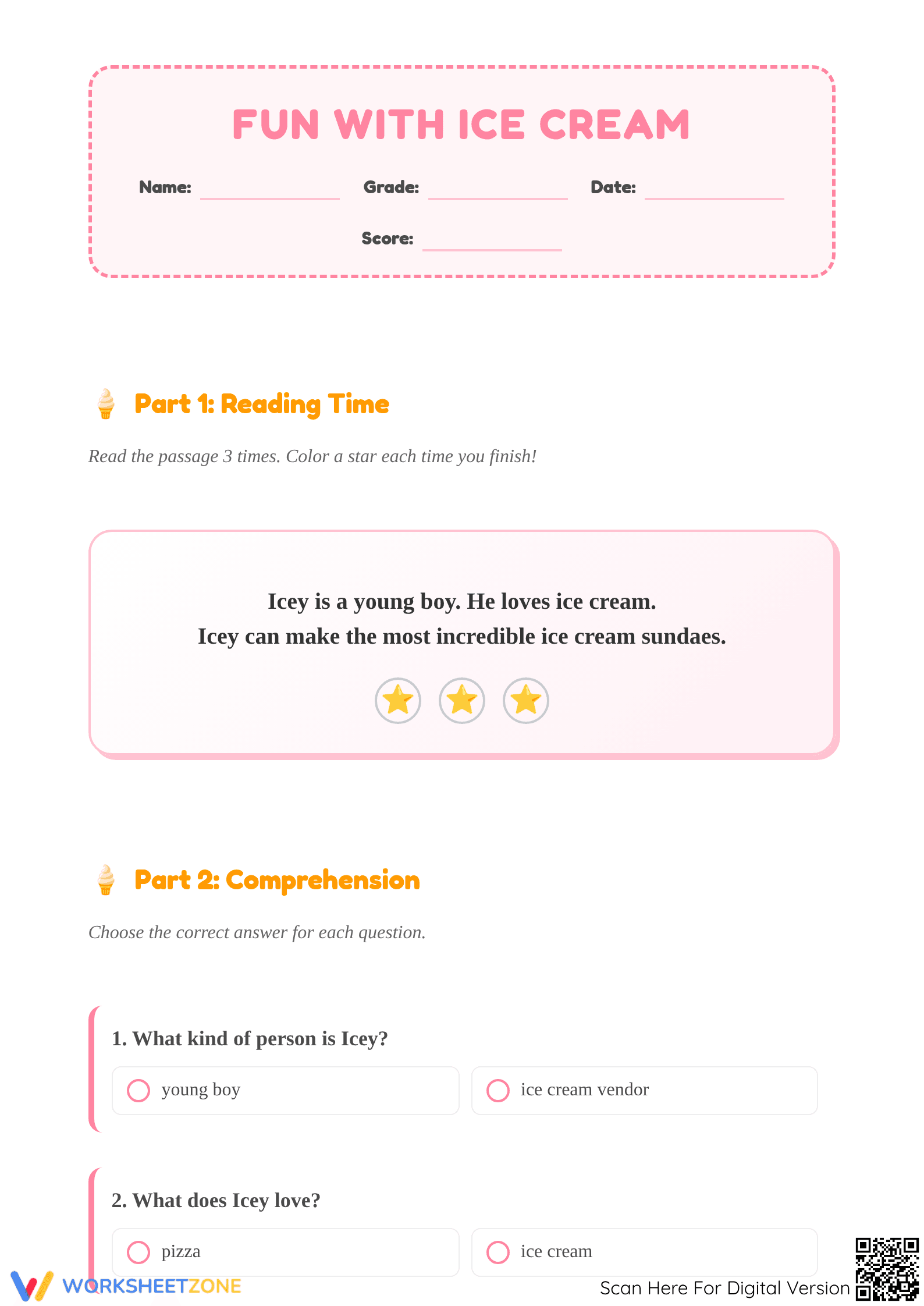
This engaging reading comprehension worksheet helps Grade 1 students practice identifying key details in a short text. By reading a fun, summer-themed passage about ice cream, young learners will answer multiple-choice questions, complete vocabulary exercises, and express their creativity, building essential foundational literacy skills.
At a Glance
- Grade: 1 · Subject: English Language Arts
- Standard:
CCSS.ELA-LITERACY.RL.1.1— Ask and answer questions about key details in a text.- Skill Focus: Reading Comprehension
- Format: 3 pages · 8 problems · Answer key included · PDF
- Best For: Independent practice or morning work
- Time: 15–20 minutes
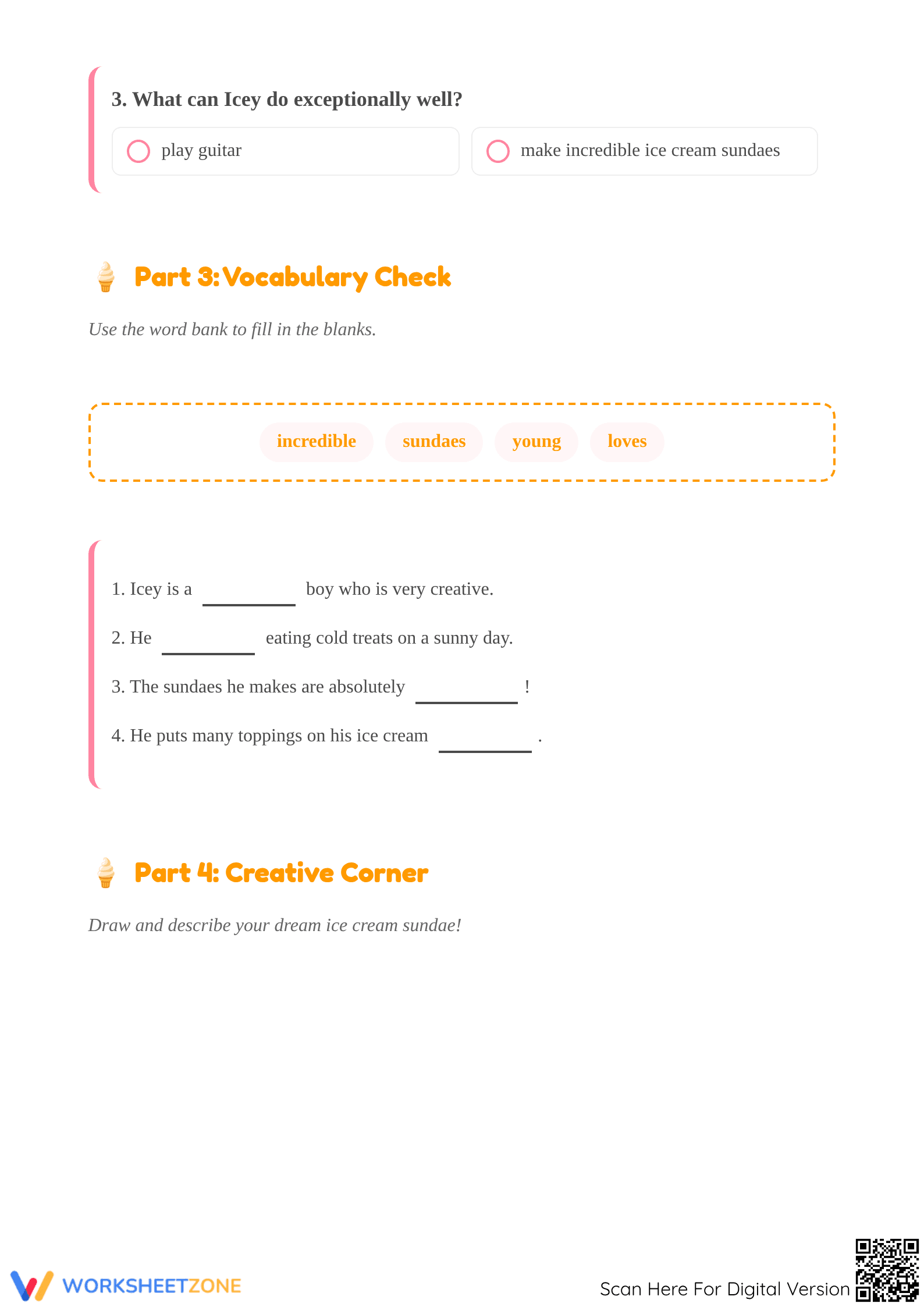
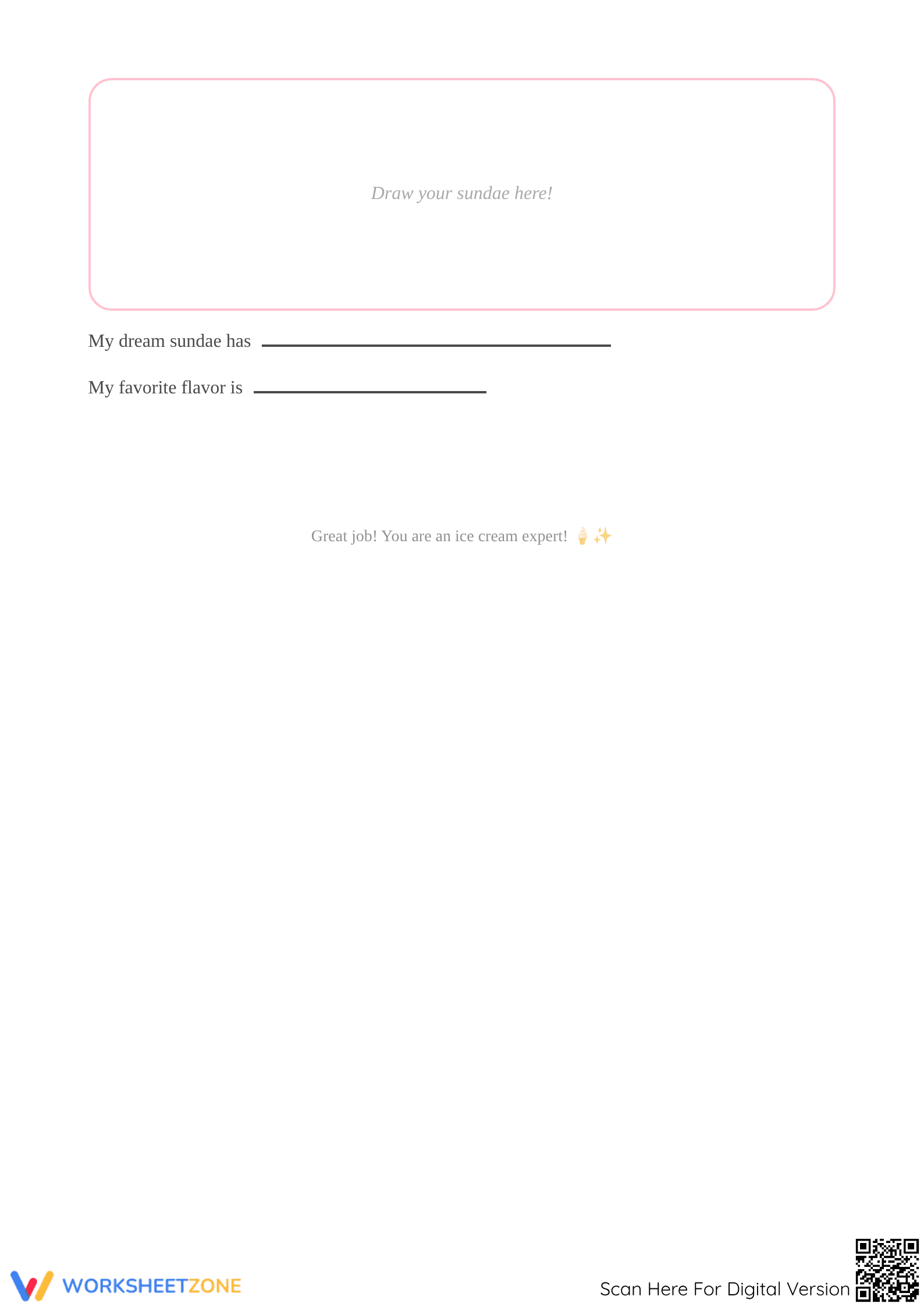
This three-page packet features a short, accessible reading passage followed by three distinct activity sections. Students will tackle three multiple-choice comprehension questions, complete a four-question vocabulary fill-in-the-blank exercise using a provided word bank, and finish with a creative drawing and writing prompt. A complete answer key is included to make grading quick and straightforward.
Designed for immediate classroom implementation, this resource requires minimal teacher setup:
- Print (1 minute): Simply download the PDF and print the three-page student packet.
- Distribute (1 minute): Hand out the worksheets during your literacy block or morning routine.
- Review (1 minute): Use the included answer key to quickly check student responses or guide a whole-class review.
With less than two minutes of total prep time, this self-explanatory packet is highly suitable for emergency sub plans or independent learning stations.
This resource is directly aligned to CCSS.ELA-LITERACY.RL.1.1: Ask and answer questions about key details in a text. It also supports foundational vocabulary acquisition by requiring students to use context clues and a word bank to complete sentences. Both standard codes can be copied directly into lesson plans, IEP goals, or district curriculum mapping tools.
This worksheet is highly versatile and fits perfectly into a morning work routine or as an independent literacy center activity after direct instruction on finding text evidence. Teachers can use the multiple-choice section as a quick formative assessment to observe which students are successfully retaining key details from their independent reading. Expect students to complete the entire packet within 15 to 20 minutes.
This resource is primarily designed for first-grade students developing their independent reading and comprehension skills. The simple text and clear word bank provide built-in scaffolds for early readers or English Language Learners who need extra support. It pairs wonderfully with a whole-class read-aloud about summer treats or a direct instruction lesson on identifying character traits.
Developing early literacy requires consistent opportunities for students to interact with accessible texts and demonstrate their understanding through varied response formats. By aligning to CCSS.ELA-LITERACY.RL.1.1, this resource ensures students practice how to ask and answer questions about key details in a text. According to Fisher & Frey (2014), providing structured, gradual-release tasks—such as moving from basic multiple-choice recall to vocabulary application and finally to creative expression—significantly enhances reading comprehension and student engagement. This multi-modal approach allows young learners to process information in different ways, solidifying their grasp of the material. Integrating these targeted, standards-based activities into daily routines helps build the foundational skills necessary for long-term academic success, ensuring that early readers develop both the competence and the confidence required to tackle increasingly complex texts as they progress through elementary school.


