




























Views
Downloads

Grade 1 Fruits or Vegetables — Printable No-Prep Worksheet

Paste this activity's link or code into your existing LMS (Google Classroom, Canvas, Teams, Schoology, Moodle, etc.).
Students can open and work on the activity right away, with no student login required.
You'll still be able to track student progress and results from your teacher account.
This Grade 1 Science worksheet helps young learners master food classification by distinguishing between fruits, vegetables, and dairy. Students apply observational skills to recognize plant-based foods and animal products, strengthening their understanding of nutrition. This essential resource provides immediate engagement and clear instructional goals for any early childhood science lesson.
At a Glance
- Grade: Grade 1 · Subject: Science
- Standard:
1-LS1-1— Identify and categorize external parts of plants used for food- Skill Focus: Food Classification and Sorting
- Format: 1 page · 9 problems · Answer key included · PDF
- Best For: Independent practice or introductory science lesson
- Time: 10–15 minutes
What's Inside
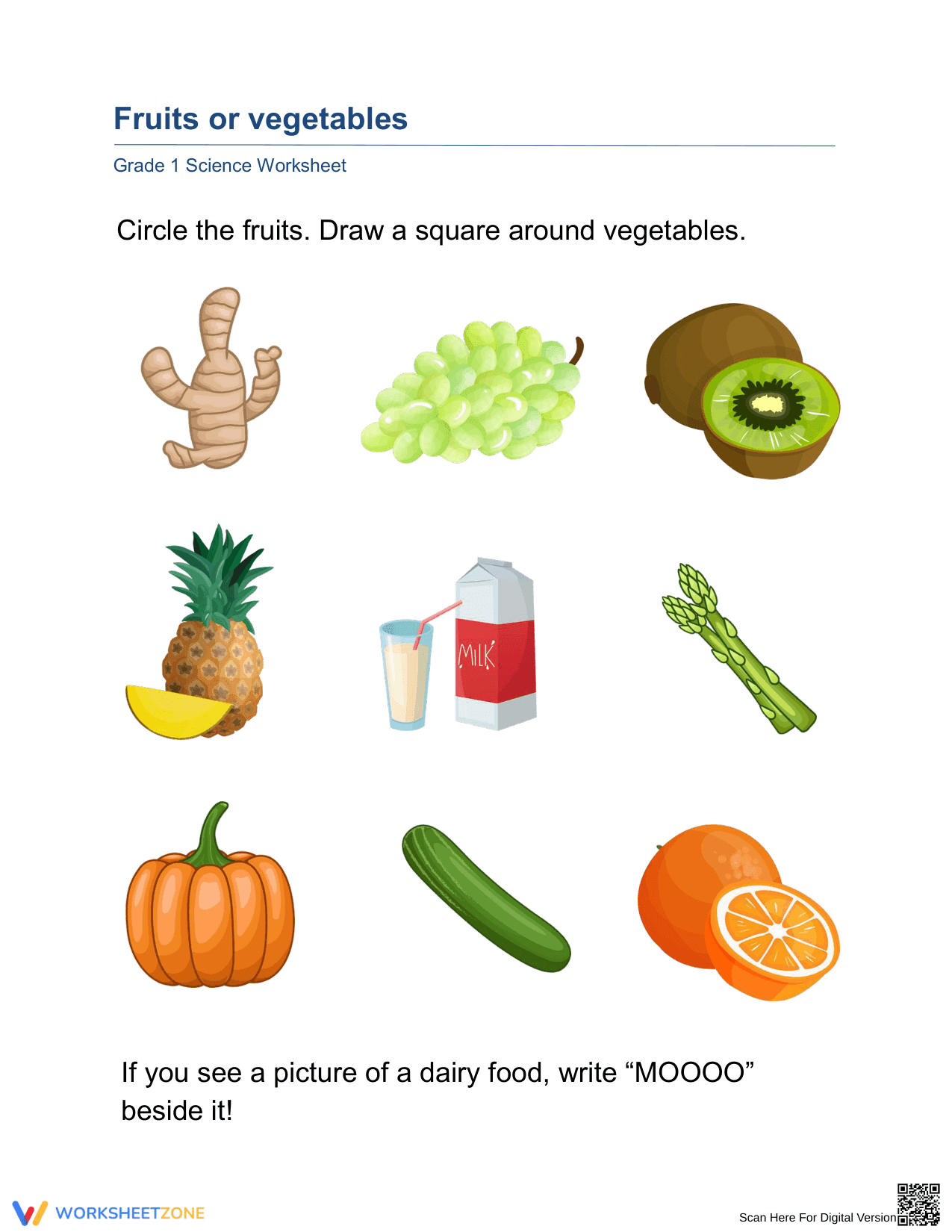
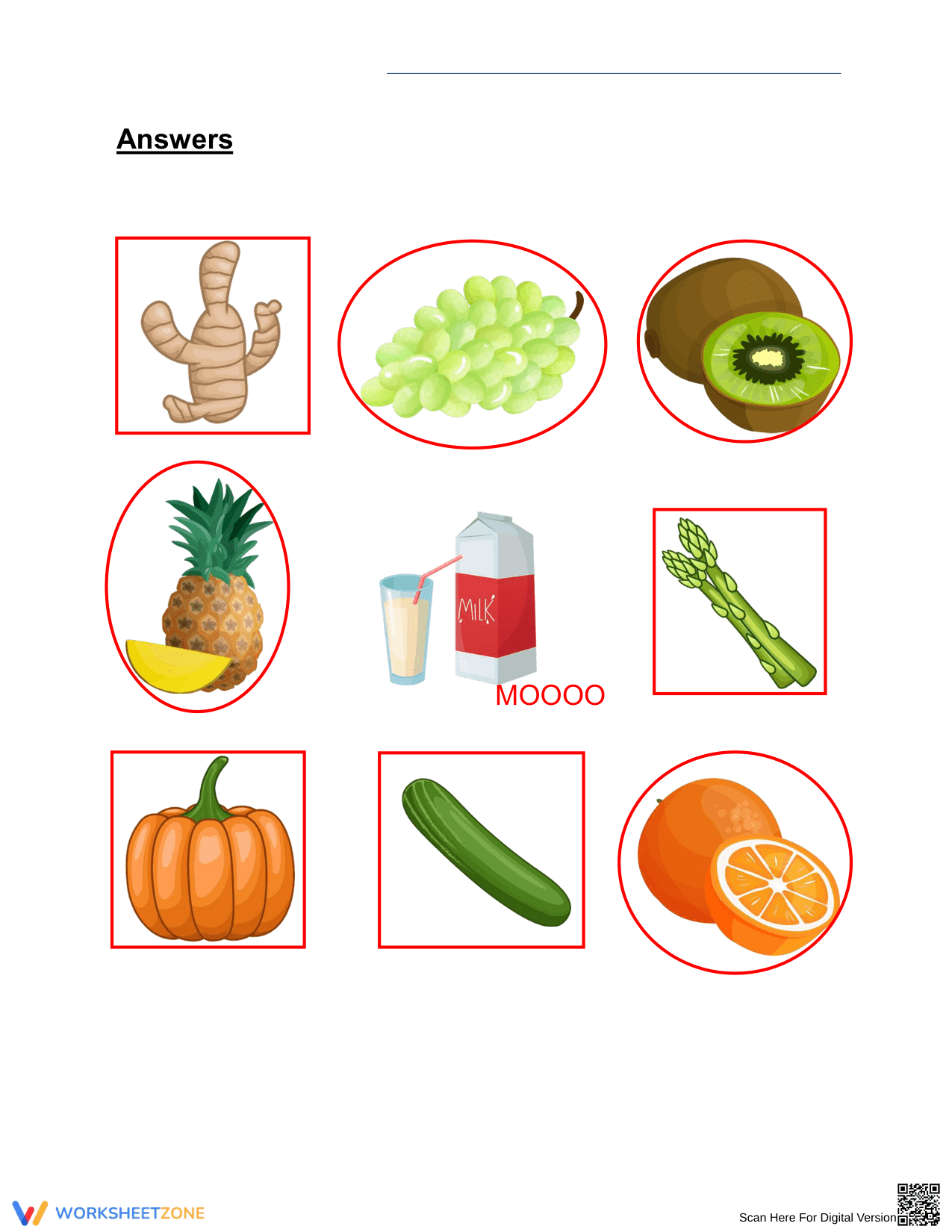
This single-page PDF features nine high-quality illustrations of common foods including ginger, grapes, and pumpkin. The layout is designed for young readers with large icons and clear instructions. Students use circling, drawing squares, and writing text to demonstrate their mastery of categorization. A comprehensive answer key is included for quick review.
Zero-Prep Workflow
Using this worksheet is incredibly efficient. Simply print the single-page document (30 seconds), distribute it to your students during your science block (1 minute), and review the answers together using the included key (5 minutes). The total teacher preparation time is less than two minutes, making it an ideal choice for emergency sub plans.
Standards Alignment
This resource is aligned to 1-LS1-1, which focuses on how organisms use external parts to meet their needs. By identifying parts of plants we eat, students build a foundation for understanding plant biology and support the L.1.5.A categorization goal. Both standard codes can be copied directly into lesson plans, IEP goals, or district curriculum mapping tools.
How to Use It
Assign this worksheet during the "elaborate" phase of a lesson on plant parts. Teachers should observe whether students can distinguish between fruits and vegetables as a formative assessment. Expect students to complete the primary sorting tasks and the bonus dairy identification within a 15-minute instructional window.
Who It's For
This activity is designed for first-grade students but serves as an excellent review for kindergarteners. It is particularly effective for English Language Learners who benefit from visual representations of vocabulary words like asparagus or zucchini. Pair this worksheet with a physical food sorting activity or a reading passage about healthy eating.
According to NAEP frameworks, early exposure to categorization tasks is critical for developing the logical structures required for higher-order scientific reasoning. This Grade 1 Science worksheet leverages visual literacy to help students distinguish between plant-based food groups and dairy products, supporting the 1-LS1-1 standard's focus on observable physical properties. Research from Fisher & Frey (2014) highlights that such structured practice with visual cues accelerates vocabulary acquisition in early learners. By requiring students to use different symbolic responses for different categories, the worksheet engages multiple cognitive pathways, ensuring deeper retention of nutritional concepts. This task-driven approach aligns with EdReports 2024 recommendations for high-quality, evidence-based instructional materials that provide clear student outcomes with minimal teacher overhead. It serves as a robust tool for assessing a student's ability to recognize and sort external plant parts used in human diets, a foundational skill in the life sciences curriculum.


