





























Free Unresolved Ending Effect Worksheet | Grade 9 English I
Paste this activity's link or code into your existing LMS (Google Classroom, Canvas, Teams, Schoology, Moodle, etc.).
Students can open and work on the activity right away, with no student login required.
You'll still be able to track student progress and results from your teacher account.
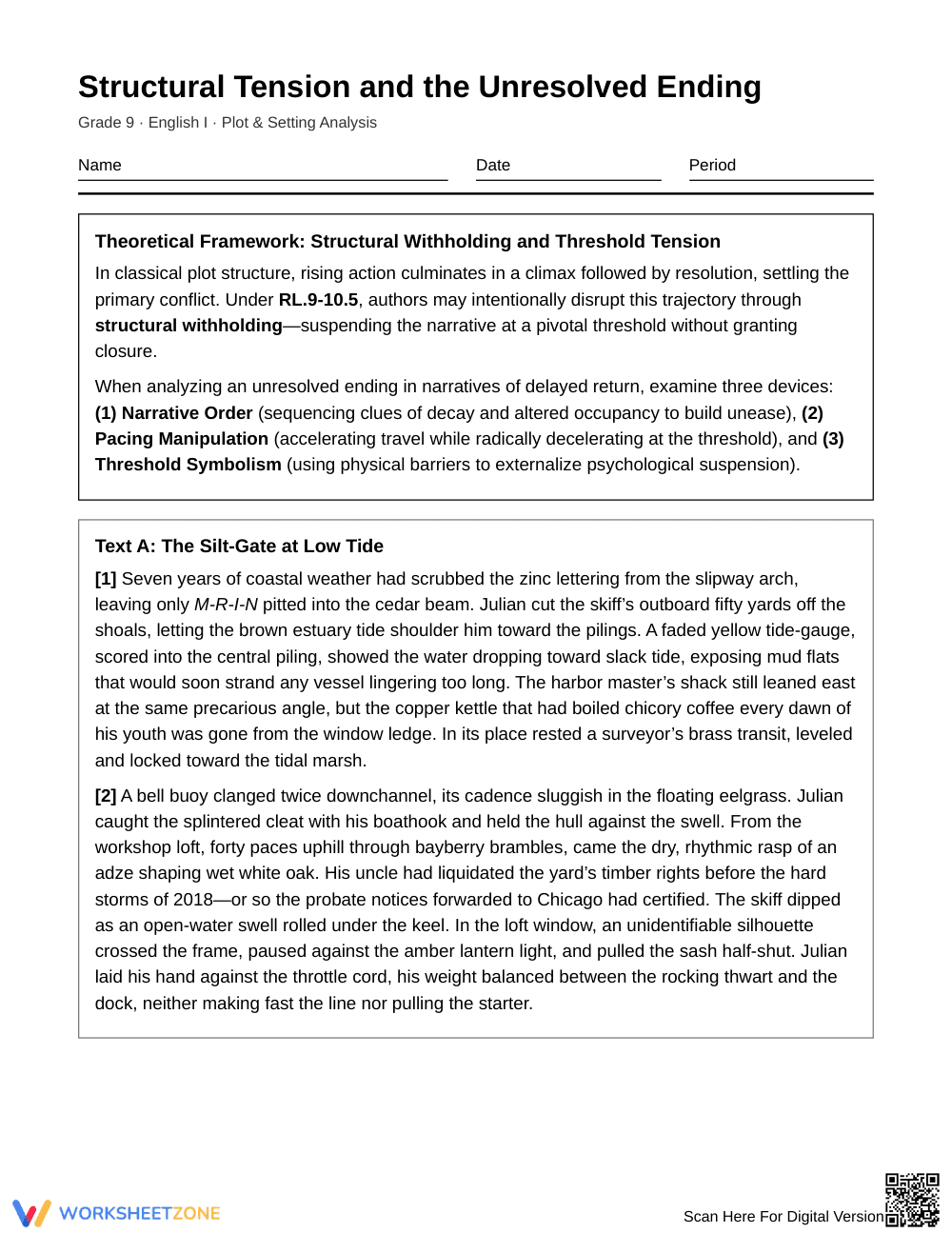
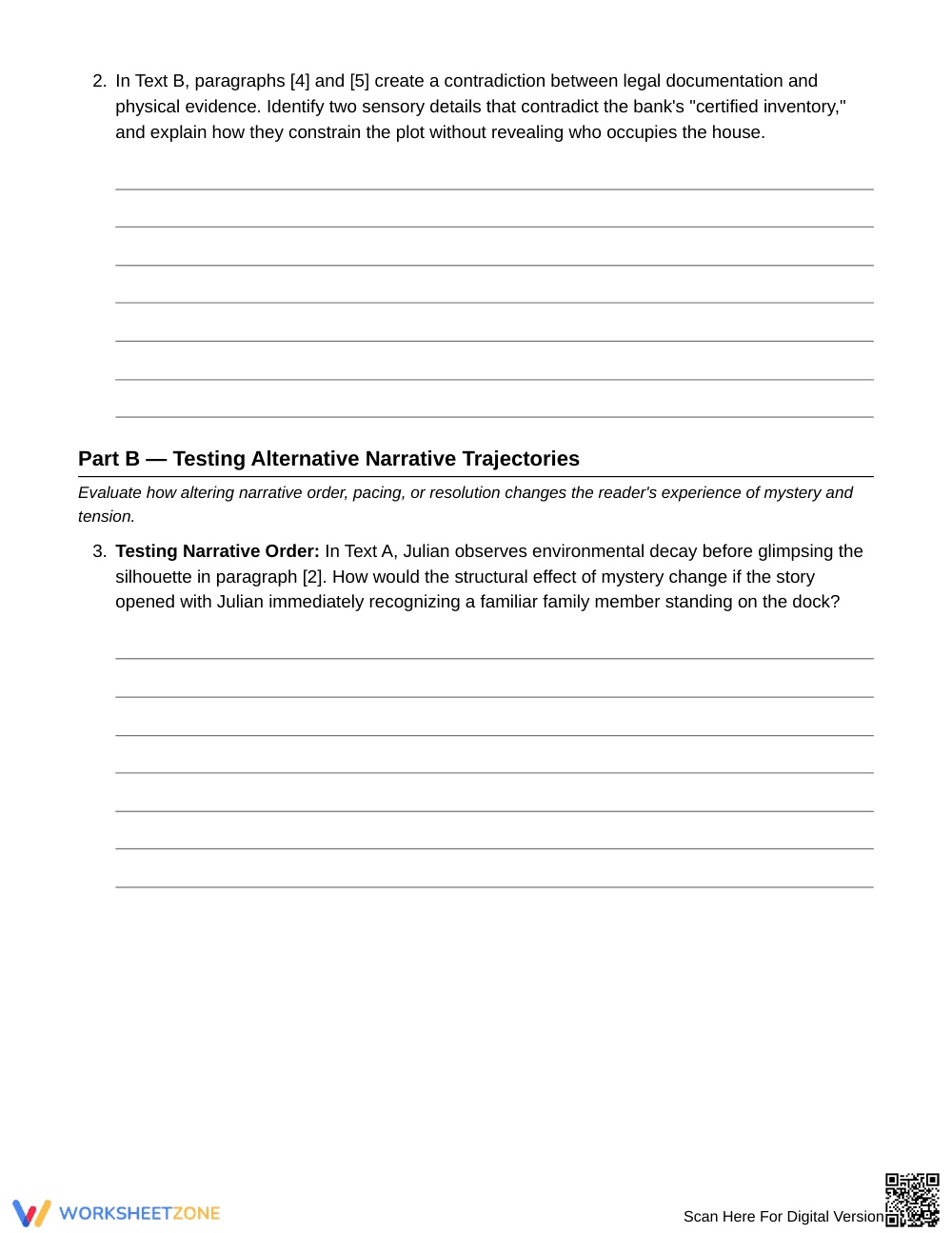
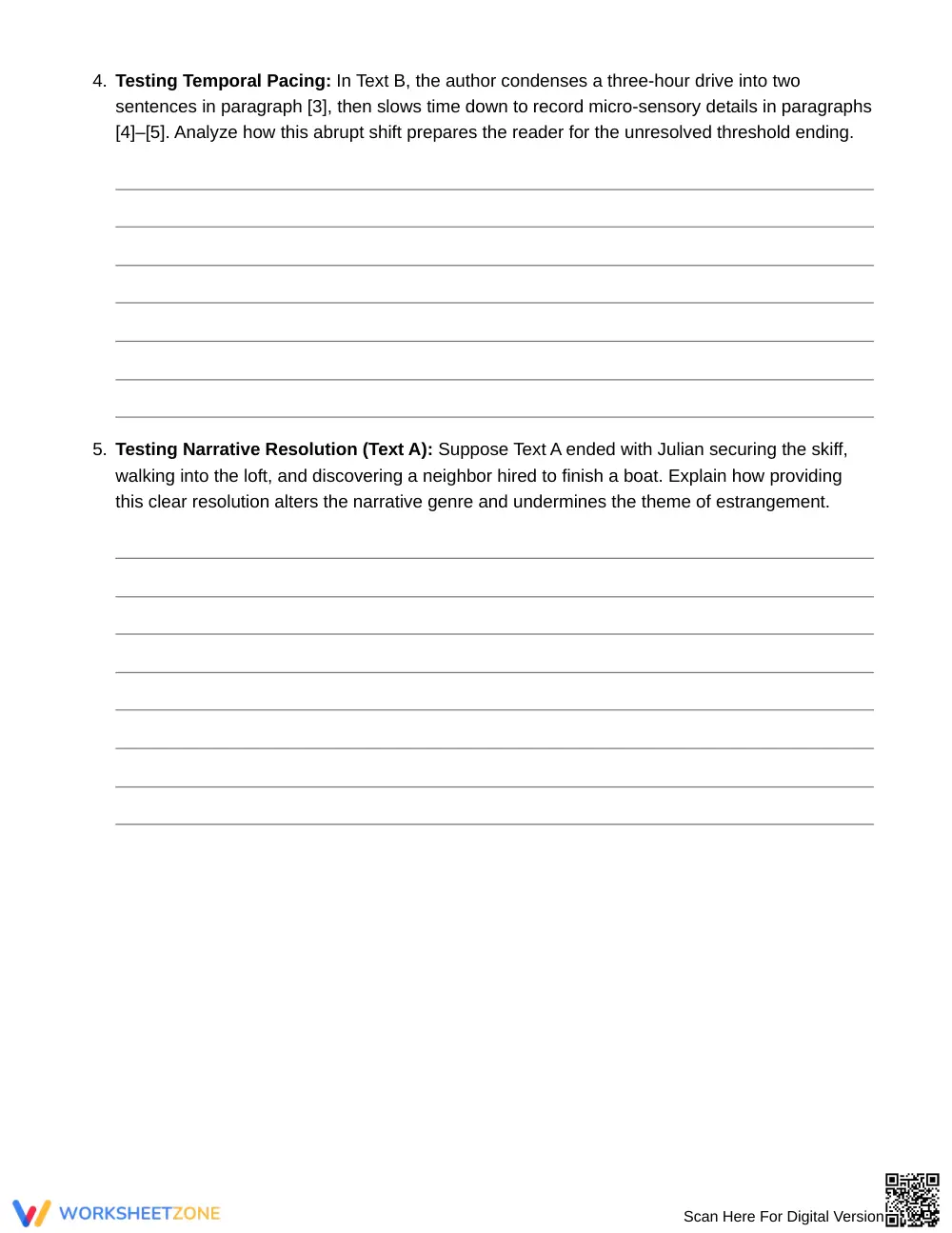
Students will directly examine how an unresolved ending heightens structural tension, then craft qualified arguments that explain its narrative impact. This worksheet guides ninth‑graders through evidence‑based analysis, ensuring they can articulate the effect of lingering plot threads on reader interpretation.
At a Glance
- Grade: 9 · Subject: English I
- Standard:
RL.9-10.5— Analyze how an unresolved ending creates sustained tension and deeper meaning- Skill Focus: Explain the Effect of an Unresolved Ending
- Format: 6 pages · 8 problems · Answer key included · PDF
- Best For: Analyzing plot tension in narrative texts during close reading
- Time: 30–45 minutes
What's Inside
Inside are eight text‑based tasks spread over six PDF pages, each paired with a detailed answer key. The worksheet features a worked example, sentence frames, and a concise word bank to scaffold analysis.
Mastery Evidence
The rubric, though not printed, outlines three performance tiers—Approaching, Meeting, and Exceeding—aligned with the RL.9‑10.5 expectations. Each task maps to a sub‑skill such as evidence citation, tension analysis, or argument synthesis, allowing teachers to record scores directly in gradebooks or IEP progress notes.
- Approaching: Student cites one textual detail and offers a basic explanation of the unresolved ending (2‑3 sentences).
- Meeting: Student integrates two pieces of evidence, compares the two texts, and articulates a nuanced effect on reader response (4‑5 sentences).
- Exceeding: Student provides three or more citations, evaluates structural withholding, and constructs a sophisticated argument linking tension to theme (6‑7 sentences).
Standards Alignment
`RL.9-10.5` – Analyze how an author’s choices regarding structure, such as an unresolved ending, affect the development of theme, plot, and character. This focus aligns with ninth‑grade literacy goals and can be copied directly into lesson plans, IEP goals, or district curriculum mapping tools.
How to Use It
Use the worksheet as a post‑reading activity after a close‑reading lesson to deepen students’ analytical writing, or as a pre‑assessment to gauge readiness for a unit on narrative tension. Teachers can observe students’ use of textual evidence as a formative indicator, with completion time ranging from 30 to 45 minutes.
Who It's For
Designed for ninth‑grade English I students preparing for high‑school literature standards. While the worksheet is a single version, the built‑in scaffolds (sentence frames and word bank) support diverse learners. Pair it with an anchor chart on narrative tension for a cohesive instructional block.
Research indicates that explicit instruction on structural withholding markedly improves students’ capacity to discuss complex narrative outcomes; a 2014 study by Fisher and Frey reported gains of up to 22% in analytical writing scores when teachers emphasized unresolved endings. By aligning every task with RL.9‑10.5, this worksheet provides a clear pathway for learners to examine how an unresolved conclusion creates sustained tension, deepens thematic interpretation, and influences character development. The included answer key supplies immediate, evidence‑based feedback, allowing students to revise their arguments within the same class period. Moreover, the built‑in sentence frames and a 30‑word bank give scaffolding that benefits diverse learners, while the eight‑task sequence ensures sufficient practice for mastery. Together, these features reinforce the standard’s demand that students articulate the effect of an unresolved ending with specific textual citations and thoughtful analysis.


