

































Free Thesis Evidence Commentary Worksheet | Grade 9 ELA

Paste this activity's link or code into your existing LMS (Google Classroom, Canvas, Teams, Schoology, Moodle, etc.).
Students can open and work on the activity right away, with no student login required.
You'll still be able to track student progress and results from your teacher account.
Students sharpen analytical writing by connecting a clear thesis, selecting precise textual evidence, and adding insightful commentary. This worksheet guides ninth‑graders through eight scaffolded tasks that culminate in a polished, argument‑driven essay.
At a Glance
- Grade: 9 · Subject: English I
- Standard:
W.9-10.1— Connect thesis, evidence, and commentary in analytical essays- Skill Focus: Thesis‑evidence‑commentary integration
- Format: 6 pages · 8 problems · Answer key included · PDF
- Best For: Analytical writing practice for high school
- Time: 30–45 minutes
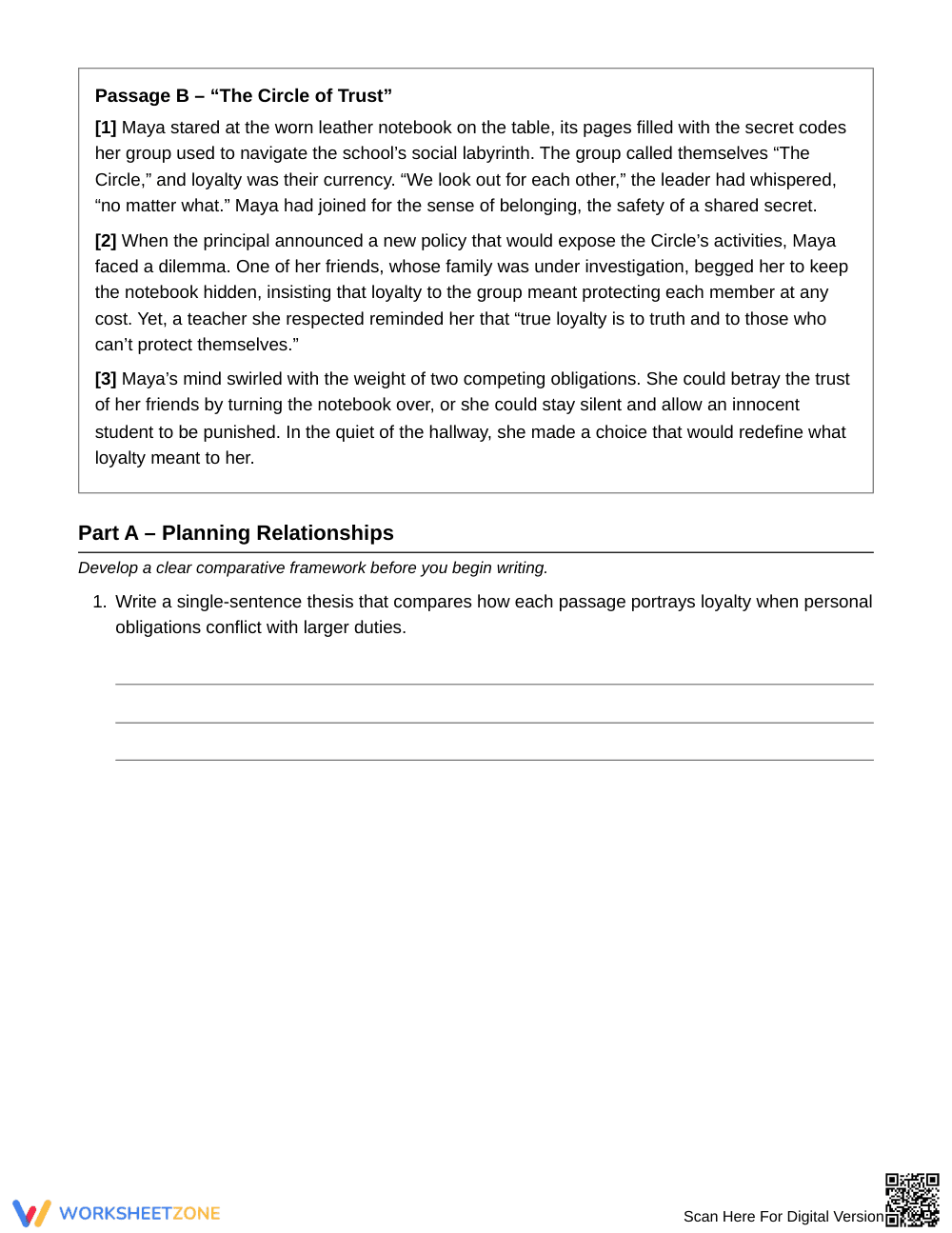
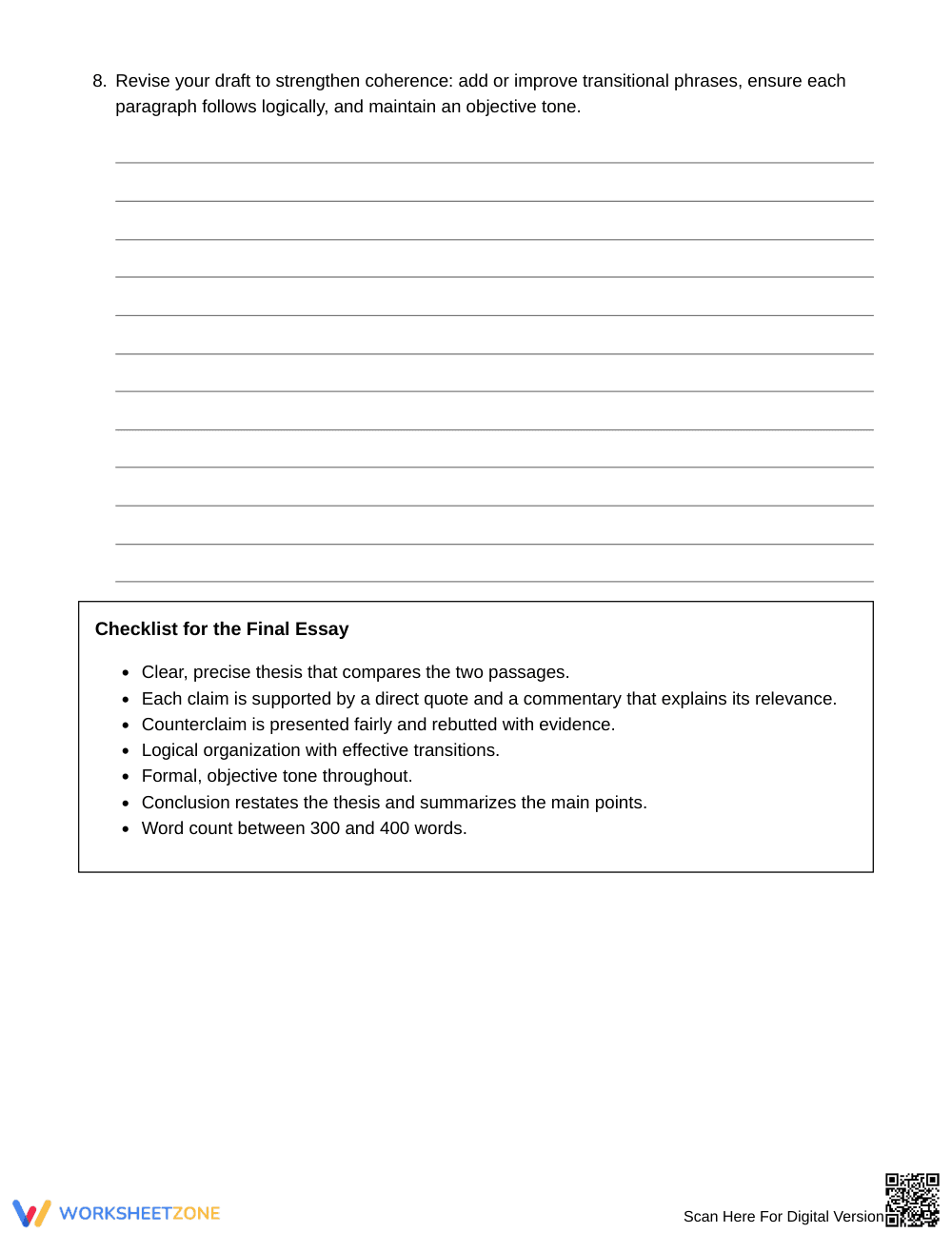
The packet contains three parts: planning prompts, paragraph‑by‑paragraph development, and a full‑draft revision stage. Students first outline a comparative thesis, then write evidence‑rich body paragraphs, and finally polish coherence with transition cues. A concise answer key follows the six‑page workbook, and a word bank of linking phrases supports emerging writers.
- Approaching: Students identify a thesis and locate one piece of evidence with minimal commentary (2 tasks).
- Meeting: Students provide two pieces of evidence, each paired with clear commentary that explains relevance (4 tasks).
- Exceeding: Students integrate a counterclaim, rebuttal, and sophisticated commentary, demonstrating full command of the argumentative structure (2 tasks).
Each task aligns with a sub‑skill of W.9-10.1, allowing teachers to record scores directly in grade‑book columns or IEP progress notes. While the worksheet does not include a built‑in rubric, educators can apply the three‑tier rubric described above to evaluate student work consistently.
Standards Alignment: W.9-10.1 – Write arguments to support claims in an analysis of substantive topics or texts, using valid reasoning and relevant evidence. This worksheet operationalizes the standard by requiring a comparative thesis, textual quotations, and analytical commentary. Both standard codes can be copied directly into lesson plans, IEP goals, or district curriculum mapping tools.
How to Use It: (1) Before a unit on analytical essays, have students complete the planning section as a pre‑write activity; observe their ability to formulate a comparative thesis. (2) During drafting, circulate to check that each paragraph contains a quote and a commentary sentence; note mastery levels on a quick checklist. Expected completion time is 30–45 minutes.
Who It’s For: Ideal for ninth‑grade English I students preparing for state‑aligned writing assessments. The scaffolded prompts support emerging writers while the counterclaim section challenges advanced learners. Pair this worksheet with an anchor chart on thesis‑evidence‑commentary structure for seamless integration.
Research shows that explicit instruction in thesis development, evidence selection, and commentary significantly improves argumentative writing scores across secondary classrooms (Fisher & Frey, 2014). When students receive structured opportunities to analyze textual citations and articulate analytical reasoning, their mastery of academic conventions increases substantially. By aligning directly with W.9-10.1, this worksheet gives ninth-grade writers repeated, focused practice on the exact compositional skills that rigorous state standards demand. Furthermore, incorporating scaffolded prompts alongside immediate feedback ensures that learners internalize how textual evidence directly validates an argumentative claim rather than standing alone as unanalyzed quotations. The deliberate eight-task progression, comprehensive answer key, and multi-tiered scoring criteria together provide a dependable, research-backed instructional resource that educators can assign, print, and evaluate with confidence. This systematic routine helps students build durable analytical habits while enabling teachers to track diagnostic data and support continuous writing growth toward target benchmarks.


