





























Free Technical Clarification Worksheet | Grade 9 English I
Paste this activity's link or code into your existing LMS (Google Classroom, Canvas, Teams, Schoology, Moodle, etc.).
Students can open and work on the activity right away, with no student login required.
You'll still be able to track student progress and results from your teacher account.
Opening
This worksheet guides Grade 9 English I students through ten targeted tasks that evaluate how useful a technical clarification is within an oral‑history archive article. By analyzing constraints, citation rules, and metadata specifications, learners practice evidence‑based writing and decision‑making, preparing them to justify the clarification’s value in real‑world research contexts.
At a Glance
- Grade: 9 · Subject: English I
- Standard:
— Evaluate a technical clarification’s usefulness in an informational text (students locate constraints, cite evidence, and argue relevance)- Skill Focus: Assess the Usefulness of a Technical Clarification
- Format: 6 pages · 10 problems · Answer key included · PDF
- Best For: Classroom research unit on local history
- Time: 15–20 minutes
What’s Inside
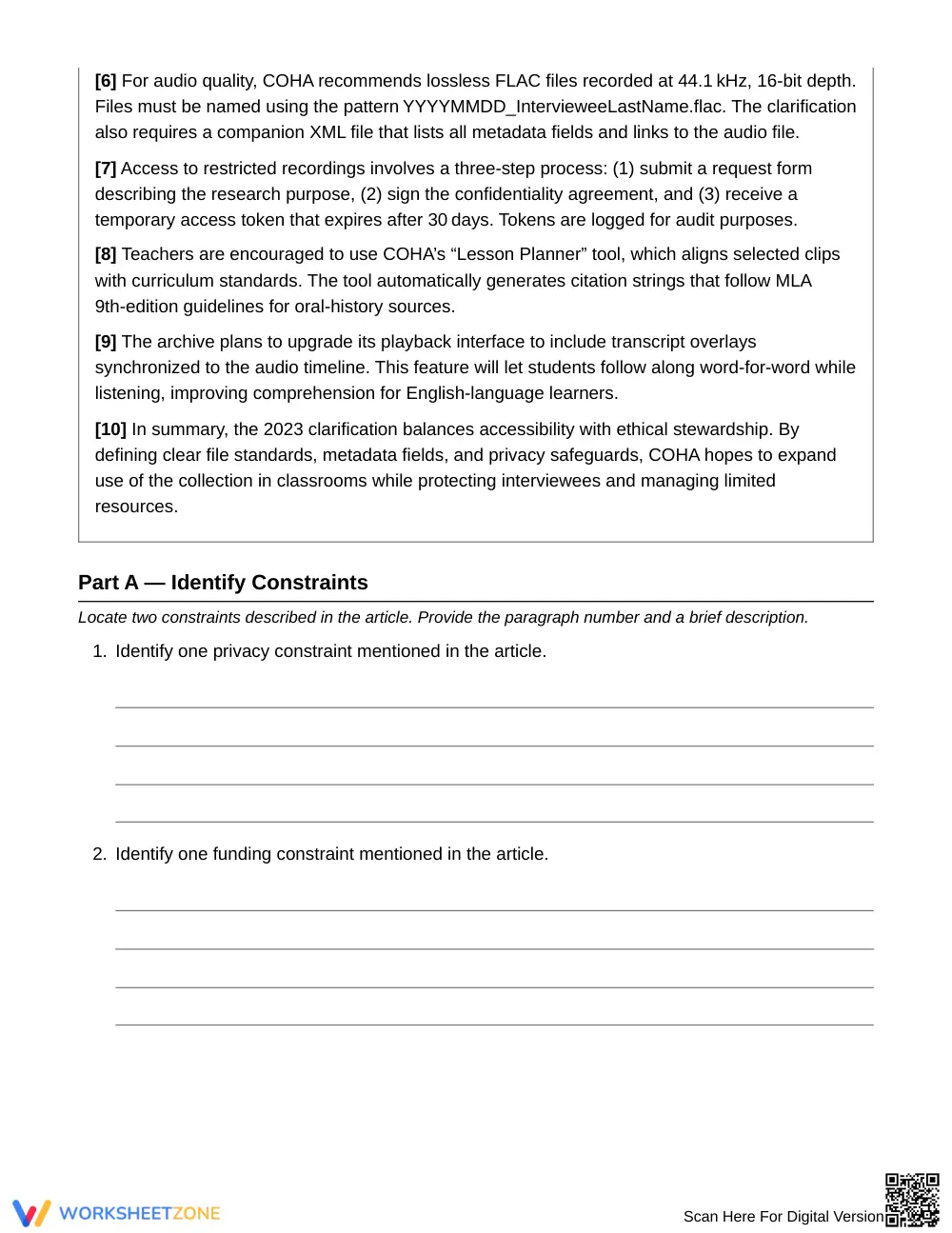
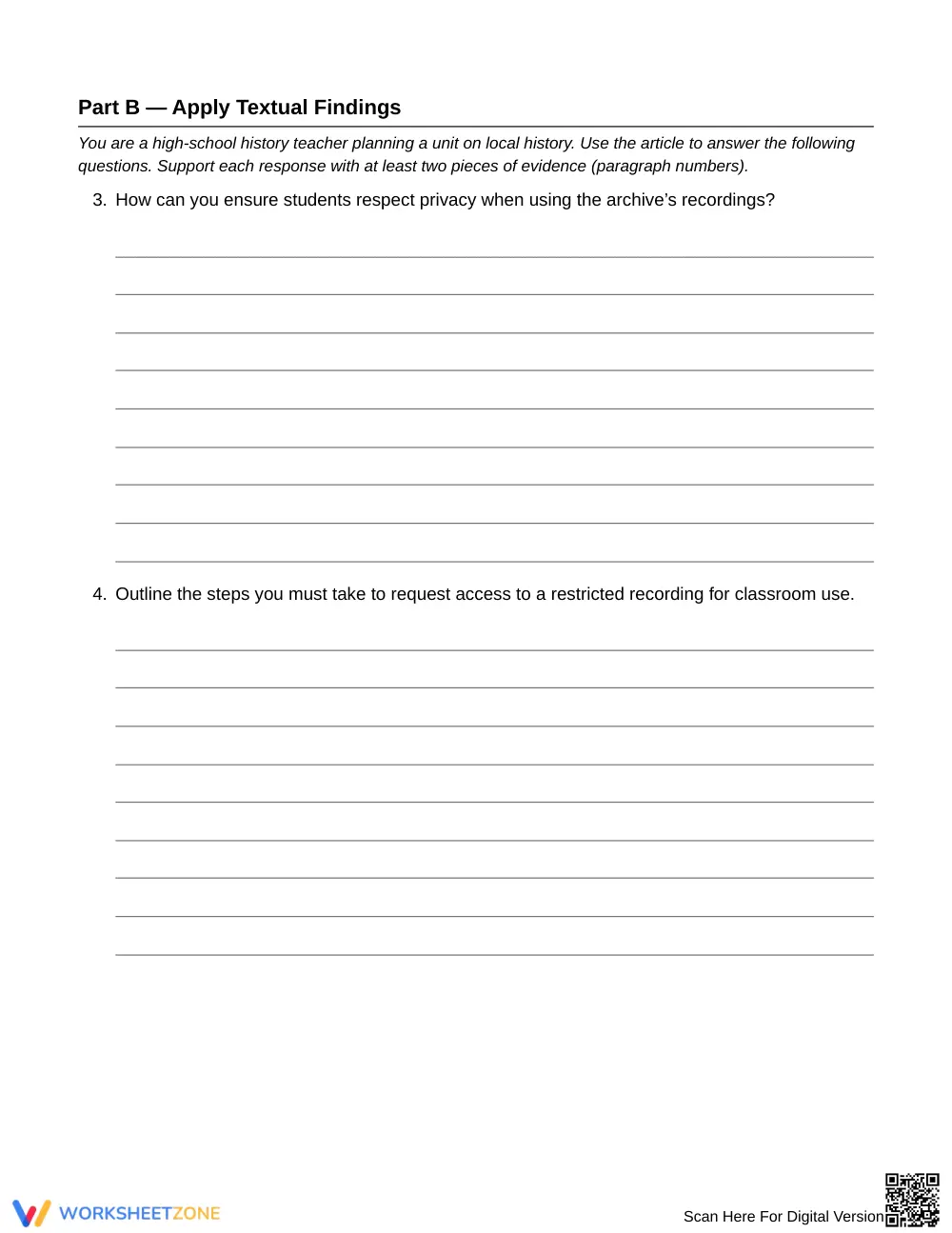
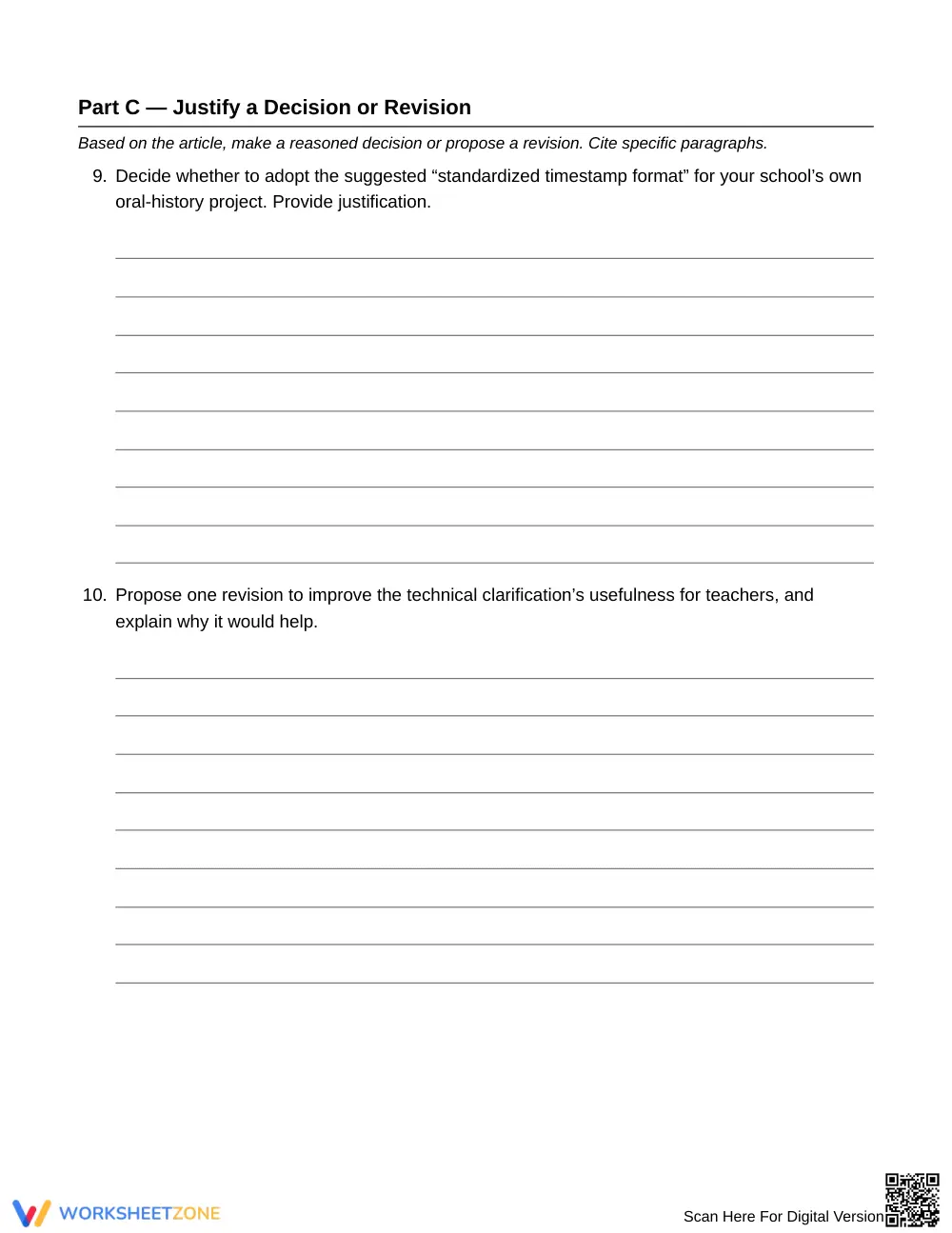
The six‑page packet contains ten multi‑part questions divided into three sections (Part A, Part B, Part C). Each section blends short‑answer prompts, evidence‑based citations, and applied design tasks. An answer key spans two pages, and the worksheet includes a citation reminder, a word bank of key terms, and a worked example for the metadata format.
Skill Progression
- Guided practice – 3 tasks with sentence frames and a word bank; teacher models citation and constraint identification.
- Supported practice – 4 tasks where students locate two constraints and draft brief arguments using provided evidence.
- Independent practice – 3 tasks requiring a full justification, a technical specification list, and a reflection without scaffolds.
The sequence follows the I Do, We Do, You Do model to release responsibility gradually.
Standards Alignment
`` `` – Students evaluate the usefulness of a technical clarification by identifying constraints, citing specific paragraphs, and constructing evidence‑based arguments. This aligns with informational text analysis expectations for Grade 9 English I. Both standard references can be copied directly into lesson plans, IEP goals, or district curriculum mapping tools.
How to Use It
Before a unit on local history, have students read the COHA article and complete Part A as a warm‑up to practice identifying privacy and funding constraints; collect their responses for a quick formative check.
During a research project, assign Part B and Part C for independent work, allowing students to request restricted recordings, cite sources, and design their own metadata sheets; use the reflection prompts to gauge metacognitive growth.
Who It’s For
This worksheet is designed for ninth‑grade English I learners who are ready to engage with authentic informational texts. It supports diverse learners through sentence frames, a word bank, and a worked example, while also challenging advanced students with open‑ended synthesis tasks. Pair it with the COHA “Lesson Planner” tool or a teacher‑created anchor chart on citation format for seamless integration.
Research shows that explicit evidence‑based writing practice improves reading comprehension and analytical reasoning in secondary students (Fisher & Frey, 2014). By centering the task on assessing a technical clarification, the worksheet aligns with the skill of evaluating informational text usefulness, a key component of the Common Core for Grade 9 English. The activity also mirrors findings from NAEP that students who regularly cite specific textual evidence demonstrate higher performance on literacy assessments. Teachers can confidently assign this resource, knowing it is grounded in proven instructional strategies and directly supports the objective of assessing the usefulness of technical clarifications.


