




























Views
Downloads


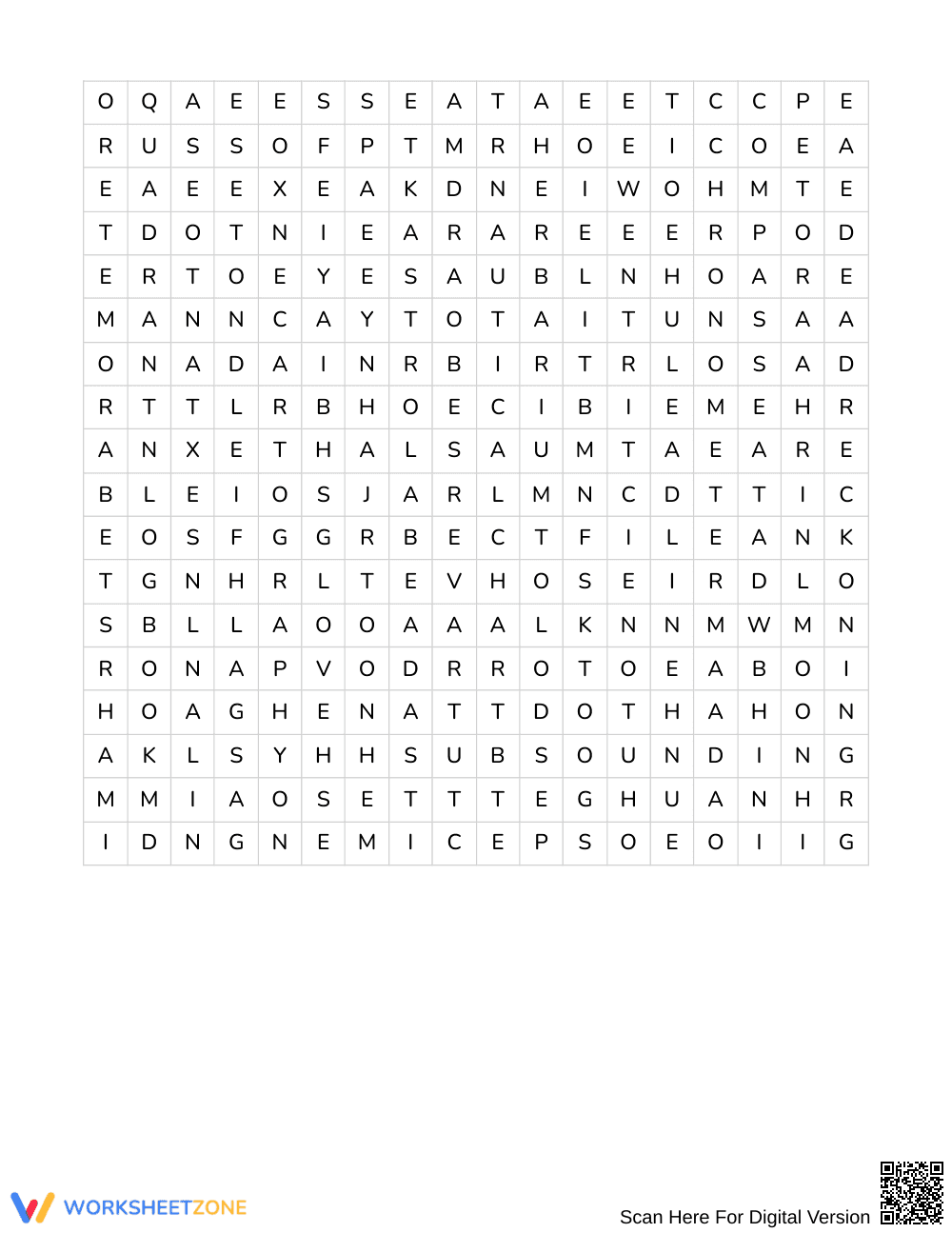

Free Explorer Tools Word Search | Grades 6–7 Social Studies

Paste this activity's link or code into your existing LMS (Google Classroom, Canvas, Teams, Schoology, Moodle, etc.).
Students can open and work on the activity right away, with no student login required.
You'll still be able to track student progress and results from your teacher account.
This Grades 6–7 social studies word search reinforces historical vocabulary by challenging students to identify sixteen essential expedition instruments and records from world history. Learners read descriptive clues, recall domain-specific terminology, and locate each term within an intricate letter grid, strengthening content retention and conceptual understanding of early modern global expeditions.
At a Glance
- Grade: Grades 6–7 · Subject: Social Studies (World History)
- Standard: Not standards-assessed — vocabulary enrichment identifying historical navigation instruments and voyage logs
- Skill Focus: Expedition tools and historical records from early global exploration
- Format: 3 student pages · 16 words · Full answer key included · Printable PDF
- Best For: World history vocabulary reinforcement and review
- Time: 25–35 minutes of independent work
What's Inside
This 3-page printable activity features 16 hidden vocabulary words embedded within a dense letter puzzle. Unlike standard puzzles, this resource omits a word bank to stimulate active memory recall. Instead, students read 16 comprehensive definitions covering maritime technology, navigational techniques, and scientific documentation. A complete 4-page answer key provides full-grid highlighting to ensure rapid, precise verification of all word placements.
Puzzle Mechanics and Structure
- Grid Matrix: An 18 x 18 letter grid containing 324 letters provides rigorous visual scanning practice.
- Search Orientations: Hidden terms run in all eight compass directions: North, Northeast, East, Southeast, South, Southwest, West, and Northwest, including forward and backward diagonals.
- Clue-Based Retrieval: Rather than scanning from a pre-printed word bank, students interpret 16 historical clues describing instruments like the astrolabe and records like field notes to deduce each target term independently.
Standards Alignment
This activity serves as vocabulary enrichment and is not aligned to a specific state or national content standard. It supports domain-specific academic vocabulary development across world history curricula by reinforcing technical terminology associated with historical expeditions, cartography, and maritime navigation.
How to Use It
Incorporate this puzzle into an Age of Exploration unit using either approach:
- Pre-Instruction Vocabulary Launch: Assign the puzzle before direct instruction to activate prior knowledge and introduce specialized terms before reading historical texts.
- Post-Instruction Review: Use the activity after lessons on global voyages to reinforce connections between navigation tools and log records. Completion takes 25 to 35 minutes.
Formative assessment tip: Observe whether students solve terms directly from the written clues or require text notes to identify words before searching the grid.
Who It's For
This puzzle is designed for Grades 6–7 social studies students studying early global navigation. For students needing support, supply an alphabetized reference list or encourage peer problem-solving. For advanced learners, challenge students to explain in writing how three discovered tools transformed seafaring. Pair this activity with an Age of Exploration navigation anchor chart.
This non-assessed vocabulary enrichment word search equips Grades 6–7 social studies students to master expedition tools and historical records across early world history. By removing the traditional word bank and requiring learners to solve 16 clue-based definitions before locating terms, the activity promotes active cognitive retrieval and contextual vocabulary acquisition. According to research by Fisher & Frey (2014), intentional domain-specific vocabulary instruction that combines definitional thinking with collaborative or independent retrieval significantly strengthens secondary students' reading comprehension in informational content areas. Learners examine specialized maritime instruments such as the astrolabe, chronometer, and sextant alongside primary documentation practices like logbooks, field notes, and herbarium collections. This 3-page printable puzzle reinforces accurate historical terminology across an 18 by 18 grid, providing educators with a targeted, self-directed instructional tool that deepens conceptual knowledge during world history exploration units.


