




























Free Digestive Cause‑Effect Worksheet | Grade 6‑10 Science
Paste this activity's link or code into your existing LMS (Google Classroom, Canvas, Teams, Schoology, Moodle, etc.).
Students can open and work on the activity right away, with no student login required.
You'll still be able to track student progress and results from your teacher account.
This 4‑page worksheet lets students practice guided cause‑and‑effect predictions about the digestive system, building confidence in explaining how structural changes impact function.
At a Glance
- Grade: Grades 6–10 · Subject: Science
- Standard:
— Identify how organ structure changes affect digestive processes- Skill Focus: guided cause‑and‑effect predictions
- Format: 4 pages · 22 problems · Answer key included · PDF
- Best For: Review after unit on human body systems
- Time: 15–20 minutes
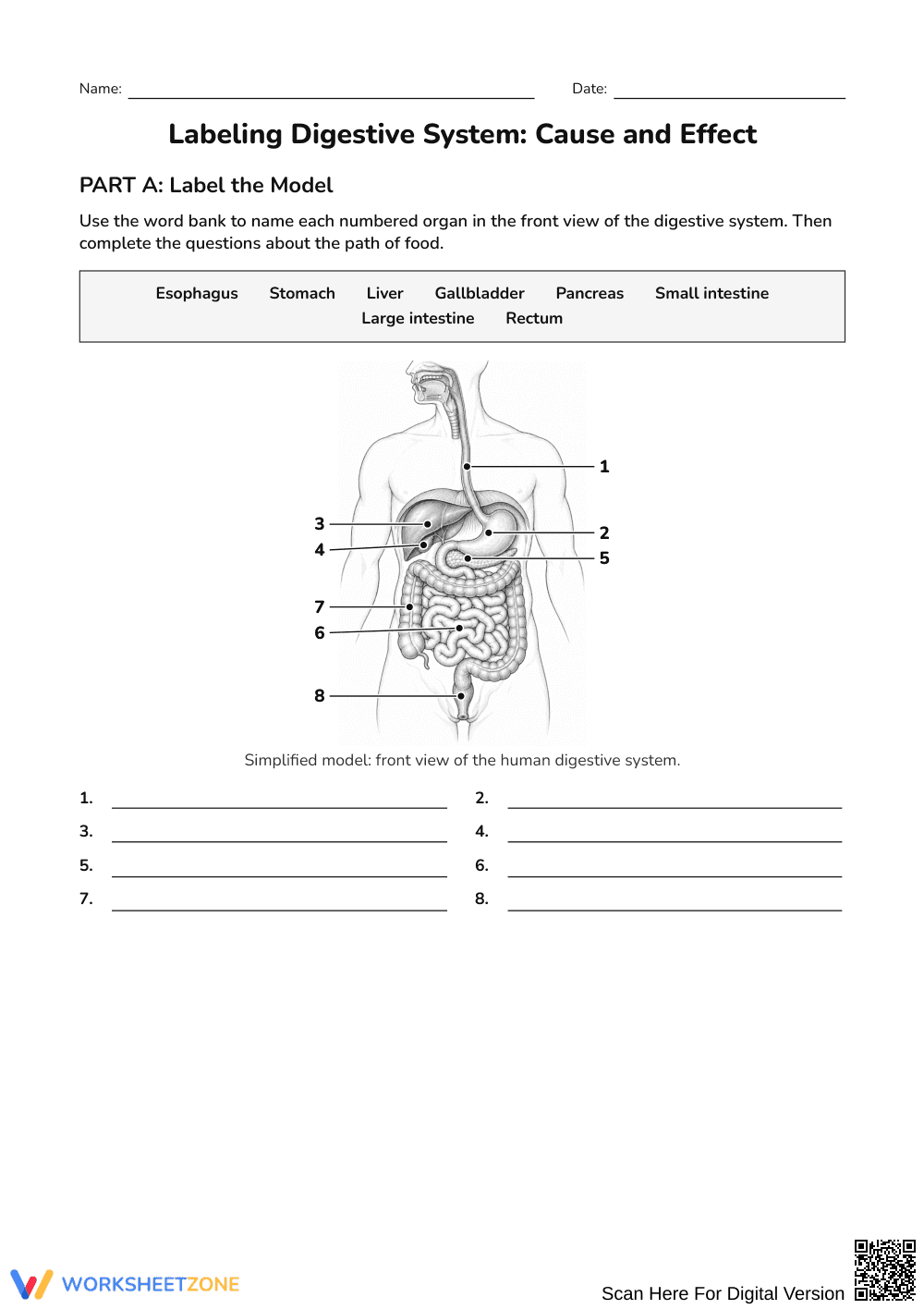
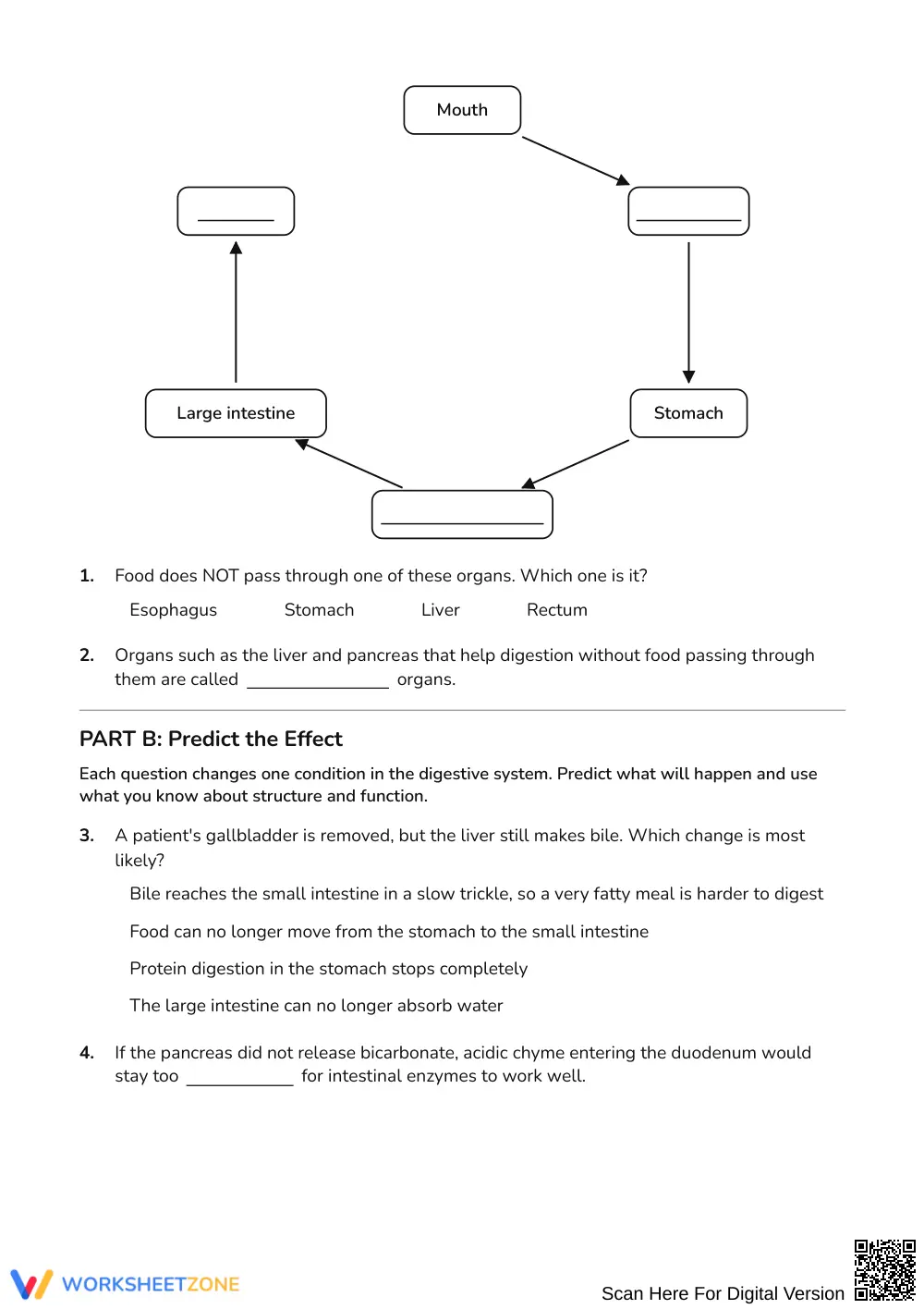
The packet includes three parts: Part A asks students to label a front‑view model using a word bank, Part B presents scenario‑based cause‑and‑effect questions, and Part C asks data‑interpretation about enzyme activity. All 22 tasks are printable, and the answer key mirrors the layout for quick checking.
- Guided practice – 6 labeled‑model items with a word bank and worked example.
- Supported practice – 8 scenario questions that provide sentence frames for students to justify their predictions.
- Independent practice – 8 data‑analysis items that require students to apply the cause‑and‑effect reasoning without scaffolds.
This progression follows the classic I Do, We Do, You Do release model, moving students from visual labeling to analytical reasoning.
This worksheet aligns with the NGSS middle‑school life‑science expectations that emphasize structure‑function relationships in human organ systems. It also supports the Common Core Science standard that calls for students to explain how changes in a system affect overall function. Both descriptions can be copied directly into lesson plans, IEP goals, or district curriculum maps.
Use it as a quick formative check after a lecture on the digestive tract, or as a starter activity before a lab on enzyme activity. Teachers can observe students’ written predictions to gauge understanding, and the worksheet’s answer key allows immediate feedback. Completion typically takes 15–20 minutes, making it ideal for a single class period.
Designed for middle‑school learners (grades 6‑10) who have completed the basic anatomy unit, this resource pairs well with a visual anchor chart of the digestive system and a short video on enzyme function.
Research shows that structured cause‑and‑effect questioning improves students’ ability to transfer knowledge to new contexts (Fisher & Frey, 2014). By linking organ structure to functional outcomes, this worksheet supports deeper conceptual change and aligns with evidence‑based practices for science instruction. The tasks provide clear, measurable evidence of students’ mastery of the skill “predict how a change in one part of a system influences the whole,” a competency highlighted in recent NAEP reports. Teachers can confidently assign this printable resource to reinforce systems thinking and prepare students for higher‑order assessments.


