































Free Contradictory Patterns Worksheet | Grade 12 English IV

Paste this activity's link or code into your existing LMS (Google Classroom, Canvas, Teams, Schoology, Moodle, etc.).
Students can open and work on the activity right away, with no student login required.
You'll still be able to track student progress and results from your teacher account.
This advanced literary analysis worksheet guides Grade 12 students to analyze contradictory patterns and competing themes within complex narrative fiction. Working with an original multi-layered text, students evaluate how structural friction between institutional records and personal recollection exposes unresolved complicity, equipping them to construct text-grounded analytical defenses for rigorous high school English coursework.
At a Glance
- Grade: 12 · Subject: English IV
- Standard:
RL.11-12.2— Analyze how two or more themes interact and build over a complex text- Skill Focus: Analyze Contradictory Patterns
- Format: 6 pages · 12 problems · Answer key included · PDF
- Best For: AP or advanced literary theme analysis
- Time: 45–60 minutes
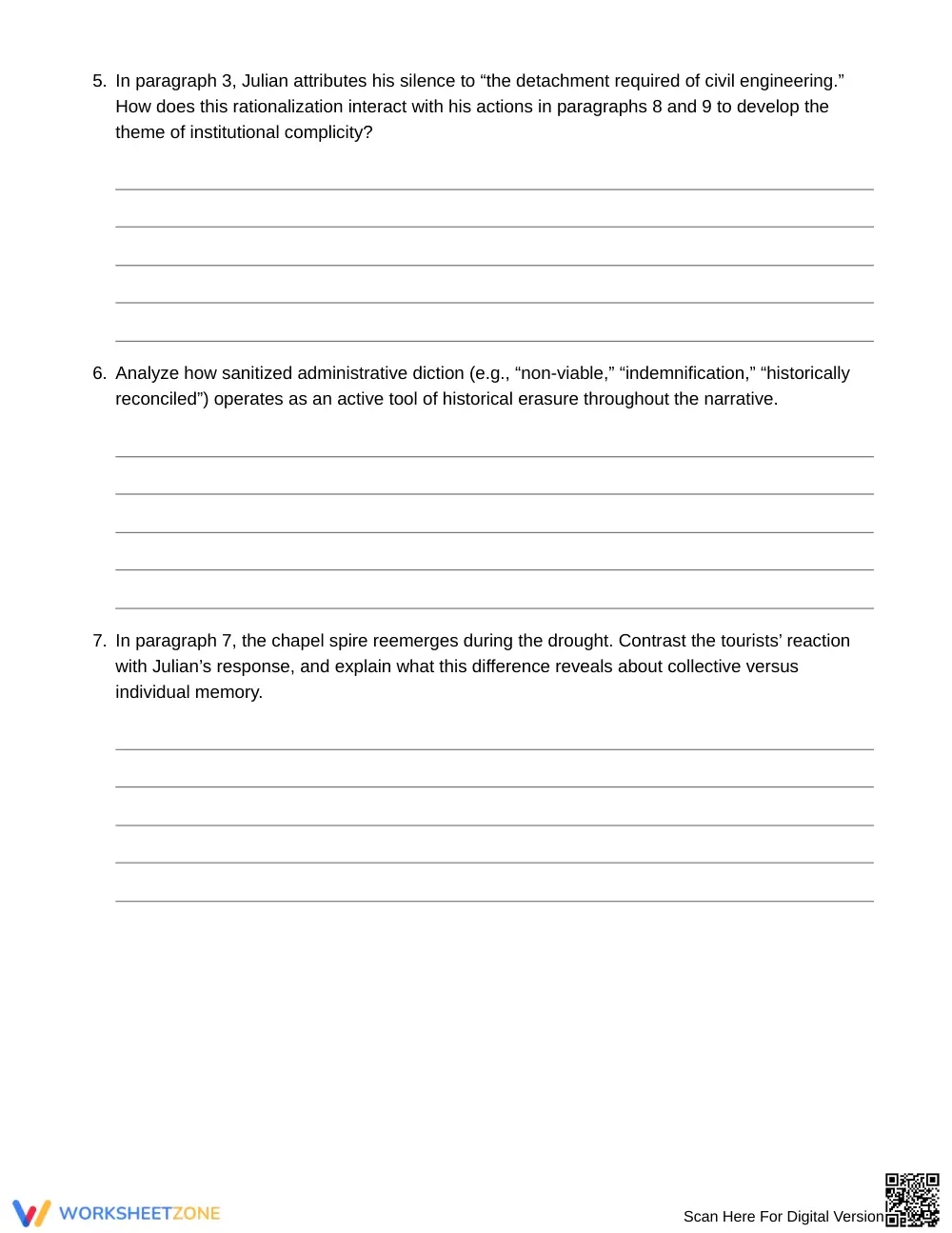
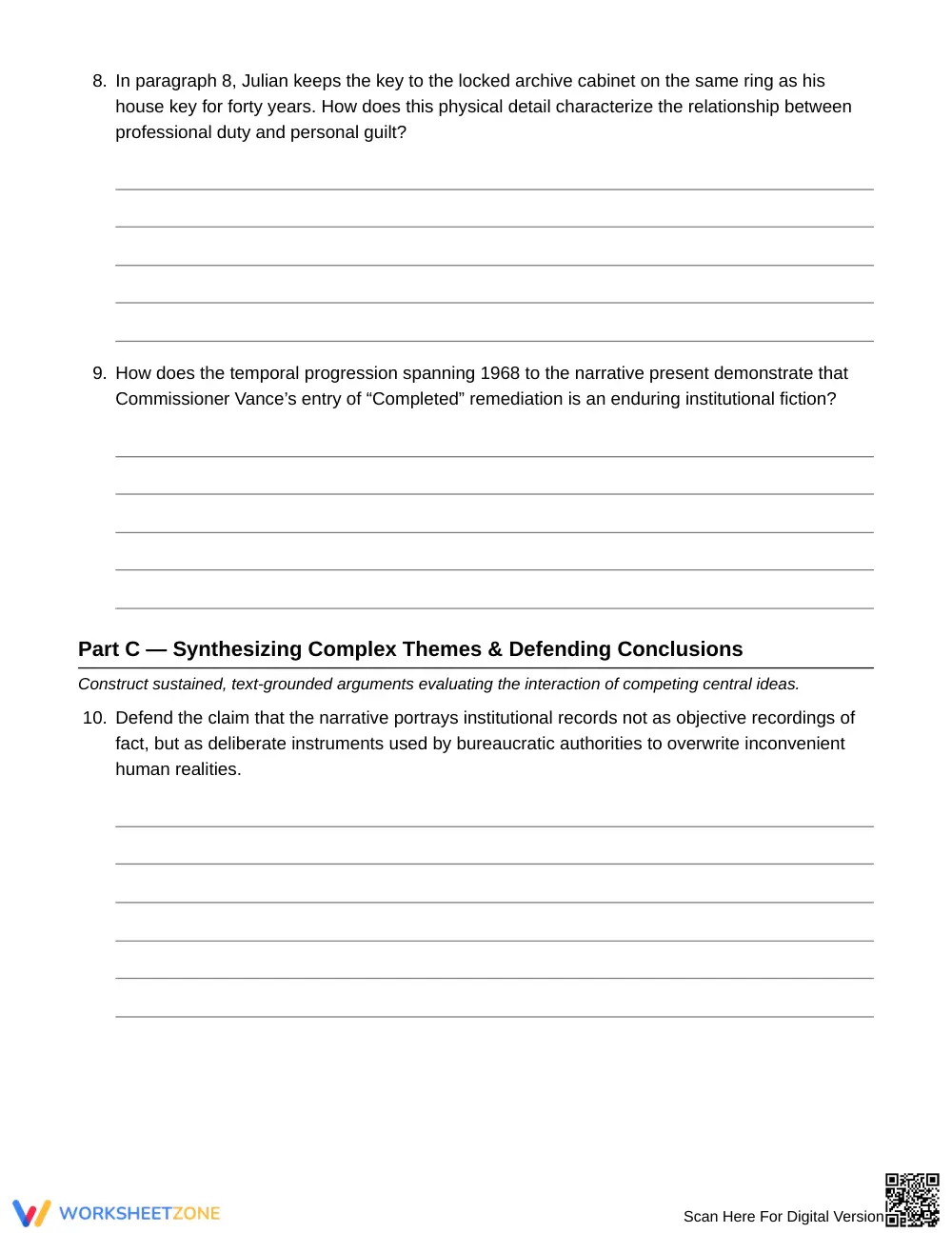
This 6-page instructional resource contains the complete narrative text "The Ledger at Oakhaven Spillway" alongside 12 text-dependent analysis questions organized into three analytical tiers. A comprehensive 3-page answer key provides model evidence citations, detailed analytical criteria, and exemplary response rationales for every item to facilitate consistent teacher grading or self-directed student review.
Skill Progression
- Guided practice (Part A, Problems 1–3): Low-scaffold direct text extraction prompts students to locate explicit discrepancies between municipal ledger claims and sensory details in the text.
- Supported practice (Part B, Problems 4–9): Intermediate relational prompts direct students to analyze structural shifts, administrative diction, and recurring symbolic motifs across narrative time.
- Independent practice (Part C, Problems 10–12): Open-ended evaluative prompts demand sustained analytical argumentation synthesizing dual central themes without teacher scaffolding.
This structured progression reflects the gradual release of responsibility model, guiding twelfth-grade readers from evidence location to high-level thematic synthesis.
Standards Alignment
This resource aligns to `RL.11-12.2`, focusing on determining two or more themes and analyzing how they interact over a complex text. It also reinforces `RL.11-12.1` by requiring explicit evidence for analytical claims. Both standard codes can be copied directly into lesson plans, IEP goals, or district curriculum mapping tools.
How to Use It
Deploy this worksheet after direct instruction on narrative structure or dual thematic development. For paired close reading, assign Parts A and B during class to monitor how effectively students identify bureaucratic subtext, offering immediate formative feedback when students confuse narrative voice with official documentation. Alternatively, assign Part C as an in-class summative assessment. Students typically complete the 12 tasks in 45 to 60 minutes.
Who It's For
Designed for Grade 12 English IV, AP Literature, and honors English classrooms, this activity supports seniors mastering collegiate-level textual critique. Differentiate by providing targeted paragraph line references to struggling readers or assigning extension essays to advanced learners. It pairs naturally with direct instruction anchor charts on thematic tension and institutional rhetoric.
According to Fisher & Frey (2014), rigorous reading comprehension and thematic synthesis require structured instructional tasks that systematically move students from literal textual tracking toward evaluative literary critique. This Grade 12 literary analysis worksheet operationalizes that instructional framework by targeting standard RL.11-12.2 through the focused examination of contradictory narrative patterns. By analyzing how institutional records clash with individual human memory across 12 rigorous tasks, students move beyond identifying isolated literary devices to evaluating how competing central ideas interact and develop across a complex account. The resource scaffolds this analytical investigation through an initial evidence-gathering tier, a structural analysis sequence, and an evaluative argument synthesis. Grounding high school seniors in verifiable textual contradictions cultivates the critical literacy and interpretive reasoning emphasized in college-readiness benchmarks, ensuring learners can articulate nuanced thematic friction across multifaceted literary texts.


